



Meet Three Local People Fighting for the Future of Our Region

Image: Courtesy Photo
“I am because we are.”
These words—drawn from a South African philosophy emphasizing the deep interdependence of community—set the tone for the recent Climate Champions awards. Newly named honoree Charlie Hunsicker used the phrase to capture a truth that felt especially fitting for the eclectic crowd gathered in the room.
Country club representatives sat side-by-side with sustainability activists. Conservationists mingled with architects, government leaders and nonprofit organizers. The audience was a cross-section of our region, all gathered to celebrate this year’s Climate Adaptation Center Climate Champions.
The Climate Adaptation Center (CAC) has been naming Climate Champions since 2024, recognizing individuals whose science-driven leadership and community impact are helping our region prepare for—and push back against—the mounting threats of a changing climate. In a region like ours, that means confronting everything from rising sea levels and storm surge to inland flooding, stronger hurricanes and accelerating biodiversity loss.
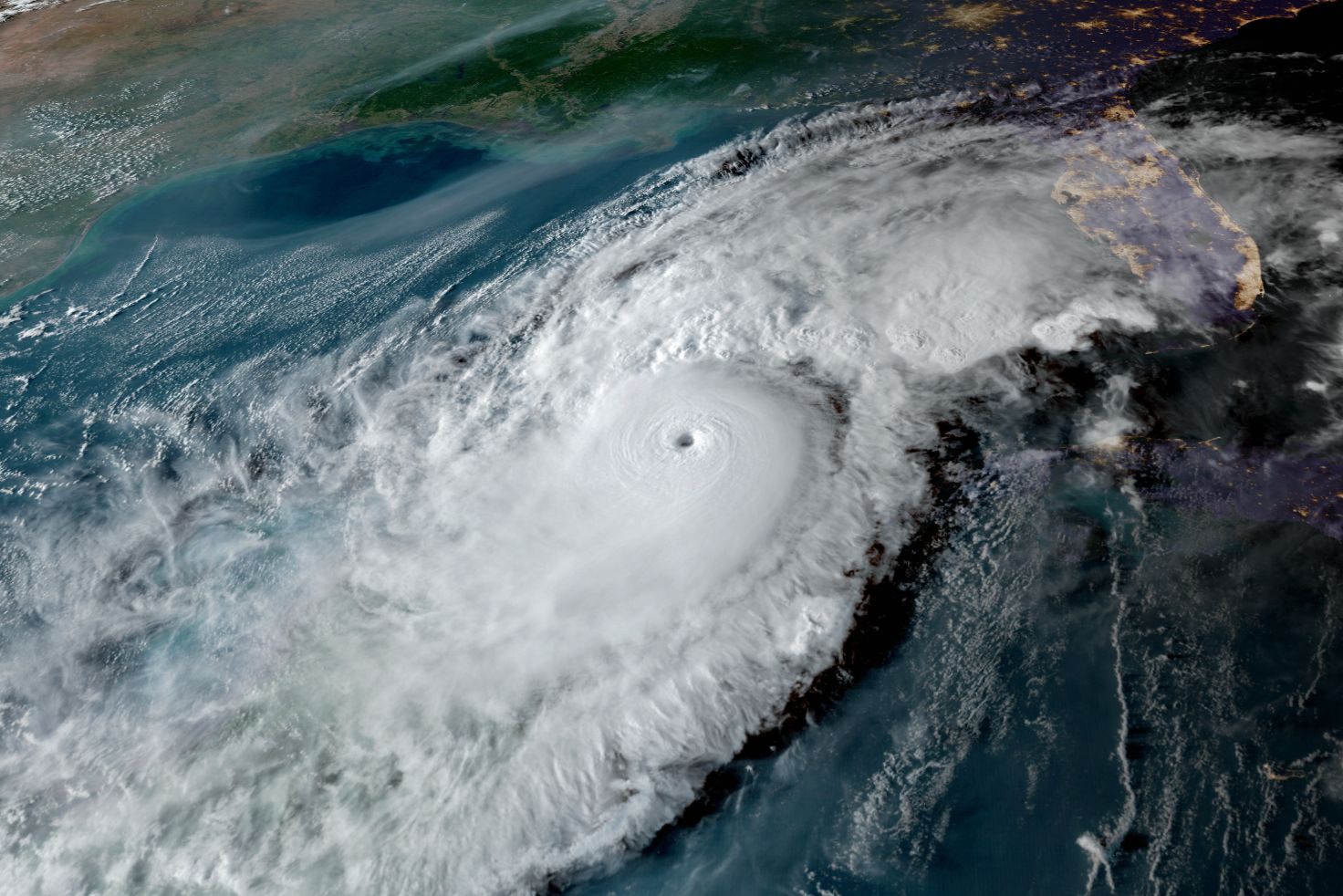
CAC CEO Bob Bunting and CAC founding director and philanthropist Elizabeth Moore drew laughs with on-theme antics (including testing fate by opening not one, not two but three umbrellas inside as part of an ongoing gag). The humor was needed, since it included alongside some sobering facts—like that Gulf Coast landfalls of Category 4 and 5 hurricanes having seen a 700 percent increase in the first quarter of the 21st century compared to the last quarter of the 20th.
Against that backdrop, this year’s Climate Champions are doing the often quiet, often complicated work of preparing our region for what’s ahead. From restoring wetlands and protecting habitats to rethinking development and strengthening community resilience, their efforts reflect the very philosophy Hunsicker invoked: that the well-being of this place and the people who call it home depends on recognizing just how deeply connected we all are.
Meet This Year’s Climate Champions
Sara Kane
Sustainability and Resilience Manager for Sarasota County
For more than two decades, Kane has worked at the intersection of science, policy and community, translating climate risk from an abstract concept into real-world action. Her track record includes leading the county’s Vulnerability Assessment and Adaptation Plan and securing millions of dollars to implement resilience initiatives, with significant investment directed toward underserved communities that often bear the brunt of climate impacts.
When Hurricane Ian came to town, Kane’s county role took on a very different dimension—Evacuation Center Manager at a local school. There, she saw firsthand how storms impact the most vulnerable people in our community, and importantly, how we come together when it matters the most. “Climate adaptation has never been about the work of a single person,” she told the crowd. “It belongs to all of us who care deeply about protecting the places we call home.”
Charlie Hunsicker
Director of Manatee County’s Natural Resources Department
Since beginning his career with Manatee County in the 70s, Hunsicker's leadership has helped protect more than 30,000 acres of preserves and environmentally sensitive lands across 18 locations and secure more than $70 million in grants and appropriations to modernize wastewater treatment. Today, he serves as the Manatee County commission’s go-to liaison on environmental matters, coordinating with county administrators while overseeing five divisions whose work impacts residents across Manatee County, the greater Tampa Bay region and Florida as a whole—projects that deal in everything from beach renourishment to phosphate mining.
“When we look at the climate, or some sort of difficult situation and make an assessment, we often draw a quick conclusion and say, 'Well, it is what it is,” Hunsicker said. “When I hear this, in my mind I'm shouting out, 'No, no, no, it is what it can be.' I believe with the actions and small steps that we take in our public places, we can educate the communities at large about what can be.”
F. John LaCivita
President and CEO, Willis A. Smith Construction, Inc.
Fifth-generation Floridian and lifelong Sarasota County resident F. John LaCivita has guided Willis A. Smith Construction—a member of the Florida Green Building Coalition and the U.S Green Building Council—in its efforts to prioritize energy-efficient, hurricane-hardened, environmentally responsible practices. While LaCivita typically focuses on local projects, he made an exception when Dr. Michael P. Crosby, president and CEO of Mote Marine Laboratory and Aquarium, asked him to build a hurricane-proof coral restoration lab in the Keys. Within six months of opening, the Elizabeth Moore International Center for Coral Reef Research and Restoration faced its first challenge from Hurricane Ian—far sooner and more intensely than anyone was expecting. After Ian, the center emerged completely unscathed, even as the surrounding area suffered extensive damage.
LaCivita has also overseen major projects including the redevelopment of Selby Botanical Gardens, the new Mote SEA, and a 17-acre rewilding initiative at Celery Fields in partnership with Big Waters Land Trust and the Sarasota Audubon Society. “It might not be a massive project by global standards, but it’s meaningful to our community,” he said. “Local actions are where real change begins. It’s our responsibility—to our clients, our community, and the generations to come—to protect the environment. We want Florida communities to thrive for the future.”

Image: Courtesy Photo
On the horizon for the CAC is 2026 Hurricane Season Forecast Day on Thursday, April 23, at the University of South Florida Sarasota-Manatee campus, where experts will share projections about the coming storm season and what communities can expect, as well as the sixth annual CAC Florida Climate Conference in the fall.
For more information, go to theclimateadaptationcenter.org.