

Inside the New Mote SEA

Image: Gene Pollux
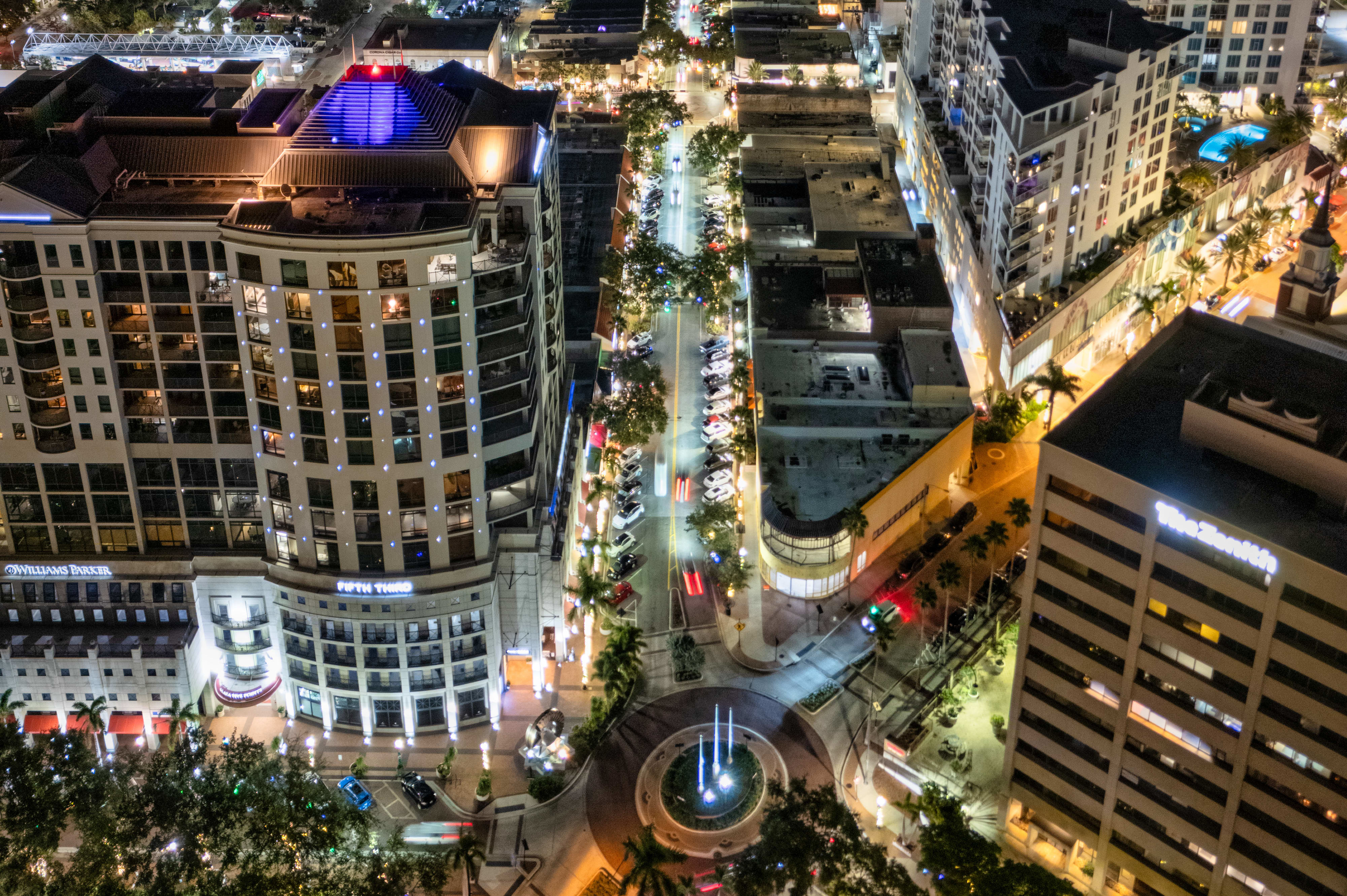
After years of planning, fundraising and waiting, Mote Marine Laboratory’s brand-new, $132 million Science and Education Aquarium (SEA) opened its doors to the public at Nathan Benderson Park in October. Inside, visitors will find 1 million gallons of aquatic exhibitions, including skulking sharks, peaceful manatees, playful otters and penguins, ethereal jellyfish and more.
The facility also delivers on the “education” part of its name, with three state-of-the-art STEM teaching labs: Biomedical, Microbiology and Immunology; Marine and Coastal Ecology; and Ocean Engineering, Technology, Robotics and Sensory Development.
It’s all been in the works for about 15 years, says Kevin Cooper, Mote’s vice president for communications and strategic initiatives. “Around that time, two things started to happen: We started to think about Mote’s marine science future, and we started to think about infrastructure,” he says. “We were on a saltwater coast, and some of our facilities had started to age.”
The decision to relocate from Mote’s 45-year home on City Island to Benderson Park was the result of brand research surveys and working with site selectors, Cooper explains—third-party contractors who evaluate the best locations for facilities like Mote’s.
“The studies showed that the No. 1 reason visitors didn’t come to the [old] aquarium was that it was difficult to get to,” Cooper says. “Ultimately, the Nathan Benderson Park site hit the sweet spot.”
The new aquarium—which rises like a wave into the sky and is easily visible from I-75—will also offer hands-on, experiential learning for more than 70,000 students at Sarasota and Manatee schools free of charge. “When people walk in there, we want them to see science being utilized to educate the next generation and hopefully train [future] marine scientists,” Cooper says. “[The new aquarium] is fun and whimsical in some areas, but most importantly, we want to educate the public on the importance of the conservation and sustainable use of our waterways. It’s a window into the globally significant scientific research happening at Mote. We are committed to passing what we’ve learned on to the next generation.”
Behind the Tank
Moving Mote’s animals 14 miles to the new facility was a major, complex project. Here’s a look at some of the marine life Mote staff transported.
North American River Otters
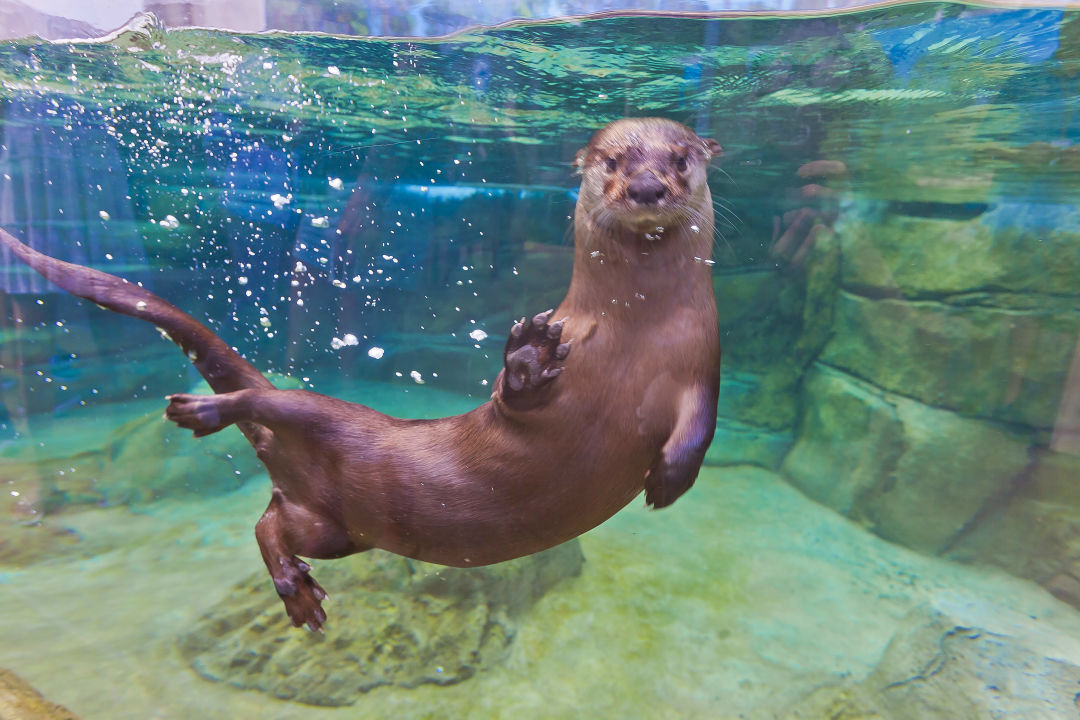
Image: Gene Pollux
No. of otters transported: 2
Weight: 16 lbs. and 19 lbs.
Tank size: 14,000 gallons
Fun fact: Otters have highly adapted physical features that allow them to survive in water and on land. They’re social animals that build bonds by tail chasing, playing in the water and even helping each other with hunting tips.
Where to see them: Florida Waters Gallery
Sharks
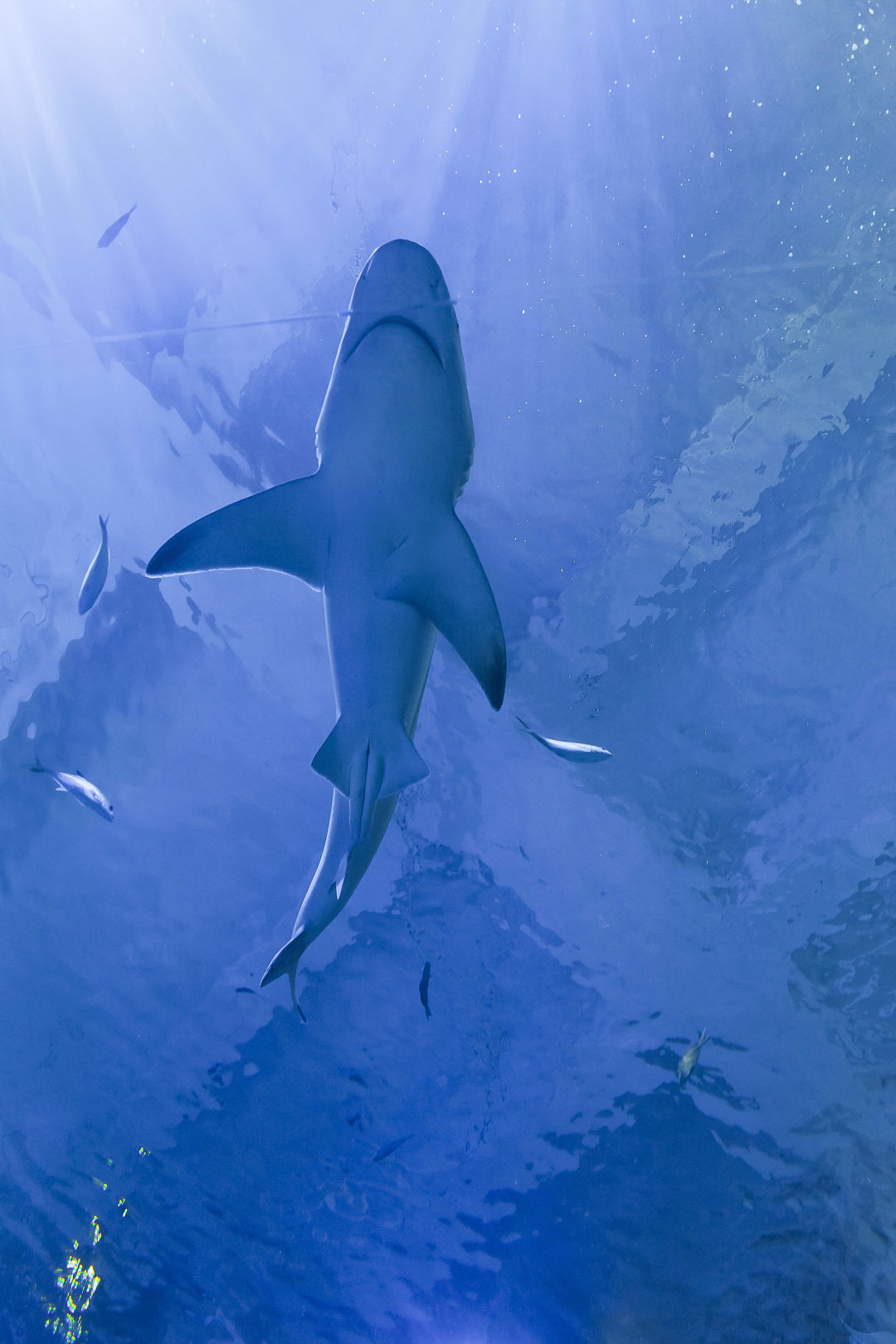
Image: Gene Pollux
No. of sharks transported: More than 20, spanning nine species, including one brownbanded bamboo shark, seven coral catsharks, two nurse sharks, two blacktip reef sharks, one sandbar shark, one sand tiger shark, one blacknose reef shark and one zebra shark.
Weight: From 2 lbs. to 165 lbs.
Tank size: Multiple habitats ranging from 2,400 gallons to 385,000 gallons.
Fun fact: Zebra sharks and nurse sharks use their muscles to pump water over their gills, which allows them to breathe while resting on the sea floor instead of continuously breathing. Blacktip reef sharks give birth to live young, unlike other shark species that lay eggs. And while sand tiger sharks have rows of long, needlelike teeth that are visible even when their mouths are closed, they are slow moving and docile to humans. They also gulp air at the surface of the water and then store it in their stomachs, allowing them to hover motionless in the water without sinking.
Where to see them: Florida’s Gulf Coast Gallery
Humboldt Penguins
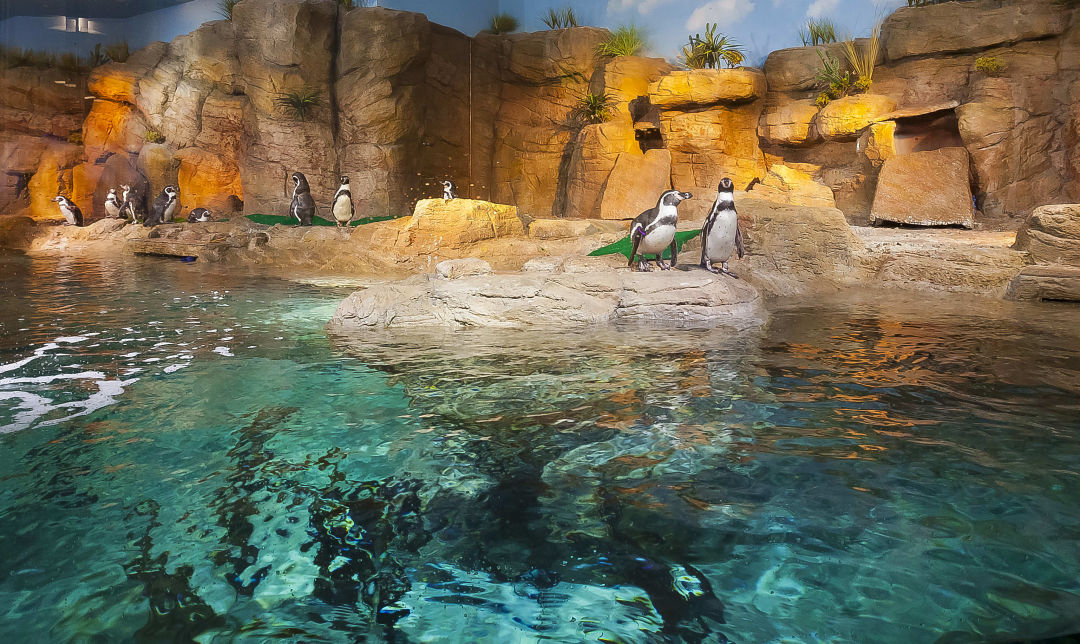
Image: Gene Pollux
Number of penguins transported: 13
Weight: Between 7 lbs. and 12 lbs.
Tank size: 23,000 gallons
Fun fact: These flightless birds have a black band across their chests and spotted bellies, which are unique to each individual—like a fingerprint.
Where to see them: Indo-Pacific Gallery
Giant Pacific Octopus
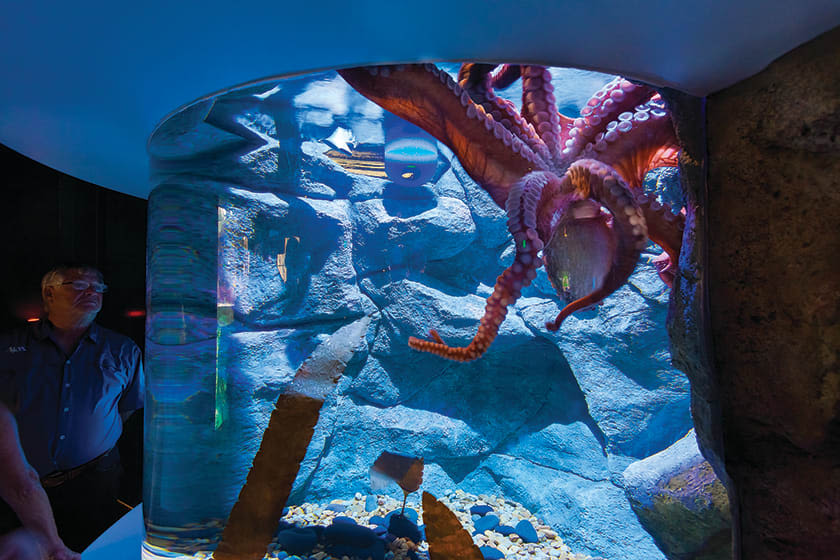
Image: Gene Pollux
Number of animals transported: 1
Weight: 22 lbs.
Tank size: 2,000 gallons
Fun fact: The reddish-brown giant Pacific octopus—the largest octopus species in the world—has special skin cells called chromatophores that help them change colors to blend in with their surrounding environment. Some giant Pacific octopi have grown to as large as 600 lbs. Their eight arms can have more than 2,000 suckers combined, giving them a powerful grip, and they’re known for their high intelligence—they can solve puzzles and even recognize human caregivers.
Where to see it: Indo-Pacific Gallery
Florida Manatees
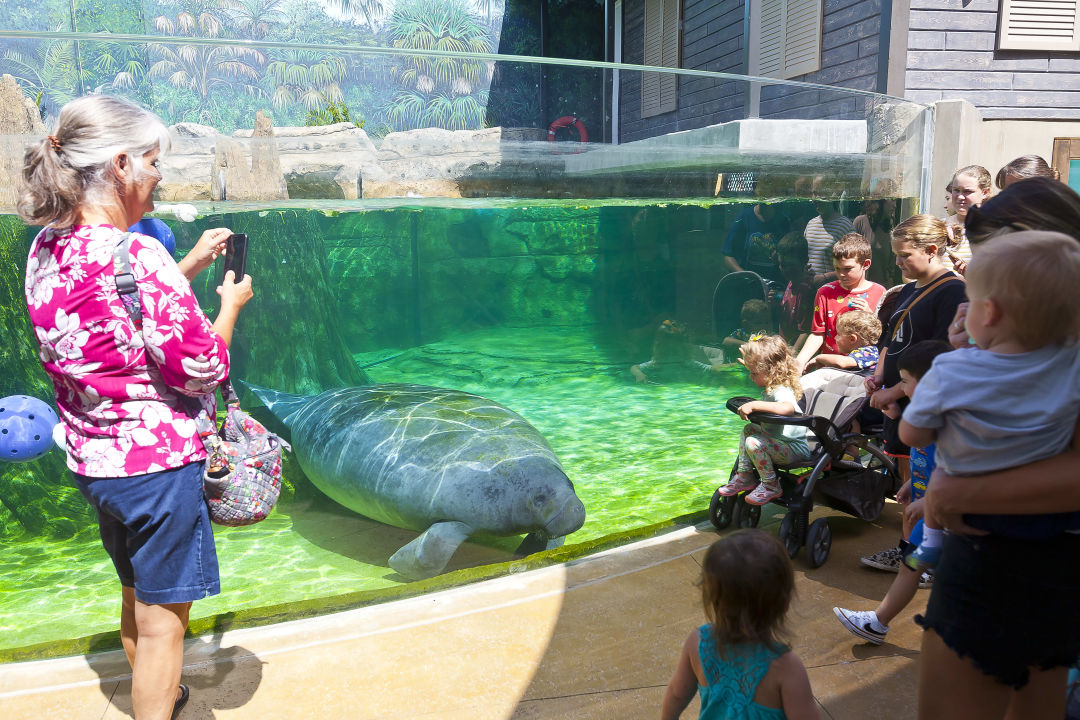
Image: Gene Pollux
Number of animals transported: 2
Weight: 1,889 lbs. and 2,140 lbs.
Tank size 150,000 gallons
Fun fact: Florida manatees are native to the United States. Early sailors thought they were mermaids, and Christopher Columbus once described them as “less beautiful than he imagined, with masculine faces.” But they do belong to the order Sirenia, which derives its name from the sirens—or mermaids—in Greek mythology.
Where to see them: Florida Waters Gallery