




Mote Documents First Sea Turtle Nest of 2026
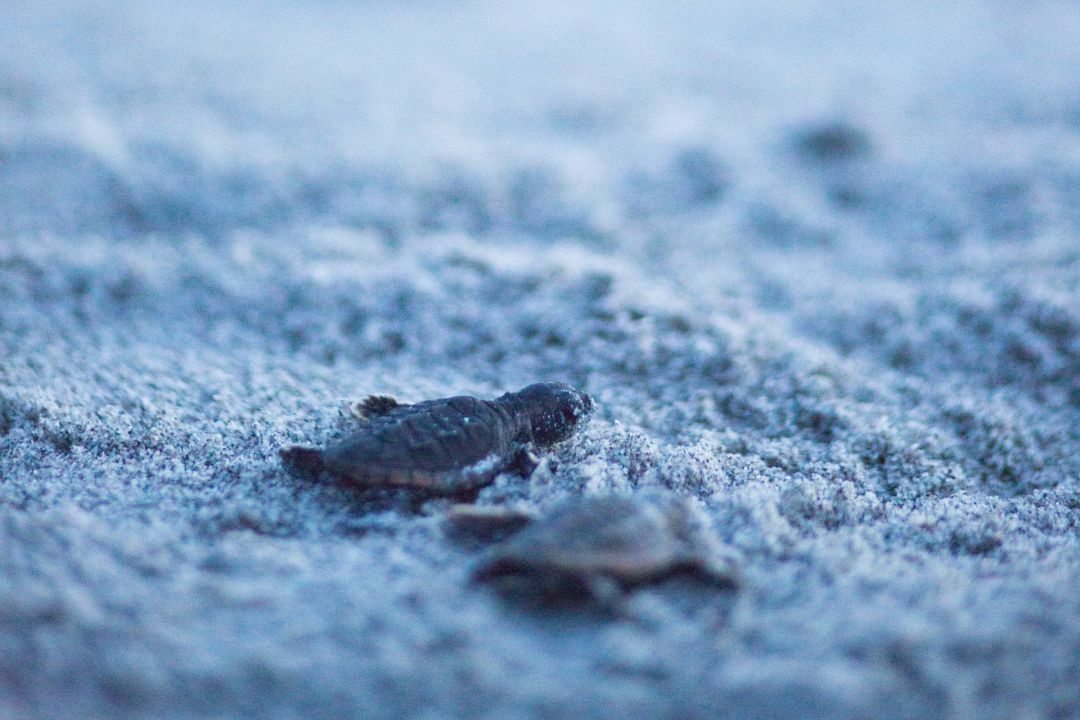
Mote Marine Laboratory's Sea Turtle Conservation and Research Program (STCRP) has documented the first local sea turtle activity of the 2026 season. This morning, STCRP’s Sea Turtle Patrol reported the first nest of the season on Venice Beach.
From April 15 through Oct. 31, the Sea Turtle Patrol, now in its 45th year, conducts daily surveys of Sarasota County's 35 miles of nesting beaches, from Longboat Key to Venice. Each morning, they scan the sand for signs of nesting activity and document each nest with care and precision.

The technical start of sea turtle nesting season on May 1. The nest the STCRP documented today was identified as a loggerhead sea turtle nest. Loggerhead sea turtles are a threatened species protected under the U.S. Endangered Species Act and the most commonly observed nesting species in our region, followed by green sea turtles. In recent years, Sarasota County has also occasionally hosted nests from Kemp’s ridley and leatherback sea turtles.

Throughout the nesting season, which officially begins May 1 and runs through Oct. 31, STCRP staff and volunteers collect detailed data on nesting activity to track long-term trends and assess critical aspects of sea turtle ecology. These include phenological shifts (changes in the timing of nesting), nest density, hatching and emergence success, nest site selection and the influence of environmental conditions. As in past years, each nest is marked with yellow stakes and flagging tape to prevent disturbances while data collection continues.
Mote’s monitoring has shown encouraging signs in recent years, including rising nest numbers along local beaches. In 2025, the STCRP reported a historic nesting season, with 5,736 total nests recorded along the 35 miles of beaches.
How to Protect Sea Turtles and Their Nests
During nesting season, it is important to keep local waters and beaches sea turtle friendly. Sea turtles swim just offshore to mate before the females come ashore to nest. Juvenile turtles feed along the Gulf coast, and by early summer the first hatchlings will venture into Gulf waters.
On nesting beaches, light from waterfront properties can disorient nesting female turtles and their young, who emerge at night and use dim natural light to find the sea. Beach furniture, trash, and other obstacles can also impede sea turtles and their young. While 2025 saw record nesting activity, it also saw the highest number of sea turtle disorientations, at 717.
Onshore
-
If you encounter a nesting turtle or hatchlings, remain quiet and observe from a distance.
-
Shield or turn off outdoor lights that are visible on the beach and close drapes after dark from May through October.
-
Stack beach furniture at the dune line or, ideally, remove it from the beach.
-
Fill in holes that may trap hatchlings on their way to the water.
-
Do not approach nesting turtles or hatchlings, make noise, or shine lights at turtles.
-
Do not use flashlights or fishing lamps on the beach.
-
Don't encourage a turtle to move while nesting or pick up hatchlings that have emerged and are heading for the water.
-
Don't use fireworks on the beach.
-
For more details, please refer to local sea turtle ordinances, including Sarasota County’s marine turtle protection code (which includes Lido, Siesta, Casey, and Manasota Keys), the City of Venice marine turtle protection ordinance, and the Town of Longboat Key marine turtle protection ordinance. An updated Longboat Key ordinance took effect in 2022. For questions about any sea turtle code or ordinance, contact code enforcement staff from each municipality.
On the Water
-
Follow Coast Guard-approved safe boating guidelines and use vigilance to avoid striking sea turtles and other large marine life.
-
Be sure to stow trash and line when underway. Marine debris that accidentally blows overboard or out of a truck can become ingested by or entangled around marine life.
-
Wear polarized sunglasses to better see marine life in your path.
Emergency Contacts
If you see a sick, injured, or stranded sea turtle, dolphin, or whale in Sarasota or Manatee county waters, contact Mote Marine Laboratory’s Stranding Investigations Program at 888-345-2335. Outside of Sarasota or Manatee counties, please call the Florida Fish and Wildlife Conservation Commission (FWC) at 888-404-FWCC (3922).
If you suspect that someone is tampering with a sea turtle nest, harassing a sea turtle, or has possession of a sea turtle or any of its parts, please call FWC or your local sheriff’s department.
Sea turtles are protected under federal law and any harassment or interference with a sea turtle, living or dead, their eggs and/or nest marking materials is subject to penalty.
To follow along throughout the season, the public can view weekly sea turtle nesting updates at www.mote.org/nesting.