




Why Are There Crow Effigies on Lido Beach?

Image: Lou Newman
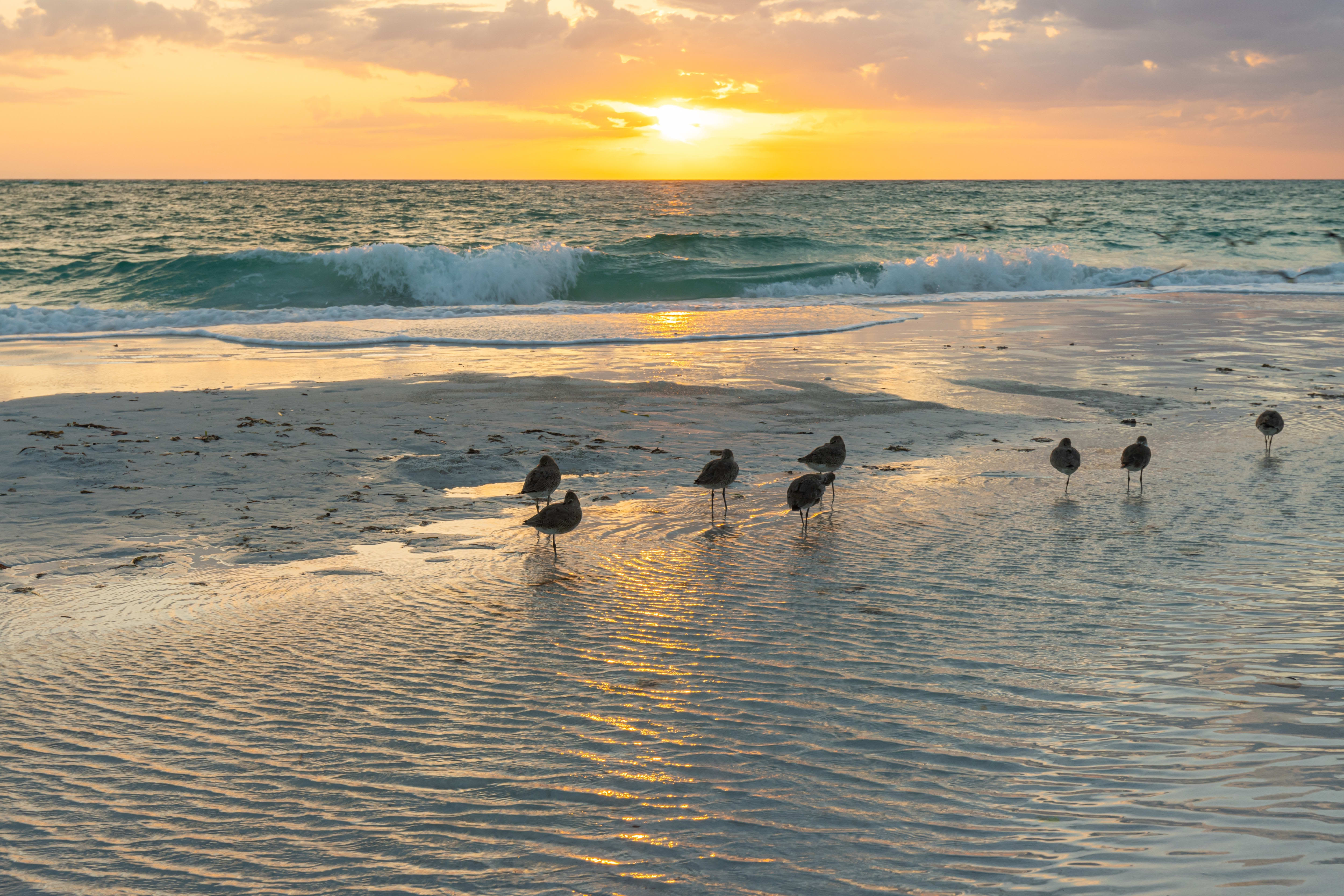
It’s nesting and hatching season at North Lido beach, and bird lovers are flocking to the shore to watch endangered shorebirds like black skimmers and least terns that return each year from Latin America to mate and lay eggs.
They aren’t the only watchers. Fish crows, which prey on the eggs and hatchlings, have returned as well.
But this year, the Florida Fish and Wildlife Conservation Commission (FWC) paired up with Sarasota County and the Florida Shorebird Alliance with a novel plan to protect those birds: crow effigies.
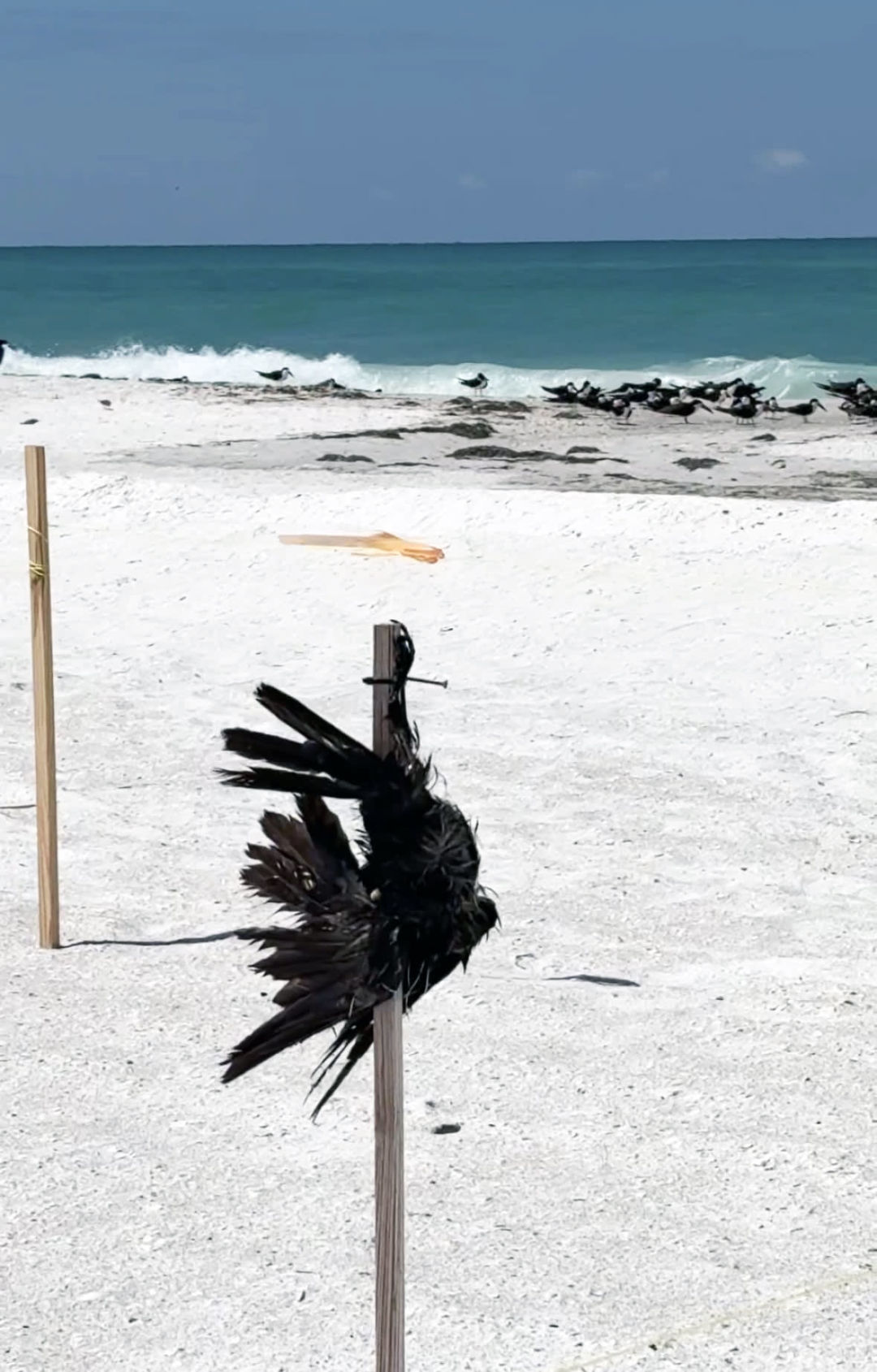
Image: Jules Telfort
Crow effigies are typically artificial crows constructed from plastic and feathers, made to mimic dead crows. Then they’re placed on top of tall wooden posts near nests to scare live crows away since research has shown that real crows get spooked by seeing what looks like their dead brothers and sisters.
Crows are smart—one of the most intelligent bird species in the world, says Abby O’Donnell, a biologist working with the FWC. So on North Lido, the FWC has opted to use real, dead crows, specifically the fish crow, which preys on the shorebirds, that would be more convincing.

Image: Jules Telfort
The FWC sources these dead crows from other wildlife management activities that follow state and federal regulations. According to the staffers at the FWC, crows may be used as part of management activities for endangered species.
And these macabre effigies are frequently replaced with fresher dead birds. “About three to four weeks after we put them up, the crows realize, ‘Oh, this isn’t as big of a threat,’ so we do have to change them out and move them around every few weeks,” says O’Donnell.
But rest assured that no crows were used just for the purpose of creating effigies. And they don’t attract other unwanted animals or any unwanted smell because they’re embalmed—and also decompose rapidly in the sun and salt.
Even though there hasn’t yet been any data that has focused on the effectiveness of the crow effigies, protectors of the endangered birds think it’s worth a try to save their eggs and hatchlings.

Image: Jules Telfort
So if you happen to be strolling North Lido at sunset and a dead crow effigy stops you in your tracks, don’t worry—it’s all part of a plan to protect our nesting seabirds. And the reason fish crows have descended upon the beach is a human-made problem. They’re attracted to the beach because of the food scraps and other trash left behind by beachgoers.
If you want to pitch in and help protect our endangered birds, click here for tips on how to make the beach a safe place for our avian neighbors.