



How Will We Pay for Climate Change?

Image: Courtesy Photo
One of the important questions that experts will tackle this week when they gather for the Climate Adaptation Center’s fifth annual Climate Forecast Conference will be how we’re going to pay for a warming planet.
Colin Polsky, professor of geosciences and associate vice president of Broward campuses at Florida Atlantic University, is one of the speakers at this year’s conference on Nov. 13 at the University of South Florida Sarasota-Manatee. Just last year, he was tapped to head the newly formed Florida Office of Ocean Economy.
Created in 2024 by Gov. Ron DeSantis and the Florida Legislature, the office is a “state-supported effort to better understand, support and grow the ocean- and coastal-based industries that drive jobs, investment and innovation across our state,” according to Adam Hasner, president of FAU.
The mission is to sustainably grow the economy without damaging or destroying the environment that is the source for growth—a point Polsky says may be obvious, but still worth stating.
As a scientist who studies the processes that form the Earth, Polsky takes a long view of climate change and policy. He says there’s been very little progress since the United Nation’s 1988 Intergovernmental Panel on Climate Change and U.S. Congress took up the issue.
“Climate change policy progress, as well as some of the science, hasn't made near the advancements that we would like," Polsky says. "Whatever we've been doing as a broad community since 1988 hasn't worked. In fact, you could argue, it's failed spectacularly."
Now the situation is even more challenging. President Donald Trump’s rollback of environmental protections have eliminated or scaled back climate mitigation and adaptation measures and moved to eliminate mentions of the phrase “climate change” altogether at the federal level. The loss of millions in funding has left experts like Polsky looking for alternative approaches to support their research and policy implementation. “I think we should plan that [that funding] is gone for the near future, at least,” he says.
His two possible solutions at the moment: turning to big philanthropy and working through the Florida Office of Ocean Economy.
“Big philanthropy has really started to fill that void in some areas,” says Polsky, who gives the example of foundations that infuse large amounts of cash into the pharmaceutical industry. “We need that kind of infusion more than ever in the climate space.”
Still in its infancy, the Florida Office of Ocean Economy—unfunded at first—was not created to focus on climate change, but rather how to better understand, support and grow any industries that are dependent on the ocean or the state’s coastlines. Last year, the office published its statutorily mandated annual report , which focused on understanding the needs of Florida’s ocean economy. Now in its second year and with a year’s worth of funding, Polsky hopes the office can also create a strategic plan for how the state can grow and support the ocean economy sustainably.
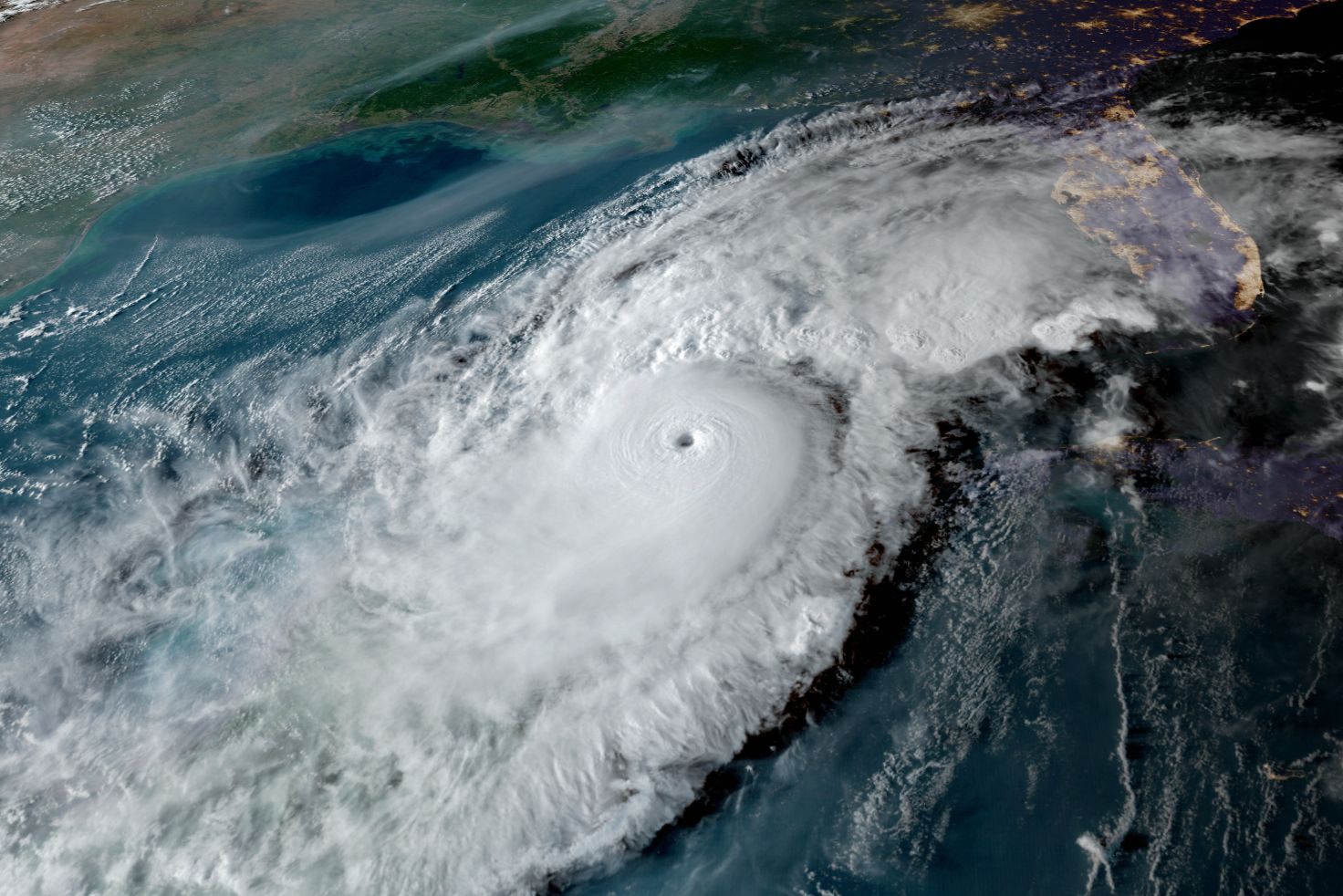
A major area of focus for the office will be flood risk mitigation. More than two-thirds of Floridians are concerned about hurricanes increasing in strength and frequency, according to the Florida Climate Resilience Survey in March, which is conducted by FAU's School of Environmental, Coastal, and Ocean Sustainability, of which Polsky is the founding director.
“Flooding is getting worse as a byproduct of development, so the more impervious surfaces you have, like streets, roofs and sidewalks, the less the rain can percolate into the soil, so it runs off,” he explains.
At the Climate Adaptation Center conference this week, Polsky will discuss how government, philanthropists and local businesses can come together around sustainable adaptation strategies—and why investing in those strategies now is much less costly than doing so later.
Polsky’s session, “The Human Dimension: Economy, Communities, and Policy: How Are We Gonna Pay for It?” will begin at 1:20 p.m. on Thursday, Nov. 13. The fifth annual Florida Climate Forecast Conference: Climate and Biodiversity will be held in the Selby Auditorium at the University of South Florida Sarasota-Manatee, 8350 N Tamiami Trail, Sarasota. For more information, click here.