





The American Kestrel Is the Smallest, Most Common Raptor in America
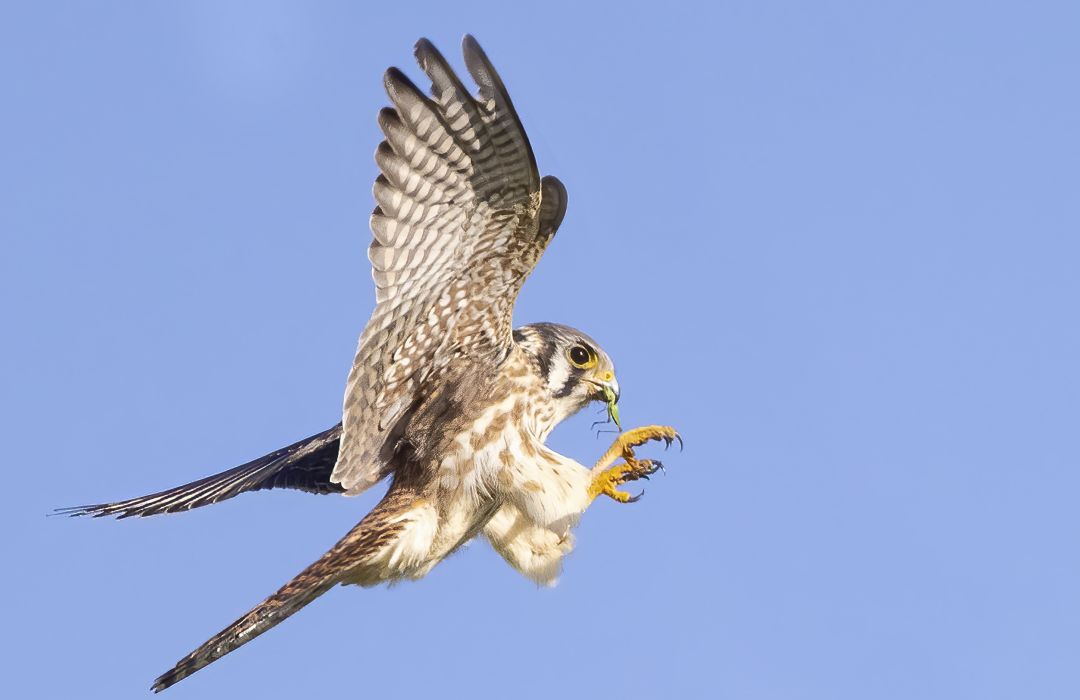
Image: Lou Newman
Don’t let its big eyes and diminutive size fool you. All you have to do is look at the American kestrel’s talons to realize it’s a bird of prey—the smallest, most common raptor in America, even though it’s only the size of a blue jay or mourning dove.
American kestrels—which the Florida Fish & Wildlife Commission have classified as a threatened species, making it especially gratifying to see one—are also known as grasshopper hawks due to their diet, which includes grasshoppers and other insects, lizards, mice and small birds. American kestrels that live in the Southeast are non-migratory and make their homes in open woodlands. In Sarasota, that includes the Celery Fields and Myakka River State Park.
Male American kestrels have blue-gray wings with black markings and white underbellies and flanks with black spots. Females are brownish-red and have buff-colored underbellies with brown streaks. When they mate, they form strong—often permanent—bonds.
Once you hear the American kestrel’s song, you won’t forget it. They have three basic calls: the “klee,” or “killy”; the whine; and the “chitter,” with the killy being the most well-known, occurring in a series of rapid tweets (“klee-klee-klee-klee”) when the bird is excited or upset, or when the male kestrel is performing its dramatic wooing ritual, which includes an elaborate series of ascents and dives.