


Oyster River Ecology Wants to Bring the Manatee River Back to Life

Image: Courtesy Photo
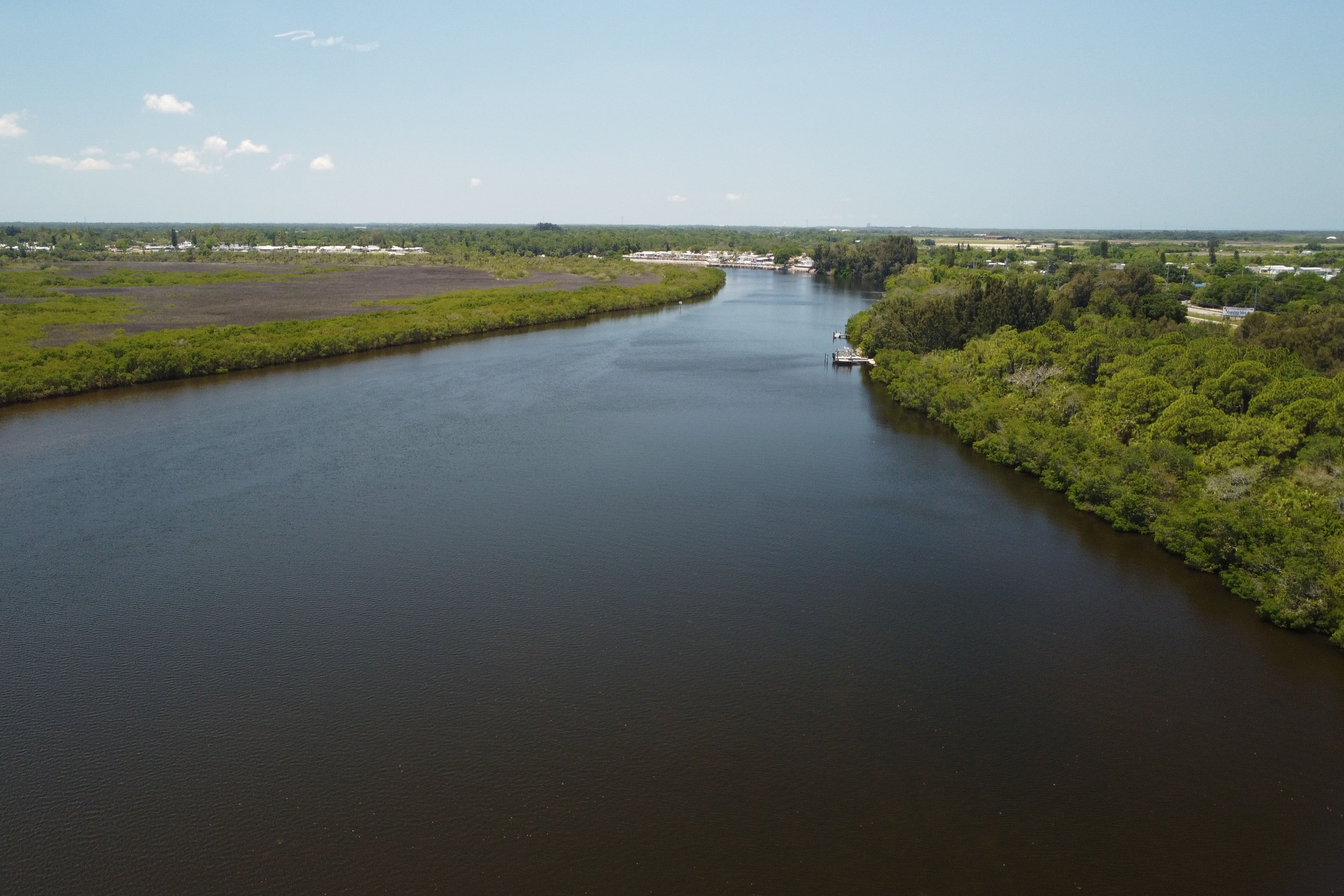
Three years ago, Oyster River Ecology (ORE) was still closer to idea than operation. Damon Moore, a habitat restoration practitioner with two decades of experience, had started the Manatee County nonprofit with seed support from the Charles & Margery Barancik Foundation, a volunteer board and a goal that sounded almost unreasonable in its ambition: restore oyster habitats in the Manatee River at a scale large enough to matter.
At the time, Moore described the work in sweeping terms. “We’re not aiming small,” he said in 2023.
He wasn’t kidding.

Image: Courtesy Photo
Today, Oyster River Ecology has a warehouse in Palmetto, a growing volunteer base, a small staff, more than an acre of restored oyster reef already installed in the Manatee River, and more than $750,000 in new funding and equipment investments to expand its work across the region. In June, the nonprofit announced new restoration projects at South Creek in Sarasota County and off Philippe Park in Safety Harbor, adding six acres of planned habitat to its existing 10-acre Manatee River initiative.
But before there was a warehouse, there was a driveway.
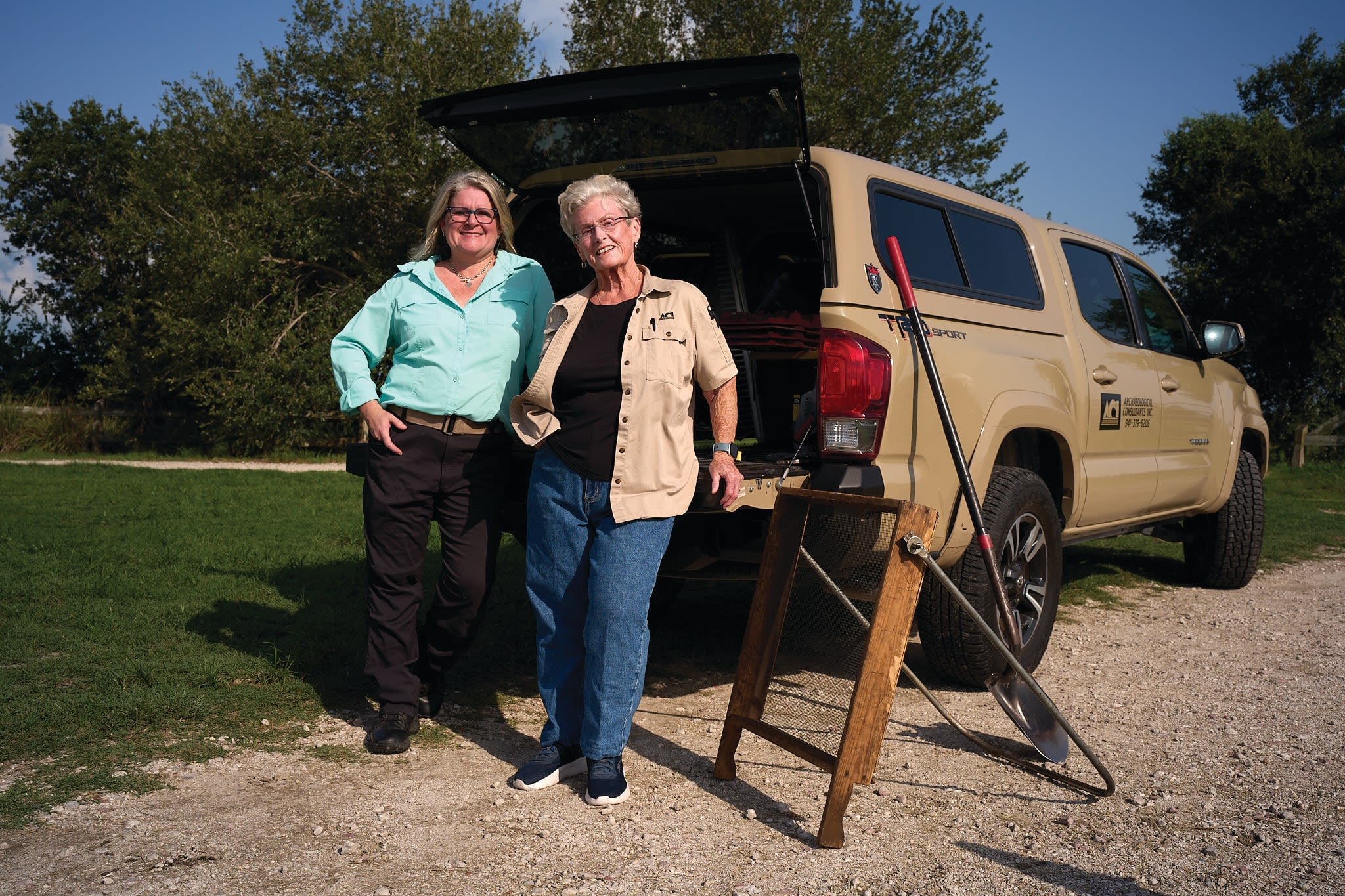
That’s where Moore says Abbey Kuhn, now ORE’s ecological projects coordinator, showed up when she began as an intern shortly after graduating from the University of South Florida with a degree in environmental science and policy.
“She had just graduated, and it was an awkward thing,” Moore recalls. “I told her, 'Okay, I’m going to do this thing with this nonprofit.' She asked, 'Where do I show up'? And I said, 'I’ll meet you at the end of my driveway and then we’ll go from there.'”
The scene says a lot about what ORE has become: a serious restoration group with a homemade origin story. Moore brought the permitting knowledge, restoration background and stubborn long view. Kuhn helped refine the hands-on method that allows the work to scale.
“We are two of the most stubborn people you’ll ever meet,” Moore says. “There have been setbacks, parts where we’re scratching our heads, but we just keep at it and figure things out.”
Their focus is oysters, but not the kind you order on ice. These oysters are workers. They filter water, remove plankton and sediment, trap nutrients and build living habitats for fish, crabs, shrimp and other marine life. A mature reef is part nursery, part filter, part neighborhood. It’s also a piece of local history that has nearly vanished from the Manatee River.
That history all starts well before the nonprofit. It reaches back through old maps, public records and newspaper references to make the case that the river was once defined by oysters. A 1793 Spanish account referred to the waterway as the “River of the Oysters.” An 1837 J. Lee Williams map labeled it “Oyster R.” An 1888 map identified about 132 acres of oyster reef in the Manatee River.
Current mapping by the Florida Fish and Wildlife Conservation Commission identified 4.65 acres. That’s a 96 percent loss.

Image: Courtesy Photo
The reasons aren't especially mysterious. Oysters were harvested for food. Oyster shells were used for road projects and construction. ORE’s research points to roughly 650,000 cubic yards of shell removed by the Bradenton Dredging and Shell Company between 1931 and 1962.
When that shell was removed, Moore says, the river didn’t just lose oysters. It lost the hard material oysters need in order to rebuild themselves.
“They removed the ability for oysters to naturally regenerate on top of each other, because they needed that hard substrate,” Moore says.
Other changes compounded the damage. Dredging near the mouth of the river allowed saltier water to move farther inland. Lake Manatee and other upstream water uses reduced freshwater flows. Oysters like a particular balance of salinity. Too much freshwater can be a problem; so can too much salt, because it brings more predators.
Moore and Kuhn have also spent a surprising amount of time thinking about snails.
“The two main [oyster] predators that we see around here are two snails,” Kuhn says. “There’s one called an oyster drill, and the other one’s called a crown conch.”
In saltier stretches of the river, those predators can keep oysters from reaching adulthood, especially on reefs that stay underwater. So ORE started looking for places where oysters were already growing well in today's current conditions. They found them east of I-75, attached to stray pieces of hard material—riprap, derelict crab traps, bits of rock and other scraps on the river bottom.
“Those oysters were so big and healthy and multi-generational,” Moore says. “We let our observations of what we were seeing out there guide our restoration strategy.”
That strategy is different from the City of Palmetto-backed oyster project, in which 380 reef balls were installed in 76 clusters east of the U.S. 41 Green Bridge as part of a five-year experiment to restore habitat and study water-quality benefits. That project showed how quickly marine life can begin to colonize new structures when oysters are given something to grow on.
ORE is chasing the same larger goal—more oysters, better habitat and cleaner water—but with a different method and a different scale in mind.
The organization’s first big permitted area in the Manatee River is a 10-acre site called Eileen Reef. The challenge was obvious almost immediately: restoring oyster habitat the traditional way costs a lot of money.
Moore knew that, though. Before founding ORE, he spent a decade in private-sector environmental consulting and 10 years with Manatee County Government’s Natural Resources Department, where he worked on projects including Perico Preserve and the Robinson Preserve expansion. He knows how restoration projects are designed, permitted and built. He also knows that if ORE had to rely on conventional materials, its dream of large-scale restoration might remain just that—a dream.
When ORE looked at placing limerock on the river bottom, Moore says an engineering estimate came back at about $635,600 per acre for a six-inch layer. For 10 acres, that would be more than $6 million. For the 100-plus acres ORE ultimately wants to restore, the number becomes almost impossible to imagine.
“Two people standing in their driveway weren’t going to pull that kind of money,” Moore says.
So they tested other options. Shells on spikes. Cinder blocks. Loose shell. Rock. Burlap treatments. Several versions of what became ORE’s signature tool: the Oyster Rag Pot.

Image: Courtesy Photo
The Oyster Rag Pot is exactly what it sounds like—and also more deliberate. Cotton rags are coated in cement and shaped into durable structures that provide surface area for oyster larvae to attach. The pots are heavy enough to stay in place, light enough to handle, broad enough not to sink into soft river bottom and simple enough that volunteers can help make them.
“We needed something cost effective and scalable," Moore says.
ORE has now installed just over one full acre of rag pots in the Manatee River—45,200 square feet, with about one rag pot per square foot. Kuhn says one-year-old rag pots ORE sampled averaged around 100 live oysters each. One oyster measured about five inches; the average length was about two and a half inches.
“That’s how we know it’s working,” Kuhn says.
But Moore doesn't claim more than the project can yet prove. One acre in a large river isn't enough to declare measurable water-quality change. That will take more acreage and more monitoring, likely with university partners.
Habitat value is easier to see.
“When we start, it’s sandy, muddy bottom with nothing,” Moore says. “After we’ve done this—especially [when we check on] the ones that have been there for a while—you go down there and there’s fish all over the place.”
That visible transformation is part of what makes the work powerful for volunteers. ORE’s restoration model is not just contractor-driven or lab-based. It’s meant to put people’s hands on the recovery of the river. Volunteers help make oyster rag pots. Students learn the history of the river and the pots, build materials and paddle out to see the work in the water.
Moore remembers a recent outing with Girls Inc., where some students had never been in a kayak before. They paddled about a half-mile to the site. Moore and Kuhn pulled up rag pots that had been underwater for about a year.
“There were oohs and ahs, because it’s one thing to see a picture [of the rag pots],” Moore says. “But when we pull them off the bottom [of the river] and there are gigantic oysters and the fish are jumping up and there’s crabs all over it, they just all start reacting.”
Then he tells them to remember where they are—that anytime they go over the bridge, they should look down and know that their hands had a part of what ORE is doing there.
ORE's latest funding should help it do more of that work. Recent awards include $244,842 from the Tampa Bay Environmental Restoration Fund, administered by the Tampa Bay Estuary Program, for projects in the Manatee River and Safety Harbor; $360,000 from the Barancik Foundation to advance work in Manatee and Sarasota counties; and a $50,000 donation from the Crosthwaite Memorial Fishing Tournament. A previous $108,000 grant from Impact100 SRQ helped ORE buy a heavy-duty work truck, cargo trailer and restoration work boat.

Image: Courtesy Photo
The equipment matters because oyster restoration at this scale isn't only an ecological challenge, it’s a logistics challenge. Rag pots have to be made, cured, moved, loaded, boated out to the site and installed. Right now, Moore says, everything moves from a small warehouse in Palmetto to a trailer, then onto a boat, then out to the river.
For ORE to reach its long-term goal of restoring more than 100 acres in the Manatee River, that setup will have to evolve.
“For us to do this at that scale, we basically need to be able to load a barge right off of the site when we’re making these [rag pots] and push them out,” Moore says. The goal is to get to the point where what ORE now installs in a month can be installed in a day. That's when 10 acres in a year and 100 acres in a decade starts to look possible.
That ambition has begun to attract attention beyond Manatee County. ORE says it has shared its oyster rag pot method with restoration groups, researchers and local governments, including groups outside Florida. Moore and Kuhn have demonstrated the technique for others interested in whether it could work in estuaries with similar problems.
Still, the Manatee River remains the center of the story. It took generations to strip away the oyster reefs, alter freshwater flows and lower expectations for what the river could be. Moore talks often about “shifting baselines”—the way each generation accepts a degraded environment as normal because it never saw what came before.
No one alive today, he says, has experienced the Manatee River with anything close to its historic oyster filtration.
This isn't a feel-good cleanup day. It’s an attempt to rebuild a missing system, one small cement-coated rag at a time, until a bare river bottom starts behaving like a reef again.
Click here to volunteer or learn more.