



What Sarasota County’s Conservation Questions—and Amendment 3—Could Mean for Remaining Open Land
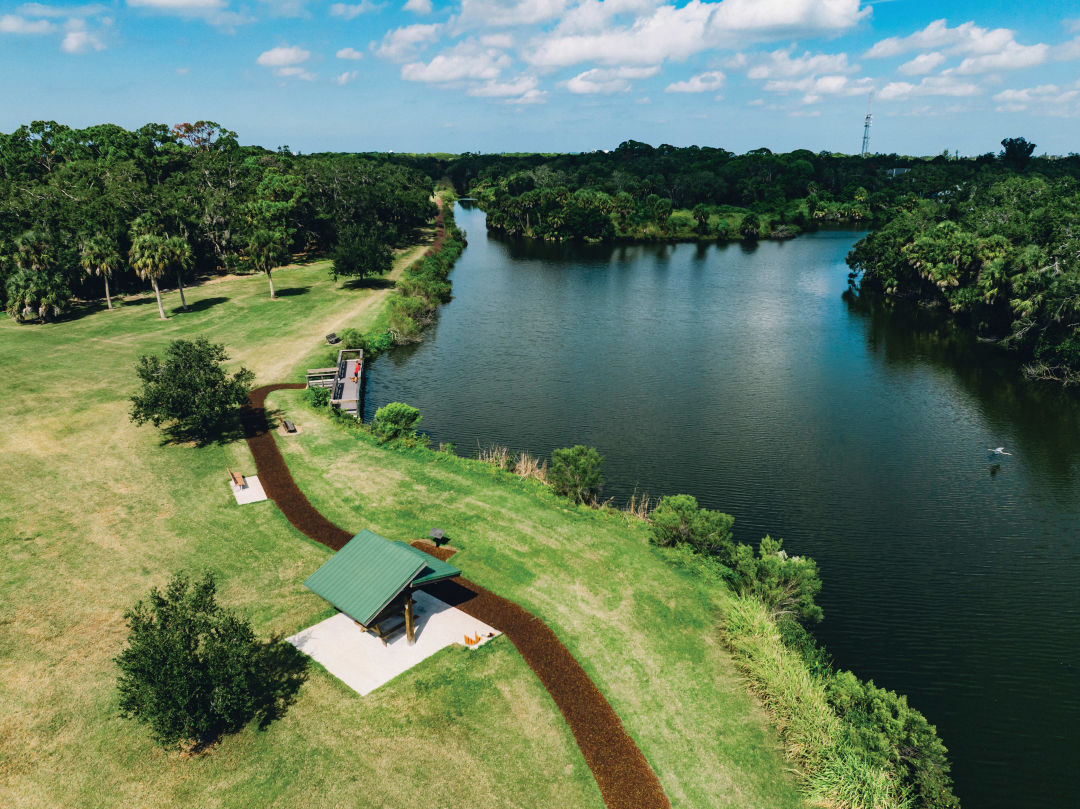
Image: Everett Dennison
Two things are true: Property-tax relief is easy to like. And undeveloped land is easy to take for granted—until it becomes a subdivision, wildlife habitat disappears and stormwater has fewer places to go.
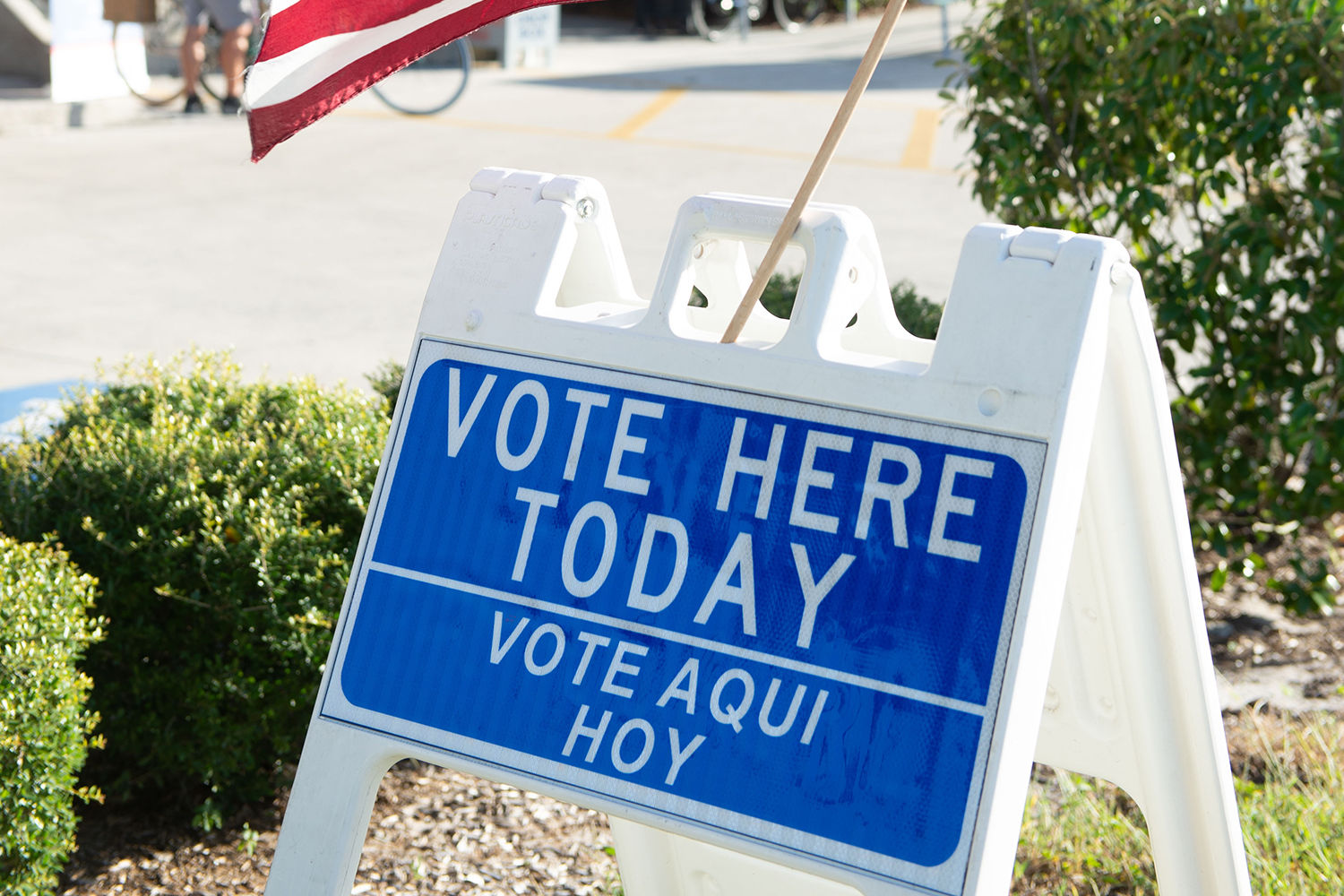
That tension will follow Sarasota County voters into the voting booth Nov. 3. Near the bottom of the ballot, they’ll encounter two county questions concerning a long-running program that buys environmentally sensitive land and parkland—one asks whether the program should continue and the other asks voters to approve how to pay for these purchases. The same ballot contains a third issue for voters to decide, this one on Amendment 3, a statewide measure that would lower non-school property taxes for many homesteaded homeowners.
The three ballot questions are separate. Amendment 3 wouldn’t cancel the county conservation measures or prohibit Sarasota County from preserving land. But if all three pass, the statewide amendment could reduce the property-tax revenue available for conservation—even as voters authorize the program to continue.
In plain English: Sarasota County could retain its conservation program but have less money to do it.
What the two county questions would do
The first county question asks voters to continue the Environmentally Sensitive Lands Protection Program and Neighborhood Parkland Acquisition Program through Dec. 31, 2049. The two programs are now administered under the county’s Land Acquisition and Management Program.
They’re supported by an existing property tax capped at 0.25 mill, or 25 cents for every $1,000 of taxable property value.
It isn’t a new tax or a proposed rate increase. Voters initially approved the environmental lands program in 1999 and reauthorized it in 2005, when neighborhood parkland was added. The current authorization runs through 2029, and the ballot question would extend it another 20 years.
The second question asks voters to extend the county’s authority to issue up to $250 million in additional bonds backed by revenue from that tax. Despite how it may read on the ballot, that borrowing mechanism isn’t new.
“This is a repeat of the 2005 referendum,” says Brie Ondercin, Sarasota County’s land acquisition coordinator for Parks, Recreation and Natural Resources. “Essentially, we’re extending the program by an additional 20 years.”
Approving the bond question wouldn’t require the county to borrow the full $250 million. It would give commissioners the option to borrow when a significant property becomes available rather than waiting for enough annual tax revenue to accumulate.
Christine Johnson, president of Big Waters Land Trust, describes the purpose more simply: “To quicken the pace of land conservation.”
In a county where development can move rapidly and a property may come up for sale only once, bonding can allow the county to secure land before its price rises or it’s developed. Future revenue from the conservation tax would repay the bonds over time.
The county says the programs have protected more than 42,000 acres through purchases and conservation easements. An easement allows land to remain privately owned while permanently removing its development rights.

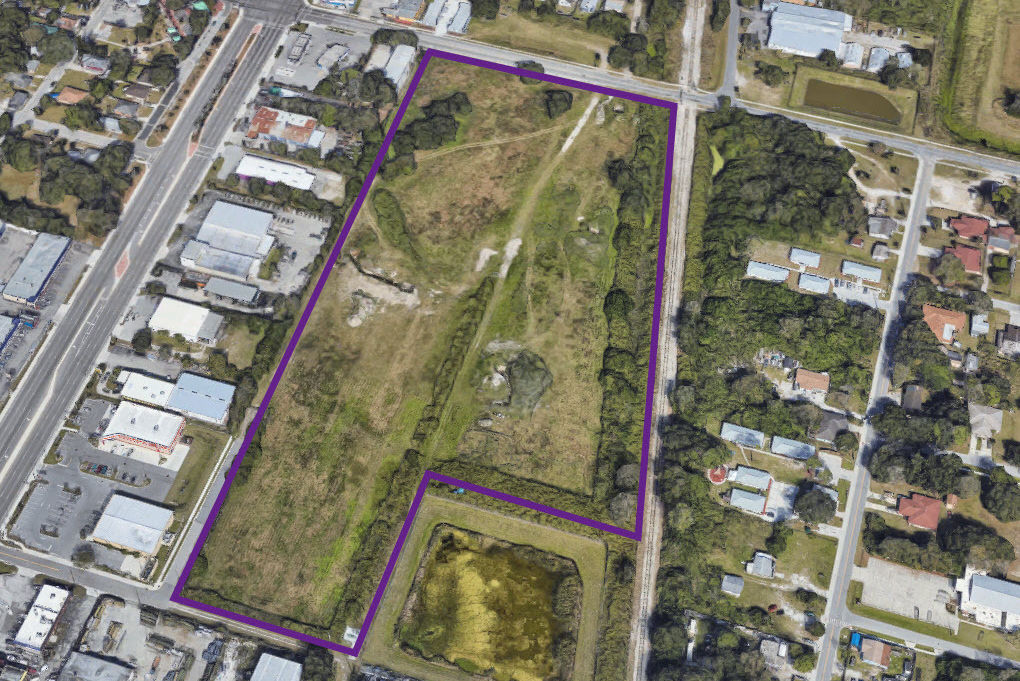
Among the projects now in progress is a proposed partnership with the state to protect more than 3,000 acres at Hawkins Ranch along State Road 72, east of Interstate 75. The Hawkins family would continue owning and operating the cattle ranch, while a conservation easement would prevent future development.
The county also has several smaller properties under contract, Ondercin says, including prospective additions to parks and greenways in North County, Nokomis, Englewood and near Phillippi and Shakett creeks.

Image: Sarasota County Government
If both county measures fail, the current program and tax wouldn’t disappear immediately. They remain authorized through 2029, and county officials could return to voters in 2028 with another referendum.
Land already purchased or covered by permanent conservation easements would remain protected. The longer-term questions would concern future acquisitions and the money available to manage existing preserves.
“We would not be able to continue purchasing properties as we have for the last 26 years,” Ondercin says of what would happen if the program ultimately expired. The county could still pursue grants and partnerships, she says, but acquisitions would have to be planned around other available funding.
If the program extension passes but the bond question fails, the county could continue collecting the dedicated tax through 2049 but wouldn’t receive the additional borrowing authority proposed on this ballot.
What private conservation can and can’t do
Sarasota County isn’t the only organization buying land to keep it undeveloped.
The Neighborhood Land Conservancy, formerly known as the Environmental Conservancy of North Port and Surrounding Areas, concentrates on small parcels within developed or developing neighborhoods. President and founder Barbara Lockhart says the nonprofit receives no city, county, state or federal money to purchase land. Its acquisitions are funded through public donations or properties donated by private owners.
Lockhart says the organization has acquired 60 parcels in nearly seven years and raised almost $500,000 to buy the ones that weren’t donated. It expects to close on a 61st parcel later this month, pushing the amount raised beyond $500,000.
That work preserves pockets of tree canopy and habitat within neighborhoods, but it also illustrates the limits of relying on private fundraising.
The county has millions of dollars available for properties of different sizes and prices, Lockhart says, giving it access to a far larger range of potential acquisitions. Her organization, by contrast, generally raises money for one property at a time.
“There’s only so many times we feel we can ask the public to contribute to our purchases,” she says. “We try to be sensitive to the public’s needs as well as nature’s needs.”
The comparison isn’t between effective and ineffective conservation. It’s one of scale. A private land trust may be able to preserve scattered neighborhood lots that don’t rise to the top of a county acquisition list. The county can pursue large ranches, wetlands, additions to public parks and more expensive properties that would be difficult to buy through small donations.
Lockhart says public support for her organization’s acquisitions shows that residents want natural land retained inside their neighborhoods—not only in large preserves far from their homes.
Her organization isn’t opposed to development, she says.
“We understand it’s a necessary thing, and we all live in homes too,” Lockhart says. “We just believe that we can have both natural areas and development coexisting in the same places. Why should nature have to move out or be scraped away just because people are moving in?”
Why undeveloped land matters
The argument for conservation isn’t solely about creating parks or saving beautiful scenery.
Wetlands, forests and ranchlands hold rainwater, slow runoff and filter pollutants before water reaches creeks, bays and water supplies. They also provide wildlife habitat and corridors between larger natural areas.
Johnson points to projects such as the Celery Fields and the restored wetlands at Bobby Jones Golf Club as examples of land doing more than one job: providing open space while retaining and filtering water.
“You can use the land not only for public open space and recreation, but also to hold water during the rainy season to prevent flooding,” she says.
Lockhart says conservation shouldn’t be limited only to the largest properties or the habitat types judged most exceptional.
“It is our opinion that every piece of land still existing in its natural state is sensitive and important, no matter what the habitat type,” she says. Different habitats and ecosystems depend upon one another, she adds, and each plays a role in the larger natural environment.
Conservation doesn’t halt development countywide. It does, however, permanently remove particular properties from the development pool—either through public ownership or by purchasing their development rights.
Ondercin calls the county program “the flip side of the development that we’re seeing,” preserving green space, wildlife corridors, trails and access to water as more land is built upon.
Where Amendment 3 enters the picture
Amendment 3 is a much broader statewide proposal. It would increase the homestead exemption for non-school property taxes to $150,000 in 2027 and $250,000 in 2028, with inflation adjustments afterward. It would also lower the annual assessment-increase cap on non-homestead properties from 10 percent to 5 percent and change how counties and municipalities may use property-tax revenue.
People who aren’t Florida residents by Dec. 31, 2026, would initially receive the existing homestead exemption and wouldn’t become eligible for the larger exemption until their fifth year.
For qualifying homeowners, the amendment could produce meaningful tax savings. School taxes would be excluded from the larger exemption.
But the same mechanism that lowers a homeowner’s bill—removing more assessed value from taxation—also reduces the tax base available to local governments and voter-approved programs.
That includes Sarasota County’s conservation levy.
If Amendment 3 passes, at the maximum 0.25-mill rate, every additional $100,000 exempted from taxation would mean as much as $25 less per year paid into the conservation program by a qualifying homesteaded property with sufficient taxable value. Once the exemption reaches $250,000 in 2028, the reduction could be as much as $50 annually compared with current rules. Actual savings would depend on a property’s assessed value, exemptions and the rate the county adopts.
Johnson says her research indicates that revenue flowing into the county’s environmental-lands and parkland programs would decline 15 percent in the amendment’s first year and another 13 percent in its second year—for a total reduction of roughly 25 percent.
The county hasn’t released its own estimate of the impact of Amendment 3 on the programs. The actual amount would depend on the number and taxable values of qualifying properties, future growth and the millage rate the county adopts.
Johnson’s broader concern is that, across thousands of properties, the smaller individual payments could add up to fewer dollars for land purchases.
“Less land’s going to get conserved, basically,” she says. “Fewer parks are going to be created. Fewer preserves are going to be created.”
That’s an assessment from a conservation advocate, not a guarantee of particular cuts. County commissioners will make future budget and tax-rate decisions, and the program can also receive grants and money from government and nonprofit partners.
Amendment 3 also wouldn’t make conservation an impermissible use of property taxes. Its language specifically lists natural resources and bond debt service among the allowable uses. The question is whether enough revenue would remain—not whether the county would be legally barred from spending it on conservation.
The effect on North Port also requires some nuance.
Lockhart says relatively little money from the county program has been spent within the city itself. Her organization wouldn’t directly lose acquisition funding under Amendment 3 because it doesn’t receive government money to buy land.
And the amendment isn’t the sole force behind the environmental pressures North Port already faces.
“Nothing is going to stop the development boom,” Lockhart says.
Regardless of the amendment’s outcome, she expects residents to continue seeing habitat loss, declining tree canopy and pressure on wildlife corridors as construction continues. If Amendment 3 leaves the county with less conservation revenue, however, she says residents would likely see the county acquire less land overall, shifting more of the responsibility to individual donors and private land trusts.
“The people have proven that they care by voting yes for the county’s program in years past and by donating to many private land trusts,” Lockhart says.
A voter could support both county conservation questions and Amendment 3. Those votes wouldn’t contradict or invalidate one another. But they would ask county government to continue preserving land while reducing one of the revenue sources available to do so.
For voters, the choice comes down to more than a contest between lower taxes and greener spaces. The outcome of these votes will determine whether Sarasota County keeps its established conservation framework and its ability to borrow against future collections. Amendment 3 helps determine how much property value will remain available to support that work—and many other local services—if it continues.