





A Sarasota Environmental Program Has Saved Miles of Open Space From Bulldozers
Seventy-nine years ago, my grandfather bought a 275-acre dairy farm in Nokomis for $12,500 (about $180,000 in current dollars). He ran the farm for 15 years, then started selling the land for house lots. He never had to work again. He belonged to the lucky generation of Florida landowners who turned their cattle pastures into retirement funds.
By the time my grandparents died, in 1982, the farm had shrunk to 43 acres. They passed it to my father and his three siblings. Back then, Edmondson Road—named after my family—was lined with small cinder block houses and single-wide trailers on the lots Grandpa had sold, until you reached my family’s farmhouse. Then it became a dead-end path paved with crushed shells that cut through more open land.
This land was Florida to me and my three siblings. It was our refuge.
One-third of our family’s ranch was a wetland that still drains into Curry Creek and is dotted with orchids and other subtropical rarities. Longleaf pines, live oaks and sabal palms provided shade, and behind the wetland we watched for gopher tortoises, scrub jays and signs of bobcats.
I used to walk down our shell path with my grandmother, who moved here in 1920, because it reminded her of the old days. We’d watch the longleaf pines shimmering in the heat and imagine that we could keep going east for 120 miles, all the way to Lake Okeechobee, without seeing many people.

Image: Courtesy Photo

Image: Courtesy Photos
But by the 1980s, we also knew what was coming. All local natives did.
Today, the western half of Sarasota County, between I-75 and the beaches, seems like a wall-to-wall carpet of houses, businesses and parking lots. The hammocks, prairies and marshes that once dominated the landscape are vanishing. But Southwest Florida still has large tracts of open land, and it is critically important that they remain undisturbed.
The reasons go far beyond scenery and wildlife. Natural areas generate drinkable water, swimmable beaches and fresh, plentiful seafood. Hurricanes and droughts are facts of life here, making it essential to preserve large undeveloped tracts of land to store rainwater and buffer storm surges. If stormwater cannot slowly percolate into open land, it will quickly flood someone’s living room.
These are a few of the reasons why, after decades of effort, 34 percent of Sarasota County’s land has been set aside for conservation. Most of the protected land anchors the 130,000-acre “Myakka Island,” a term for a web of mostly natural lands in the river’s watershed surrounded by suburbs, intensive agriculture and phosphate mines. But there are also dozens of smaller parks and natural areas in every corner of the county, with more added every year, thanks to Sarasota County voters, activists and environmental programs.
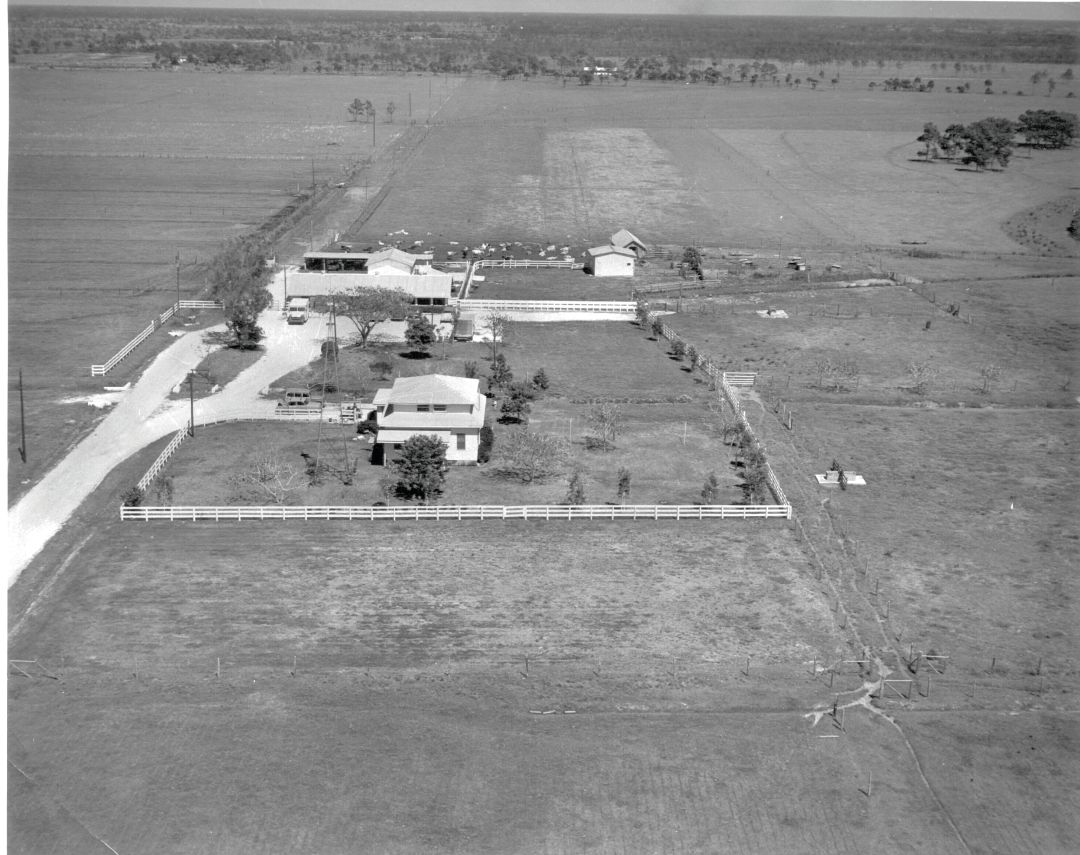
Image: Courtesy Photo
Sarasota didn’t get serious about protecting its open space until much of it was lost, and the struggle to save the county’s critical natural areas from development is far from over. But close to 26 years ago, the county created a voter-approved program, the Environmentally Sensitive Lands Protection Program (ESLPP), to protect land. The ESLPP and similar programs have since protected almost 77,000 acres through land purchases or conservation easements.
The ESLPP closed its first land deal in November 2000, and its 100th deal, Camp Venice Retreat on the Myakka River, last October. Its properties, combined with other lands protected by the state and private groups, protect miles of Sarasota County from most forms of development. It’s supported by a powerful coalition of activists, ranchers, hunters, scientists and county officials.
Jon Thaxton, environmental activist, former Sarasota County Commissioner and director of policy and advocacy at Gulf Coast Community Foundation, recently looked at a county map and counted acreage that is developed, approved for development, and legally protected from development. He estimates that only about 10 percent of Sarasota County does not fall into those three categories. “We’re in a race to save what’s left,” he says.
Thaxton, 68, grew up on a farm a few miles north of Edmondson Road. He likes to show a picture of his grandmother in 1913, when she was a toddler. She’s posing in front of a cow pasture. The photo was taken on Sarasota’s East Avenue, one block from the intersection of Main Street and U.S. 301. It’s named East Avenue because it once marked the eastern edge of town. “My family has been watching the boundary of urban development move east for 114 years,” Thaxton says.
The defenders of Sarasota County’s open spaces have often felt like they are throwing trash cans at Godzilla. Local elected officials used to say there was no need to control development pressure because there was so much open land. Back in the 1980s, “the county commissioners promised to keep the cities separated by ranchlands,” Thaxton says. “But a few years later, different commissioners broke that promise. Then they promised that the interstate would be the eastern boundary of development, forever. They broke that promise, too. It went on and on. And with each broken promise came more traffic, more flooding, and more loss of open space and wildlife.”
Sarasota County’s population tripled between 1970 and 2000, reaching 325,000 people (it is approaching 500,000 now). Voters kept asking local officials to preserve open space, but nothing much happened. Construction drove Florida’s economy, and politicians argued—without proof—that attracting new residents and businesses kept taxes low.
Any proposal to increase taxes will be a tough sell in Sarasota. But birds, fish and sunsets have always been popular here, too.
“The top three reasons people come to Sarasota are the beaches, the bays and the fresh air,” says environmental consultant Rob Patten, who started the county’s Natural Resources Department in the mid-1980s. “They can be conservative, liberal, Republican, Democrat or Libertarian. It doesn't really matter. They come with that ethos.”
One of the first major actions to save land in Sarasota County happened in 1968, when Save Our Bays Association (SOBA) launched a fierce grassroots campaign that stopped a proposed dredge-and-fill coastal development by the Arvida Corporation on South Lido Key. The company wanted to build a high-density development, similar to the one it had done on Bird Key. Activists overwhelmed the city commission, packing meetings with up to 1,500 angry people who forced officials to deny the permit. SOBA went on to lead the campaign that persuaded voters to buy the property, along with Venice’s Caspersen Beach, in 1973. The Lido property is now named Ted Sperling Nature Park for the activist and city commissioner who led the campaign.
Another referendum in 1982 allowed the county to protect a large ranch east of Venice—again led by an elected official. The 32,000-acre tract was named for T. Mabry Carlton, the rancher-turned-county commissioner who spearheaded its preservation.
Almost a decade later, in 1990, after intense public pressure, Florida’s state government finally got serious about protecting open space, and the legislature allocated $3 billion over a 10-year period in a program called Preservation 2000 to buy land. It was seen as a major step to protect Florida’s open land from development.

Image: Everett Dennison
The impetus behind these protection efforts was the shift in public attitude toward open space. Social change happens slowly, often as one generation replaces another. As the huge, well-educated baby boom cohort began moving into middle age in the 1980s, they also began moving outdoors. The number of Americans who enjoy hiking and bird-watching more than doubled between 1983 and 1994, according to a national survey that also found a rapid increase in active outdoor activities like paddling, lake swimming and other forms of “passive recreation.” The increase in demand happened here, too. In 1986, Sarasota voters passed a bond act that bought five small parks at Phillippi Creek, Lemon Bay, Blind Pass, Shamrock and Woodmere.
Still, the 37,000-acre Myakka State Park and Carlton Reserve, on its southern border, were the only places in the county big enough to protect drinking water, store runoff from big storms and provide secure homes for wildlife. But Carlton Reserve was managed as a drinking-water source by the county’s Department of Natural Resources, which pays careful attention to our water supply but does not offer much in the way of trails, canoe launches or other things for nature-lovers to use. So even though the public owned the land, the county kept it behind locked gates. “That made no sense,” says John McCarthy, who worked for the county’s parks department in the 1980s. “How can you get voters to buy land they can’t visit?”
Finally, after 14 years, in 1996, Sarasota County opened trails and other public facilities at Carlton. The public responded with enthusiasm. “That was the turning point,” says McCarthy, who co-managed the facility for the parks department along with my sister-in-law, Nancy Edmondson. “They realized they started getting votes for open space protection when they let people visit
the land.”
But funding for open space remained an issue. The county needed a dedicated local funding source that would improve its ability to attract state and federal funds. After years of study and lobbying, Sarasota’s voters finally got their chance in November 1999.
More than two-thirds of county voters voted yes on a referendum that levied a small property tax increase ($25 per $100,000 of assessed value) to purchase open space. They also approved $53 million in bonds so that properties could be purchased quickly and paid off like a mortgage. Finally, a decade after the state’s $3 billion Preservation 2000 program passed, the county had the Environmentally Sensitive Lands Protection Program (ESLPP), a dedicated source of funds for land protection.
Patten, who headed up the pro-referendum group, didn’t recall much controversy. “We had to be ready for attacks, but none ever came,” he says. “Putting it on the ballot was smart because voters agreed to tax themselves. We made sure they knew exactly what they would get, and what it would cost.”
A common argument against land protection is that it takes property off the tax rolls. But most of the original 18 ESLPP sites in Sarasota were zoned agricultural, so taking them off the tax rolls would have cut the county’s property taxes by less than 1 percent. Several other studies show that preventing residential sprawl often reduces local taxes by limiting the demand for public services, and that parks offering passive recreation attract loads of tourist dollars.
Longtime environmental advocate Jono Miller has served on the ESLPP’s advisory committee since it was set up in 1992. He says that the program succeeds because every decision is vetted and voted on in meetings that are open to the public. The panel rates sites according to their potential to protect water quality, rare species, overall ecological health and whether they are connected to other preserves.
Most of the sites that rate highest are in sparsely populated areas east of the interstate. But Miller says that the advisory panel kept hearing about smaller places in settled areas that didn’t meet their criteria but were desirable as neighborhood parks. The county went back to the voters in 2006 for more funds, along with a proposal to create a separate panel that would choose parcels for more intensive use. That measure passed with 70 percent of the vote and released another $250 million in bonds.
Sarasota’s land acquisition funds are back in the news this year because the program will expire in 2029 unless voters extend it in November. Activists are preparing a campaign to pass a ballot measure in November that will extend the program’s funding to 2049 (see “Will It Continue?”on page 57). If the measure fails, more land that could be saved will be vulnerable to development.
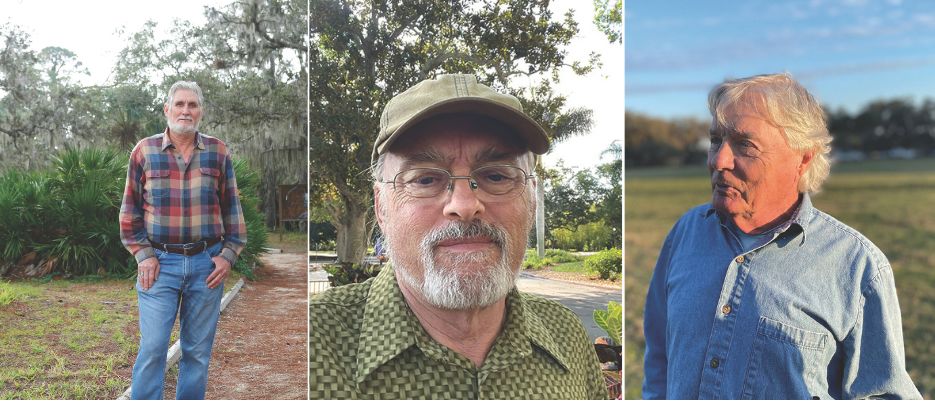
Image: Courtesy Photos
By the time Sarasota County launched the ESLPP program, land conservation had become a well-funded international movement. Environmental activists, real estate brokers, financiers and public officials learned how to work together to buy land and development rights on a large scale. And not just in Sarasota or Florida at large, either. The number of acres protected by local and regional land trusts in the United States increased from 1.9 million in 1990 to 6.2 million in 2000. Today that total stands at 61 million acres and is growing, underscoring its popularity, even as President Trump continues to dismantle environmental protection groups.
Land protection coalitions depend on private contractors who act as “acquisition agents.” They quickly negotiate purchases of land, or the development rights to land, on behalf of slower-moving public agencies. For example, The Nature Conservancy and the Trust for Public Land helped to acquire 57 of Sarasota’s ESLPP land deals.
In 2000, state legislators put land protection into the annual budget process when they replaced Preservation 2000 with a permanent fund called Florida Forever. Today the Southwest Florida Water Management District (SWFWMD) and Sarasota County jointly own 12,000 acres, as well as three conservation easements, that extinguish the development rights to almost 14,000 more acres of privately owned land. In other words, one-third of the county’s 77,000 protected acres were financed partly with state money.
But the movement’s most important players are individuals, who run the gamut from the fuzziest tree-huggers to the flintiest cowboys, and the grassroots groups organized to protect beloved places. In 2000, almost 1,300 local and regional land trusts were active across the country. The Sarasota Conservation Foundation, renamed Big Waters Land Trust, has helped with 25 ESLPP deals and has protected 20,000 acres since it was established in 2003.
Sarasota pediatricians Mary and Alan Jelks co-founded Friends of the Myakka River in 1993. That group now has about 600 people on its email list. The Jelkses also donated $1 million to purchase a 614-acre preserve along the river in Venice. At the dedication ceremony in 2002, Mary said that she hoped visitors would begin to think, “Hey, nature’s still here, it’s still an intact world. Everything’s not gone to pieces. We’ve still got some beautiful places, thank goodness.”
Another powerful stakeholder group, Friends of the Legacy Trail, emerged in 2008 with the opening of the Legacy Trail, a 23.2-mile linear park running north-south through the county along an abandoned railbed. At last count, the trail got about 650,000 users a year. And ManaSota 88, which has been a local environmental watchdog since 1968, now monitors conditions on private land constrained by conservation easements, which prevent development. “Just because there’s an agreement doesn’t mean it’s being followed,” says its director Glenn Compton.
Some of those easements are on land owned by conservation-minded ranchers who belong to the Florida Conservation Group. The ranchers also work with wildlife biologists at Conservation Florida who map and monitor wildlife corridors. That can be a touchy subject, because wildlife corridors and biodiversity hotspots often run through private property. “Ranchers would see these maps and freak out,” Miller says. “But the county program is for willing sellers only. If there’s no interest, or any complications, the county backs out.” So far, the urgency of continued population growth has kept all the groups roughly pointed in the same direction: to save open space.
Miller says that his most important goal as an activist is changing how people think about nature and the land. “Environmental activists are often characterized as being against progress and having a negative mindset,” he says. “But actually, they are the most optimistic people I know. Activists are people who believe that things can get better through concerted action.”
But all of these things take time.

Image: Courtesy Photo
My family knows that firsthand. We watched with dismay as Sarasota’s open spaces were chewed up. It got personal in the early 1990s, when the county announced plans to build a four-lane road that would bisect our land. We tried everything we could to stop it, but nothing seemed to work. We had already said goodbye to so much of Florida. Now we were losing our land, too.
Then we got lucky. An archaeologist dug into the proposed roadbed and found pottery shards from a Woodland Indian encampment. Further digging uncovered a piece of a child’s skull bone, about as big as a grown-up’s thumbnail. Chapter 872 of the Florida Statutes says that whenever an unmarked grave is discovered, “all activity […] shall cease immediately.”
The skull fragment kept the road builders away, but it didn’t save our land. My grandfather left the property in shares to his four children as Edmondson Farms, Incorporated. Decades later, after his children had died, ownership passed to cousins and widows, my family among them, which included my mother, me and three siblings. We owned a one-quarter undivided interest. We were also the only family that lived near the farm. As the land’s value increased and offers from developers piled up, my extended family waited with growing impatience to turn their hard asset into cash.
My mother, siblings and I did not want to sell. In 2018, we suggested to the other shareholders that we offer the farm for ESLPP’s consideration. When the cousins learned that they might get market value for the land while also preserving it in its natural state, it bought us time. Sarasota County finally acquired three-quarters of the farm through the ESLPP program in 2023.
Among the dozens of dots of open space in Sarasota, the one that means the most to the Edmondsons is the adjacent 112-acre Curry Creek Preserve in east Nokomis. My extended family got the fair deal they had waited for, and my own family held on to a few acres. Today, my siblings and I still have enough land to graze some stock, but more important, we also have gopher tortoises as neighbors and swallow-tailed kites darting through our sky at dusk. My late father and brother always dreamed of turning the land into a nature park that would be open to the public. It’s nice to know that their wish came true, and that Sarasota will protect places like ours as long as its voters insist on it.
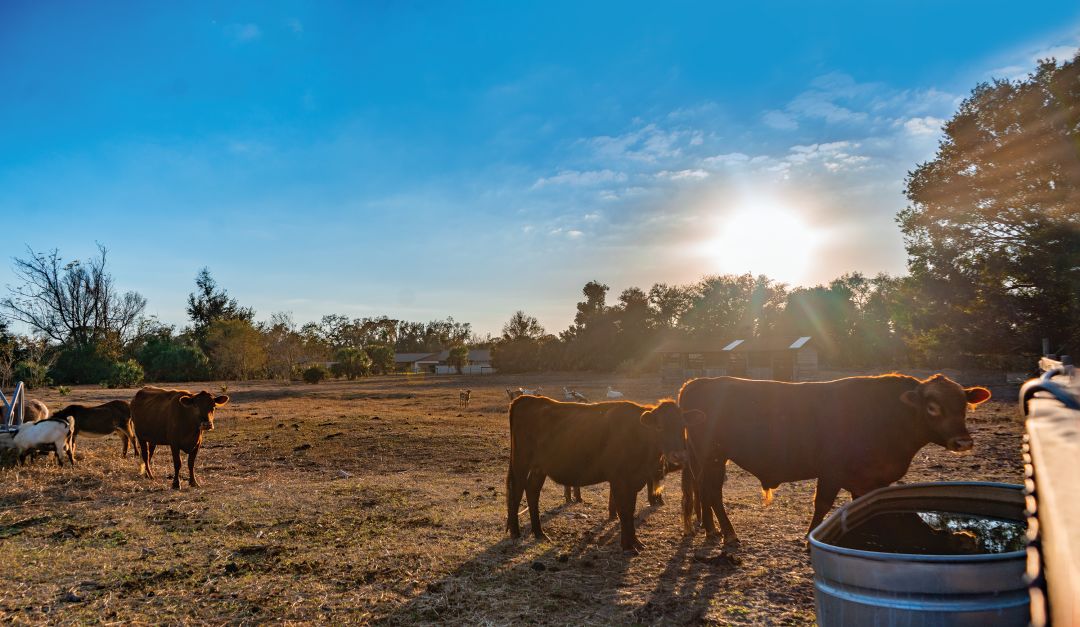
Image: Nicole Moriarity
Will It Continue?
The program that has saved open land in Sarasota expires in 2029.
The current Environmentally Sensitive Lands Protection Program (ESLPP) program is authorized only until 2029 and needs to be approved by Sarasota County voters to continue. In 2005, voters approved the program with an overwhelming 80 percent, but will this support continue? The county’s bonding ability for this program will also be on November’s ballot, asking voters to allow up to $250 million in bond capacity. Sarasota County commissioners need to approve putting both referendums on the November ballot. The referendum language was not available at press time but should be approved by the county commission in April 2026.
A group of Sarasota citizens and organizations have formed a public advocacy committee to promote the passage of the upcoming ballot initiative to extend the ESLPP program for 20 more years, or until 2049. The committee, SARASOTA FOREVER, is co-chaired by Lisa Carlton (rancher and former State Senator) and environmental consultant Rob Patten (former director of the Sarasota County Environmental Services). Committee members will be available to speak and meet with interested groups to explain the program and answer questions.