



The Resource Factory Creates Million-Dollar, Glass-Fiber Sculptures for Major Multinational Corporations
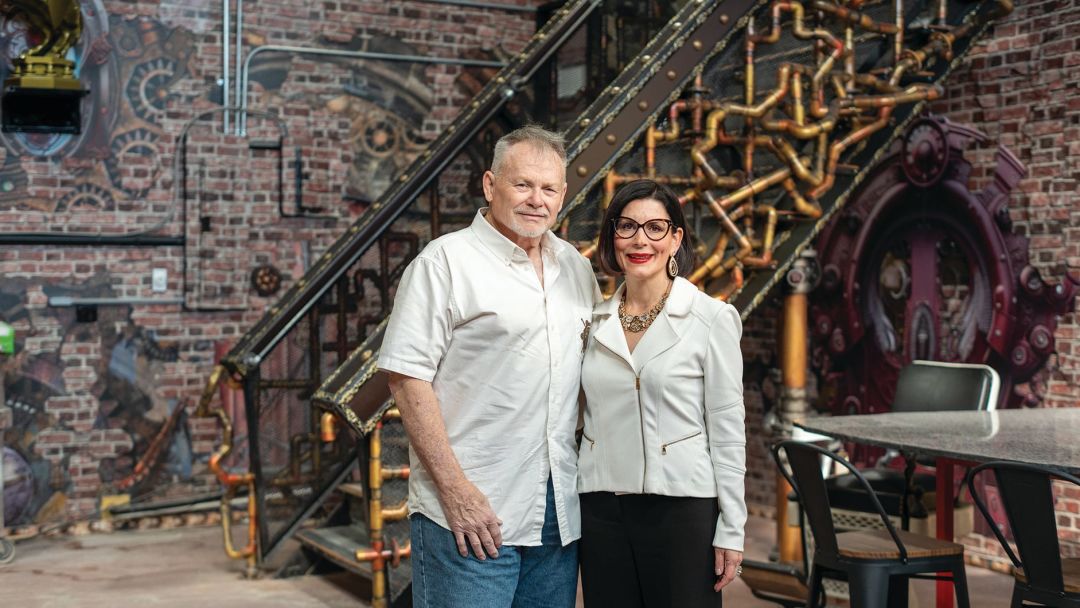
Image: Nicole Moriarity
In a 12,000-square-foot warehouse in Sarasota’s Limelight District, Scott Hamblin’s The Resource Factory produces fiberglass sculptures for international businesses like Nickelodeon, Disney, Universal Studios, Nintendo and more.
Hamblin, a Ringling College alum, began his career painting signs in 1980. After graduation, “I’d go to the college’s job board daily, sometimes two or three times a day,” he recalls. “People would call in [with work] and the Ringling secretary would post them on 5-by-7-inch index cards. I would grab them as they came up.” His first job was painting plywood signs for the laundromat across the street. As his portfolio and reputation expanded, he began working with real estate developers on painted sign work, then transitioned to creating sandblasted wood signs.
But his life changed when an acquaintance told him that Six Flags was opening a children’s theme park in Atlanta. “Somebody said, ‘Have you ever called them?’” Hamblin recalls. “The art director picked up the phone and asked me if I could sculpt a Tasmanian Devil, Bugs Bunny and Daffy Duck [out of foam]. I said, ‘Absolutely,’ even though I’d never attempted anything like that before. I turned to another Ringling graduate, who was familiar with sculpting [licensed] characters, and we completed the project. We were so successful that the art director awarded us another 10 Warner Bros. sculptures.” Hamblin and his team worked with Six Flags and Warner Bros. for a decade, installing sculptures all over the world and building their client roster. Now 69, Hamblin co-owns The Resource Factory with his wife, Shannon, and employs a 15-person team.

Image: Nicole Moriarity
The Space
The Resource Factory’s Limelight District facility is split into two sections: one is used for prepping, fiberglassing and finishing sculptures; the other is for painting.
Moving Pieces
“I could have 15 or 16 jobs going at any given time, and each of those jobs has a handful of elements,” Hamblin says. “There’s a lot of artwork coming through.”
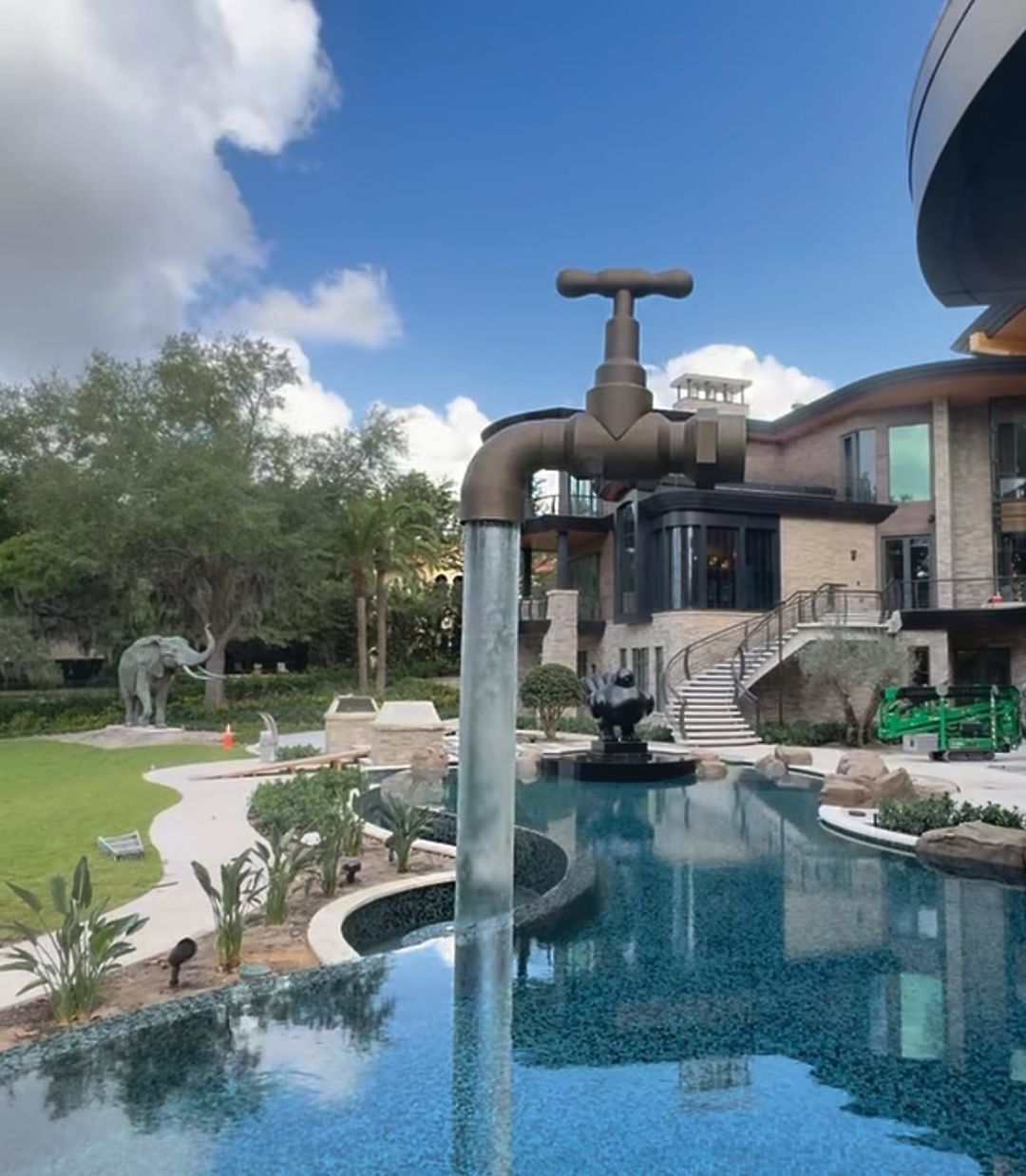
Image: Courtesy Photo
Sizing It Up
Some of The Resource Factory’s sculptures are small enough to hold in your hand; some of them are as big as 35 feet long, 25 feet wide and 25 feet tall.
Nintendo Power
The Resource Factory just wrapped up a seven-year contract with The Nassal Company, in which they shipped hundreds of Nintendo sculptures to Tokyo, Hollywood and Orlando. They’re about to start another contract with The Nassal Company for a fourth Nintendo project in Singapore.
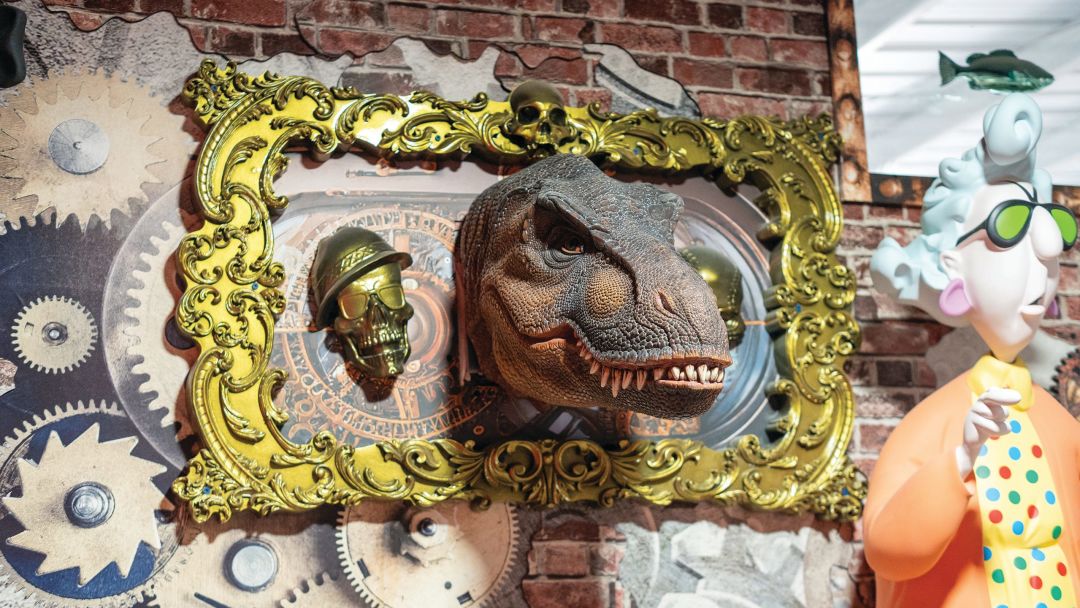
Image: Nicole Moriarity
Sculpture 101
The Resource Factory sculpts many of its pieces by hand. “I have a genius sculptor on staff named Tan who’s worked with me for more than 25 years,” Hamblin says. “There’s nothing he can’t sculpt.” The company also uses computer-controlled machinery and printers as needed—”it all depends on the project,” Hamblin says. “There are times when we use a combination of methods. Whatever it takes.”
Foam and Fiberglass
There are two types of foam used for creating sculptures: EPS, used to make products such as coffee cups, and HDU, a urethane foam, which is denser and harder. After a piece has been sculpted from the foam, it’s encased in several layers of fiberglass, making it nearly indestructible, so it hardens, then sanded to to the appropriate finish—a process that takes “hours and hours,” Hamblin says.
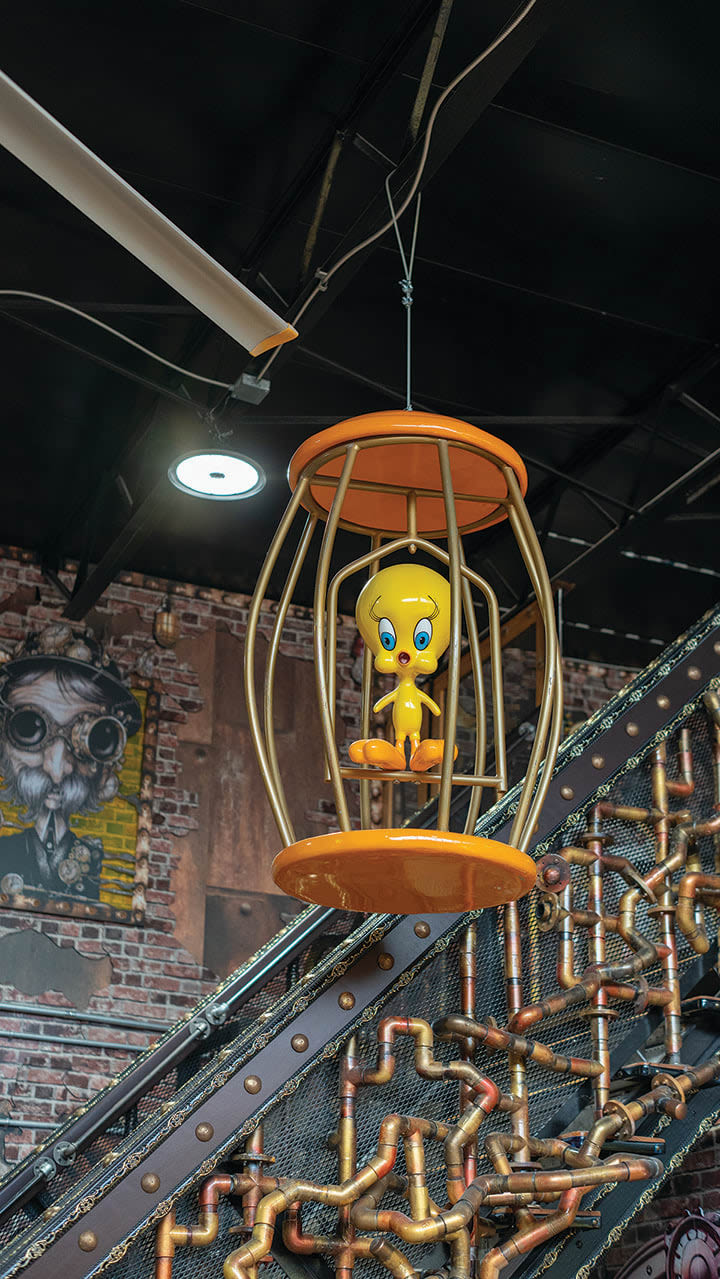
Image: Nicole Moriarity
$5,000-$1 Million-Plus
The Resource Factory’s projects vary in terms of size, scope and cost. “You never know what the next call is going to request,” Hamblin says.
Up to 50
Number of colors of paint on the characters The Resource Factory made for Nickelodeon. The company uses latex, acrylic and automotive paint for its sculptures, which are finished with a flat, satin or high-gloss automotive urethane clear coat finish for protection.

Image: Courtesy Photo
Not Just Cartooning
The Resource Factory also creates pieces for hotels and universities—like
the USF bull outside each campus, or this mangrove sculpture recently installed at the Omni Fort Lauderdale Hotel, which took eight months to finish and comprised 2,000 fiberglass, feather-shaped leaves hanging from steel pipe.