




Sarasota Rescue Dog Trains to Protect Endangered Sea Turtle Nests in Texas

Image: Courtesy Photo
In late October, an 8-month-old shepherd-lab mix arrived at Satchel’s Last Resort in Sarasota with little backstory and loads of energy.
She had been picked up as a stray and transferred from Animal Services. No one knew how long she had been on her own. What they quickly discovered was this: she wasn't going to be anyone’s couch dog.
“She wasn’t a dog that wanted to be somebody’s couch potato,” says Michal Anne Vander Woude, executive director of Satchel’s. “She was young and active and she needed a job to focus on.” At the shelter, they called her Swoosh—like the Nike logo—because she moved in arcs and bursts; fast and determined.
Today, Swoosh has a new name, Magpie, and a job description that reads like something out of a conservation thriller: scent detection specialist, assigned to help protect one of the most endangered sea turtle populations in the world.
Her assignment is part of Project D.U.N.E., a new initiative by Sea Turtle Inc., a 48-year-old nonprofit based on South Padre Island, Texas. The concept is simple in theory and radical in practice—train a rescue dog to locate the scent left behind when a sea turtle lays her eggs, so conservationists can find and protect nests before predators, vehicles or beach traffic destroy them.
“We actually came up with the idea of Project D.U.N.E. and had pitched it to a number of sponsors,” says Wendy Knight, chief executive officer of Sea Turtle Inc. “We’re a small nonprofit, and this was an idea that we needed somebody to help us with.”
Funding came through Tito’s Vodka’s charitable arm, Tito’s for Dogs, which supports rescue-focused initiatives. When the grant was approved, the sponsor asked whether Sea Turtle Inc. would consider working with one of the shelters it already funded in Sarasota. Satchel’s was on the list.
“I reached out to a handful of them and just clicked with the people at Satchel’s right away,” Knight says. “It just felt like the absolute right fit and right people that were trying to do what we’re trying to do.”
Satchel’s, a no-kill sanctuary known for taking in dogs and cats with behavioral or medical challenges, specializes in second chances. When independent scent-work trainer Pepe Peruyero arrived in Sarasota to evaluate potential candidates, he came with specific criteria: high energy, relentless focus and strong motivation for food or toys.
“He said he liked the dogs that would come in as relatively unruly, just really high energy,” Vander Woude says. Magpie fit the description. “She definitely didn’t have manners,” Vander Woude says. “But she was very eager to learn.”

Image: Courtesy Photo
At about 10 months old, Magpie was social, driven and, in Vander Woude’s words, “a play group rock star.” What she lacked in polish, she made up for in stamina. There is a term at Satchel’s for dogs like her: a “boomerang dog”—adopted quickly because they’re sweet and beautiful, then returned when their intensity overwhelms an unprepared household. “She was a dog that would have required somebody to put a lot of effort into training her,” Vander Woude says.
Instead of bouncing back through the adoption system, Magpie was given structure. Through Satchel’s Wolf Pack volunteer mentorship program, one volunteer worked with her daily, tackling obedience, leash skills and public exposure while she waited for formal training to begin. She attended group classes. She learned to channel her exuberance.
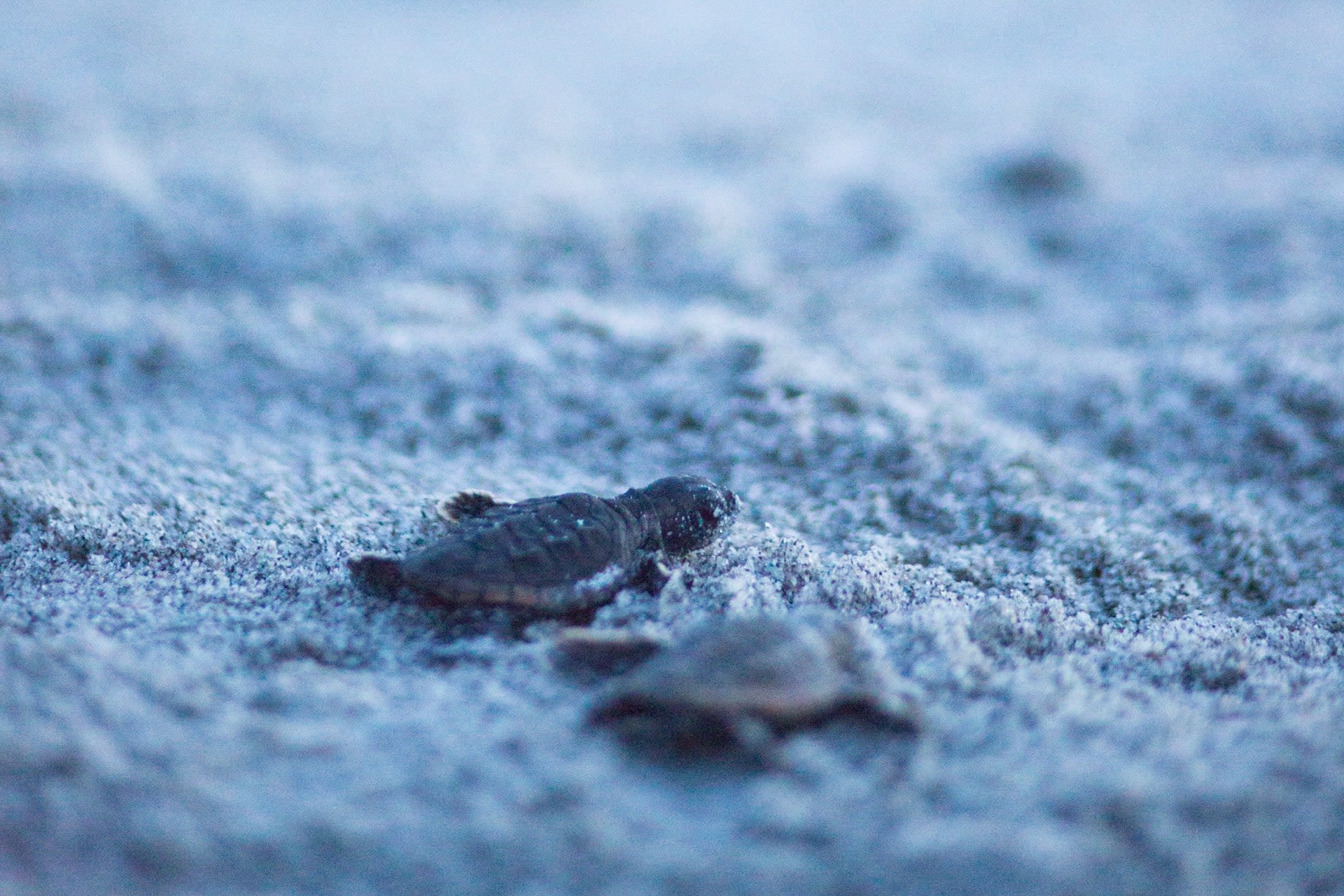
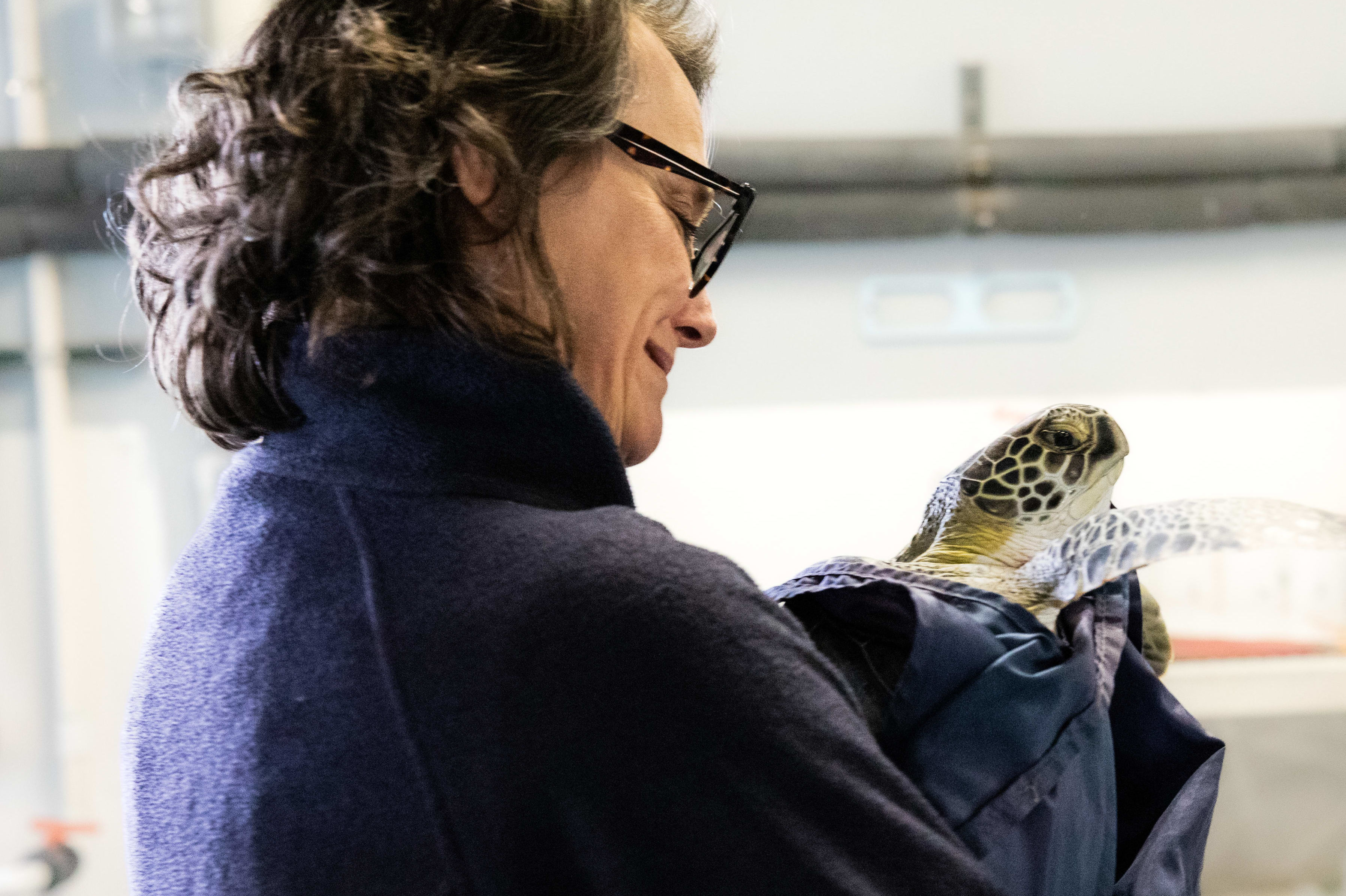
Then the real work started. Magpie's training focuses on a scent most people have never heard of: the cloacal mucus left behind when a female sea turtle lays her eggs. On South Padre Island, where Sea Turtle Inc. operates, that scent could make the difference between turtles' survival and loss. The island is a critical nesting site for the Kemp’s ridley sea turtle, the most critically endangered sea turtle species in the world. The majority of Kemp’s ridley nesting occurs in Mexico; the Texas coast represents one of the species’ most important U.S. strongholds.

Image: Courtesy Photo
“In order for us to protect the eggs of a nesting sea turtle, we need to know where she laid them,” Knight says.
That sounds straightforward until you consider what it means in practice. Conservation teams patrol miles of shoreline at dawn, scanning for subtle crawl marks in sand. Wind erases evidence. Waves flatten tracks. It can take hours to trace a single turtle’s path. Time matters. The faster a nest is located, the faster it can be protected. On South Padre Island, nests are moved into fenced corrals to shield them from predators, cars and beachgoers until the eggs hatch.
“Magpie being trained on the scent will give us the opportunity to find the nest much quicker so we can protect it, as opposed to [putting in] hours and hours of manual and people time.”

Image: Courtesy Photo
Over the past decade, Sea Turtle Inc. has protected more than 1,500 nests and more than 80,000 eggs on South Padre Island. On average, about 89 percent of those eggs hatch successfully, according to Knight. The organization operates with roughly 20 paid employees and about 600 volunteers.
In conservation terms, every nest counts. For a species that once hovered near extinction, incremental gains accumulate into recovery.
Magpie will likely be the only full-time working detection dog in a sea turtle rescue program, Knight says. Soon she will relocate to South Padre Island full-time, where she'll live with her handler.
Back in Sarasota, Vander Woude sees something else at work beyond efficiency. “She is kind of the dog that bridges rescue and conservation,” she says. “They’re two very separate missions, but they are two missions rooted in compassion and stewardship and hope.”
To learn more about Satchel's Last Resort, click here. To learn more about Sea Turtle Inc., click here.