


The 2026 ‘Six to Save’ List Reveals What’s at Risk as Development Surges
Development is booming in Sarasota and Manatee counties. In 2025, Manatee led the nation in residential building permits per capita among counties of comparable or larger population, while the Sarasota-Manatee metro ranked fifth for single-family permits and eighth for multifamily permits in a separate 2025–26 analysis.
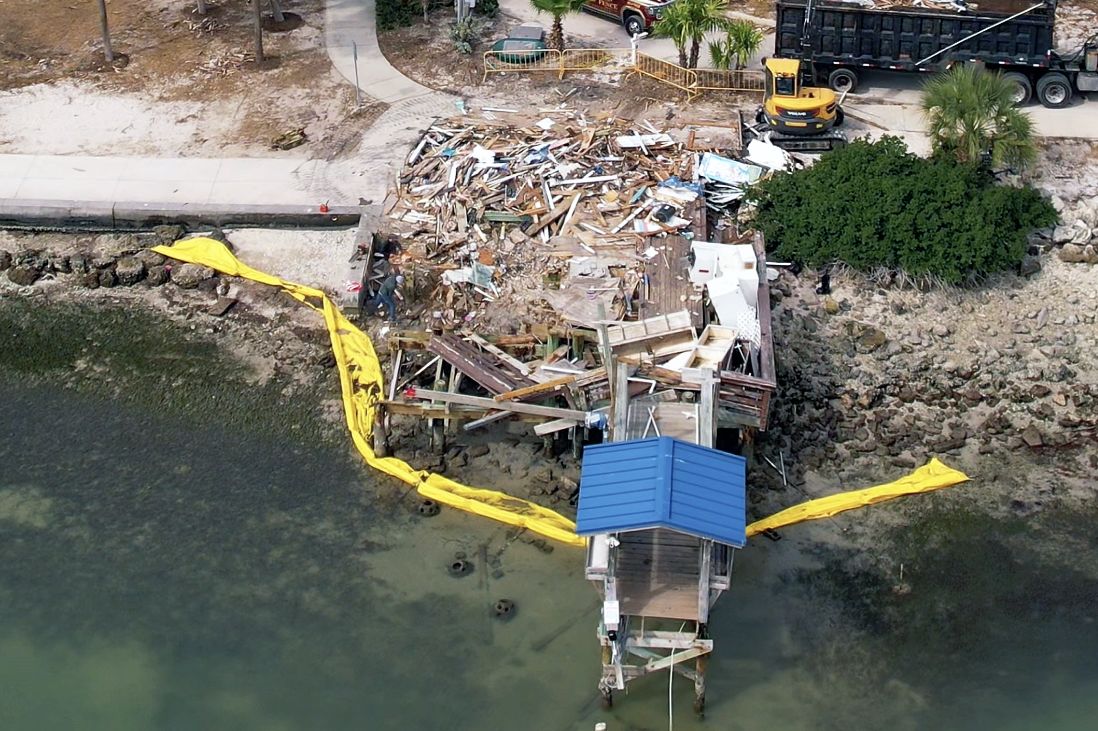
But as the region builds its future, pieces of its past continue to disappear. The former Hyatt Regency Sarasota, a fixture of the bayfront since 1975, was demolished to make way for a new hotel and condominium development. Hart's Landing, the longtime waterfront bait shop established in 1934, was torn down last year after suffering extensive hurricane damage. And long before both of those landmarks came down, the demolition of architect Paul Rudolph's landmark Riverview High School in 2009 demonstrated that even nationally significant architecture isn't necessarily safe from the wrecking ball.
The losses haven't gone unnoticed. The Sarasota Alliance for Historic Preservation (SAHP) has released its 2026 "Six to Save" list, identifying six historic properties that tell the story of Sarasota County's architectural and cultural past, and the growing challenges of keeping that history intact.
This year's selections include a little-known example of Googie architecture, a historic Black Masonic lodge, two midcentury school buildings and two nearly century-old properties in Venice. Their threats range from deferred maintenance and mounting development pressure to the possibility of outright demolition.
Launched in 2020 as a collaboration between SAHP and the History and Preservation Coalition of Sarasota County, "Six to Save" aims to bring public attention to vulnerable historic properties and encourage alternatives to demolition. Inclusion on the list doesn't guarantee protection, but it can help attract the support, funding or new uses necessary to keep a building standing.
This year's list, unveiled last week at the Historic Downtown Village on Fruitville Road, places particular emphasis on buildings that might otherwise be overlooked. Some are modest structures whose significance lies less in architectural grandeur than in the people who built, occupied and depended on them.
Here's a closer look at the six properties and what's at stake.
Alta Vista Elementary School “Butterfly Wing” (1957)
1050 S. Euclid Ave., Sarasota
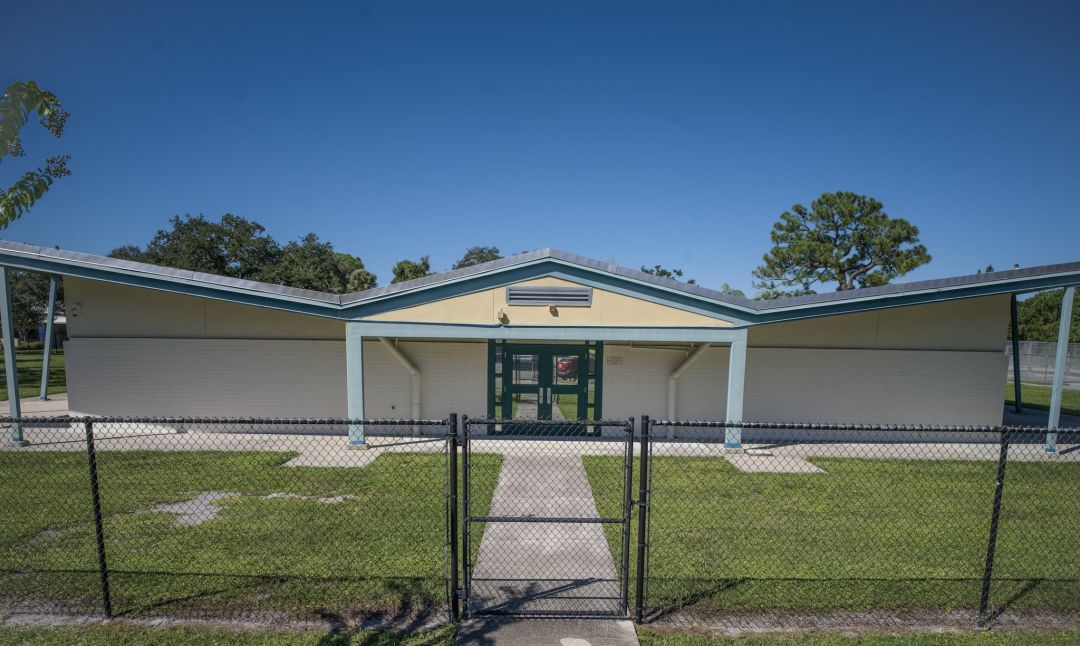
Designed in 1957 by renowned Sarasota School architect Victor Lundy, the butterfly wing at Alta Vista Elementary is a surviving example of the innovative school architecture that helped establish Sarasota as a center of modernist design. The building was one of roughly a dozen experimental schools constructed between 1955 and 1965 under the leadership of school board president Phillip Hiss, who later helped found New College.
Lundy's design was as practical as it was expressive. A central corridor served classrooms on either side, each with direct access to outdoor space sheltered by an 18-foot cantilevered roof. Custom glue-laminated beams, a hallmark of Lundy's work, gave the structure its distinctive form.
But the building nearly disappeared in 2025, when the Sarasota County School Board voted to demolish the vacant wing as part of a larger consolidation plan. After preservation advocates raised concerns about its architectural significance, the superintendent halted the demolition. The school district is now exploring whether an outside nonprofit organization with an educational or child-development mission could reuse the building.
Googie Plaza (1954)
402–412 N. Washington Blvd., Sarasota

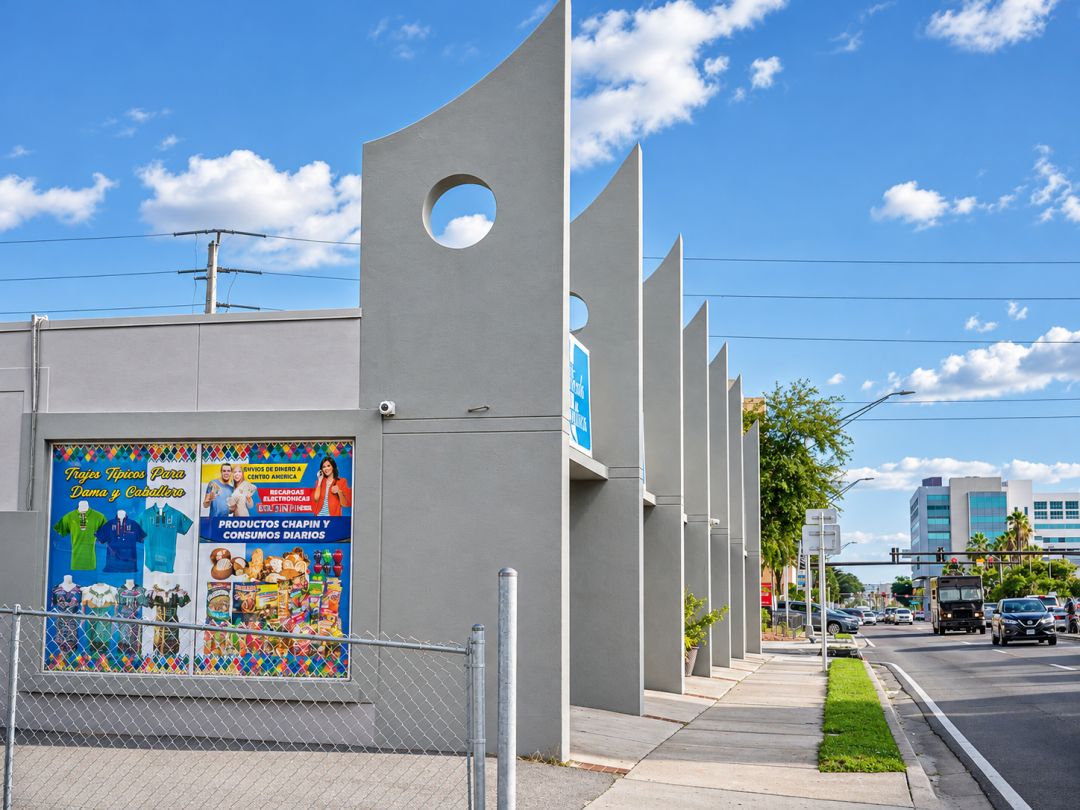
With its sharply angled concrete fins, circular openings and unmistakably space-age personality, this small commercial plaza looks like a relic from the era when Americans were falling in love with automobiles, rocket ships and roadside architecture. Built in 1954, the strip mall just north of Fruitville Road and U.S. 301 is believed to be Sarasota's only surviving example of Googie architecture, the playful, futuristic style that flourished after World War II.
Named for Googie's Coffee Shop in Los Angeles, the style was designed to attract motorists with dramatic rooflines, bold geometric forms and eye-catching details. The North Washington Boulevard plaza retains much of that visual character, even as its storefronts continue to serve everyday commercial purposes.
Unlike several other properties on the list, Googie Plaza isn't facing a known immediate threat of demolition. Its vulnerability comes from its location near downtown Sarasota, where redevelopment pressure continues to intensify.
Its inclusion is a reminder that preservation isn't limited to stately homes or celebrated architects. Sometimes a neighborhood's architectural history is hiding in plain sight, between a restaurant and a produce shop.
Granada Apartments (1927)
410 Palmetto Court, Venice
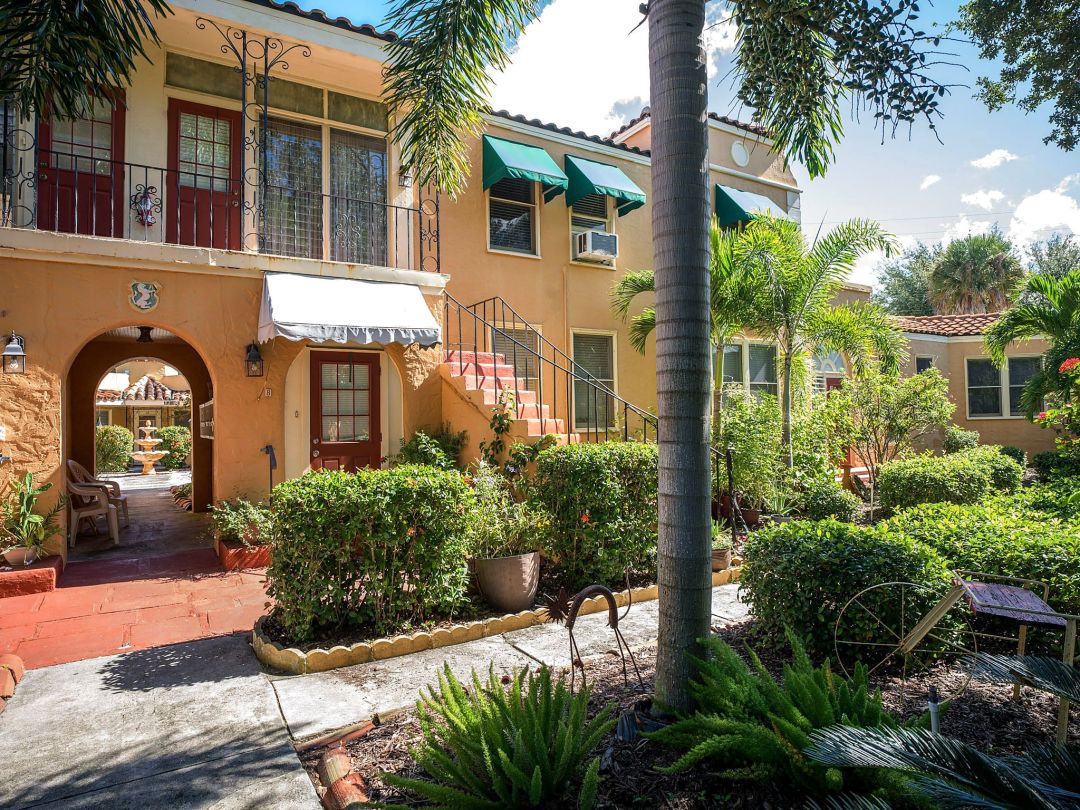
Nearly a century after it was built, the Granada Apartments building remains part of the residential fabric envisioned by John Nolen, the pioneering city planner who helped shape Venice. Constructed in 1927 as part of Nolen's original apartment district, the Spanish Colonial-style complex reflects the city's early Mediterranean-inspired architecture, with stucco walls, tiled roofs and an intimate courtyard setting.
During World War II, the property housed nurses working at the temporary military hospital serving the Venice Army Air Base. After the war, it returned to its original use as rental housing. The complex was added to the National Register of Historic Places in 1989 and remains one of the relatively affordable housing options for workers in downtown Venice.
But age and development pressure have placed its future in question. The building requires maintenance, and its large parcel near Venice City Hall and the downtown business district makes it attractive for redevelopment. In 2026, the longtime owners offered to sell the property to the city of Venice in hopes of preserving its affordable housing use. The city declined.
Preservation advocates believe a buyer willing to rehabilitate the apartments could potentially take advantage of historic rehabilitation tax incentives. The challenge is finding a way to preserve both the building and its longtime residential purpose in an increasingly valuable downtown location.
Prince Hall Masonic Lodge No. 314 (1954)
2311 Maple Ave., Sarasota
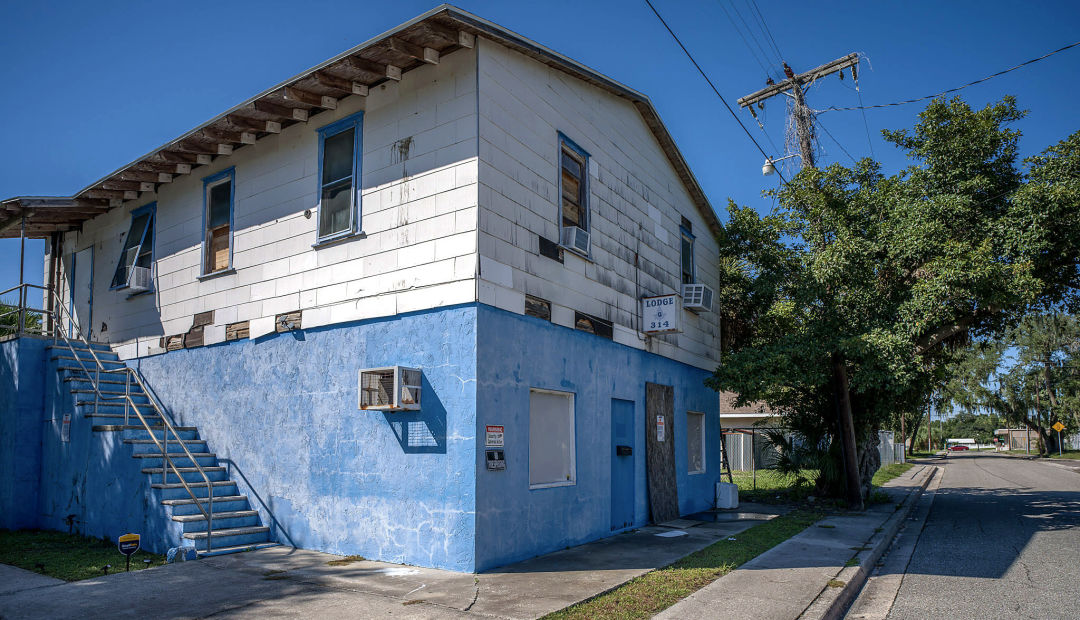
Not every historic building announces its significance through high-level architecture. Some are important because of the lives and communities they touched. Built in 1954, Sarasota's Prince Hall Masonic Lodge No. 314 is one of the few surviving buildings directly associated with the city's Black history.
The lodge itself dates to around 1916, when prominent Black Sarasota residents established a chapter of the Prince Hall Masons, part of a longstanding fraternal tradition that provided mutual support, fellowship and opportunities for civic leadership during segregation. The modest building on Maple Avenue stands within Newtown, Sarasota's historically Black neighborhood, and is included in both the city's Newtown Conservation Historic District and the federally recognized Newtown Historic District.
Its architectural simplicity belies its cultural importance. For generations, the lodge provided a gathering place and a connection to the organizations that helped sustain Sarasota's Black community.
Today, the building is suffering from deferred maintenance, including a leaking roof and termite damage. However, lodge members have recently revived the organization and hope to restore the structure with community support.
The Monkey Sanctuary House (1926)
801 Groveland St., Venice
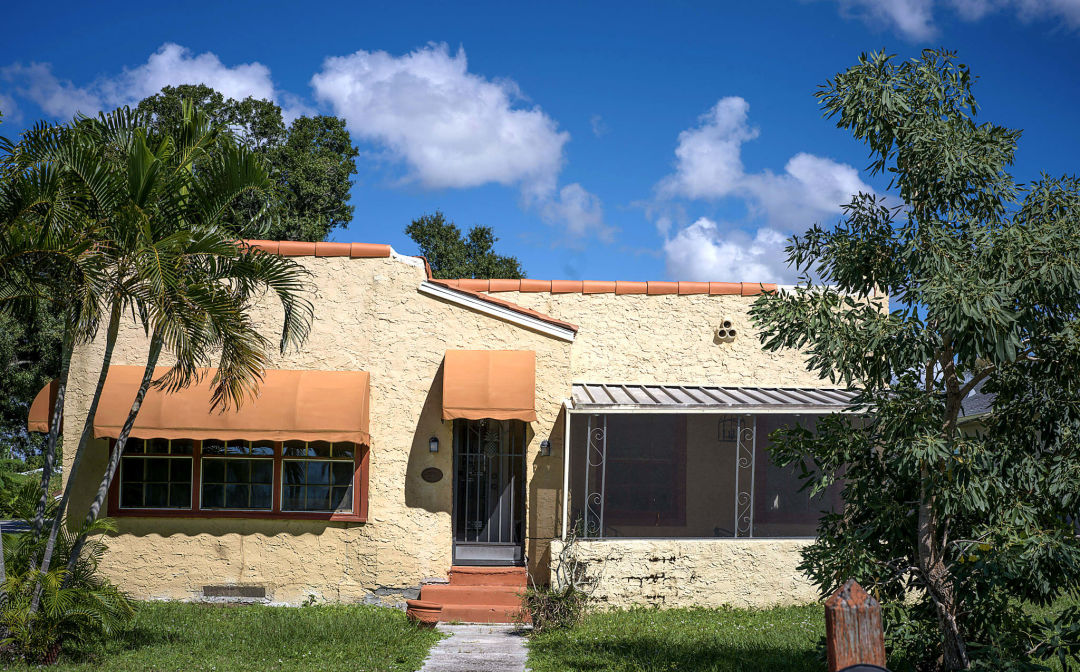
This modest Mediterranean Revival house has an unusual place in Venice history. Built in 1926 in the Edgewood neighborhood, one of the city's earliest residential districts, the house became the original location of the Florida Monkey Sanctuary in the late 1960s, when it was associated with the care of rescued pet monkeys.
The sanctuary eventually relocated the animals, but the house retained its unusual historical distinction, along with much of its original architectural character.
The property also represents Venice's earliest period of residential development, when Mediterranean-inspired homes helped establish the visual identity of the newly planned city. The house is now showing signs of deterioration, raising concerns that it could eventually face demolition rather than rehabilitation.
Those concerns extend beyond a single property. SAHP estimates that the Edgewood Historic District has already lost approximately 10 percent of its contributing historic structures. Preservation advocates hope the property's owners will consider protections and incentives available through Venice's local historic register, which can provide certain financial benefits to owners undertaking preservation work.
Sarasota Military Academy (1950)
801 N. Orange Ave., Sarasota
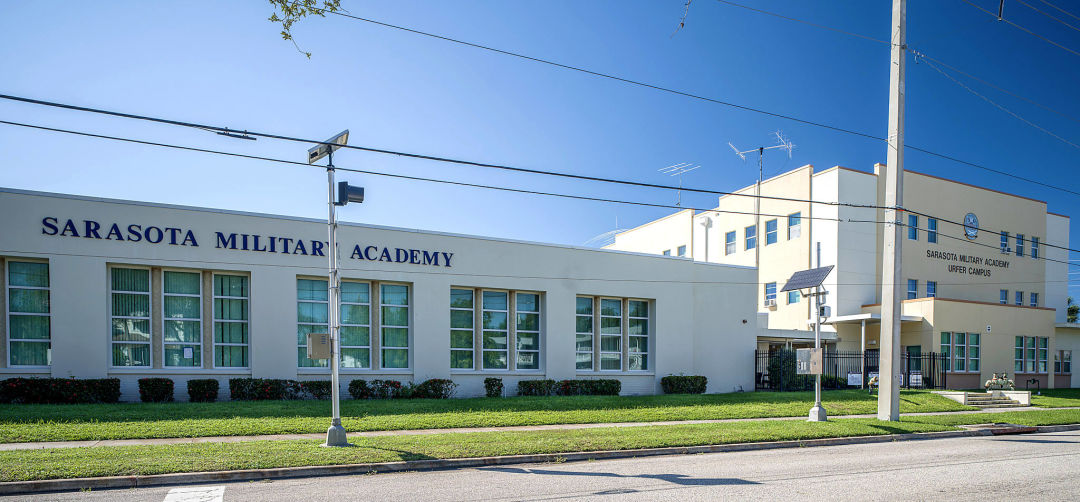
Before it became part of the Sarasota Military Academy, the campus at North Orange Avenue housed St. Martha Catholic School, an early example of modern educational architecture in Sarasota.
Built in 1950 and designed by architects Werner Kannenberg and Edgar C. Hanebuth, the original school building was conceived around natural light and the subtropical climate. Large north-facing windows and protected clerestory windows on the south allowed sunlight into classrooms while reducing exposure to the harshest conditions. The design also incorporated elements of Art Moderne architecture, including decorative terracotta pilasters with religious symbolism.
Today, Sarasota Military Academy is consolidating its two campuses and marketing its roughly five-acre Orange Avenue property as a major redevelopment opportunity. SAHP warns that development, permitted under Florida's Live Local Act, could allow a building as tall as 18 stories on the site, a dramatic change for an area characterized largely by lower-scale residential development.
The prospect raises questions about whether the historic portion of the campus could be incorporated into a new project rather than demolished. For preservation advocates, it's another test of whether Sarasota can accommodate new development without erasing the architecture that helped define its earlier periods of growth.
Special Recognition: Historic Downtown Village
1899 Fruitville Road, Sarasota
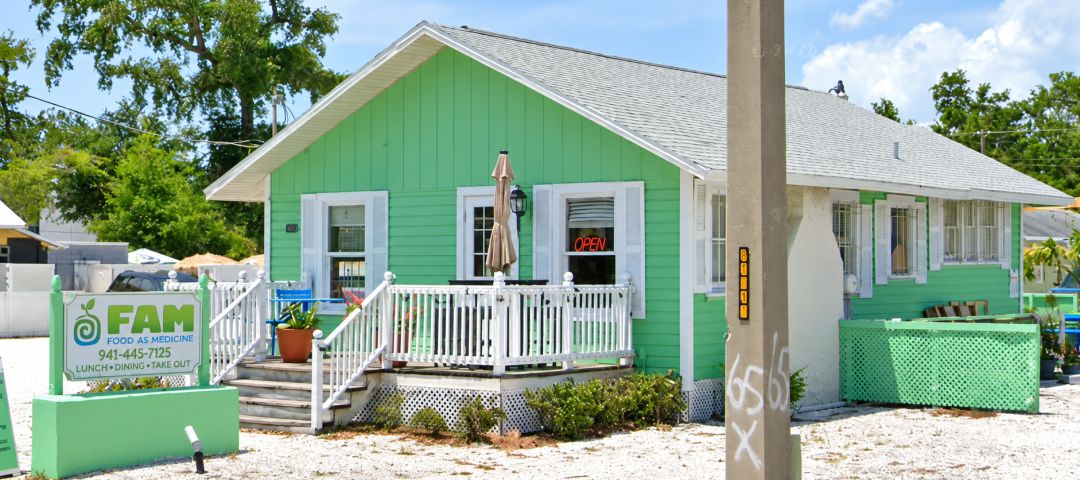
Image: Courtesy Photo
At the recent unveiling of this year's Six to Save, SAHP also recognized the merchants of Sarasota's Historic Downtown Village, at 1899 Fruitville Road, whose efforts to preserve and potentially relocate a cluster of 1920s and 1930s cottages helped draw attention to a proposed apartment development that would have replaced them. The sale behind that proposal ultimately fell through.
Check out last year's Six to Save list here. For more information on the Six to Save program or to get involved in preservation efforts, visit PreserveSRQ.org.