




The History of Mar-a-Lago
When you’re stuck in Palm Beach on a rainy weekend, there isn’t an awful lot to do, even if you’re staying at The Breakers. Many people decide to drive around and look at real estate. That’s what Ivana and Donald Trump did back in February 1982. They were unfamiliar with the town. Miami was their Florida place. Donald had been there many times as a kid, staying with his family at the Fontainebleau Hotel. Its over-the-top aesthetic made a big impression on him.
Palm Beach was weird, the Trumps agreed. The fancier homes were hidden behind hedges 20 feet high, and the atmosphere felt unwelcoming. The town was famous for its segregation—not just racial, but religious, too. It was one of the last bulwarks of WASP superiority, and Jews were so excluded they were forced to start their own country club.
The Trumps had their driver show them the pricier areas, and fortunately, he knew a lot about Palm Beach real estate. When Donald asked him what was the most expensive property on the market, he knew the answer. The famous Mar-a-Lago, Mrs. Post’s old mansion, was just about the only one left from the 1920s era. It had been sitting there, empty and getting a little decrepit, ever since Mrs. Post died in 1973. Everybody assumed it would be torn down and replaced by 20 or so new homes.
Donald’s interest was piqued. He smelled an opportunity—for what, he didn’t know yet. But he called the Post Foundation, which owned the house, and went to see it the next day.
The moment he walked through the front door—glass and steel, weighing 600 pounds—he fell in love. “It was the greatest place in the world,” he reportedly recalled. The future president had found his spiritual home.
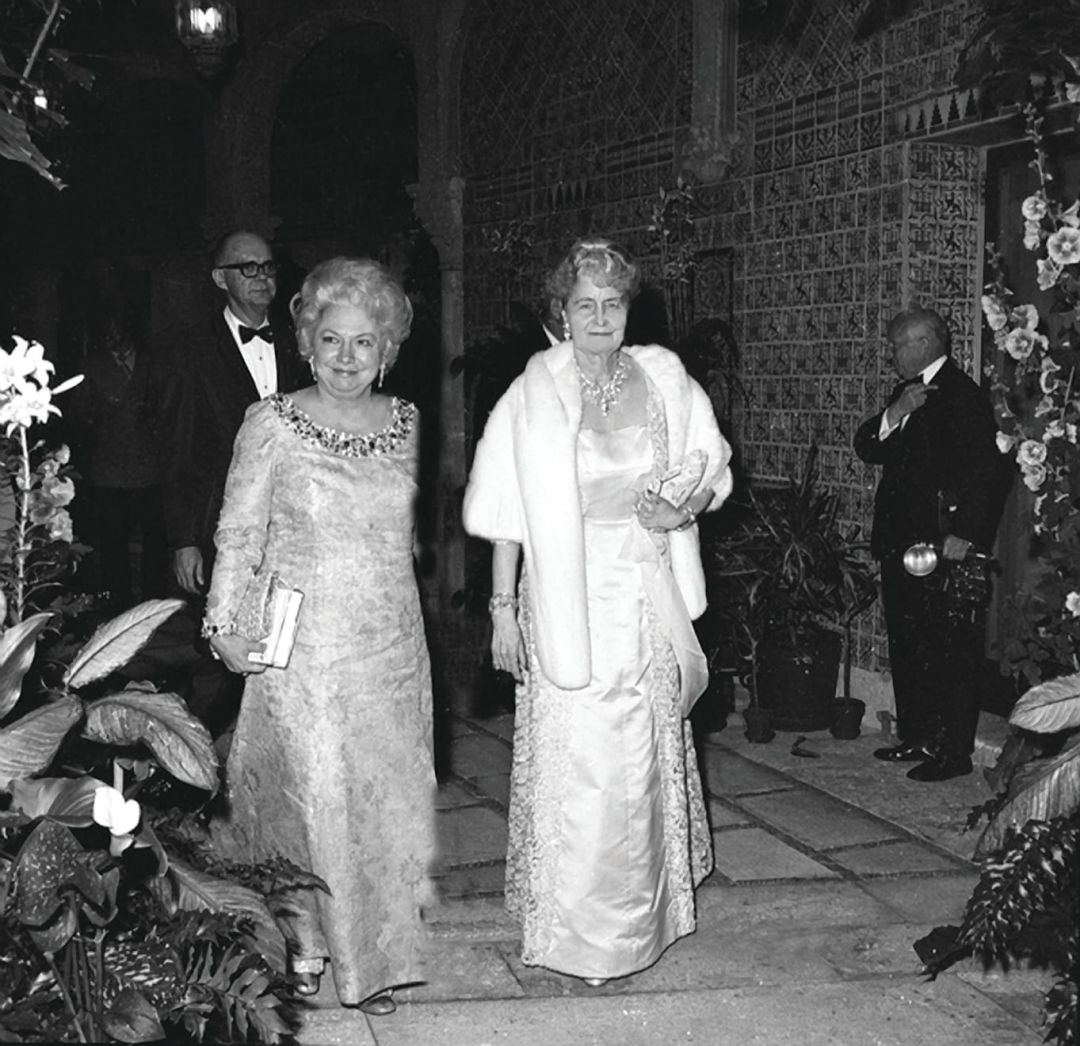
Of all the famous heiresses of the 20th century—Barbara Hutton, Doris Duke, Gloria Vanderbilt—Marjorie Merriweather Post had the most successful life. No scandals, no playboy marriages. True, she did have four husbands, but being married to the richest woman in the country, which she was at one point, is a challenge to which few men can rise, and her husbands didn’t.
She was good-natured, kind, generous and egalitarian. This is probably because she didn’t grow up rich. She was in her teens when her eccentric father, part genius, part oddball, came up with a coffee substitute he named after himself (Postum) and pretty much invented the processed and packaged food business. This led to Post Toasties and Grape Nuts and an enormous fortune.
But as a child in suburban Battle Creek, Michigan, Marjorie, as she liked to tell people in her old age, would walk to school in the snow and sew her own doll clothes. A major influence was the positive approach taught by Christian Science. It became part of her entire life. Her biggest passion was square dancing. Palm Beach used to grumble every Thursday night when they were expected over at Mrs. Post’s at 7:30 sharp for the weekly square dance, where she limited guests to two drinks each. But even if she hadn’t, no one would have dared get drunk at one of her parties.
I’m making her sound provincial, and she wasn’t. Yes, her freakish wealth set her apart, but she was a sophisticated woman who spent her money wisely—an appropriate amount of philanthropy and then a never-ending stream of beautiful houses, yachts, jewelry, gardens, artwork, antiques. She believed in spending your way out of an economic depression and was known to build things she didn’t need just to employ people.
Mar-a-Lago isn’t the only home of hers that’s famous. Hillwood, her estate in Washington, D.C., is now a museum that houses many of her collections. Her apartment on Fifth Avenue in New York was considered the city’s first real penthouse. It had three floors and 54 rooms. There was also a compound in the Adirondacks, consisting of 68 buildings, all full of Native American art, plus various other places along the way.
Her first husband, Edward Bennett Close, was an old money aristocrat from Connecticut. (He later became Glenn Close’s grandfather.) He was nice but boring. Next came E. F. Hutton, a stockbroker and business genius. He and Marjorie bought a little company called Birdseye, and the frozen foods industry was born. (Marjorie was introduced to frozen food by the chef on her 316-foot yacht. He prepared a goose that had been frozen for six months, and she was flabbergasted.) The company grew into General Foods, which has now merged into several different companies.

Marjorie and E. F. first visited Palm Beach in 1909, when it was still undeveloped and full of mosquitoes. They built a house called Hogarcito and became part of the social set. When the town took off in the 1920s, they wanted something bigger—something like the town’s Mirasol (40 rooms) or Playa Riente (70 rooms). The architect of choice back in those days was Addison Mizner, but Marjorie said she found him a little too “ecclesiastical” for her taste. The Huttons—Marjorie always used her husband-at-the-time’s last name—hired Mizner’s chief competitor, Marion Sims Wyeth.
But the couple’s best friends—Florenz Ziegfeld, the great Broadway impresario, and his actress wife, Billie Burke, immortalized by her performance as Glinda, the good witch in The Wizard of Oz—had a better idea. The Ziegfelds told the Huttons they had to talk to a guy named Joseph Urban, who just happened to be coming to Palm Beach next week. He was doing the sets for a show Ziegfeld was producing at a local night club.
Today Urban is almost forgotten, but 100 years ago he was a famous design genius—part architect, part set designer, part interior decorator. He even designed postage stamps for Austria’s Emperor Franz Josef, creating images that glorified His Highness. Urban could design in any style. Indeed, his buildings that still exist—there aren’t many—are all totally different from one another. The New School in Greenwich Village: strict Bauhaus. The Hearst Corporation on 57th Street in Manhattan: monumental classicism.
What his buildings do have in common is a sense of drama. How could they not? Urban was best known as a set designer, one of the masters of the field. He did all the sets for the Ziegfeld Follies, of course, and also designed 51 productions at the Metropolitan Opera, not to mention 25 Hollywood films, including such early silent classics as East Lynne and Little Old New York.
Marjorie was entranced with Urban’s ideas. Here was a man who thought as big as she did. They were both bored with conventional good taste, and they had all the money in the world to work with. In Palm Beach, they created a setting, in many cases a literal stage setting, for the richest woman in America.
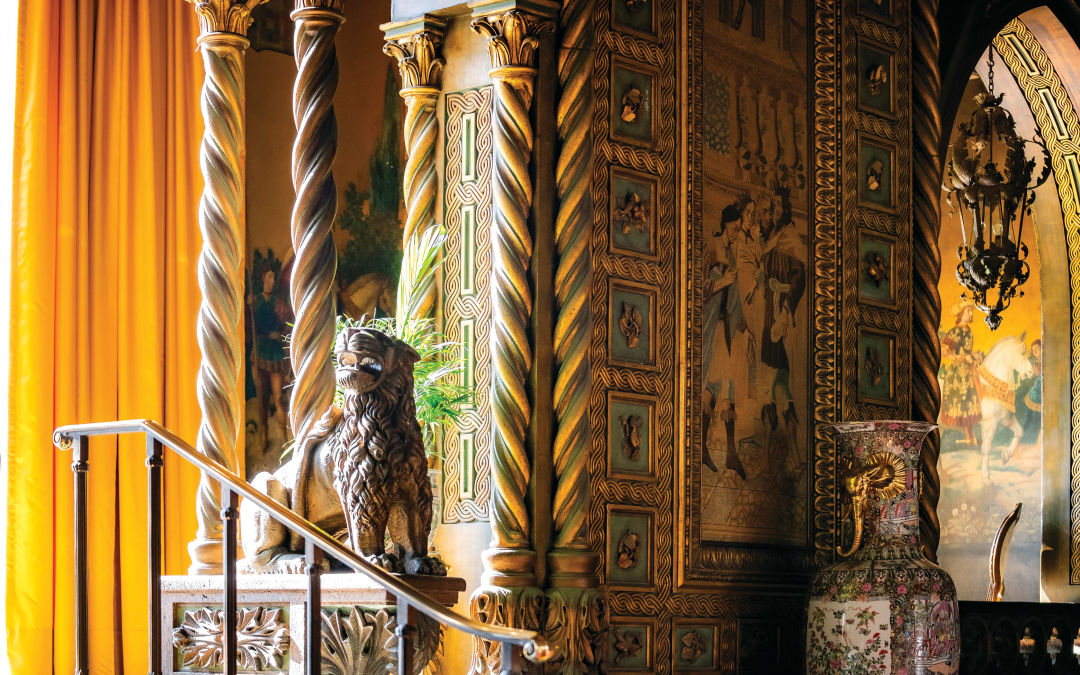
Marjorie didn’t want a big imposing mansion, but rather something that followed the plans of her Adirondack lodge. The client and her architect came up with several buildings in a sort of campus, each with its own purpose: grand spaces for socializing, guest rooms and cottages, recreational buildings, elaborate and self-contained owners’ quarters. These were strung out along a 500-foot-long curving terrace that faced not the ocean but a lagoon called Lake Worth, all of it set on 17 acres of lawn.
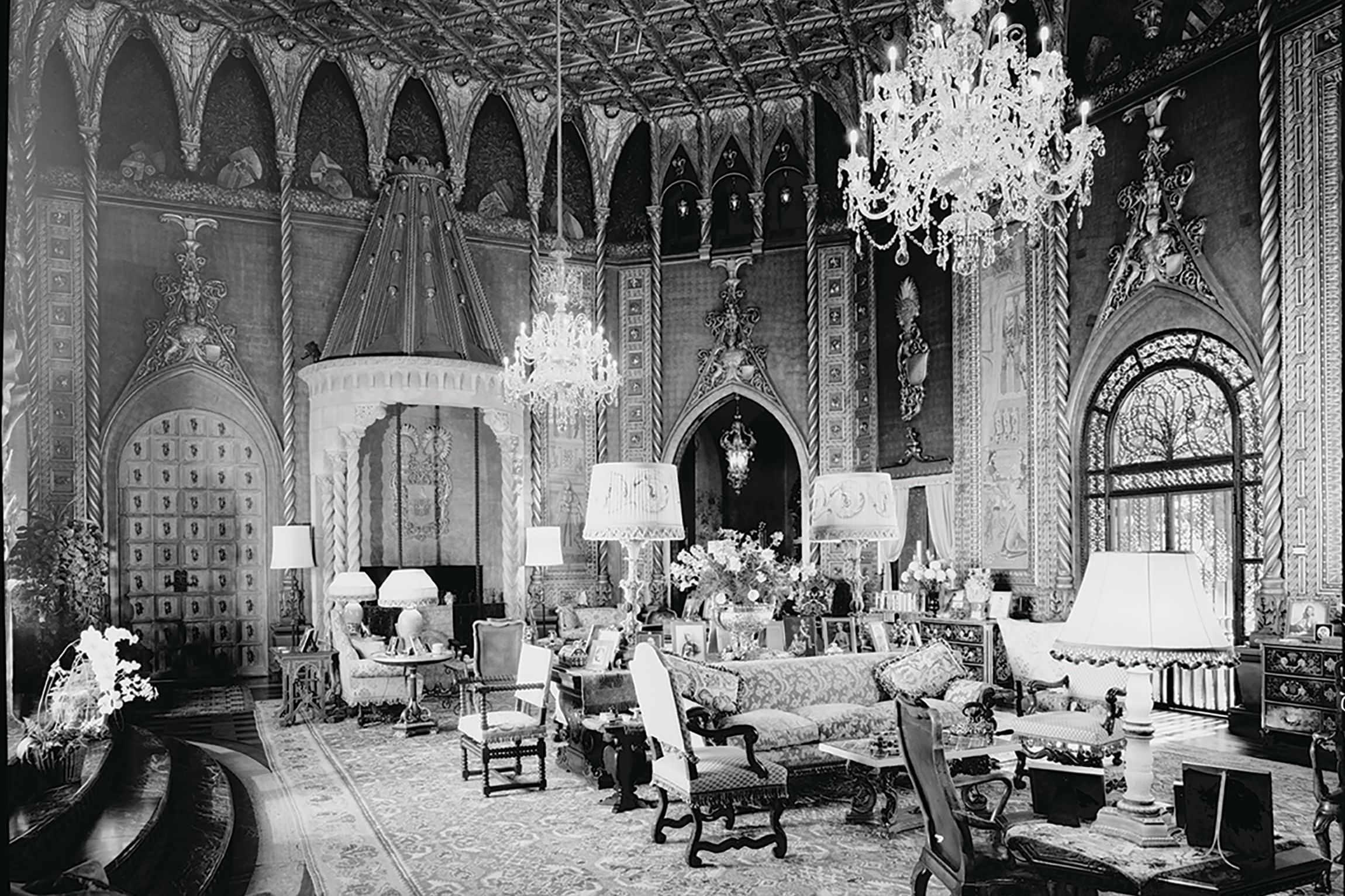
It was the interiors, however, that gave the home its reputation. Here, Urban’s theatrical background found its focus. The rooms could be scenes from great operas. You can see Tosca being performed in the main living area. Styles are combined and tweaked and enlarged for effect. There’s a lot of Spanish, quite a bit of Moorish and a strong underpinning of Jugendstil, the Austrian version of Art Nouveau. The amount of gold leaf must set some sort of record. Rare tiles are everywhere, as are decorative sculptures by Franz Barwig, a noted artist, also Austrian, who came over for the job.
The living room is perhaps the most famous—and most photographed. It has 42-foot-high ceilings that are covered in gold-leafed plaster, and the seven silk tapestries on the wall come from a Venetian palazzo. The dining room is a copy of the one in Rome’s Chigi Palace. Unusual effects are all over the house. The bedroom of Marjorie’s youngest daughter (who grew up to become the actress Dina Merrill) is covered with plaster roses and has a fireplace in the shape of a beehive.
Famously anchored to a coral reef by steel and concrete, the 126-room house was designed to withstand hurricanes and was completed in 1927. It cost the equivalent of $123 million in today’s dollars and was said to be the most expensive residence (excluding royal palaces) ever built.
Mar-a-Lago was a part of Marjorie’s life until she died in 1973 at age 86. She would, however, leave it for years at a time when she was off on some adventure. The most exciting was when her third husband, Joseph E. Davies, a Washington lawyer, was appointed by FDR as ambassador to Russia. Davies and Marjorie sailed off on her yacht with food packed in the hull, just in case.
Marjorie was quite a success as an ambassador’s wife and wrote Eleanor Roosevelt chatty letters about the amusing things that happen when you entertain communists. For a while, Marjorie became the toast of Moscow, though in truth, with Stalin in power, there wasn’t much competition. She spent most of her time tracking down artworks, jewelry and antiques that had been confiscated from the nobility during the revolution and which the Soviet government was then trying to unload to pay for an ammunition build-up. In some cases, priceless Fabergé objects were being sold by the pound. Today they’re on display at Hillwood in Washington, D.C.
Marjorie spent more time in Palm Beach as she grew older, becoming the town’s reigning grande dame. She married one last time, to a local man about town, but after the discovery of some incriminating pictures of him cavorting with young men in the pool at Mar-a-Lago, well, he hit the road, too. Marjorie announced that she was now to be known as Mrs. Marjorie Merriweather Post. Her square-dancing parties became a beloved running joke, and her hearing got so bad that she had secret microphones placed around the dining table and wore earrings that were actually radio receivers. And she became obsessed with her beloved home’s destiny. Mar-a-Lago had been so special to her. It needed a future as glorious as its past.
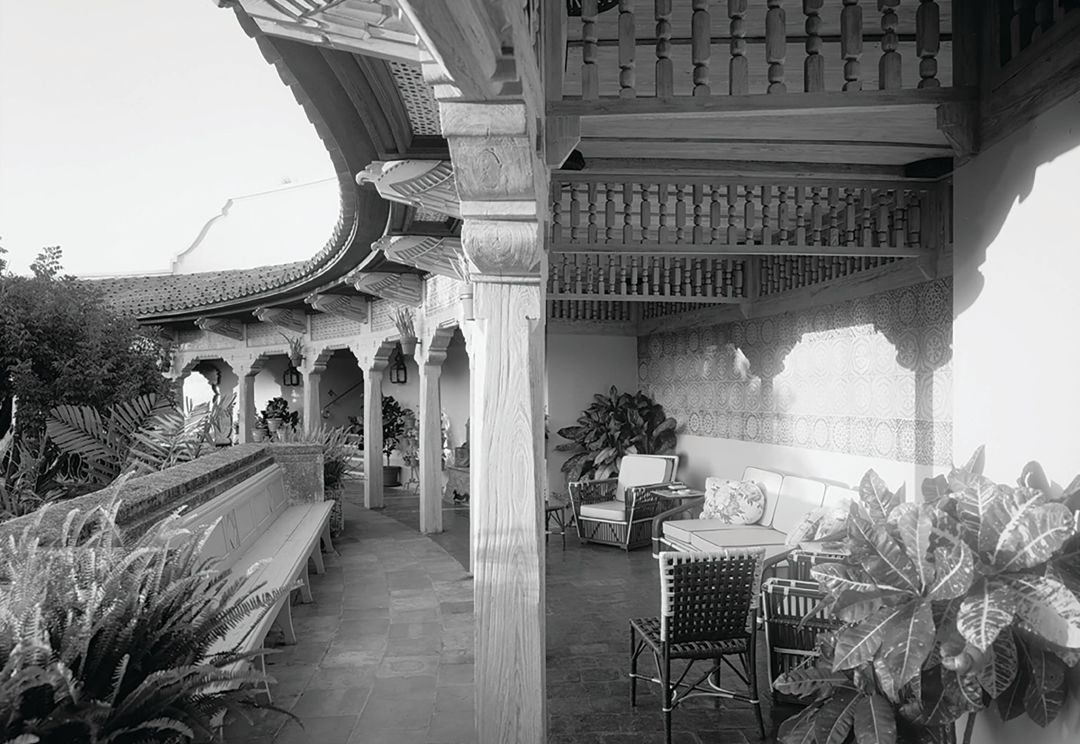
Image: Library of Congress
In her will, Marjorie left Mar-a-Lago to the federal government, specifically the National Park Service. The plan was that it would become a winter White House and also possibly serve as a high-level guest house for foreign dignitaries who might be doing business in Palm Beach. Nixon went for a visit and didn’t care for it. He was perfectly happy with his Florida ranch house on Key Biscayne. Jimmy Carter avoided it like the plague. Such castles were not for a populist farmer from Plains, Georgia.
The place sat there useless, growing musty for nine years, until the government, appalled at the upkeep costs, gave it back to the Post Foundation, which administered Marjorie’s large and complicated estate. For Marjorie’s four daughters, it held no sentimental value whatsoever. They wanted to sell it—and the furniture, too. The price was $20 million.
Trump, in love with a piece of real estate, offered $15 million. They said no. Then he noticed that a strip of land right across the street, on the beach, was for sale. He bought it for $2 million. Now Mar-a-Lago’s beach view was in jeopardy. A building of some kind could be built right in front of it, and Trump threatened to do exactly that. The price plummeted, and Trump bought Mar-a-Lago for about $10 million. The story goes that through a series of loans and tax abatements, he actually ended up spending just $2,800 of his own money.
To his great credit, aside from refurbishing it and adding some amenities, Trump did nothing to materially change Mar-a Lago. He did not modernize it. He did not alter it to suit his taste. It was his taste. Something in the home’s past spoke to him.
He even found the son of the original gold leafer and hired him to supervise the restoration so it would be as close as possible to the original. Some changes were made, of course. The library became a bar and the kitchens were updated—but not much. Trump’s daughter Ivanka moved right into Marjorie’s daughter Dina Merrill’s suite, with its walls full of pink roses and its canopied bed—and bars on the windows, added after the Lindbergh kidnapping in 1933.
Books will be written—in fact, some already have—to show how Mar-a-Lago became Trump’s crash course in politics. In New York, he knew how to play the game. Here, he was learning by the seat of his pants. He was battling an insular, snobbish town that didn’t like people like him. Yet he owned their crown jewel. It was a conflict that changed Palm Beach forever.
Trump’s legal issues concerning the home were never-ending. The airport’s flight plan was right over the roof; he wanted that changed. No way, the city said. He sued. He wanted to subdivide and make a little money. After all, he had 17 acres. They wouldn’t let him. He put up an 80-foot-tall flagpole. Too high, the city said, and fined him $250 a day. He sued for $25 million. Finally, after Trump got into financial trouble in Atlantic City, and with multiple bankruptcies along the way, his lawyer suggested that he turn the place into a private club. At first, Trump thought it was a ridiculous idea, but soon he saw its genius. In the fight over approval that ensued, he drew upon—some would say exposed—Palm Beach’s embarrassing and rarely talked about antisemitism. He made it clear that his club was to be one of the Jewish clubs, and if you opposed it, that meant you were antisemitic.

Image: Associated Press
And so today, there it is: the legal and spiritual residence of our most controversial president, an immense architectural oddity with roots that go back to the Austro-Hungarian Empire, all the more astonishing because it multitasks as a private club that’s really not so private. Hundreds of people pass through its doors daily, some as members (it costs $200,000 to join), some attending private parties (it’s a great wedding venue for the right couple) and some for charity events, political meetings and even the occasional car show.
The Trumps live in Mrs. Post’s private quarters, not really that big (2,000 square feet, I’m told) and not really that private. But the former president, from all reports, thrives on the atmosphere. He crashes weddings in the ballroom one minute then hosts world leaders on the patio the next. The atmosphere is always festive, but when he appears, it becomes electric.
Mar-a-Lago has not only earned its place as one of the nation’s most historic homes. In the most circuitous route possible, it has also achieved Mrs. Post’s goal of becoming the winter White House. Along the way, it has entertained a host of notable people, from Maya Angelou to Jeffrey Epstein, from Omar Bradley to Fabio. Suspected Chinese spies sneak in, secret documents wind up in the bathroom and “situation room” meetings are held on the dining terrace as members record the conversations with their cell phones.
What does the future hold? Will it still belong to the Trump family, with Ivanka’s bedroom someday accommodating her great-great-great granddaughter and the Make-a-Wish Foundation hosting its gala in the ballroom? Or will it revert to the National Park Service and be open for tours, with stops to view the storage room where boxes of top-secret documents were stashed and the grill where Trump would occasionally take over and cook hamburgers for his guests?
Whatever its destiny, Mar-a-Lago is about to play its most famous role ever. As the center of Trump’s tumultuous campaign, it’s the staging ground for the country’s most important election since 1860. Even now, legions of gardeners are sprucing up the grounds as it gets ready for its close-up.
Robert Plunket is an architecture critic, magazine journalist and novelist. His articles have appeared in The New York Times, Barron’s and The Atlantic. New Directions Publishing recently reissued his novels My Search for Warren Harding and Love Junkie.