




'Precession Through Glass' Dazzles at the Sarasota Art Museum
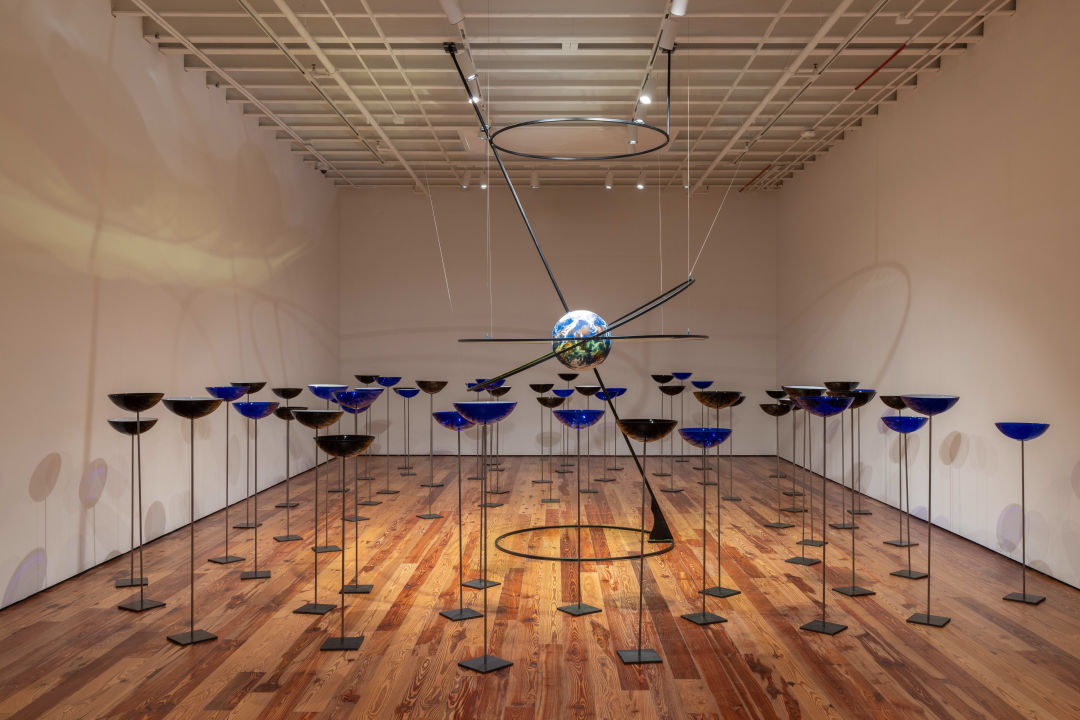
Image: Ryan Gamma Photography
Sarasota visual art audiences have for years now been able to appreciate the beauty of studio glass work, at several different venues. But not all glass art is created equal. In the case of a new exhibit at the Sarasota Art Museum, Precession Through Glass, viewers not only get to ooh and aah at the colors and craft of the works on display, they get to explore some cosmic connections.
The artists behind the show, longtime partners Monica Guggisberg and Philip Baldwin, are just that: artists, not astronomers or archaeologists. But that doesn’t mean they can’t pose some existential questions related to humanity’s origins and civilizations.
Take the exhibit’s title. “Precession” is not a typo for “procession.” In case you didn’t know it, precession is the term for a phenomenon describing a slow, 26,000-year “wobble” in the rotation of the earth due to our planet’s tilted axis. And that phenomenon has been known to people for centuries, according to Guggisberg. “What’s especially interesting to us is that every mythology on the planet refers to this fact of astronomical precession,” she explains in a press release.
“There is so much archaeological evidence going back thousands of years demonstrating that somehow human beings have been aware of this phenomenon—that the earth doesn’t simply revolve but does so with a slight wobble—and we’ve known about this for a very long time,” Guggisberg adds.
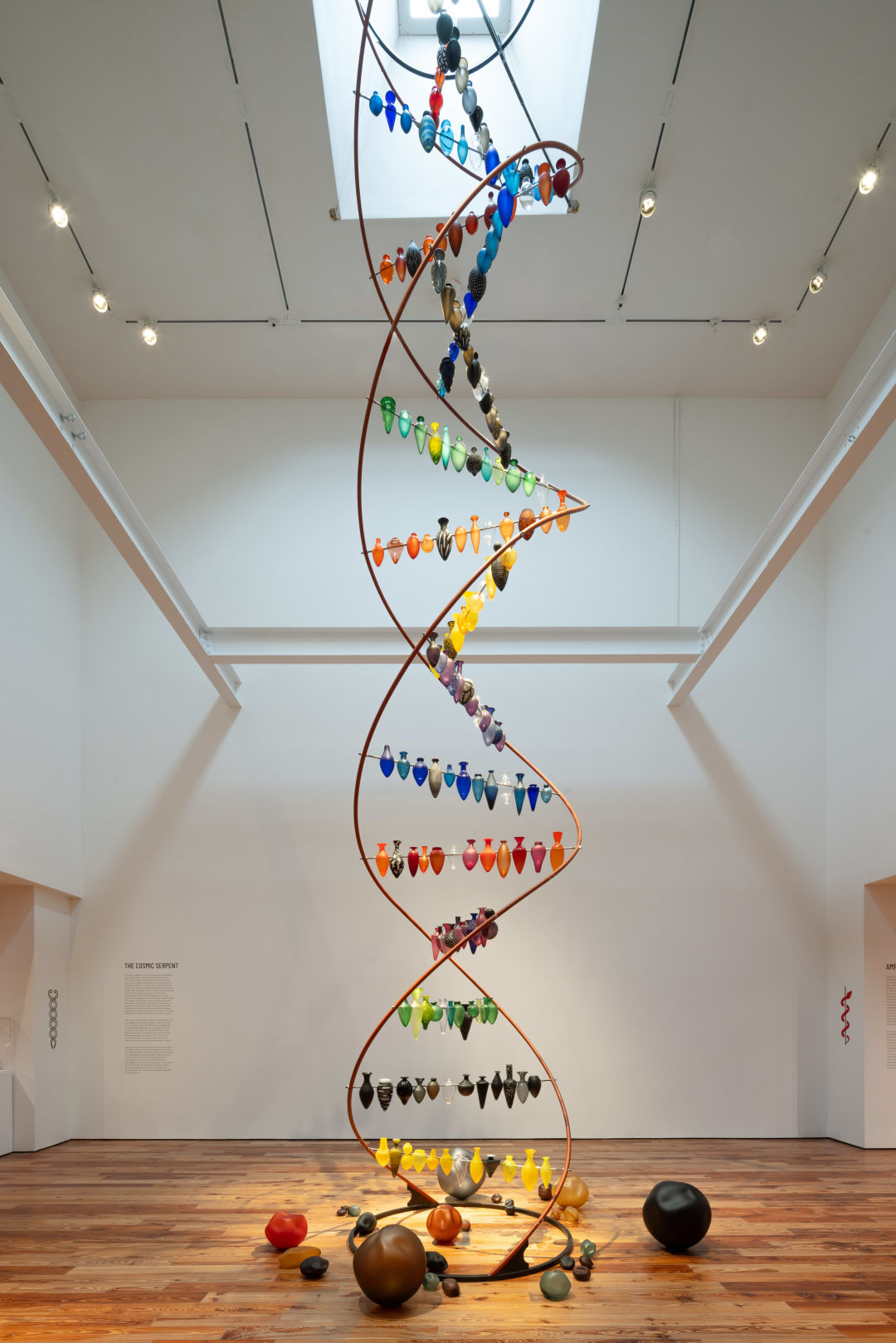
Image: Ryan Gamma Photography
Artwork made by the couple at their studio, now based in rural Wales, has been shown in hundreds of exhibitions worldwide, including a monumental installation in England’s Canterbury Cathedral. But what’s extra special about the SAM show is that it boasts brand-new works, commissioned by the museum and painstakingly installed to make the most of the museum’s third-floor tower gallery.
That’s where a 31-foot mixed-media sculpture (a Cosmic Serpent), representing a DNA double helix, soars. Metalwork creates the structure of the DNA spiral, and then, suspended on rods between the metal bands are dozens of glass-blown amphorae—ancient vessels used to store and transport commodities—representing the nitrogenous bases that make up the code for all life.
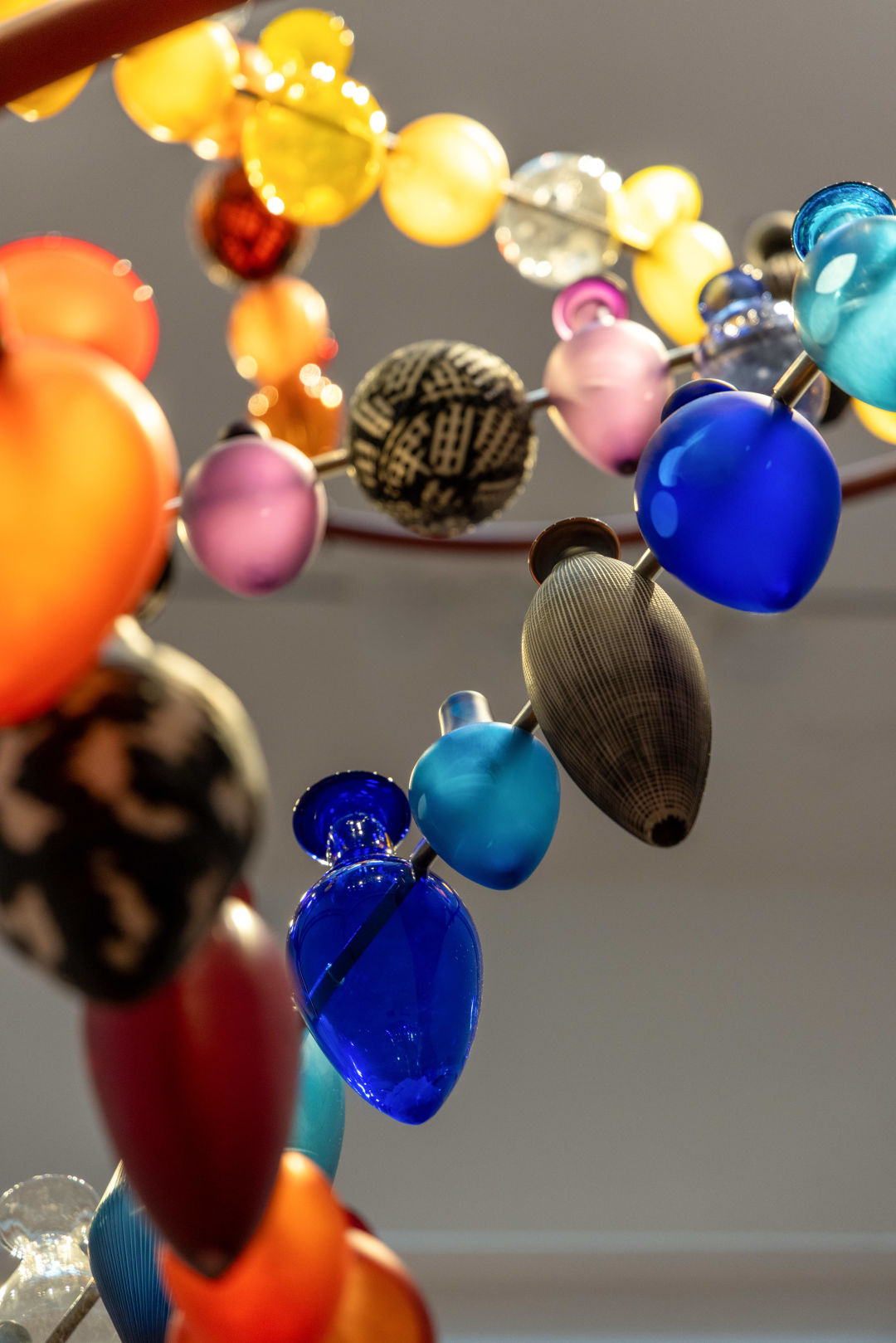
Image: Ryan Gamma Photography
But wait, there’s more. The artist duo says they were interested to learn that Francis Crick, who co-discovered the structure of DNA in 1953 and won a Nobel Prize for his scientific contribution, later went on to propose a theory called “Directed Panspermia”—the idea that DNA arrived here on earth from somewhere else. Ergo, the DNA sculpture here is surrounded by meteors made of glass, scattered across the gallery floor—a nod to this still controversial notion.
A second installation commission is actually the first thing you see when you enter the galleries. A metallic and glass sculpture features a steel orb representing earth, with circular glass sheets bisecting the form and representing the tilt of the earth’s equator and its orbit around the sun. Surrounding the central sculpture: a constellation of 60 glass-blown bowls, which the artists say are among the more technically challenging forms to realize in glass. The number of bowls refers to the sexagesimal numerical system based on the number 60 and developed by the ancient Sumerians and Babylonians. As you can see, a lot of thought went into creating this exhibition.
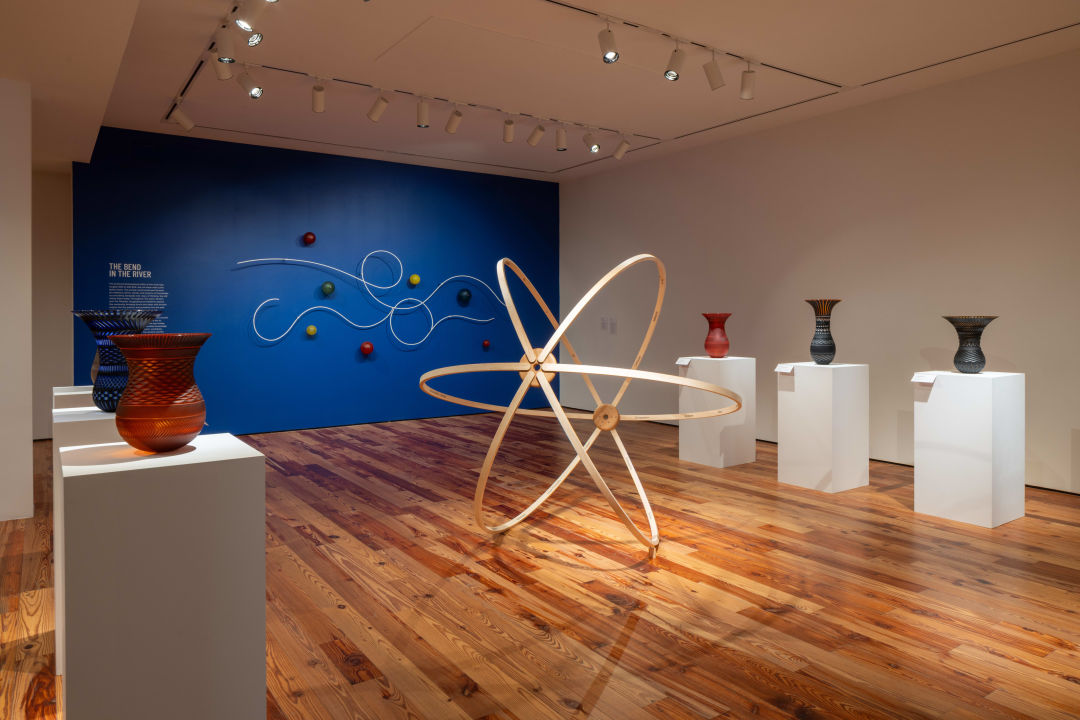
Image: Ryan Gamma Photography
There’s still more recognition of past civilizations with pedestal displays filled with more amphorae and “paniers,” or baskets constructed of glass. And there’s a nod to our planet’s constellations with a piece based on the Pleiades, or Seven Sisters, hung on a wall painted blue to remind us of the color of hot glass.
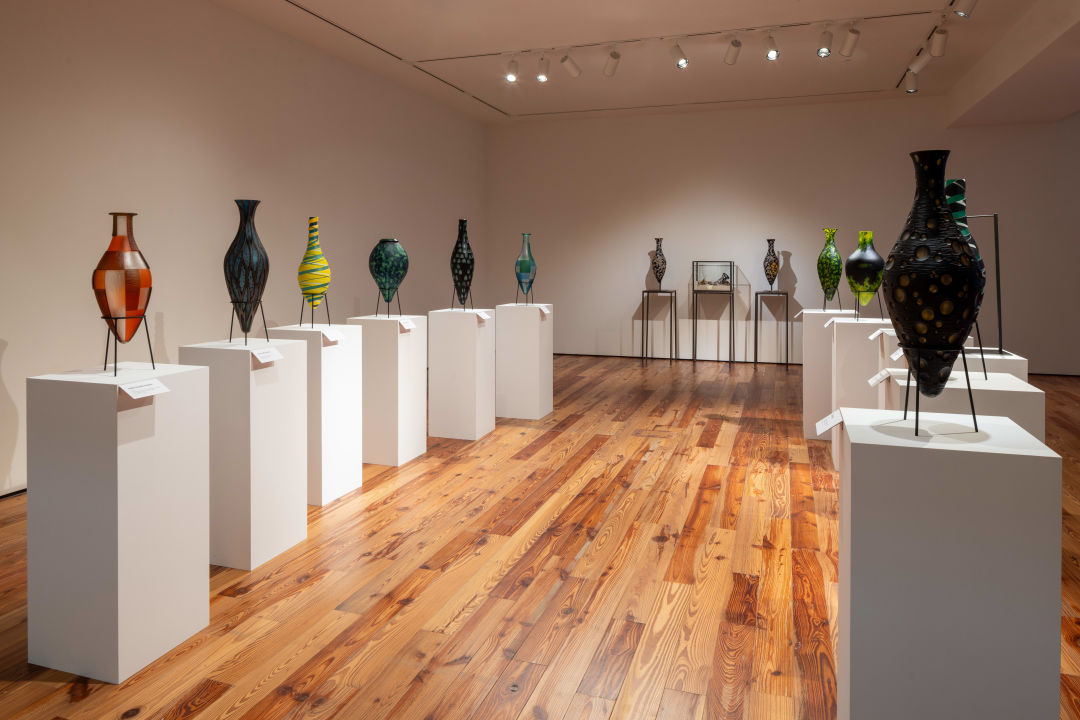
Image: Ryan Gamma Photography
Precession Through Glass, which opened Nov. 15, runs through April 25, 2027, so you have plenty of time to take it all in. The exhibit was co-curated by SAM executive director Virginia Shearer and Sarah Qing Markovitz, with guidance from former senior curator Rangsook Yoon; to learn more, visit sarasotaartmuseum.org.


