

What We're Reading This Summer
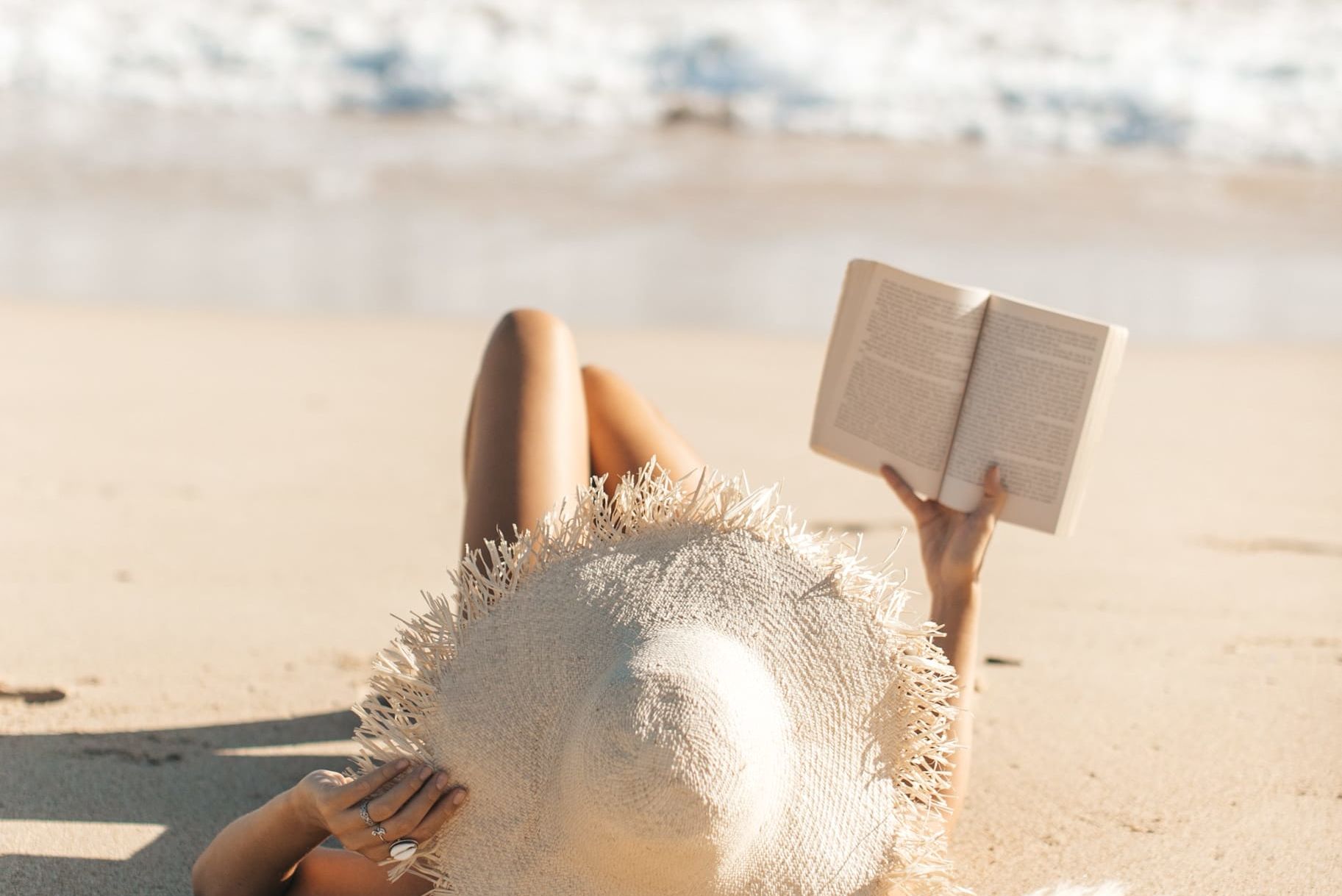
Our ideal summer reading scenario involves digging our toes into the sugar-white sand of Siesta Key Beach, leaning back in a beach chair under the shade of an umbrella, ice cold drink nearby, and cracking open a great book. (Acceptable alternative scenarios include curling up in bed during a summer storm and lounging on a raft in the pool under bright blue skies. The great book is non-negotiable.)
No matter how fast-paced life is, summer always feels more languid, thanks to the golden heat, longer days and, in our region, the exodus of the snowbirds. Getting lost in a great book is one of the season's great pleasures (not to mention an excellent antidote to doomscrolling); if you're looking for something great, here's a list of books our editors are loving right now.
Land by Maggie O’Farrell

Image: Courtesy Photo
Maps are power. That’s what Tomás tells his young son Liam as he maps a remote part of Ireland for the British government after the Great Hunger of 1845-1852 in Maggie O’Farrell’s latest novel, Land. The book is historical fiction, starting in 1865, when Ireland is still reeling from the potato famine and its more than a million deaths. The story focuses on Tomás and his family as they struggle to survive under British rule. (Ireland was Britain’s oldest colony, something most of us don’t remember.) Tomás, a gifted mapmaker, realizes in a stunning moment on a cold, windy peninsula as he charts the land that the real lives, homes, streams, landmarks and language of his homeland are being erased in the maps the colonial government wants him to create. His determination to tell his truth, the truth of his land, affects the survival of his family and pulls the story forward for decades, around the world and through mystical experiences that go against the church. It is a mesmerizing read and another beautiful O’Farrell novel (Hamnet is another must-read if you haven’t already) about family, history, love and awakening.—Susan Burns, editor in chief
Tropic of Cancer by Henry Miller

Image: Courtesy Photo
Tropic of Cancer isn't exactly beach reading, unless you’re an English major, have a soft spot for the saddest of The Velvet Underground’s discography or just take pleasure in a certain kind of discomfort. Banned from import and circulation in several countries, its 1961 publication in the United States—nearly 30 years after its initial release—ignited a series of obscenity trials that tested American standards for pornography. (The Supreme Court ultimately ruled the novel was not obscene, a verdict that might have been harder to reach had its author, Henry Miller, stuck with his original title, Crazy Co—).
The novel chronicles Miller's years among the bohemian expatriates of Paris, where he endures hunger, loneliness, homelessness and the emotional wreckage of a failing marriage—and delights in the hedonistic chaos that threatens to consume him. Blurring autobiography and fiction, it has a stream-of-consciousness structure and dissolution of past and present that became Miller's hallmark.
Anaïs Nin captured it best in her 1934 preface: "The predominant note will seem one of bitterness, and bitterness there is, to the full. But there is also a wild extravaganza, a mad gaiety, a verve, a gusto, and at times almost a delirium." Trigger warning for almost anything you can imagine, and read only if you’re ready to keep company with the profane and profoundly human.—Kendall Southworth, associate editor
Whistler by Ann Patchett

Image: Courtesy Photo
Author Ann Patchett, who was here a couple of years ago to speak at the Library Foundation for Sarasota County's annual luncheon, is a writer I've followed for years, and to me Whistler, her latest, is one of her best. Daphne, a fifty-ish English teacher, and her older husband meet by accident with Daphne's former stepfather, Eddie, while at the Metropolitan Museum of Art. They haven't seen each other since Daphne was nine, after her mother, Abigail, divorced him following a life-threatening accident. But they've always held fond memories of each other, and gradually are drawn to spend more time together, remembering the past and what they've meant to each other. It's even more poignant because Eddie seems modeled at least partly after Patchett's longtime friend, Jim Fox, a publishing house executive and lawyer who passed away in 2024, to whom she dedicated the book. The ending brought tears to my eyes.—Kay Kipling, arts editor
The Cruel Prince by Holly Black

Image: Courtesy Photo
Set in the fantastically terrifying world of faerie, bestselling author Holly Black’s The Cruel Prince is a political fantasy centered on Jude, a mortal girl who was kidnapped from her home after her parents were brutally murdered by the person who would become her foster father. In the world of faerie, being human is dangerous. Jude has to wade through trickery, enchantment, disguises and homicidal bullies, sidestepping the royal court and its princes just to survive.
Fortunately for Jude, she has a plan to get respect from the faerie folk—and power over them, as well. Unfortunately for Jude, everything goes wrong in every way imaginable. She’s forced to become a thief and a sneak to survive. In the aftermath of the slaughter of most of the royal family, she quickly realizes that she doesn’t just need to save herself, but her family as well. And the only way she’s going to get what she wants is to ally herself with the one person who might hate her enough to help her.
The Cruel Prince has mystery, intrigue, childhood trauma (like, a lot), and, surprisingly, romance. Black’s ability to bring to life the main character’s capacity for murder and betrayal will both shock you and have you rooting for more bloodshed, making you question if you really know the difference between right and wrong. With that warning, read at your own risk, and enjoy.—Jules Telfort, editorial intern
Runaway by Alice Munro

Image: Courtesy Photo
I’ve been reading Alice Munro’s Runaway, a collection of eight short stories about women trying to escape their lives—or at least understand how they became trapped in them. In the title story, Carla considers leaving her volatile husband with help from an older neighbor, but, as in most of Munro’s work, the difference between wanting freedom and actually choosing it is vast and complicated. Three connected stories follow Juliet, an intelligent, independent woman whose relationships with her parents, partner and daughter unfold across decades, often turning on choices that seem minor until their consequences come fully into view.
Munro, who won the Nobel Prize in Literature in 2013, is often praised for fitting the emotional scope of a novel into a short story. That sounds like the sort of thing people say about an important writer because they’re supposed to, but here it’s true. A life can change within a few pages—or it may have changed years earlier, in a moment neither the character nor the reader recognized at the time. Munro's writing is precise and unsentimental, especially about women, marriage, motherhood and the private bargains people make with themselves. These aren’t tidy stories, and Munro doesn’t strain to make her characters admirable. She simply observes them closely enough that their contradictions begin to feel uncomfortably familiar. It’s the kind of book that makes you stop after each story, partly to think and partly because you’re not quite ready to leave it behind.—Kim Doleatto, senior editor
Summer Sisters by Judy Blume

Image: Courtesy Photo
I’ve read this Judy Blume book, which came out in 1998, every few summers since I surreptitiously plucked it from my aunt’s bookshelf in high school. This is one of those years. Spanning 1977 to 1995, it’s the story of Victoria (Vix) and Caitlin, two unlikely best friends who spend their teenage summers at Caitlin's family's summer home on Martha’s Vineyard. Vix is quiet, introverted, responsible and comes from a lower-middle-class family; Caitlin is extroverted, impulsive, carefree and old-money wealthy. (Even their appearances are opposites: Vix is dark-eyed and brunette; Caitlin is blonde-haired and blue-eyed.) Together—as told by Vix and occasionally the novel’s peripheral characters, but pointedly never Caitlin—they navigate the big themes of young adulthood, from friendship and familial responsibilities to love, sex, death, money, work, power, class, education and identity. Vix and Caitlin are often philosophically at odds—at one point, Vix likens their friendship to a tapestry on which they’re always pulling a thread—but even as they grow up and apart, they remain the most influential people in each others’ lives.
Like so much of Blume’s work, Summer Sisters somehow manages to speak to exactly where I am in my life whenever I read it. It’s timeless, even though its ending takes place more than 30 years ago. Blume trusts her readers enough to render Vix and Caitlin as complicated and sometimes unlikeable, which is still not as common a literary device as you might think, even in 2026. That makes them feel real, like they’re your friends, too. It’s nice to be able to keep visiting them.—Megan McDonald, managing editor