



What's Next in Philanthropy?

Image: Courtesy Photo
Wendy Deming
Chief Executive Officer, Bishop-Parker Foundation
“At Bishop-Parker Foundation, we see philanthropy shifting in ways that are both encouraging and challenging. We see generosity growing as more people choose this region as home and look for meaningful ways to invest in its future. That’s encouraging.
“At the same time, many nonprofits are under serious strain, navigating higher costs, increased demand and uncertainty around funding streams that have long supported essential services.
“What stands out most is how the nature of requests has changed. Organizations that once came to foundations with ideas for new programs are now seeking support for core operations. They need funding for salaries, rent, utilities and other essential expenses. The conversation has shifted from growth to stability. A strong nonprofit sector depends on stable organizations, trusted relationships and the ability to respond when community needs change. Private giving alone cannot make up for the scale of what organizations are facing. The math simply doesn’t work.
“What we need right now is greater engagement and shared commitment from across the community. Foundations, individual donors, businesses and civic leaders all have a role to play. The organizations that feed our neighbors, educate our kids, protect our environment and care for our most vulnerable community members do not run on goodwill alone. This is a pivotal moment. How we respond will help define the kind of community we become.”

Image: Courtesy Photo
Phillip Lanham
President and CEO, Gulf Coast Community Foundation
“Communities are navigating complex challenges, and based on insights from Gulf Coast Community Foundation’s recent Regional Scan, affordable housing, environmental protection and support during times of crisis are among the most urgent priorities. This shared perspective helps philanthropists and partners direct resources where they can make the most meaningful and lasting difference.
“These priorities overlap and compound in ways that shape community stability. Housing affordability influences workforce attraction and retention; environmental resilience impacts economic security; access to childcare and strong public schools shapes long-term outcomes for families. Gulf Coast works with donors and partners to align resources to reflect the full scope of need rather than addressing challenges in isolation. Feedback from our nonprofit partners reminds us that the work of a community foundation extends well beyond the grant. Strengthening relationships and deepening coordination are responsibilities we take seriously as we work to be a stronger partner to the nonprofits and communities we serve.”

Image: Courtesy Photo
Veronica Thames
Former Chief Executive Officer, Manatee Community Foundation
“Donors—especially younger and mid-career givers—are no longer satisfied with writing a check and walking away. They want to understand outcomes, see systems change and feel their dollars are part of something durable.
“Alongside that, we’ve seen a genuine democratization of legacy giving. Endowed funds—vehicles that generate impact in perpetuity—are no longer the exclusive domain of the ultra-wealthy. More donors at every level are thinking about what they want their giving to mean long after they’re gone.
“The single word I hear most from nonprofit leaders right now is uncertainty. The federal funding environment has become deeply unstable—organizations that built programs on federal grants are facing mid-cycle disruptions, abrupt terminations and a policy climate that treats human services as discretionary rather than foundational.
“What donors and community members should understand is that the nonprofit sector is not an abstraction. In Manatee County alone, more than 86 organizations receive over $26 million annually from the county government, and many layer federal funding on top of that. When that federal floor becomes unreliable, families, children and vulnerable residents feel it directly. Private philanthropy cannot replace government funding at scale—and it shouldn’t have to. Flexible, locally controlled philanthropic dollars are more valuable right now than they have been in a generation.
“Sarasota-Manatee is one of the fastest- growing regions in the country—Manatee County is currently the second fastest-growing county in Florida. Philanthropy has a critical role in ensuring it works for everyone, not just those who arrive with resources.
“For donors ready to think beyond the annual gift, a permanent endowed fund through a community foundation is one of the most powerful tools available. In a moment of federal retreat and historic regional growth, that kind of rooted, lasting investment is exactly what Sarasota-Manatee needs more of.”

Image: Courtesy Photo
Susie Bowie
President and CEO, William G. and Marie Selby Foundation
“It has been encouraging to see more people and institutions acknowledge that challenges and opportunities are relational. The people benefiting from philanthropy and those contributing dollars through philanthropy are connected in ways that are recognized—and even celebrated. Each of us is a resident of the same community, with gifts to contribute. This trend points to a greater understanding of our shared humanity through time, talent, testimony and ties—not money alone.
“Cutting through the noise of today and sharing the essential work nonprofits do—one mission at a time—is both challenging and imperative. Organizations need crisp, compelling and transparent communications about the difference they are making in order to advocate for their cause and for the individuals they support. Mastering communications engages donors, community leaders and policymakers. With so much demanding our attention and so much on the line, it’s crucial.
“Donors of any means can dedicate serious reflection time to the local causes and organizations that are most meaningful to them and focus their giving. By doubling down on the handful of issues that stand out—and the organizations making noteworthy gains in these areas--they can make a greater overall impact than with a scattered approach. Working with trusted professional advisors, community foundations and with nonprofits themselves are ways donors can hone their decisions and know their intent will be honored.”

Image: Courtesy Photo
Jessica Muroff
President and CEO, Community Foundation of Sarasota County
“The past five years have reshaped philanthropy more than the previous 20. Donors are increasingly moving beyond transactional giving and asking deeper questions about outcomes, impact and how their philanthropy can address root causes rather than symptoms. At the same time, we’re seeing a shift toward greater collaboration as foundations, nonprofits, businesses and government recognize that our most pressing challenges cannot be solved by any one sector alone.
“One of the biggest challenges is sustainability amid uncertainty. Rising demand for services, workforce pressures and shifting federal funding priorities are creating strain across the nonprofit sector. As funding sources evolve and community needs become more complex, nonprofits are being asked to do more while navigating an increasingly dynamic environment. That reality is pushing all of us to think differently about resilience, partnerships and long-term impact.
“The greatest opportunity lies in philanthropy’s ability to convene, inform and catalyze action. Advances in technology, data and community intelligence are giving us better tools to understand local conditions, identify emerging trends and make more informed decisions. Increasingly, philanthropy has an opportunity to move from a reactive posture to a proactive one by helping communities anticipate challenges before they become crises.
“But our greatest asset isn’t technology—it’s trust. Community foundations are uniquely positioned to bring donors, nonprofits, businesses and civic leaders together around shared goals. The organizations that will lead next won’t simply move capital. They’ll build connections, align resources and help communities solve problems that no single organization can address alone.”

Image: Courtesy Photo
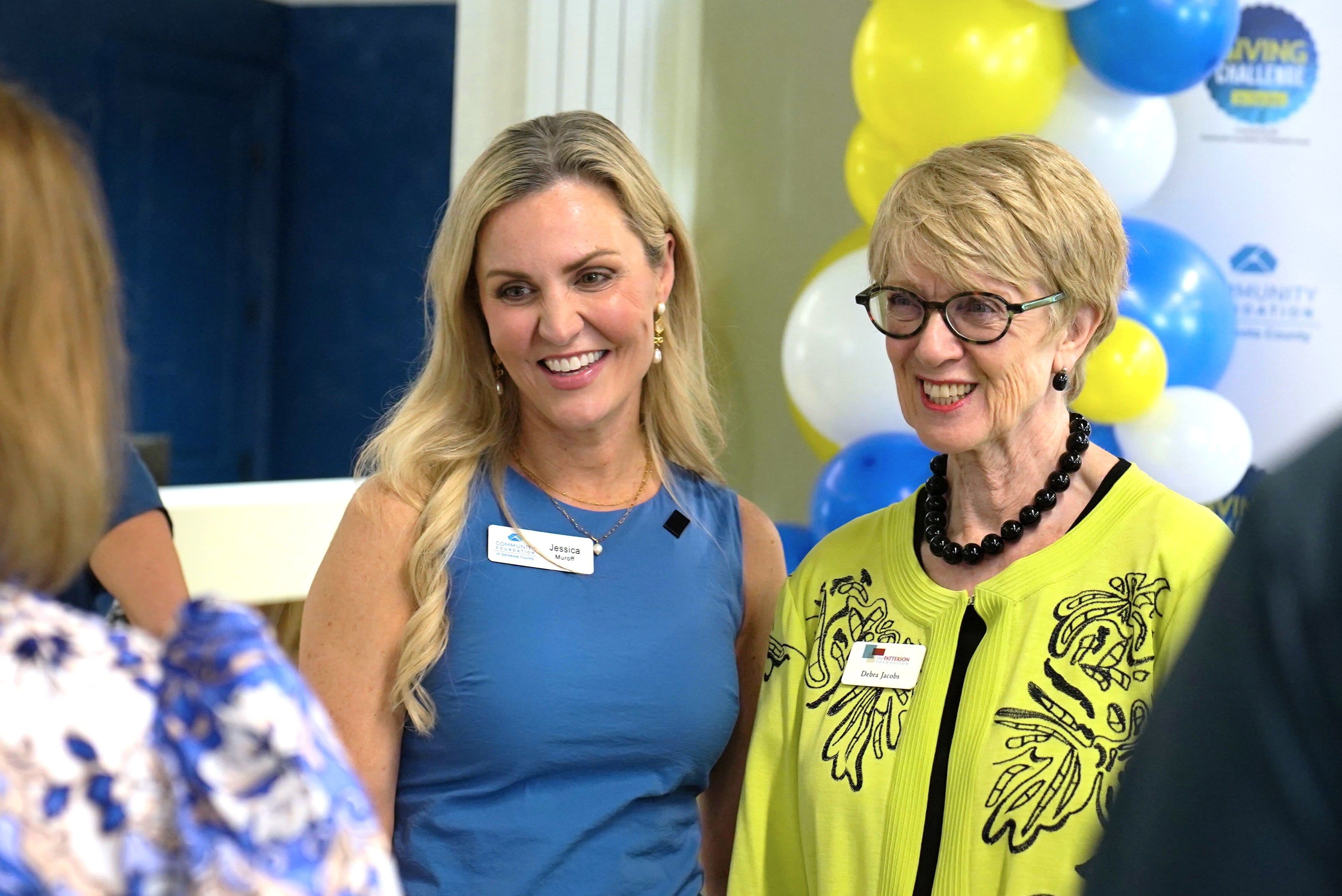
Debra Jacobs
President and CEO, The Patterson Foundation
“Across the Suncoast, we see people striving to do the best they can with what they have each day. But when uncertainty hits—as it inevitably will—it can knock them off balance. Fortunately, we live in a region full of people passionate about sharing and helping others.
“At The Patterson Foundation, we have the privilege of witnessing that in several ways. We see the tens of thousands of families who spark their children’s love of learning by attending Suncoast Remake Learning Days events—not to mention the hundreds of event hosts behind those experiences. There are people in Community Emergency Response Teams making our neighborhoods more resilient to natural disasters. Of course, we applaud the thousands more who donate through opportunities such as the Giving Challenge and Season of Sharing, demonstrating that everyone can be a philanthropist.
“From DeSoto County to the North River region of Manatee County, we see the magic that happens when people come together around shared aspirations for a better future, for themselves and for strangers they’ve never met.
“These people are at the heart of all that we do—the helpers and those receiving help alike. Our purpose is to catalyze the right conditions and opportunities that strengthen meaningful connections: linking people to resources they might not have known about otherwise and, most importantly, to each other.”

Image: Courtesy Photo
John Annis
CEO, Charles & Margery Barancik Foundation
“One thing I’m seeing is that nonprofits are being asked to meet growing community needs while also navigating rising costs, workforce challenges and increasing expectations to measure and demonstrate their impact. That accountability is important. Chuck and Margie Barancik created Barancik Foundation to make a meaningful difference, and honoring their legacy means continuing to ask whether well-intentioned work is producing lasting results. But philanthropy also has to recognize the real cost of doing the work. That includes the staff, technology, financial systems and evaluation capacity that may not sound exciting but are essential to strong and effective organizations. I’m glad to see more funders recognizing that asking nonprofits to collect data or submit reports without being willing to fund the things they need—people, lights, computers—doesn’t make sense. Margie reminded us that we can’t change the world, but we can change little pieces of it and hope for a ripple effect. Our responsibility is to make sure those ripples are meaningful and lasting.”

Image: Courtesy Photo
Kate Mulligan
Executive Director, Lakewood Ranch Community Foundation
“One of the most encouraging trends I have witnessed is the growing commitment of local high school students to philanthropy.
Through conversations with these young people, I have learned that their passion for giving is often shaped by hands-on volunteer experiences in their own communities.
“When students volunteer with local organizations, they see community needs up close. Inspired to make a difference, many take action, despite having limited financial resources. They organize clothing, food and toy drives, launch small fundraising campaigns, or rally friends and family around causes they care about.
“Their interests also reflect the issues that matter most to their generation, from environmental conservation and social justice to animal welfare. Rather than focusing solely on large national charities, many choose to invest their time and energy in local nonprofits where they can see the direct impact of their efforts and build meaningful relationships within their community.
“At the Lakewood Ranch Community Foundation, we recognize this spirit of service by awarding scholarships each year to three outstanding high school junior humanitarians. Several of these students have gone even further, creating their own nonprofits or community initiatives to address challenges such as providing dental hygiene supplies to underserved children and organizing outreach programs for isolated seniors.
“These young leaders remind us that philanthropy is not measured by the size of a donation but by the willingness to identify a need and take action. Their creativity, compassion and commitment give me great confidence that the future of philanthropy and our communities is in capable hands.”
These responses have been edited for length and clarity.