


See How Locals And Neighbors Residents Ranked Issues Like Housing and More in a Recent Regional Survey
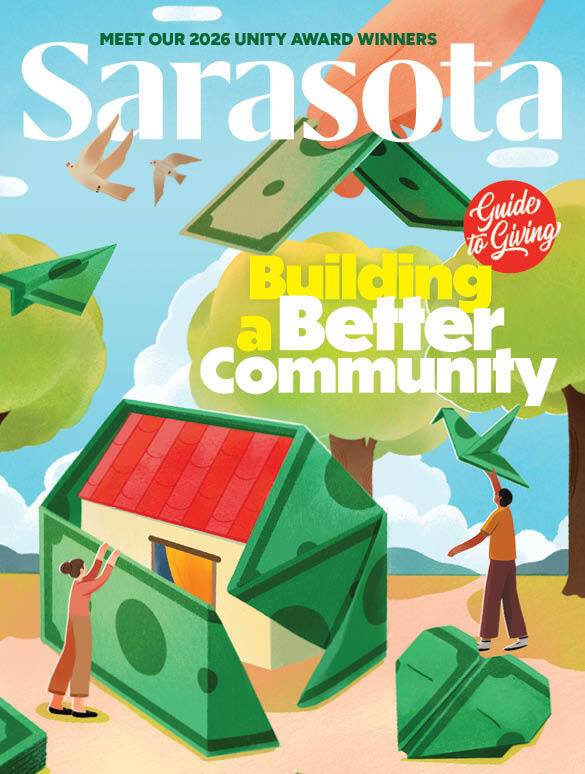
A new survey of 1,500 residents across Sarasota, Charlotte and DeSoto counties found that affordable housing has become the region’s top concern, outranking every other issue by a wide margin—and pulling behind it a familiar set of anxieties: rising costs, overdevelopment, flooding, food insecurity and the difficulty of getting help when life goes sideways.
The survey, conducted from July 2025 through January 2026 as part of the Gulf Coast Community Foundation’s Regional Scan, put affordable housing at the top of the list, with 57.4 percent of respondents saying addressing it would do the most to improve their community. Environmental protection followed at 35.8 percent. Support during times of crisis came next at 32.1 percent.
Together, the three form a portrait of a region under pressure, not only from the cost of living but from the sense that growth has outpaced the systems meant to hold a place together.
Overall, housing dominated the findings. More than half of respondents identified affordable housing as a top concern, yet only about one-quarter said it directly affected their own household. And residents also described a broader unraveling—one they could see around them in the workers who keep the region running, the families struggling to stay and the neighbors who have been priced out.
The complaints were specific. Residents pointed to rising rents, insurance premiums, property taxes and utility bills, along with a market that many feel favors luxury homes, short-term rentals and investor ownership over housing for people who live and work here year-round.
In Sarasota County, 57 percent of renter households spend 30 percent or more of their monthly income on rent. In Charlotte County, that figure is 47 percent. In DeSoto County, it's 46 percent. The 2024 ALICE Household Survival Budget for a family of four was $104,424 in Sarasota and Charlotte counties and $95,004 in DeSoto County, figures that help explain why housing costs no longer feel to many residents like one issue among many, but the issue underlying all the others.
Even among people who said housing costs didn't directly affect them, many still described the problem as a threat to the region’s stability. Teachers, nurses, childcare workers, first responders and hospitality employees were cited as people who increasingly can’t afford to live near their jobs. In one chart, 32.7 percent of respondents indicated they worried that housing prices, rents or mortgage rates were making it harder for local workers to remain in the region.
Environmental concerns ranked second, with 76 percent of respondents indicating their concern came from something they had personally seen or experienced.
Overdevelopment was the most common concern, cited by 83 percent of respondents in that category. Water quality followed at 47 percent, then red tide at 45 percent, loss of wildlife habitat at 41 percent and flooding at 40 percent. Written comments tied those fears to roads, stormwater systems, utilities and other infrastructure that residents feel haven’t kept pace with the pace of building. Water quality concerns were tied to runoff and sewage impacts. Flooding was described as a recurring fact of life.
The third-ranking category, support during times of crisis, brought the scan from long-term pressure to immediate need. Residents weren't asking for new programs. They were asking for systems that work.
Support during times of crisis referred to homelessness, food insecurity and natural disasters, along with the long and often frustrating effort to recover from them. Across the responses, residents pointed to delayed assistance, confusing processes and uneven access to help.
The homelessness figures help explain the urgency. Sarasota County’s estimated homeless population rose from 1,048 in 2020 to 1,157 in 2024. Charlotte County’s rose from 163 to 343. DeSoto County’s rose from 104 to 115. When asked what would better support people experiencing homelessness, 69 percent of respondents chose more affordable housing options and 59.7 percent chose more emergency shelter beds.
Food insecurity, too, emerged as another concern. The survey found that more than 80,000 neighbors may need support from All Faiths Food Bank, amounting to roughly 20.4 million meals. Residents said better transportation to food access points, more food bank locations and greater affordability for fresh food would help.
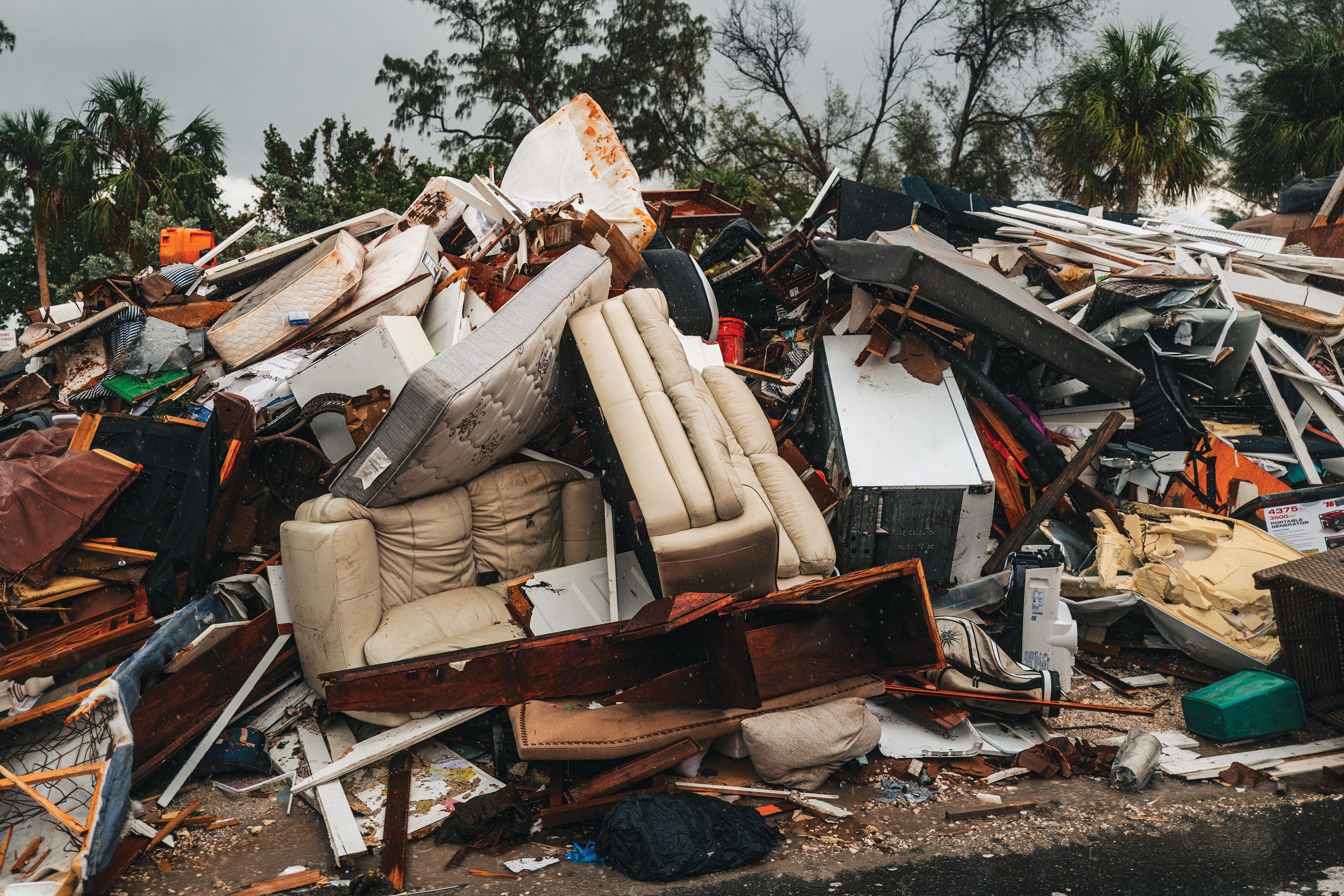
Then there was disaster recovery. The survey cites an estimated $4 billion in storm damage from Hurricanes Debby, Helene and Milton in 2024. But the concern residents expressed was not only the scale of the destruction. It was the bureaucratic afterlife of it: the forms, the delays, the uncertainty and the sense that aid exists on paper but remains tangibly out of reach.
For all that, 65 percent of respondents selected issues that did not directly affect them personally, suggesting a regional thinking toward shared responsibility. Residents also identified arts and culture, along with parks and recreation, as strengths that make the region distinct.
Nearly half of respondents, 48 percent, said they sometimes or always do not feel they belong in their local community. Among that group, 40 percent said they feel local government is not listening.
In all, the findings show the region still knows what makes it beautiful, livable and worth defending. But for many residents, especially in Sarasota, the question is whether the foundations of ordinary life can still be secured here.