



For 50 Years, Archaeologist Marion Almy Has Uncovered and Protected Florida’s Buried History
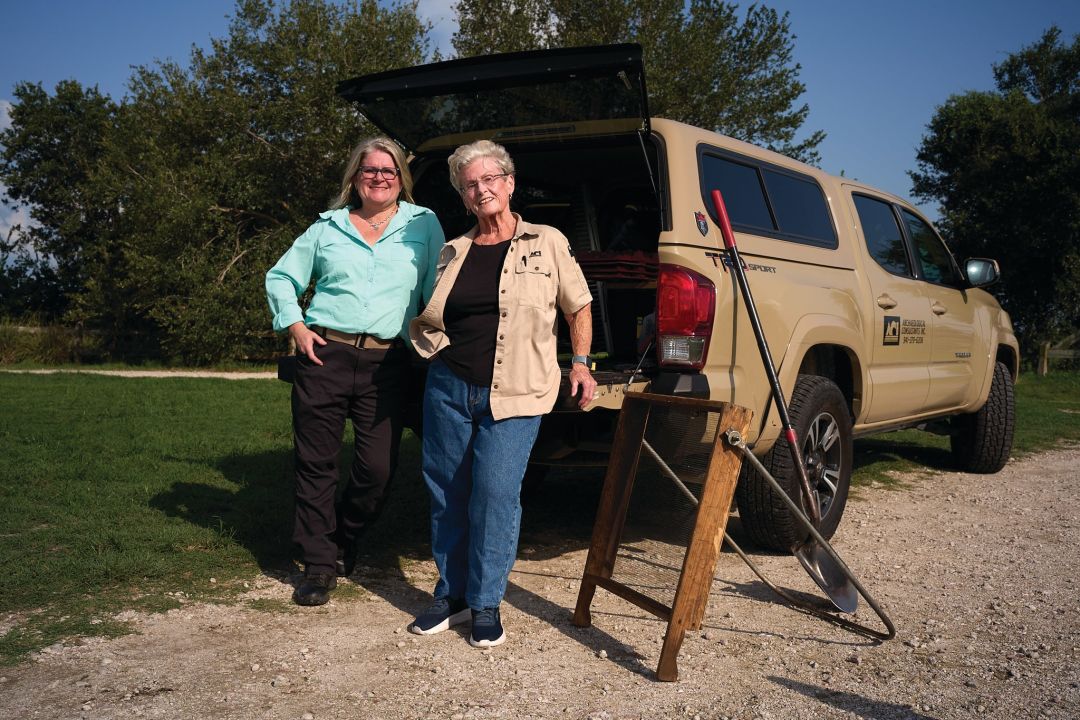
Image: Jeffrey P. Günthart
Marion Almy’s archaeology career began in fourth grade at Southside Elementary School. The assignment was to research Pompeii, the Roman city buried by the eruption of Mount Vesuvius almost 2,000 years ago, which preserved homes, frescoes, food, graffiti and even humans in ash and pumice, turning disaster into vivid snapshots of ancient life. Almy was hooked. The fascination followed her through to a master’s degree in public archaeology and, in 1976, to the founding of Archaeological Consultants Inc. (ACI), a Sarasota firm that has spent nearly 50 years working on more than 6,500 projects helping Floridians understand what lies beneath our subdivisions, roads and back yards.
For her daughter, Maranda Almy Kles, 46, archaeology was the world she inhabited. When she was little and sick enough to miss school but not enough to keep her mother home, Marion brought her to job sites. On one dig in Lee County, Marion and her business partner Joan Deming found an archaeological site and named it after the 5-year-old Maranda. By the time she was in third grade, Maranda announced she wanted to be an archaeologist like her mom.
Still, Marion later tried to steer her daughter away from the profession. “Don’t major in anthropology,” she said when Maranda went off to college. Years passed, but Maranda’s passion for digging in the dirt did not.
“I was going to go to medical school, but then got sidetracked to archaeology,” says Maranda, who now has a doctorate in bioarchaeology. “In the end, I’m a doctor, just not quite the kind she wanted.”
Today, Marion, 79, is ACI’s CEO. Maranda is the company’s president. Both were born and raised in Sarasota, and both now translate Florida’s buried and built history for developers, governments and homeowners who often encounter archaeology not as something romantic, but as an irritating permitting requirement.
“Nobody would spend money on digging holes if they didn’t have to,” Marion says. Local, state and federal laws require cultural resources to be considered before some projects move forward, such as roads, bridges, cell towers, conservation lands, backyard pools and historic buildings.
The daily work is less Indiana Jones than logistics, science and patience. Crews check old maps, aerial photographs and more to decide where to look, then dig carefully placed holes, recording soil colors, artifact depths and anything that might suggest past human activity. “On one hand, it can be monotonous, because you’re digging all day,” Maranda says. “On the other hand, one day you’re working in a cow field, and the next you can’t dig a hole on the site because there’s a 10-foot alligator.”
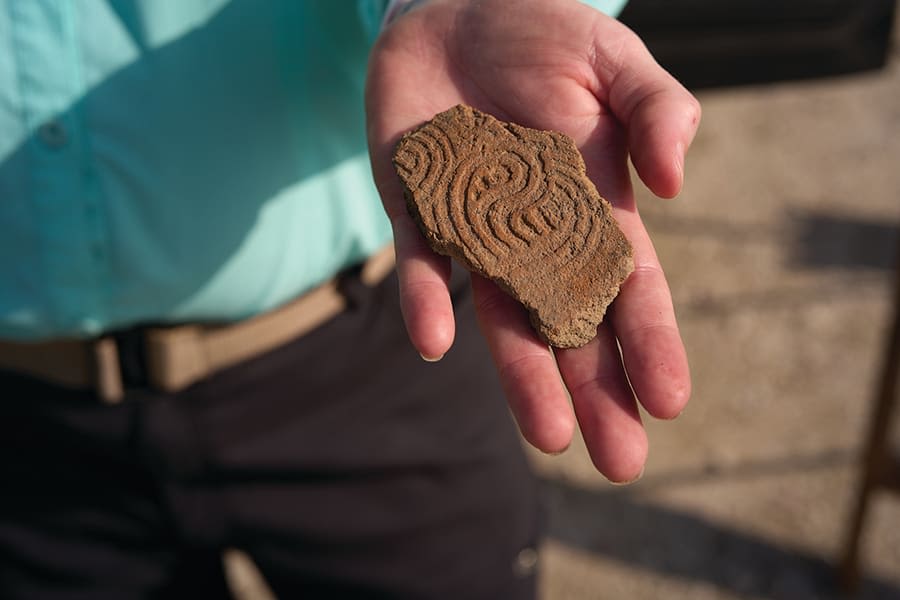
Image: Jeffrey P. Günthart
What they find tells a story: stone tools, pottery fragments, animal bones, traces of meals and movement. In Sumter County, the firm found a midden with unusually well-preserved bone and pottery. They could tell what animals people had eaten and even what season they returned. “To everybody else, that doesn’t look like a lot,” Maranda says. “But it gave us a picture into 1,000 years of human activity.”
When artifacts are found, they may be returned to landowners, transferred to museums or local historic divisions, or stored for future researchers, who can learn new things from old collections as technology improves. Locally, ACI’s work has touched sites across Sarasota, from Indian Beach and Spanish Point to county parkland and conservation projects, as well as private properties where homes, pools or other construction overlap with the archaeological map.
As Florida keeps building, the work is also about correcting a misconception: that preservation stops progress. “It’s a step in the process,” Maranda says. Usually, even significant archaeological finds lead to evaluation, documentation or mitigation, not a permanent halt to a project.
That balance matters in Sarasota, where Native American life, early settlement, historic dumps, midcentury buildings and civic memory sit beneath places people pass every day. “So many people are new to Florida and think that maybe we don’t have an ancient history,” Marion says. “There have been people here for 10,000 years. There’s still a lot to learn.”
What ACI Has Found Close to Home
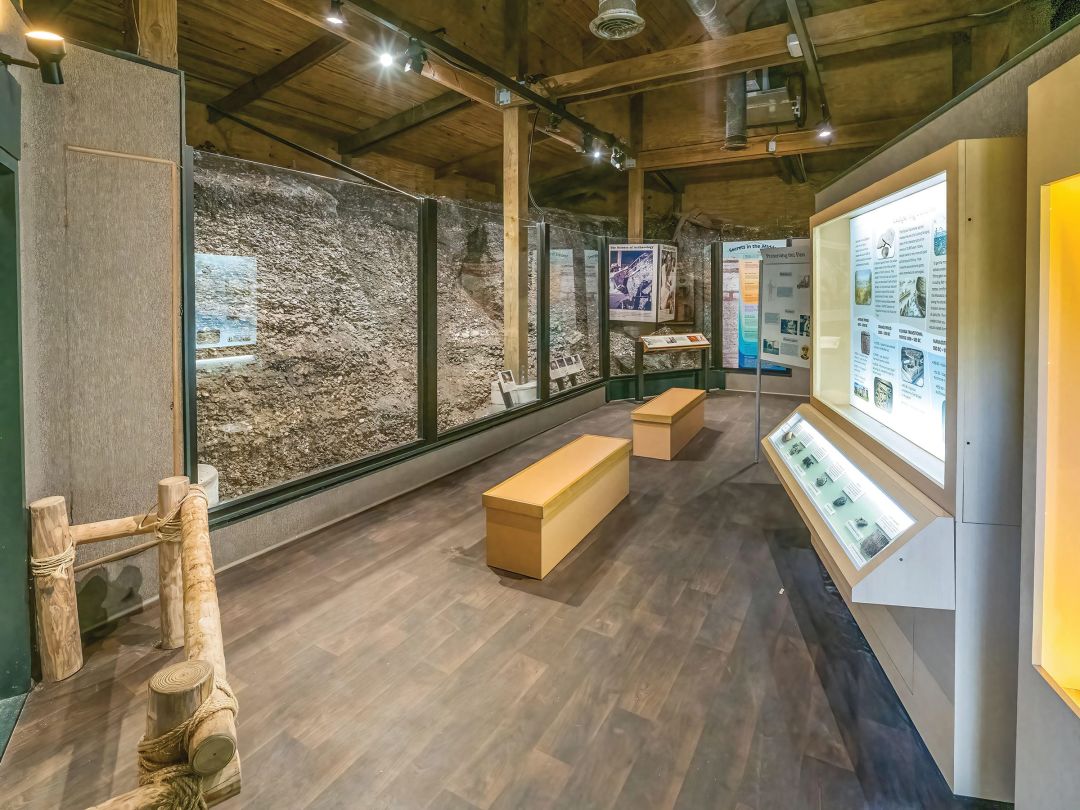
Image: James Schwabel/Alamy
Historic Spanish Point
One of ACI’s early local projects helped shape what visitors now experience at Selby Gardens’ Historic Spanish Point. Marion Almy and archaeologist George Luer worked with the Gulf Coast Heritage Foundation to identify and evaluate Indigenous archaeological sites on the property, as well as the overgrown shell pathways Bertha Palmer built through her gardens. They also helped create the Window to the Past exhibit, a 10-foot-tall ancient shell midden, displayed behind glass, a rare view of thousands of years of layers of Indigenous shell debris. The walk-through diorama became a visitor favorite and a model repeated elsewhere in Florida.
Fort Hamer Bridge
Much of ACI’s work has been done with the Florida Department of Transportation, including the Fort Hamer Bridge project in Manatee County. Historic records placed Fort Hamer, a Second Seminole War fort, near the proposed bridge area on the south side of the Manatee River. After archival research, consultation with the Seminole Tribe of Florida and Manatee County, and several years of archaeological and historic study, ACI determined the fort itself was not within the bridge’s area of impact. But the surveys uncovered artifacts tied to U.S. soldiers stationed there and Seminole people incarcerated at the fort—including uniform buttons, glass bottle fragments and hardware likely related to horse tack—which, along with archival research and consultation with the Seminole Tribe of Florida, helped produce a detailed history now on file in Tallahassee.
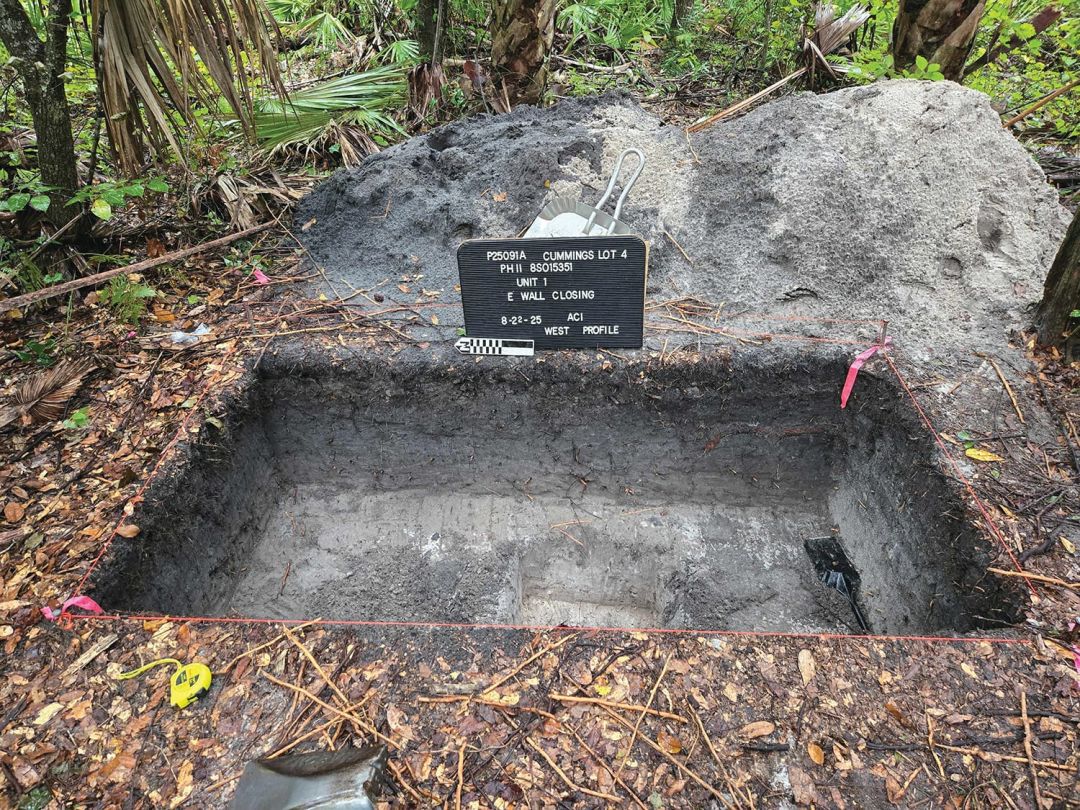
Image: Courtesy Photo
A North Port Site
More recently, ACI identified a rare archaeological site in North Port, a city whose history stretches back more than 10,000 years. The site showed evidence of Native Americans returning to the area seasonally to collect turtles and hunt deer. Deer bones had been made into sharp drills, knives and tools for working hides, while shells suggested people moved between the beaches and inland hammocks. ACI is now working with the landowner and the city on a plan that preserves what the site can teach while still allowing development to continue.


