



New North Port Data Center Filings Detail Water Use, Wetland Impacts and More
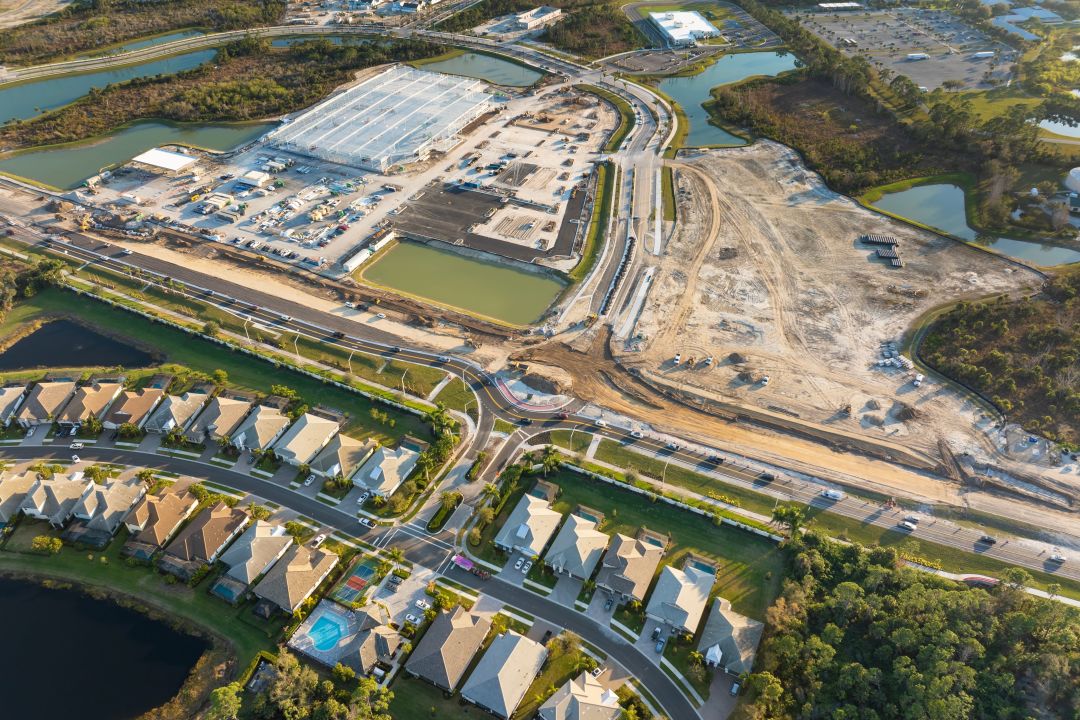
Image: Bilanol/Shutterstock.com
North Port residents worried about the proposed Deep Park data center now have some numbers to examine—but not all the numbers they’ve been asking for.
The North Port City Commission held an informational workshop on data centers at 6 p.m. Thursday, Sept. 3, in the City Commission Chambers at City Hall. The session lasted roughly four hours and included presentations from Florida Power & Light, the Peace River Manasota Regional Water Supply Authority and the Florida Digital Infrastructure and Security Alliance, a digital-infrastructure industry group. No vote or project approval occurred.
The meeting followed the commission’s Aug. 31 vote to advance an 18-month moratorium on data center development. That ordinance still requires a second and final vote, scheduled for Sept. 22.
Much of the workshop dealt broadly with how data centers affect electric grids, water supplies and local economies. More concrete information about the pending project came from a separate set of revised application documents submitted to the city by North Port Holdings 300 LLC on Aug. 31.
Those documents add details that weren’t publicly available when the commission began debating the moratorium.
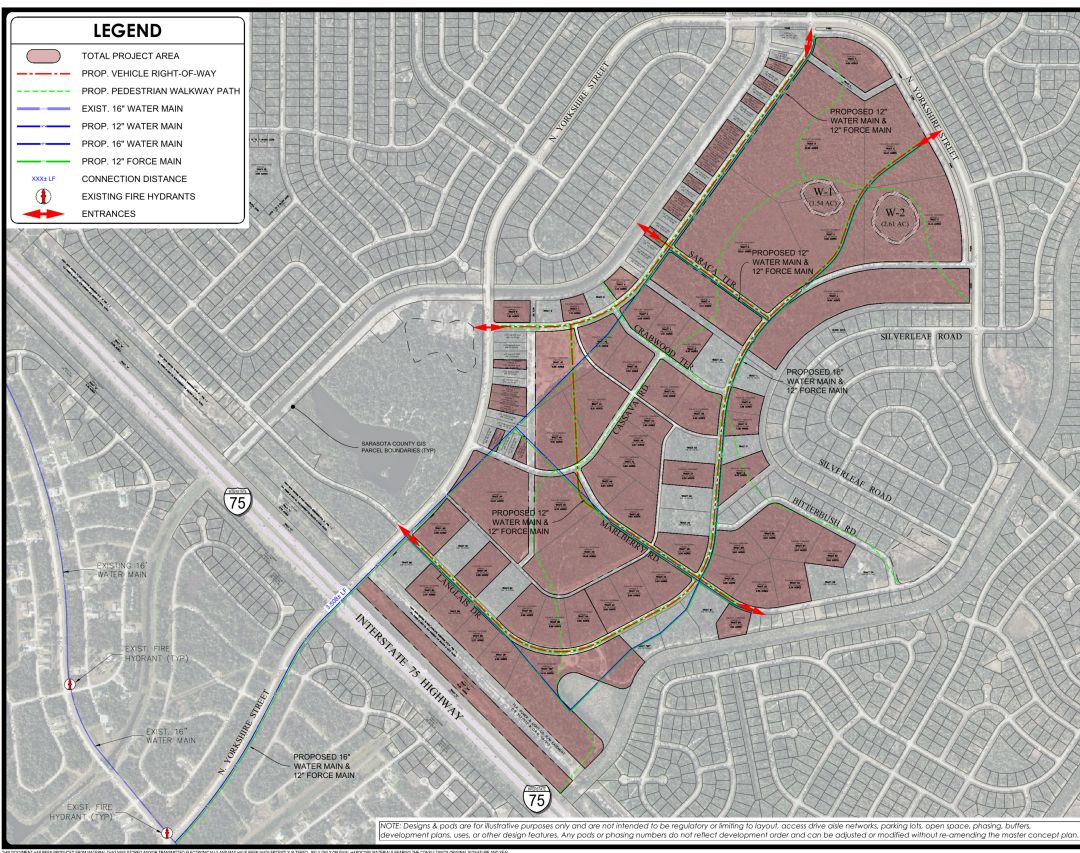
Image: Courtesy Photo
The proposed data center would occupy approximately 112 acres within the broader 282-acre Deep Park concept north of Interstate 75 and south of Yorkshire Street. The revised application identifies three parcels and calls for seven data center buildings spanning roughly 896,000 square feet.
About 123,200 square feet would be used for offices.
The plans also identify a future electrical substation as an accessory use. The substation isn’t included in the current approval request and would be designed and submitted separately, the applicant said.
The applicant proposes extending public water infrastructure to the property while treating wastewater onsite. Approximately 22.5 acres—or about 20 percent of the data center site—would be devoted to stormwater ponds.
A newly submitted water analysis estimates average potable-water demand of 15,500 gallons per day. It projects maximum daily demand of 23,250 gallons and a peak-hour flow of approximately 43 gallons per minute.
Those are the applicant’s estimates. The analysis labels them as potable-water demands but doesn’t clearly identify the cooling technology planned for the facility or explain whether the figures include any water that would be consumed by its cooling system.
That difference matters because water consumption can vary substantially depending on how a data center is cooled. Without a description of the proposed system, the calculations don’t resolve questions about the project’s potential cooling-water requirements.
The latest application documents also don’t state a definitive electrical load.
FPL used the workshop to explain how it handles large-load customers generally. The utility says its large-load framework is designed to prevent existing customers from bearing the costs of serving new data centers. It requires qualifying customers to pay the incremental generation costs associated with their projects and may require them to contribute toward transmission, distribution and other facilities needed for interconnection.
FPL says its process begins with a system study that generally takes six to nine months and is paid for by the prospective customer. Its large-load rate structure also requires a commitment of at least 20 years, minimum-demand payments and financial penalties if a project fails to begin operating or meet its obligations.
Those statements respond to residents’ concerns that the proposed development could raise other customers’ electric bills.
The documents don’t establish how much new generating capacity or transmission infrastructure Deep Park might require or whether North Port Holdings 300 has begun FPL’s large-load review process.
The workshop presentation also noted that a recently enacted Florida law defines a large-scale data center as a single location with an anticipated monthly peak load of at least 50 megawatts, calculated as the highest average load during a 15-minute interval. The application materials don’t establish whether Deep Park would meet that threshold.
Water-supply officials provided another layer of context.
The Peace River Manasota Regional Water Supply Authority, which provides wholesale drinking water in Charlotte, DeSoto, Manatee and Sarasota counties, said North Port currently has an allocation of 2.9 million gallons per day from the authority.
The authority also reported that a modified Phase III “extreme” water-shortage order affecting the region had been extended through Oct. 1. The presentation didn’t determine North Port’s utility system could accommodate the data center’s potential cooling-water requirements.
The applicant’s consultant identified six wetlands totaling approximately 4.34 acres and two other surface-water areas consisting of approximately 1.47 acres of excavated hydric ditches. The project proposes impacts to all six wetlands and both ditch areas.
The consultant characterized the wetlands as having diminished ecological value because of historic disturbance and invasive vegetation. The applicant proposes offsetting the loss of approximately 4.14 acres of wetlands by purchasing credits from the Myakka Mitigation Bank.
Those conclusions come from an environmental assessment prepared on behalf of the applicant rather than from an independent city environmental study.
The consultant also identified several potentially occupied gopher tortoise burrows. It recommends surveying all suitable habitat within 90 days before construction or land clearing and obtaining a state relocation permit for any tortoises found within or near the clearing area.

Image: Wikimedia Commons
The assessment also discusses protected species that could occur on or near the property, including the eastern indigo snake, wood stork, Florida bonneted bat, Florida burrowing owl and Florida sandhill crane. The consultant says none of those species was observed during its fieldwork.
City staff said in the workshop presentation that they had invited representatives from environmental regulatory agencies and regional environmental consultants, but those representatives either couldn’t attend or didn’t respond. The workshop therefore didn’t include a separate environmental presentation comparable to those provided by FPL, the regional water authority and the digital-infrastructure industry group.
The city hasn’t announced whether the revised application contains enough information to advance to full technical review. Even if it does, that wouldn’t constitute project approval.
The proposed moratorium would freeze new data center applications for 18 months. Under the version advanced on first reading, the Deep Park application could continue through processing and technical review, but the city couldn’t grant final approval while the moratorium remained in effect.
Commissioners are scheduled to hold the second and final hearing at 6 p.m. Tuesday, Sept. 22, in the City Commission Chambers at 4970 City Hall Blvd.
Until then, the new documents provide a clearer picture of the land the data center would occupy, its estimated potable-water demand and its proposed environmental effects. They still don’t answer two of the most consequential questions raised by residents: exactly how much electricity the facility would require and how its servers would be cooled.
Click here to learn more about data centers in our region, and here to view application materials.