


Manasota ASALH Executive Director Jada Wright-Greene on the Vitality of the Past and How We Can Preserve It
This article is part of the series In Their Own Words, proudly presented by Gulf Coast Community Foundation.

Image: Barbara Banks
When Jada Wright-Greene talks about history, she doesn’t describe it as something static or sealed behind glass. To her, it’s alive in handwritten
letters and oral testimonies, archives and attics, and in the choices we make about what to preserve.
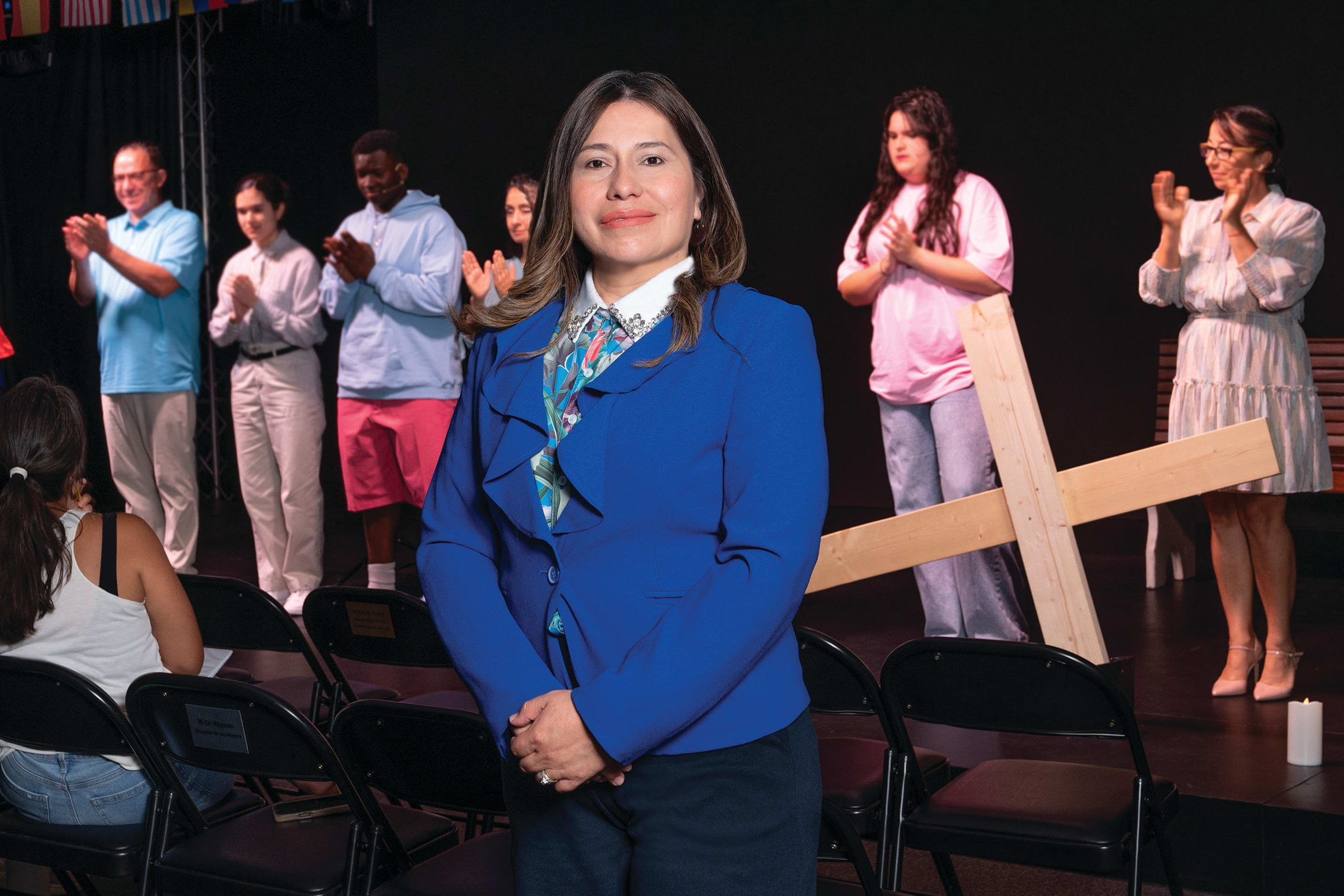
The first African American graduate of the museum studies program at Michigan State University, Wright-Greene has built a career blending scholarship and service. From writing a book on Florida’s historic African American homes to publishing the oral history of Malcom X’s sister and founding the only magazine devoted to African American museums and cultural sites in the nation, her passion for preservation has taken her across the country.
Today, Wright-Greene is the first executive director of the local branch of the Association for the Study of African American Life and History (Manasota ASALH), a national organization founded by the father of Black History Month, Dr. Carter G. Woodson. The Manasota branch is the largest and most active in the country. Since taking the helm in August 2024, Wright-Greene has overseen the expansion of the branch’s Freedom School—a community-based, Saturday K-12 school program that aims to improve students’ reading and literacy skills and teach Black history—and strengthened a scholarship initiative that has awarded more than $700,000 to 333 local scholars. Its most recent fundraiser raised $100,000 to support high-achieving students.
Where does your love of history come from?
“My grandmother. My earliest memory of museum-type work goes back to when I was around 11. She had been asked to gather the story of our church—a very small congregation on the north side of Jacksonville called New Hope AME. The church was founded by James William Randolph, the father of civil rights leader A. Philip Randolph, and my grandmother was tasked with creating an exhibit about its history. I can almost see it now: us taping old photographs to wood-paneled walls, hanging up pages she’d carefully typed, detailing the narrative. I just loved it. And then my mother! Every trip we took, she insisted we go on a city tour. Whenever we go to a new city, my middle child, who’s 15, starts asking where the nearest museum or historical site is. I’m passing on that tradition.”
When did that childhood spark become a calling?
“I started at Mary McLeod Bethune’s home on the campus of Bethune-Cookman University. She was a humanitarian who traveled the world, championing education and the rights of all people. I visited during a college tour and on the first day of my freshman year, I went straight to the house and said, ‘I want to work here. You don’t even have to pay me.’ I just kept showing up, and they let me be there—for more than two years! I loved every moment of it. Anyone who attended the university will tell you [Bethune’s] spirit lingers there and calls you to serve. That was my first real introduction to historic homes and sites.”
How do you combat erasure and take control over the historical narrative?
“Being able to know and understand what true history is—not something someone wrote somewhere that isn’t evidence-based—is essential. It starts with primary sources: census records, newspaper archives from the time period, original documents. It means talking to people who lived it, or turning to established oral history collections. Many museums also provide access to online exhibitions and digitized materials, which helps broaden that access. I have three master’s degrees, and my most recent is in history. I didn’t pursue it because I needed another credential. I pursued it because I wanted to deepen my understanding of what comprehensive, documented history looks like.”
What feels most at stake right now as far as protecting and preserving Black history?
“If we don’t take the time to share our voices—to speak up about what’s happening and what we may not agree with—we risk losing it. Showing up matters. Supporting and investing in institutions and nonprofits doing the work, attending their events, that’s what sustains them. There is a real threat that, without that backing, we won’t be able to continue this work in the way it deserves. Arts and cultural nonprofits have always depended on funders and donors, on people giving what they can. Now more than ever, we have to stand up for them. We have to be collaborative across the aisle with everyone.”
As technologies like AI and social media reshape how we access and understand information, what do you think the future of historical preservation looks like?
“I always tell people: support your local museum, your neighborhood historic site, a nonprofit, a program—something you really believe in. If we want real history preserved, we have to actively support the organizations doing that work. At the same time, we have to use technology to inspire us. I was scrolling through social media recently and came across a letter Mary McLeod Bethune wrote while she was at Bethune-Cookman University. She was looking out her window, reflecting on the pride she felt watching her students graduate. She reminded them that they had entered to learn and were departing to serve. Someone took the time to scan it, preserve it and share it with the world. How impactful is that?”
What are your favorite Sarasota historical places?
“The story of Mr. [Leonard] Reid and his house, which was rescued from demolition and preserved, is amazing. The work Vickie Oldham has done through her organization [the Sarasota African American Cultural Coalition] speaks to me deeply. I’ve also loved learning about [Irene Colson and the Rev. Lewis Colson], some of the first Black settlers in Sarasota. In the Rosemary District, they established the first Black church in the City of Sarasota. That legacy is amazing, and I’m grateful that these parts of Sarasota’s history are being preserved.”

This article is part of the series In Their Own Words, proudly presented by Gulf Coast Community Foundation.