



Sarasota Wants Your Input on Main Street’s Next Look
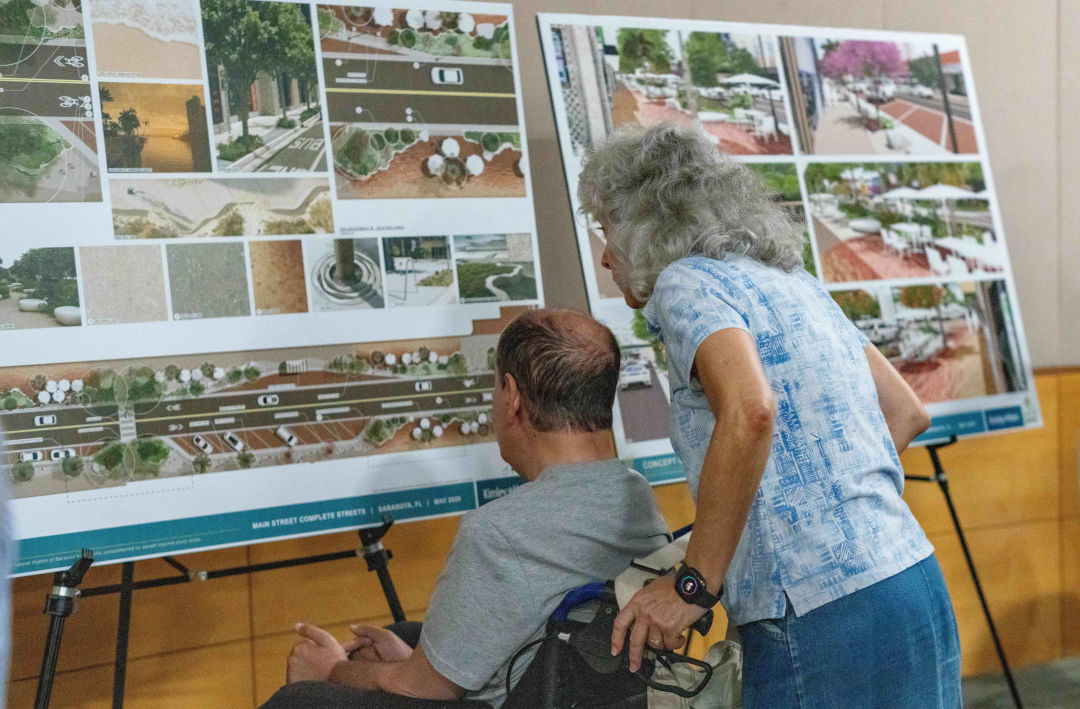
Image: City of Sarasota
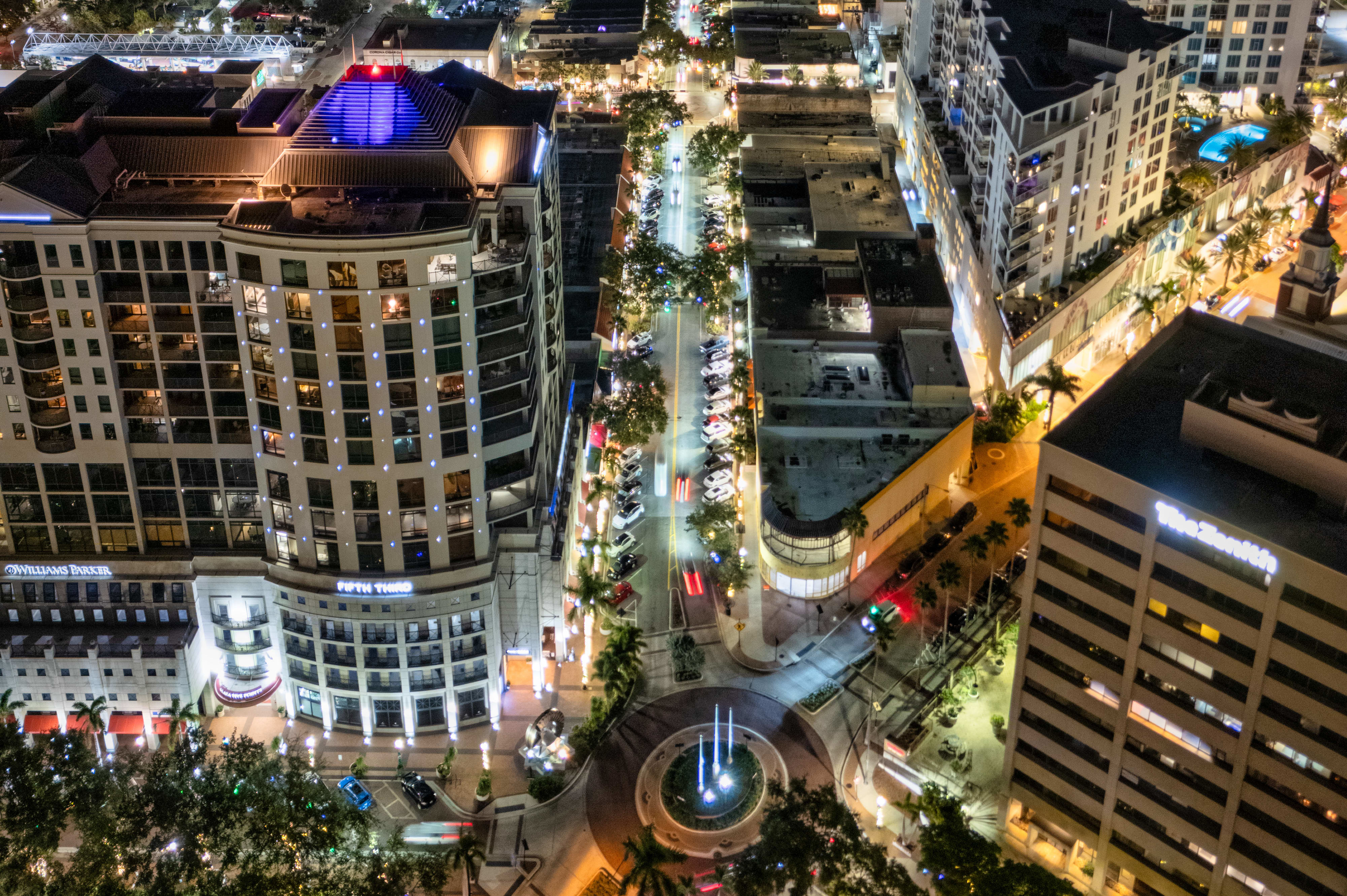
Main Street has long had a split personality. By day, it’s lunch meetings, errands, coffee runs and delivery trucks. By night, it’s date-night tables, slow-moving cars, full sidewalks and the familiar question of where to park.
Now, the City of Sarasota is asking the public to help decide what that street should look and feel like next.
The city has opened an online survey for its Main Street Complete Streets project, giving residents, business owners, workers, property owners, visitors and anyone else with a stake in downtown until June 19 to weigh in on three design concepts for the corridor. The project covers Main Street from U.S. 41 to School Avenue and is now in the planning and design phase.
The concepts were presented at a May 21 public meeting at Selby Public Library and are also available online through the city’s Engage Sarasota project page, along with a comprehensive video presentation. The renderings are conceptual and meant to show the general look and character of the future street, not final construction materials, exact amenities or a finished design.
This isn’t a final vote on whether Main Street becomes one thing or another overnight. It’s a chance for the public to help shape the direction before the project moves further into design. Construction timing hasn’t been determined.
The Main Street Complete Streets project comes out of Sarasota in Motion, the city’s transportation master plan, which identified Main Street as its No. 8 priority. The broader goal is to make the corridor safer and more comfortable for people moving through downtown by foot, bicycle, transit or car, while supporting the businesses and daily life that already make Main Street one of Sarasota’s most visible public spaces.
The redesign discussion is happening against a backdrop of parking frustration downtown. Sarasota recently extended paid parking hours to 8 a.m. to midnight, seven days a week, and some business owners worry the change could hurt the shoppers, diners and visitors Main Street depends on.
After nearly two years of visioning work and a year of community engagement, the city says previous public input pointed to several priorities: wider sidewalks, more shade and tree canopy, enhanced public spaces, traditional materials and streetscape character, and a careful balance between pedestrian improvements and on-street parking.
The three concepts offer different answers to the same question: Should Main Street lean traditional, historic or coastal?
Concept A
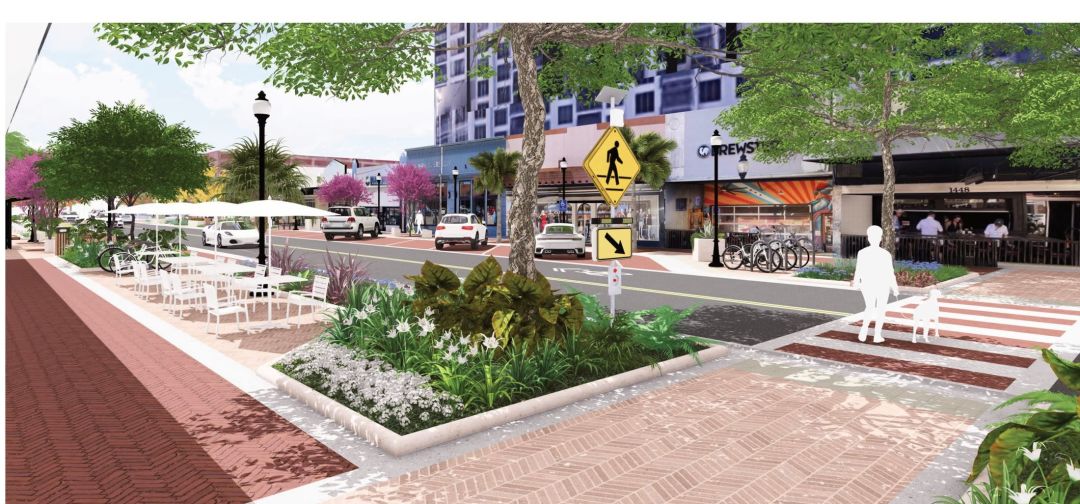
Image: Courtesy Photo

Image: Courtesy Photo

Image: Courtesy Photo
Concept A is the most classic downtown option. It uses traditional clay brick pavement, orthogonal planters and timeless furnishings arranged in a consistent, linear pattern. The renderings show cafe tables and chairs, benches, bike racks, light poles, planters, flowering trees, canopy trees and pedestrian crossings. Of the three, it reads most like an extension of the Main Street people already know: orderly, brick-heavy and familiar, with upgrades aimed at shade, seating and pedestrian comfort.
Concept B

Image: Courtesy Photo

Image: Courtesy Photo

Image: Courtesy Photo
Concept B borrows more directly from Sarasota’s early 20th-century architecture. It uses elegant arches, varied paving patterns, raised planters, seat walls and decorative paver banding. The renderings show seating nodes, curved planter forms, cafe seating, palms, flowering trees and a more embellished streetscape. This option is still rooted in brick and downtown character, but it has more architectural gesture, with arches and seat walls giving the sidewalks a stronger sense of place.
Concept C

Image: Courtesy Photo

Image: Courtesy Photo

Image: Courtesy Photo
Concept C is the most coastal of the three. It proposes a rippling walkway edge inspired by Sarasota’s shoreline, with sunset-inspired paving areas, shellcrete-like materials, pebble seating, wave-like walls, shaded seating and more fluid planter shapes. Where Concept A is linear and Concept B is architectural, Concept C is looser and more scenic, leaning into the language of water, beach and sunset that often defines Sarasota’s public image.
The differences are aesthetic, but they also speak to how people might experience the street. A more traditional design could emphasize continuity and restraint. A more historic design could make Main Street feel more formally tied to Sarasota’s architectural past. A coastal design could make the corridor feel more playful and destination-oriented.
Each concept includes elements that have become familiar in complete street planning: wider and more inviting sidewalks, shaded areas, landscaping, bike racks, lighting, outdoor seating and safer crossings. The details vary, but the premise is Main Street shouldn’t function only as a way to get through downtown. It should also work as a place to linger.
For downtown businesses, that question is practical. Better sidewalks and more shade can make it easier for people to walk, dine and shop. Changes to the streetscape can also raise concerns about access, parking, deliveries and construction disruption. Balancing pedestrian improvements with on-street parking remains one of the priorities identified through earlier engagement. That tension has become more pointed since commissioners recently approved extended paid parking hours and increased some parking fines by $5.
Public feedback will continue to shape the project as it moves through design. The city has hired Kimley-Horn to conduct the project development and environmental study and design work. Construction timing hasn’t been determined.
For now, the decision before the public is simpler: look at the three versions of Main Street, decide which one feels most like Sarasota, and say so before June 19.
The survey, concept boards and public meeting video are available here.