




After More Than Two Decades on Jewfish Key, Stephen Ellis Is Ready to Pass Along His Island Getaway
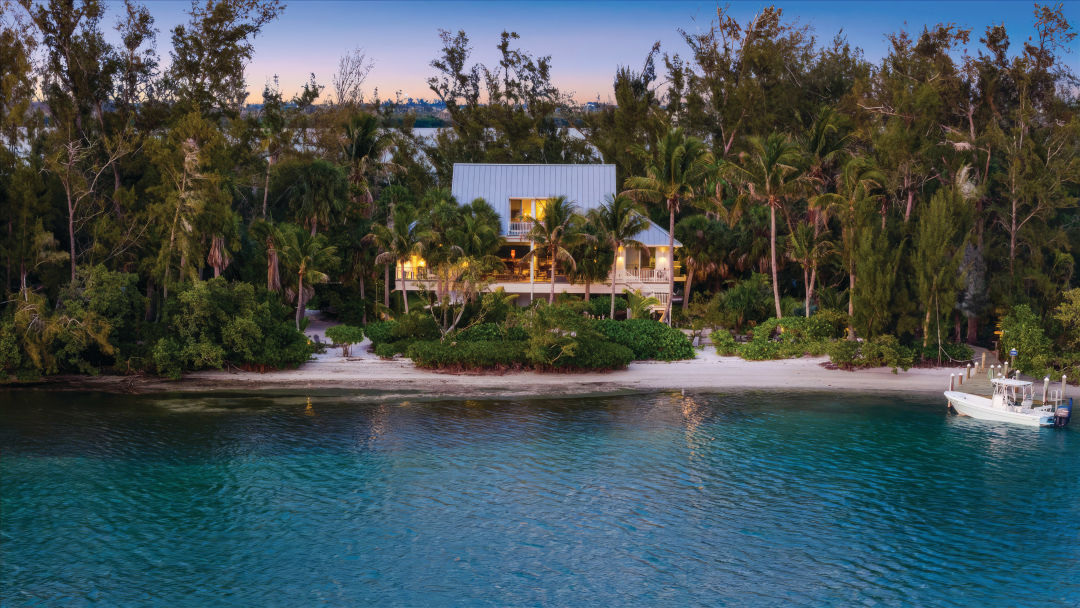
Before there was a house on Stephen Ellis’ slice of Jewfish Key, there was a dock, some shade and a reason to keep coming back.
Ellis was boating in late 2003 with his wife, Catherine, and their infant daughter,
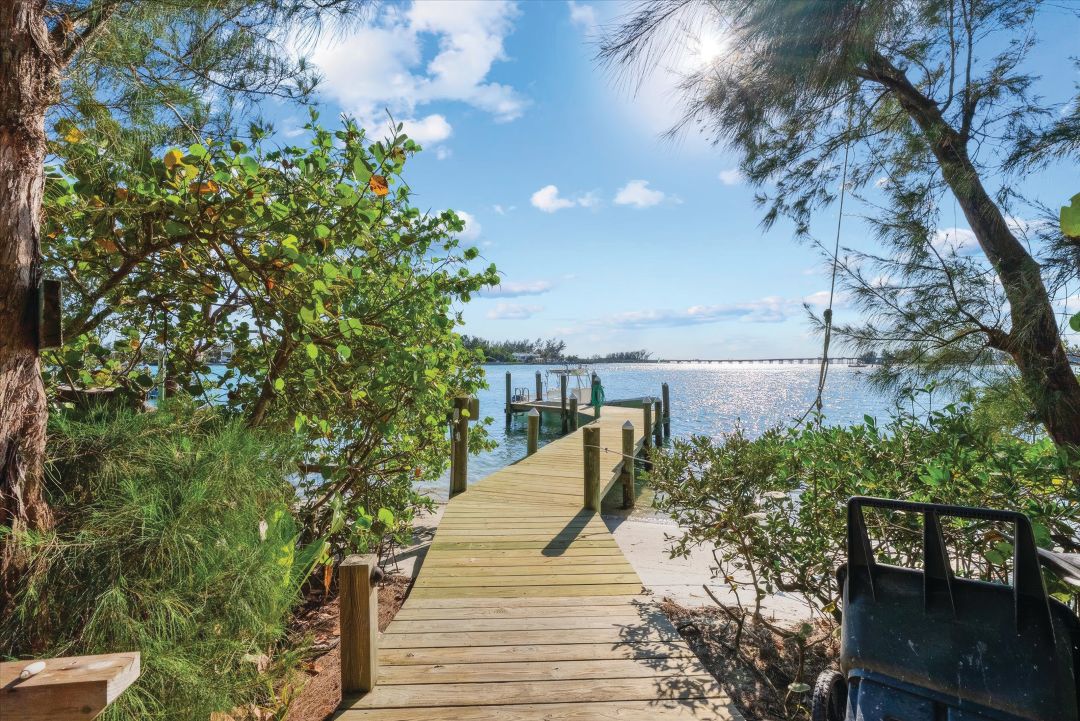
Saylor, after lunch at Mar Vista in Longboat Village, when he noticed a for-sale sign on the island. “It was nothing but woods,” he says, remembering when the key was thick with Australian pines and invasive growth. Still, it had what other lots didn’t: about 300 feet of beachfront and a deep-water dock. A few months later, he bought the property for $345,000. “We used it as a weekend beach getaway with our boat,” Ellis says. “We brought power to the dock, and we would hang out, cook, eat and sleep on the boat.”
Jewfish Key sits just off the north end of Longboat Key near Longboat Pass, and is only accessible by boat. It was formed from two earlier islands, Pickett Key and Fisherman’s Key, after the Intracoastal Waterway was dredged in the late 1930s, and then named for the Goliath grouper, once known as the jewfish. Today, the key is small, private and mostly green, with eight homes scattered among mangroves, palms, sea grapes and sandy paths.
For Ellis, 62, who grew up sailing and later built a career in construction and consulting, the island meant true waterfront living. For years, he and his family came by boat from Siesta Key. They cleared a beach, planted palms and let the place tell them what it wanted to be.
When Ellis designed and built their 2,721-square-foot, four-bedroom, four-bath home—listed for $5,995,000 at press time—in 2010, he didn’t want a sealed box. “We designed it to keep the feeling that you were living outside,” he says.
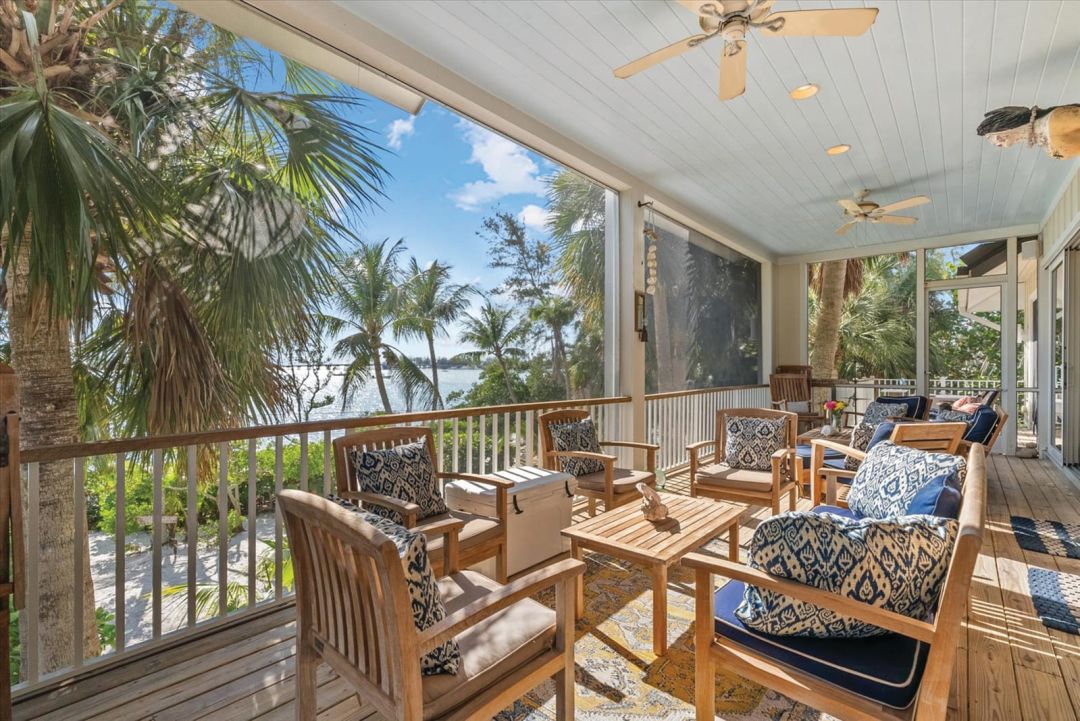
Elevated on pilings, the house creates a breezy, shaded hangout beneath its wide porch, where sandy ground, brick pavers, hanging chairs and informal seating areas make the space feel like an outdoor living room. Upstairs, the main living level opens east and west through broad pocketing sliders. One side is a screened dining porch looking into the island’s green interior; the other side is a lounge porch that faces the water and sunset. “Open those doors and the air just blows through,” Ellis says.
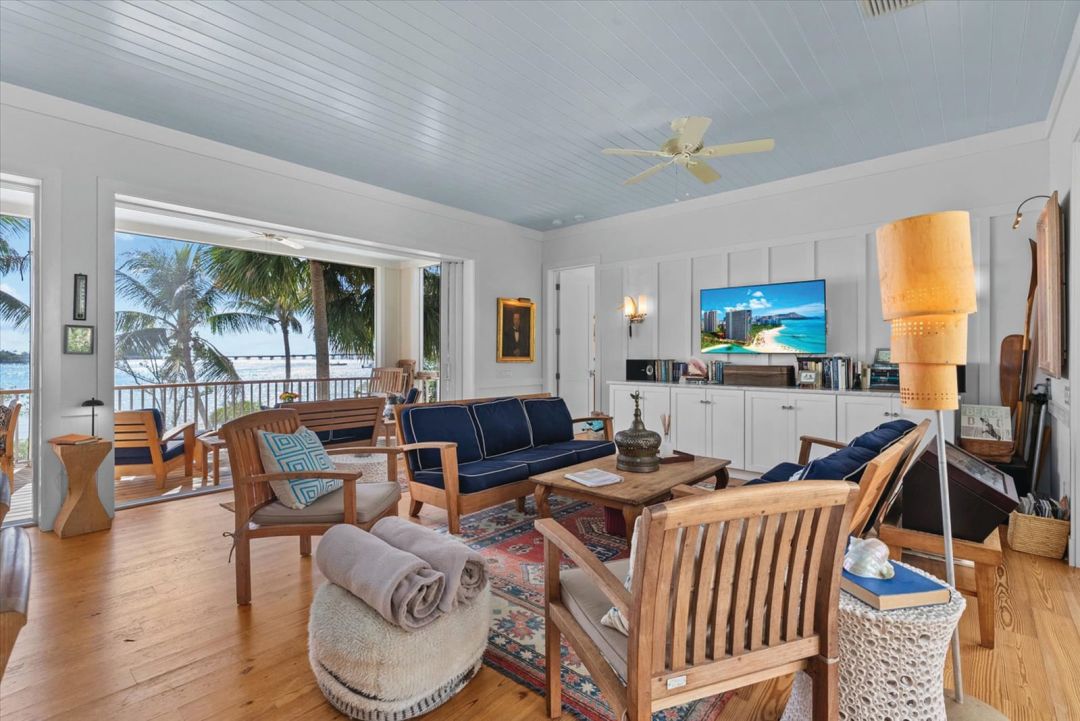
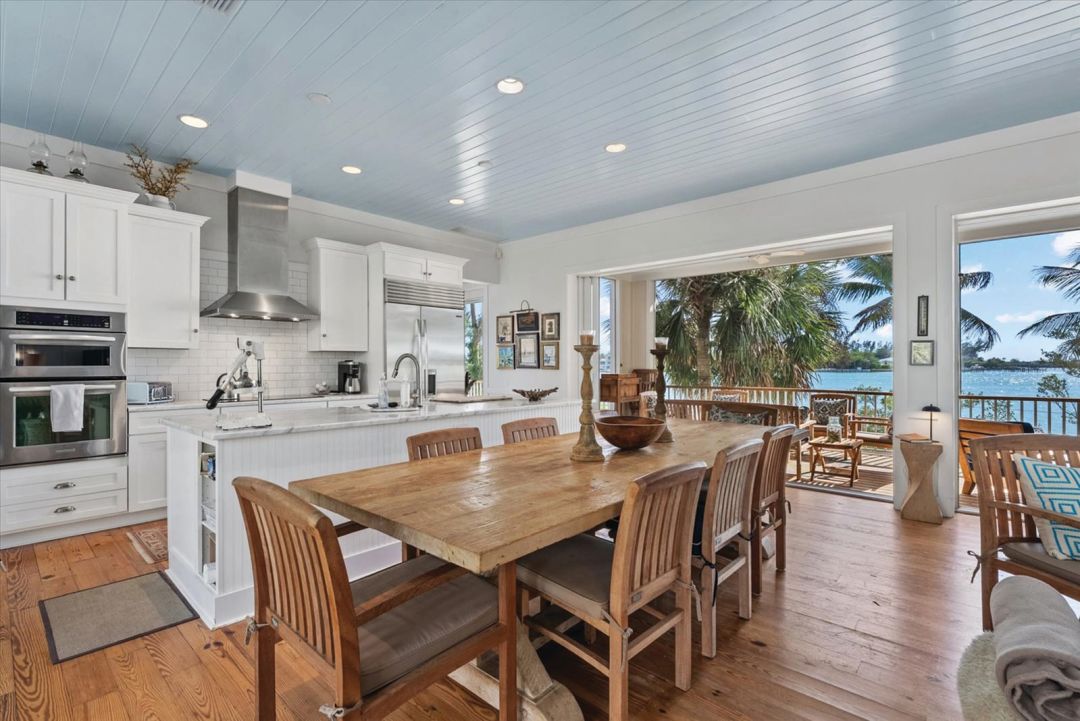
Inside, the house has the practical ease of a high-end beach camp. White walls, pale blue tongue-and-groove ceilings, heart pine floors, a marble island, a farmhouse sink and teak furniture create a polished look without turning precious. The kitchen, dining area and living room flow together, making shared meals part of the architecture.
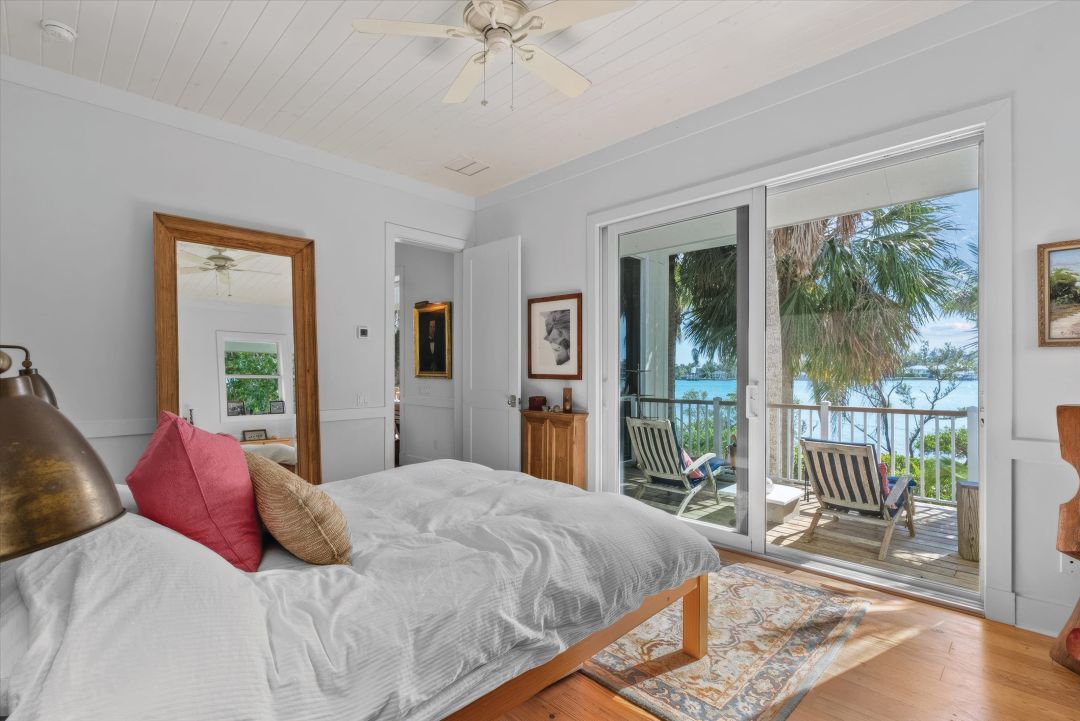
The decor has the same lived-in smarts. Ellis used reclaimed materials and pieces with history because, he says, “I don’t like new for the sake of new.” Swinging closet door panels were made from sails from a schooner that had gone around the world several times. The primary bed was built from a massive salvaged beam Ellis says came from the former John Ringling Hotel. Other beds were made from heart pine salvaged from an old cigar factory in Ybor City. Headboards were built from old doors. The teak seating came from the old Fred’s, a popular Southside Village restaurant and bar that’s now the site of Libby’s Neighborhood Brasserie.
The house became a place for gathering. Birthdays, family reunions, engagement parties, fundraisers and cigar dinners were held here. But typical days were filled with children running to the sand, dogs living their best forbidden-beach fantasy and friends who came for weekends that stretched through Monday mornings.
When Ellis rented out the house, he found that guests were families looking for something rarer than a resort: enforced togetherness, in the best sense. One happy visitor wrote in the guest book about watching teenagers “be and stay fully present,” a line that may be the highest compliment a house can receive.
But island life requires creativity. There’s no driveway, no quick grocery run, no mail truck pulling up to the door, which here is the dock. Supplies, groceries and people arrive and leave by boat. But Ellis doesn’t present the logistics as a burden. “It’s for people who love Old Florida,” he says.
The house also proved itself in less romantic terms. During the 2024 hurricanes, Ellis says the lower storage area got wet, as it was designed to do, but the living areas were unharmed. Now, after more than two decades, he’s ready to let it go. Not because the place has lost its magic, but because it hasn’t.
“The house has given us an awful lot,” he says. With Saylor now grown, the Ellises want more time to travel. The house, he says, is “ready for another family with young kids who can get all that we have out of it. I think they are the next stewards of this place.”