


The Iconic Sarasota Architectural Salvage Warehouse Is Closing in April

Image: Nicole Moriarity
Scroll any real-estate listing long enough and a pattern emerges. White sofa. Bone-colored walls. Beige rug. Pale wood. Repeat. Interiors scrubbed of personality.
Then you walk into Sarasota Architectural Salvage, where nothing matches on purpose, nothing is neutral and nothing pretends to be new.
It’s delightfully cluttered. Layered, rusted, ornate, strange and beautiful. For 23 years, founder and owner Jesse White has been running a quiet rebellion against the aesthetic of erasure—a warehouse built on the idea that history, texture and imperfection are not problems to be solved.
Now that rebellion is entering its final months as a retail storefront.
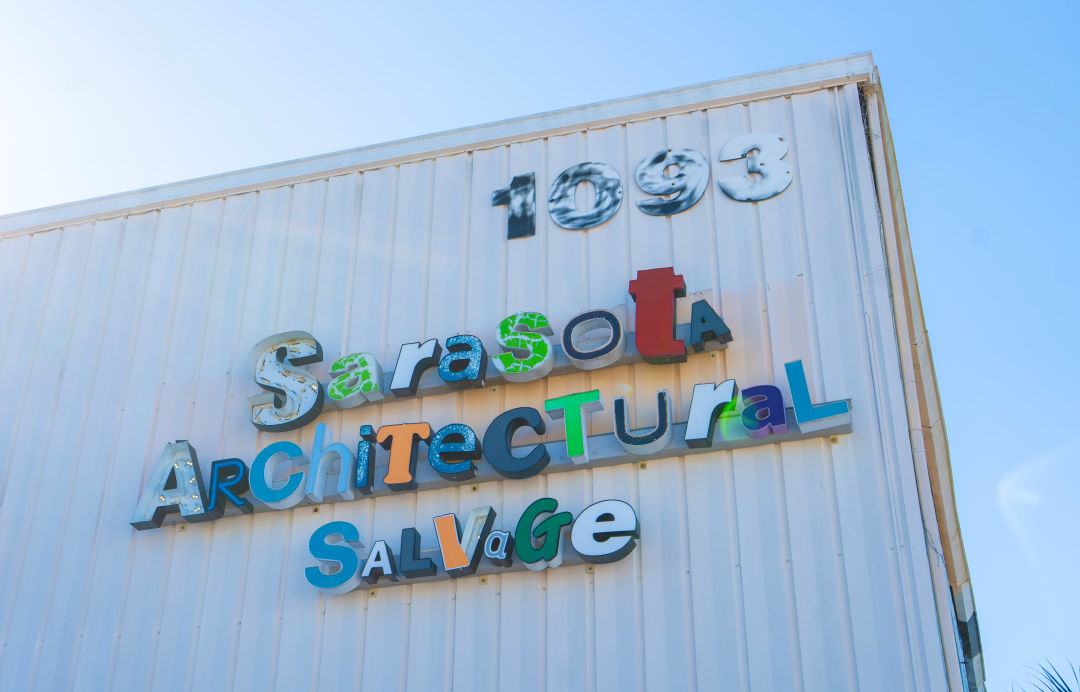
Image: Nicole Moriarity
White is selling Sarasota Architectural Salvage's Central Avenue building and liquidating the store’s contents after being unable to find a buyer for the business itself. Although that didn’t surprise him, since "I didn’t look too hard,” White admits.
A storewide liquidation begins this month at 50 percent off, with deeper discounts planned through April. White expects retail operations to wind down by late April, ahead of a June 1 real estate closing. (The buyer will remain anonymous until close.)
Until then, if you haven’t been to Sarasota Architectural Salvage, go.
And if you have, go again. Even if just for the wonder. Because inside, the space unfolds like a three-dimensional collage.

Image: Nicole Moriarity
Hundreds of chandeliers hang overhead—crystal, brass, iron, beaded, shelled, spidery, hulking—layered into a canopy. Doors stand in ranks along the walls. Old windows stack shoulder to shoulder. Carved corbels, claw-foot tubs, rusted gears, stained glass, balusters, mantels, columns, shutters, lanterns, theater seats, schoolhouse desks, wagon wheels, mannequin parts, vintage signage, ship hardware, industrial carts and crates cluster in loose neighborhoods of organized chaos.

Image: Nicole Moriarity
Outside, garden statuary and metal animals sprawl across the yard. Massive beams and slabs rest in long rows, tagged and waiting.
When he bought the building 2003, White never set out to become a retailer.
“I got into this completely out of passion for keeping good stuff from going into the landfill,” he says. “I had no background in retail. I had no background in construction and I had no background in antiques. I just built it from there.”

Image: Nicole Moriarity
What he did have was a master’s degree in environmental resource management and a belief that the most sustainable building material is the one that already exists.
Over two decades, that belief became a physical place.
Sarasota Architectural Salvage grew into roughly 10,000 square feet of vertical and horizontal abundance, fed by materials pulled from 1920s-era houses, old commercial buildings like the former DeMarcay Hotel and Roth Cigar Factory on Palm Avenue, and, more recently, storm-damaged bungalows on the keys.

Image: Nicole Moriarity
“It’s not the big, sexy items you'd think I'd prize the most,” White says. “What really gets me jazzed is when we take heart pine flooring out of a house that’s coming down, or we take the floor joists, the raw bones of a building, and they’re available to the next generation.” Old-growth wood, he says, often survives flooding in ways modern materials don’t.
“The good solid old woods dry out, and they’re just as good as they were the day before the storm,” he says.
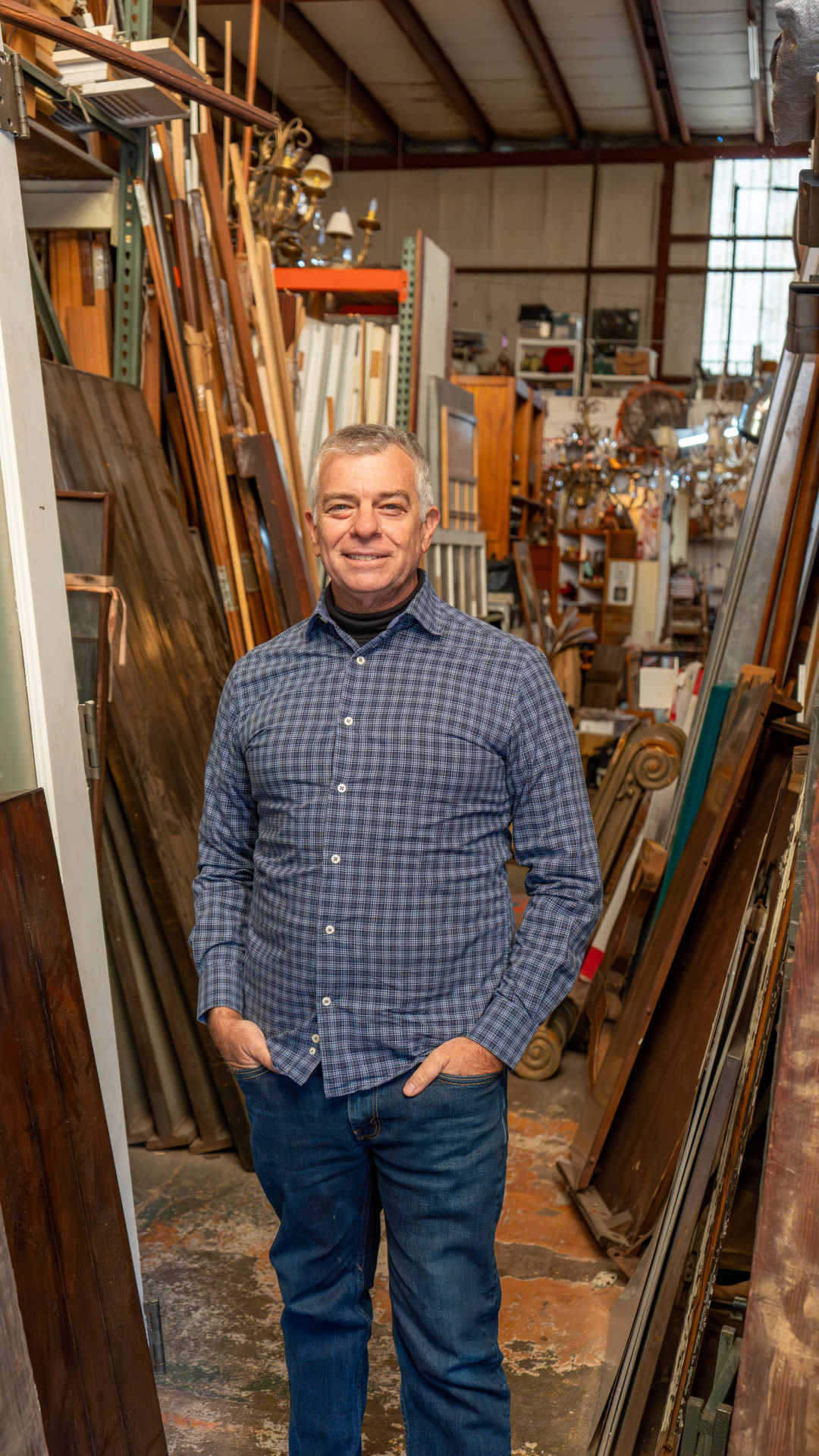
Image: Nicole Moriarity
Along the way, White became a go-to consultant for salvage assessments and historic materials mitigation plans tied to demolition permits. One example: the Mira Mar Plaza project in downtown Sarasota.
“I don’t make any judgment about whether the building should be saved or not,” he says. “I only say, 'These are historic materials, and if we go in and we salvage them, that will mitigate the loss of this historic structure.'”
His customer base has always been broad: homeowners hunting for one perfect piece, DIY wanderers on treasure hunts, designers with sharp imaginations and restaurant owners looking for character. You can see some of White's treasures at Veronica Fish and Oyster Bar, First Watch, Boca and Patellini's Pizza, just to name a handful. An oft-used mantra he hears from shoppers is, “I’ll know it when I see it.”
But the retail landscape has changed. People shop differently than they did in 2003. Online purchasing dominates. Trends churn. And salvage, White says, is fundamentally experiential.
“We’ve seen a shift in customer base," he says. "It’s harder to get people to come out to an event or to come out to the store than it used to be.”
He began thinking seriously about change roughly five years ago.
“I was getting a little burned out,” White says. “After 20-something years, it just felt like it was time to start thinking about maybe doing things differently.” But this isn't a story of collapse. “This is a thriving, good business,” he says. “I really have no reason to close, except that I want to move on personally, to do some other things.”
Those "other things" still orbit salvage. White plans to pivot toward a model that relies less on brick and mortar and more on project-based, just-in-time operations: photographing materials inside buildings slated for demolition, listing them online, selling directly out of those structures and pulling materials only after purchase. That includes on-site material recovery tied to demolitions and remodels, estate and storage clean-outs, and specialized personal shopping for rare architectural elements.
“I’m going to [have] more of a digital presence,” he says. “The idea is that we sell directly out of the house or structure that’s being demolished." The shift reduces overhead costs and keeps what White calls "embodied energy" in circulation, a concept he returns to often.
“When you think about it, a beam represents a tree that grew for 100 years—the harvesting, the milling, the transportation, the installation,” he says. “All that energy is embodied in that beam. When you salvage it and reuse it locally, a portion of that energy stays with it.”
White understands why closing the store is hitting customers hard. “I cringe every time I hear somebody say, ‘Oh, you’re closing the store,’ because that feels like a failure,” he says. “But it’s not. It’s a new chapter.”
What remains most important to him is the relationship with Sarasota itself. “It was important for me to say thank you to the community,” White says. “I think we’ve had a really good run. It really is important to me to contribute to the community, and I feel like we have been able to do that.”
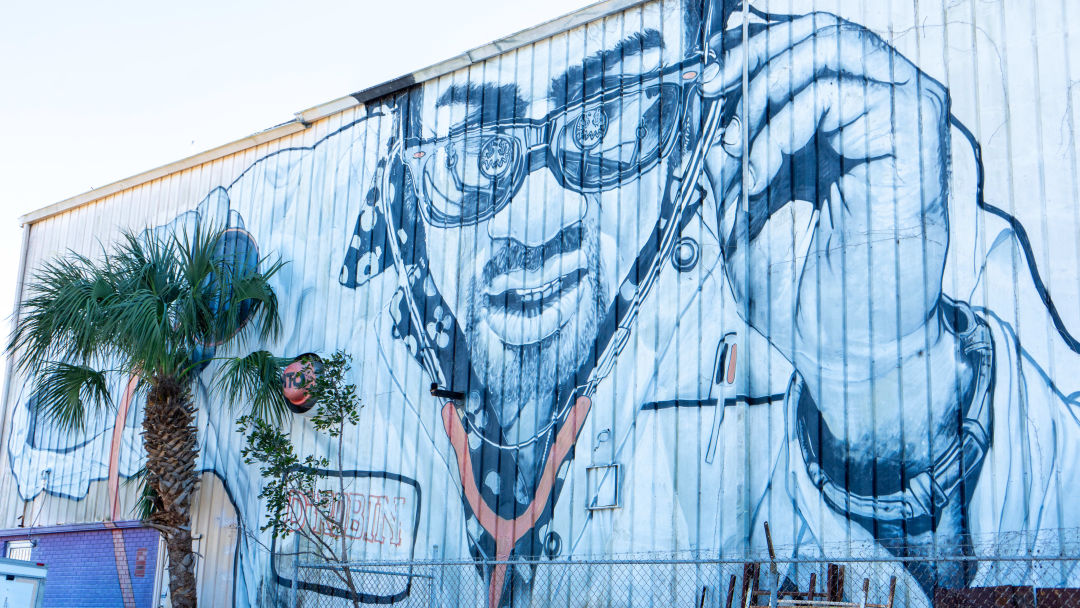
Image: Nicole Moriarity
For now, the lights are still on. The rows of doors still lean. Those energy-filled old beams still wait for their new owner. And Sarasota Architectural Salvage remains what it has always been: a showroom, a museum and a living argument against sameness and soulless decor.
A storewide liquidation sale at Sarasota Architectural Salvage, at 1093 Central Ave., begins Feb. 6, 2026, starting at 50 percent off, with deeper discounts rolling out through April. Retail operations are expected to wind down by late April, ahead of a June 1 real estate closing on the building's purchase.