




Sarasotans Have Been Publishing Their Recipes Since the Early 1900s. We Tried Two.

Image: Hannah Trombly
For better or worse, Sarasota residents in the early 1900s made food that can seem old-fashioned—or just downright weird—today. For every classic deviled egg or mullet recipe, there was one for a jiggly gelatin-based appetizer or an entrée made from sea turtle meat (until environmental protections were put in place).
But if you were lucky, you also may have breathed in the heady fragrance of oranges, butter, flour and sugar fusing into a rich citrus cake in a hot oven. The recipe—from the Woman’s Club of Sarasota’s 1914 Florida Cook Book and called simply “Orange Short Cake”—made the most out of our prized citrus, directing cooks to candy the fruit and squeeze the juice into a sticky syrup that glazed the cake. It’s as much a showstopper today as it was 111 years ago.
While history’s oldest recorded recipes date back as far as 1730 BCE, Sarasota’s are a bit younger; the region’s first archived cookbooks were published in the 1900s. Two of them, the Florida Cook Book and Sweets and Meats, a publication of the freemasonry club Order of the Eastern Star, are archived at the Sarasota History Center on North Tamiami Trail in Osprey and offer a fascinating glimpse at what Sarasotans were eating more than a century ago.

Image: Courtesy Photo
The Woman’s Club of Sarasota was an enterprising group of 63 women who ran the area’s 600-volume library, established a birth registration and census, and planted 250 coconut palms along the waterfront back when the local population was approximately 2,000 residents.
John McCarthy, vice president for regional history at Marie Selby Botanical Gardens, hosts a lecture series specializing in historic Sarasota recipes called “Delicious Histories,” which will continue through 2026. He says the Florida Cook Book was created to repay a loan from Chicago society queen and early Sarasota developer Bertha Palmer, who lent the club the money to build a clubhouse on Palm Avenue in downtown Sarasota. (It’s now the Keating Theatre on the Florida Studio Theatre campus on Palm Avenue.) While we don’t know the total number of copies sold, a Woman’s Club treasury report from 1914 shows that cookbook sales accounted for $150 (nearly $5,000 in today’s money) of the $1,573 the club raised that year.
Similarly, wives of the members of Order of the Eastern Star compiled Sweets and Meats to fundraise for their group. The meats are not sweet—rather, this is a collection of desserts and entrées, with a few salads and sides, using Florida-specific ingredients like mullet, citrus and oysters. Anyone can request access to either cookbook through the History Center.
Plenty of recipes throughout Sweets and Meats and the Florida Cook Book—like baked grits, a Southern staple that’s mandatory at every holiday—are still served today. There’s also baked mullet (a common catch, although it’s now typically served smoked). Instead of the modern version—cocktail weiners wrapped in dough—the Florida Cook Book’s “Pigs in a Blanket” are local oysters wrapped in bacon and served on crispy bread. A recipe for spaghetti, however, would enrage most Italians—it calls for breaking dried pasta in half, adding it to boiling water for a whopping 20 minutes, and then making a sauce from canned tomatoes and a grated—but unspecified—cheese. There are also several recipes for gelatin-based fruit salad, heavy on the canned pineapple, which probably set home cooks up for disaster because pineapple contains an enzyme that breaks down gelatin’s protein, making for a gloopy mess. (The Order of the Eastern Star’s “Heavenly Hash” recipe is a riff on ambrosia salad that would have been a much safer bet.)
In an attempt to recreate history, I made the “Sarasota Crab Salad” recipe in the Florida Cook Book. Two cups of crab meat, which would have come from Sarasota Bay’s blue crabs (I used cold, tinned crab), are mixed with diced tomatoes, celery, cauliflower, mayonnaise and “a little French dressing.” It could be fantastic if you left the cauliflower out. Unfortunately, the crunch is overpowering.
That orange shortcake, however, should never have disappeared into history. Make it and wow today’s guests just as much as yesteryear’s.
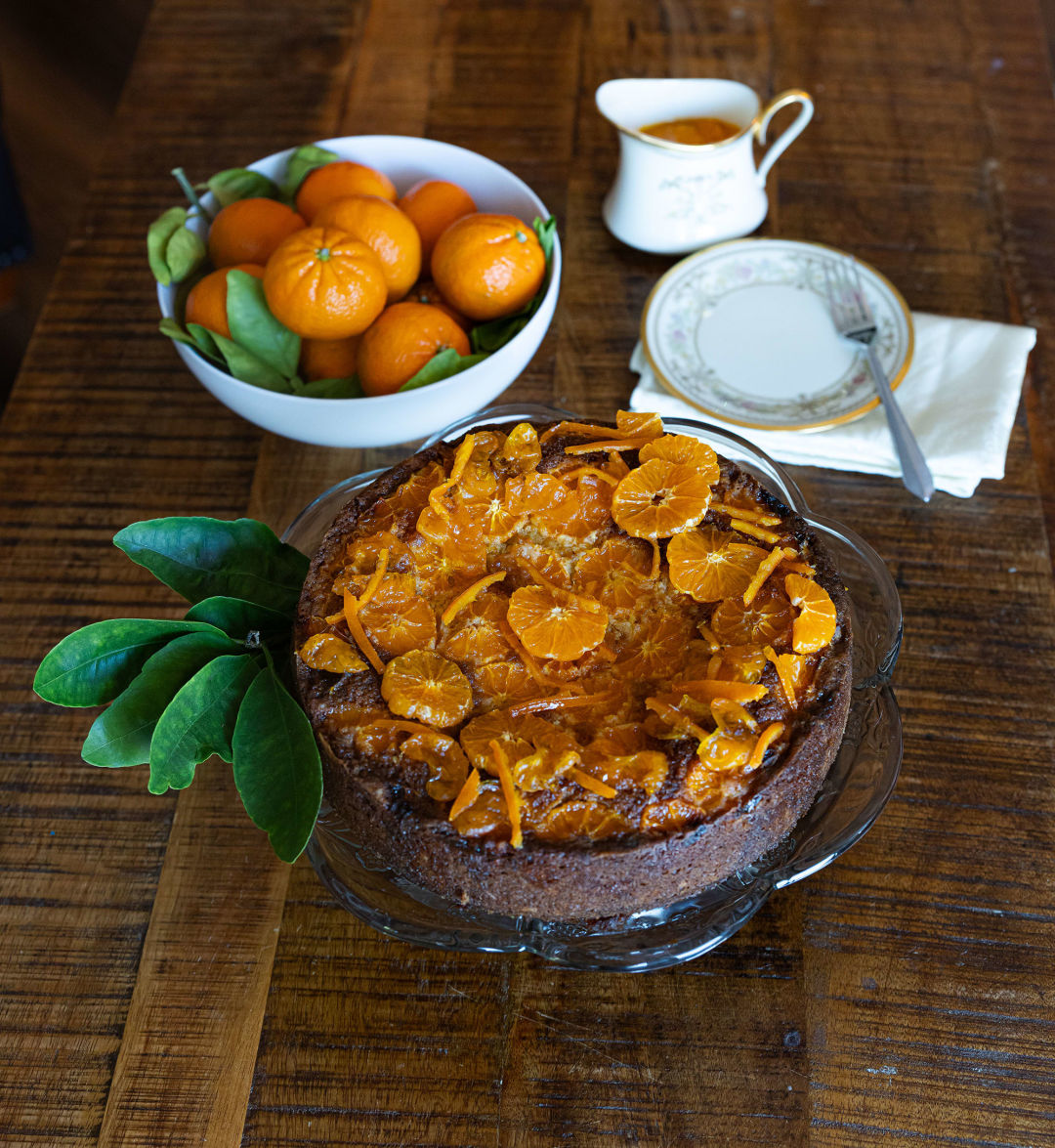
Image: Hannah Trombly
Orange Short Cake
Adapted from the Florida Cook Book. Serves 8.
Ingredients
For the cake:
6 oranges, sliced to a medium thickness (about five slices per orange)
2 cup granulated sugar, plus 1/4 cup to coat orange slices
1 cup butter
2 eggs, beaten
1 cup whole milk
4 cups all-purpose flour
3 tsp. baking soda
1/4 tsp. salt
For the sauce:
1 cup water
1 cup sugar
1 Tbsp. butter
Zest and juice of 1 orange
Method
Preheat the oven to 325 degrees Fahrenheit.
Peel the six oranges and remove any seeds. Sprinkle them with sugar and set aside until ready to assemble the cake.
Using an electric mixer, beat 1 cup granulated sugar with 1/2 cup butter, beaten eggs and milk.
Add flour, baking soda and salt to the creamed butter and sugar mixture until just combined.
Add half of the cake batter to a nine-inch round baking pan. Layer half of the orange slices on top. Add the remaining batter and one more layer of the remaining oranges.
Bake for 60 minutes, or until you can insert a toothpick and it comes out clean.
While the cake bakes, combine water, sugar, remaining 1/2 cup butter, orange juice and zest and bring to a boil on medium heat in a small saucepan. Reduce heat to low and simmer for 10 minutes or until the mixture becomes syrupy. Allow the cake to cool to warm and poke all over with a skewer to help the sauce absorb. Pour the sauce over the warm cake. Cool before serving.