



This Year's Sarasota MOD Weekend Has a Big Focus on Resilience

Image: Architecture Sarasota
Despite an unprecedented hurricane season that dumped record amounts of rain on Sarasota-Manatee, flooded homes and ripped off roofs, this year's Sarasota MOD Weekend will go on.
The annual weekend event, now in its 11th year, takes place Nov. 14-17, 2024. It's an architecture lover's dream. Attendees can tour architecturally significant local homes, learn about the Sarasota School of Architecture—its founders, the movement and its modern stewards—and connect with the community. It’s the home-gawking event we long for, and after the last few months, one we need more than ever.
But the road to making this year's event happen hasn't been easy. Sarasota’s recovery from Hurricanes Debby, Helene and Milton is ongoing, and the community faces hard decisions about the preservation and future of many of its historic properties. That includes the Sarasota School of Architecture collection, some of which, like the Sanderling Beach Club cabanas, was damaged beyond repair by the storms.
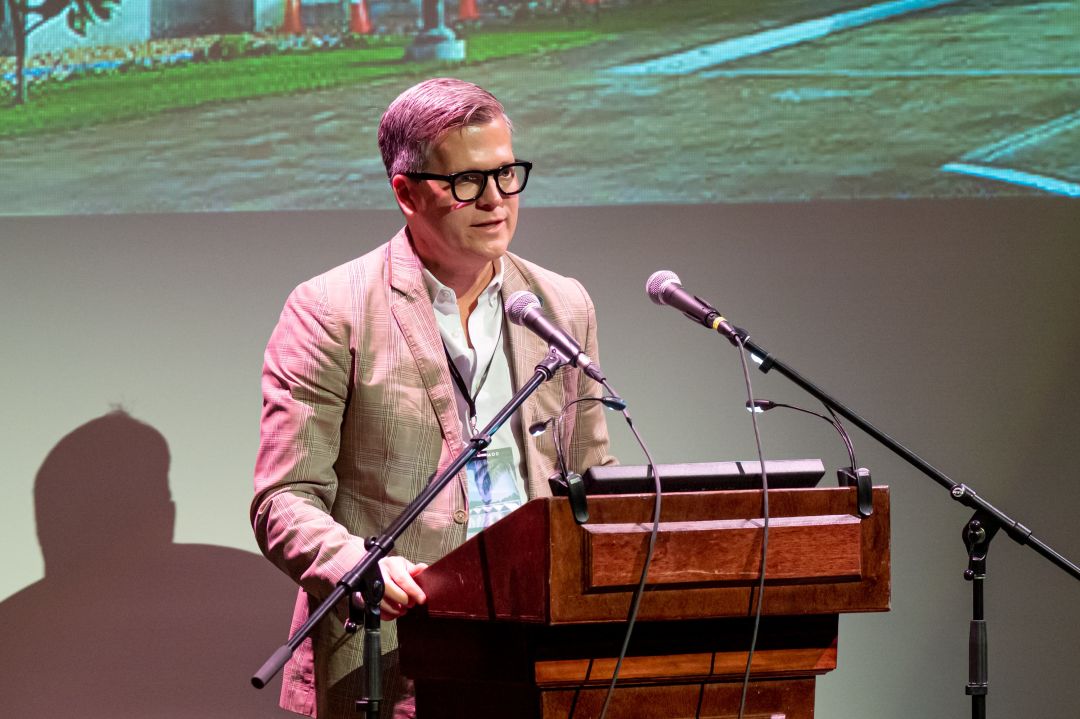
Image: Architecture Sarasota
Architecture Sarasota's president Morris "Marty" Hylton is ensuring the show goes on. Ahead of MOD Weekend, Hylton and his team have been assessing the damage to Sarasota’s notable buildings—especially those near the water that have defined the region's coastal aesthetic and cultural identity.
After so much destruction, Hylton admits, “There were moments we thought we’d have to cancel everything after Hurricane Helene.” But as he worked with the community, city and county to move forward, that sentiment shifted. “We realized we need this [event] now more than ever," he says. "Sarasota is a resilient community, and this is a time for everyone to come together.”
That's not to say the damage was insignificant. “I think roughly 50 percent of the homes associated with the Sarasota School were impacted in some way,” Hylton says. “The iconic Sanderling Beach cabanas on Siesta Key are gone, the Cocoon House and Revere Quality House were flooded, and many of the lamolithic homes on the key took on water.”

Image: Austin LeFebre
Architecture Sarasota is documenting hurricane-damaged structures with drone imaging and laser scanning, allowing the organization to capture the precise condition of each property before repairs and potentially substantial renovations take place. The digital record will serve as a valuable tool not only for current recovery efforts but also for any future restoration projects.
Another pressing issue is Sarasota’s “50 percent rule,” which mandates that properties needing repairs totaling more than half their value are subject to strict rebuilding guidelines. This often leads to partial or complete demolitions.
“People are grappling with the financial side of recovery: What does my insurance cover, and what can FEMA do to help?" Hylton explains. "I think critical decisions will be made soon that could lead to some of our Sarasota School homes being demolished. For example, there’s a [Victor] Lundy home in Sandy Hook on Siesta Key that has already filed for demolition. There’s a historic preservation meeting scheduled to discuss it.”
However, he says, “properties with historic recognition have a bit more latitude." Architecture Sarasota is helping homeowners pursue landmark status or formal historic designation, which can offer greater flexibility in repairs and help homes avoid demolition. “We’ve got at least 15 structures we're assisting, particularly in neighborhoods like Sandy Hook, which has such rich architectural heritage,” he says.
He also notes that, as Sarasota recovers, residents are also grappling with tough questions about their future on the coast.
“I’ve been hearing people wonder, ‘Should we even stay here? Are we going to recover just to go through this again?’” he says. “It’s not unlike the stages of grief, from denial to acceptance, as people start making long-term decisions about what they want to do.” For some, that means adapting their properties for the future. Others are considering leaving altogether.
“Our official position as an organization is that you can’t rebuild a structure exactly as it was," he says. "You have to adapt it. There's a heightened awareness that much of our built environment was designed for a 20th-century climate—a climate that no longer exists. The Gulf is warmer, sea levels are higher and storm impacts are greater. This doesn’t mean we have to retreat, but it does mean we need to reconsider our relationship with the environment.
“Water has always been central to us—our identity and history are connected to it," he continues. "Our relationship with water has evolved over time, and it’s about to shift again.”
To that end, one aspect of this year's MOD Weekend programming will be an Adaptation by Design symposium, a forum for sharing strategy and insight about resilient design. The focus will be on scalable solutions, from entire neighborhoods to individual properties. A panel will include leading voices in resilience and coastal planning, including Marie Nelson, who will present on nature-based solutions and what resilient futures could look like; Chris Reed of Harvard, who will discuss urban and public spaces; and materials expert Rosa Lowinger, who will explore how to protect structural materials in the coastal climate.
“We’ll talk about community-scale strategies, like restoring mangroves to soften shorelines and help manage storm surge,” Hylton says. “And at the individual level, [we'll discuss] topics like how elevating buildings, dry-proofing and wet-proofing techniques, where you essentially design parts of the home to withstand water, are essential. This isn’t just for historic property owners. Anyone in a flood plain—regardless of their home’s age, style, or designation—would benefit."
MOD's signature neighborhood tours will also be smaller this year. “Instead of 300 people wandering through Lido Shores, we’ll be shuttling smaller groups to specific homes," Hylton says. "It’s important for people to see the architecture up close and to understand what it takes to preserve it.”
A Siesta Key kayak tour has been canceled due to flooding in canal and river areas and the destruction at the Sanderling Beach Pavilion. However, there will be a self-guided driving tour of the South Gate neighborhood to see some of Sarasota’s best examples of Atomic Ranch housing, as well as a Spiritual Spaces trolley tour, which explores more than 70 years of Sarasota’s modernist religious architecture, among other tours.
The damage may be extensive, and the recovery a long process, but Hylton believes Sarasota will emerge stronger. “We’re learning even more about what remains and documenting places that hadn’t been documented before. We’re using that knowledge to inform recovery and adapt for the future,” he says. “There’s no going back to yesterday. We have to look forward.”
Architecture Sarasota takes places from Nov. 14-17, 2024. For details, tickets and more information, click here. All net proceeds of MOD Weekend will support Architecture Sarasota's recovery activities.


