




The Land Boom Decade That Changed Sarasota Forever
Florida has always had a “For Sale” sign planted on its border. Philadelphia industrialist Hamilton Disston saw the opportunity during an 1877 fishing trip to Florida and thought it would be smart to drain wetlands for agriculture. In 1881, he purchased 4 million acres for $1 million. That’s right, 25 cents an acre. The New York Times reported that it made him the largest single landholder in the world. Six months later, after dicing, developing and advertising, he sold 2 million of those acres for a nice profit.
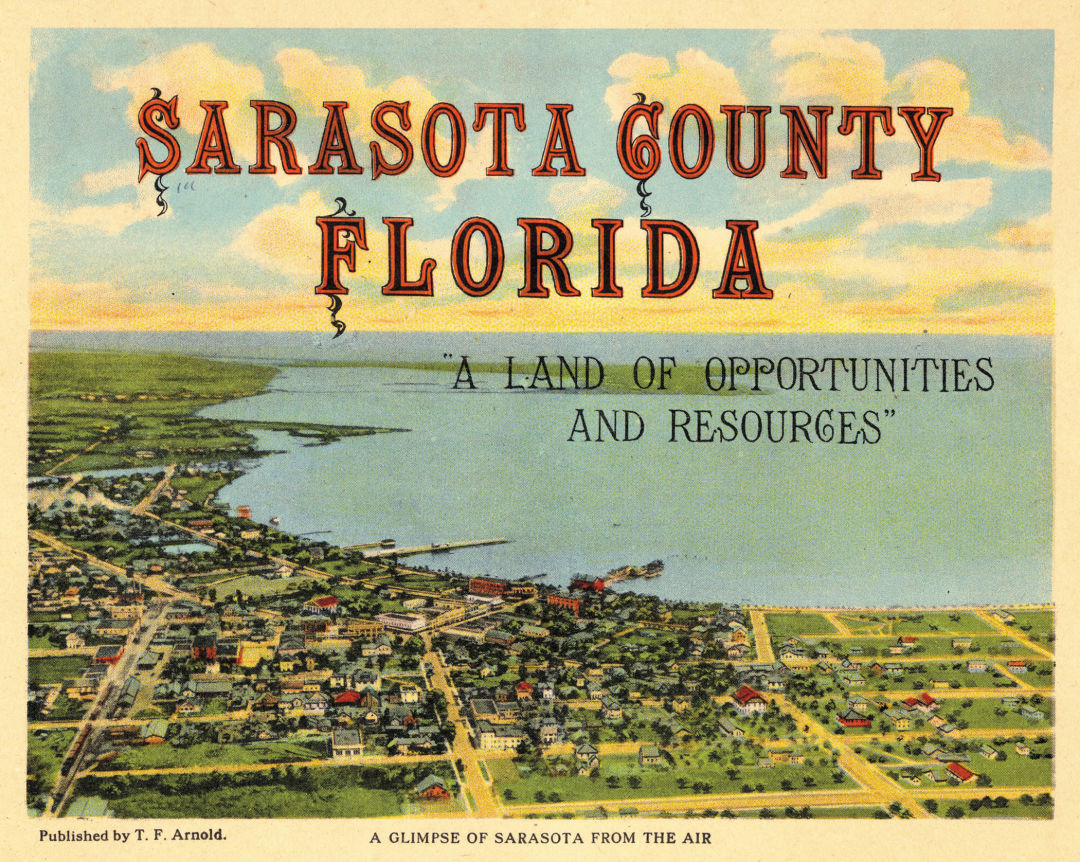
Image: State Archives of Florida
Promises of paradise, get-rich-quick promotions, buying, developing and reselling are the threads that weave throughout the entirety of the Sunshine State’s history, including Sarasota’s. And while Sarasota attracted its share of dreamers in the late 19th and early 20th centuries—from the ill-fated group of Scottish colonizers in 1885 to Chicago society queen Bertha Palmer in 1910—it was during the economic prosperity and frenetic era of the Roaring ’20s that the Sarasota we know today began to take shape.
In 1921, Sarasota wrestled independence from Manatee County, giving it the autonomy to chart its own future. By then, the country had navigable roads, and Henry Ford’s black Model T enabled Americans to travel beyond their hometowns by car for the first time. This was the beginning of the Florida Land Boom, a five-year period of feverish real estate speculation that attracted people to Florida and fueled a dramatic rise in real estate prices.
The Sarasota Chamber of Commerce, formed in 1920, attracted thousands of newcomers by promoting themes of health in our “salubrious climate,” wealth in the skyrocketing real estate market and the happiness that one expects to follow such enviable health and wealth.
However, Sarasota still gave the appearance of a backwater fishing and agricultural village. The town lacked the essential ingredient in its efforts to establish itself as a premier resort destination: a world-class hotel capable of accommodating affluent guests. The Sarasota Times reported in 1921, “Lack of up-to-date accommodations for wealthy tourists who come here every winter to escape the cold…has been felt for years.”
Enter Andrew McAnsh, a wealthy Chicago capitalist, who civic leaders wooed in 1922 to Sarasota to build a grand hotel. McAnsh was met at the Rubonia train station and paraded into town like a conquering hero. Two months later, the front page of the paper bore an architectural rendering of the Mira Mar (Spanish for “sea view”), a million-dollar hotel built in the romantic Mediterranean Revival style made popular in Florida by charismatic American architect and Boca Raton developer Addison Mizner. Not everyone was a fan of Mizner’s old fashioned European blend, which became Florida’s signature ritzy look. One wag dubbed Mizner’s mix of architectural styles the “Bastard-Spanish-Moorish-Romanesque-Renaissance-Bull Market-Damn the Expense style.”
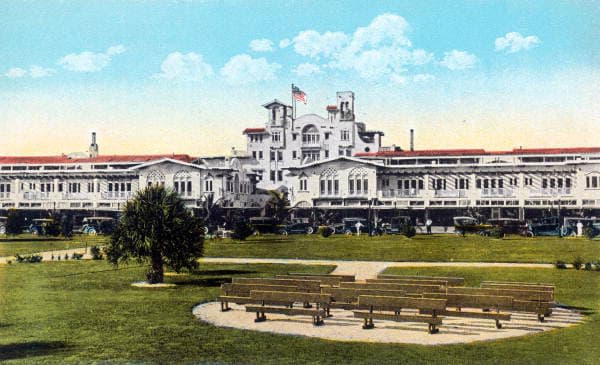
Image: State Archives of Florida
But the Mira Mar was meant to be opulent. In 1922, McAnsh constructed the luxury Mira Mar Apartments along South Palm Avenue, which would be in front of the soon-to-be-built hotel. In just 60 days, with crews working around the clock, the Mira Mar Apartments were finished. The paper gushed, “The sleeping giant has awakened and cast aside his swaddling clothes…a new beginning in the city’s history of a new epoch in development.”
Next came the Mira Mar Hotel, which was advertised as “The Aristocrat of Beauty,” and officially put Sarasota on the map of the Florida Land Boom. (The hotel was demolished in 1982, but the building that housed the apartments remains. The Seaward Development Company has agreed to preserve this structure as it builds two 18-story condo towers behind it.)
A newcomer from Kansas recalled he could tell Sarasota was booming because he had to circle Main Street several times to find a place to park.
After the hotel opened in 1923, the entire county underwent a rapid transformation, particularly within the city limits, filling with hotels, banks, office buildings, restaurants, various retail establishments and housing developments. A newcomer from Kansas recalled he could tell Sarasota was booming because he had to circle Main Street several times to find a place to park—something that sounds all too familiar today.
Sarasota dubbed itself “The City of Glorified Opportunity,” and the Sarasota Herald underscored that high opinion with a banner headline: “Sarasota’s Growth Cannot be Stopped.”
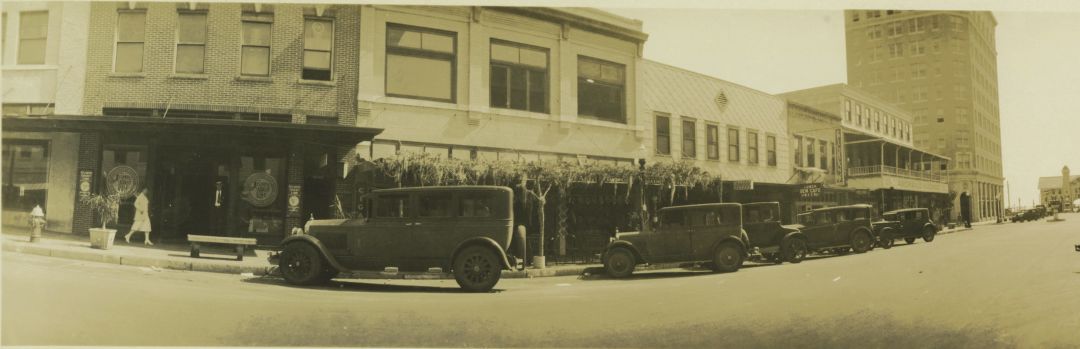
Developers flooded into Sarasota after McAnsh, ushering in an era of population growth and significant architecture. The poster boy for rags-to-riches success in real estate was Walter V. Coleman. In 1915, Coleman arrived from Detroit with his wife, five children and $80 in his wallet, hoping to strike it rich. He opened a real estate office and, 11 years later, was featured in the Sarasota Herald as a millionaire, the builder of the Bay Haven Hotel (still standing as part of Ringling College of Art and Design) and a major developer.
But the principal figures in Sarasota’s transformation were McAnsh, Owen Burns and John and Charles Ringling, the circus magnates. Their vision of permanence and beauty remains today.
Burns, a Chicago entrepreneur and businessman, was Sarasota’s first major developer. He came to town in 1910 (shortly after Bertha Palmer), immediately saw the area’s potential and, for $35,000, purchased approximately 75 percent of today’s city limits from John Hamilton Gillespie, who arrived in 1886 to represent the Florida Mortgage and Investment Company of Edinburgh. The Scottish investment company had purchased 60,000 acres in Sarasota, promising approximately 65 Scots that they could easily become farmers. After an arduous voyage, the Scots found only a wilderness they were not equipped to live in. Most of the settlers left. Gillespie stayed, however, and sold the company’s land to Burns.
Burns developed the Inwood Park subdivision, which encompasses much of what is now Gillespie Park. The Sarasota Times reported, “[Burns] purchased a tract of earth which the natives considered of little value, filled, graded and ornamented it, cut it up into lots and put down paving.” Sunset Park, across from what is now Golden Gate Point, followed.
During the boom, often partnering with John Ringling, Burns conducted a gargantuan amount of work, leaving an unmatched legacy. It was Burns who constructed the first John Ringling Bridge (in fact, all the bridges to Sarasota’s barrier islands were constructed during the 1920s); oversaw construction of John and Mable Ringling’s home, Ca’ d’Zan; dredged and filled Golden Gate Point and Lido Key; connected Bird Key to the mainland; and bought for Ringling and himself parcels of land on Lido Key, St. Armands and Longboat Key.
His personal portfolio included Burns Court; Herald Square (the buildings on the triangle-shaped property at Orange and Pineapple avenues); the luxuri-
ous Mediterranean Revival-style El Vernona Hotel (renamed John Ringling Towers and now the site of The Ritz-Carlton, Sarasota); the Belle Haven Apartments (still standing at the Quay Sarasota); the Karl Bickel House (originally Burns’ office and also demolished to build The Ritz-Carlton, Sarasota); and Washington Park Estates (now Laurel Park).
The Ringling brothers hadn’t come to Sarasota to be involved in development. They were searching for a relaxing getaway from the rigors of circus life. But with the real estate boom exploding around them, the brothers dove headfirst into the frenzy.

Image: State Archives of Florida
Charles Ringling saw a vision of a Main Street that stretched east, and he developed much of the area surrounding the Sarasota County Courthouse. He donated the land for the historic courthouse and built the Sarasota Terrace Hotel (now called the Terrace Building, home of the Sarasota tax collector and property appraiser). He built the still-standing Charles Ringling Office Building, along Ringling Boulevard—a street that’s named after him, not his better-known brother John. He also founded the Ringling Trust and Savings Bank. Charles died in 1926, shortly after his pink marble mansion on what is now the New College of Florida
campus was finished.
Charles Ringling saw a vision of a Main Street that stretched east, and he developed much of the area surrounding the Sarasota County Courthouse.
But John Ringling was the high-profile brother, rightly credited with establishing Sarasota’s claim to be the cultural hub of the Gulf Coast thanks to the creation of The John and Mable Ringling Museum of Art in 1927 and the Ringling School of Art, now the Ringling College of Art and Design, in 1931.
John also developed St. Armands Circle, the canal streets surrounding the circle, and part of Lido Key—a major project called Ringling Isles, which became the hallmark of the Sarasota boom. He spared no expense on St. Armands. The development featured wide boulevards, canals, imported antique statuary, a myriad of palm trees and lush tropical plants. Burns, who held a 25 percent interest in the land, oversaw the developments on the keys. After Burns built the Ringling Bridge (financed by John Ringling with a reported $750,000 and then donated to the city of Sarasota), it opened to the public on Feb. 2, 1926, providing access to Ringling Isles and also to John Ringling’s property on Longboat Key, where he was building a Ritz-Carlton hotel. Soon after the bridge opened, the Sarasota Herald reported that John Ringling sold $1 million worth of property in
one day.

The Herald swooned over Ringling’s projects: “To know that Sarasota is going to be a wonderful city, both beautiful and prosperous, one needs only to go on a day inspection of St. Armands and Longboat keys. They tell the story.”
But it was 1926, and the real estate market was cooling. Florida Gov. John Martin tried to assuage fears of a crash, stating there was no indication of an imminent economic bubble in Florida.
He was wrong.

The pin that burst the bubble was the devastating 1926 hurricane, which tore through Miami and South Florida, leaving in its wake massive destruction and killing approximately 400 people.
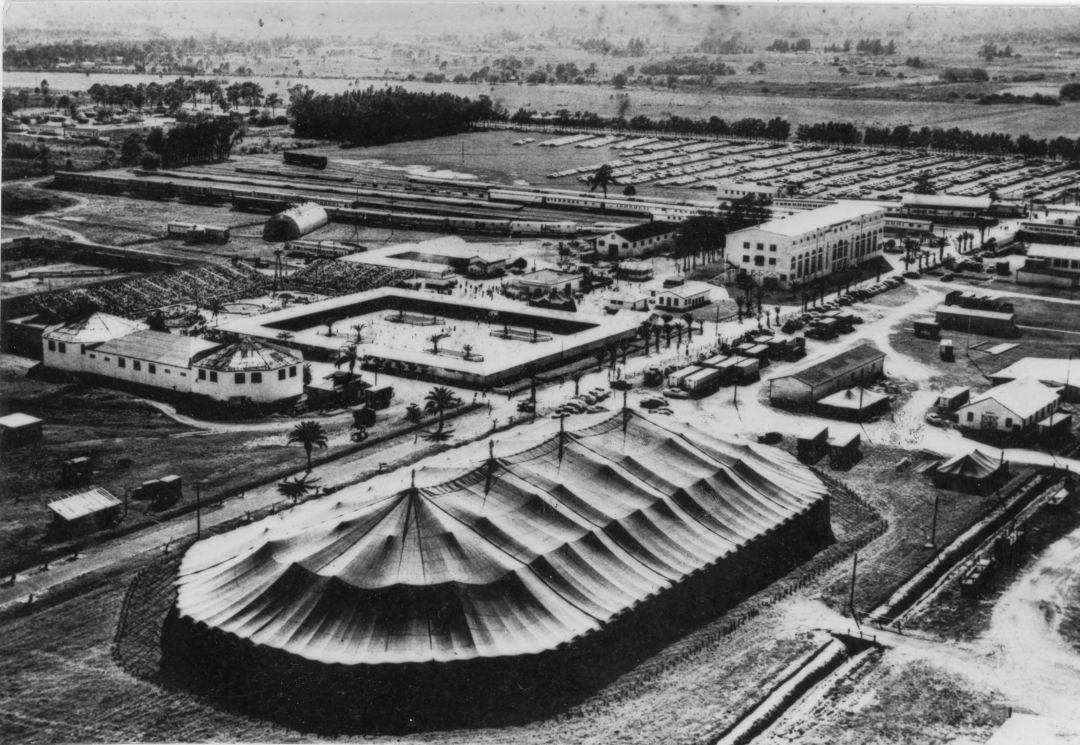
At the end of 1927, John Ringling decided it was prudent to move the winter headquarters of the Ringling Brothers and Barnum & Bailey Circus to Sarasota from Bridgeport, Connecticut, to help shore up his investments. While making Sarasota the “Circus City” gave the area a morale boost, the circus also offered much-needed jobs to locals and quickly became one of the most popular attractions in the state. But it wasn’t enough to rekindle Sarasota’s fortunes.
Of the real estate crash, Sarasota Mayor A.B. Edwards said, “The water had been squeezed out of the sponge.” Speculators traded among themselves, and then they were gone. Newcomer growth slowed, construction plummeted and the leading lights of the 1920s era were scrambling to ward off financial disaster.
The Great Depression of 1929 soon swept the county. The numbers reflect the change of fortune. Sarasota building permits, which had reached more than $4.5 million in 1925, dropped to $83,596 in 1929 and to a paltry $51,880 in 1933. Business licenses, which had escalated from 139 in 1923 to 1,057 in 1925, were reduced to 600 by 1931.
Downtown storefronts were abandoned, weeds grew in the streets and housing projects sat empty as nature took them over. Forty percent of the city’s property owners could not pay their taxes, and the Herald reported defaults, foreclosures, bankruptcies and receiverships.
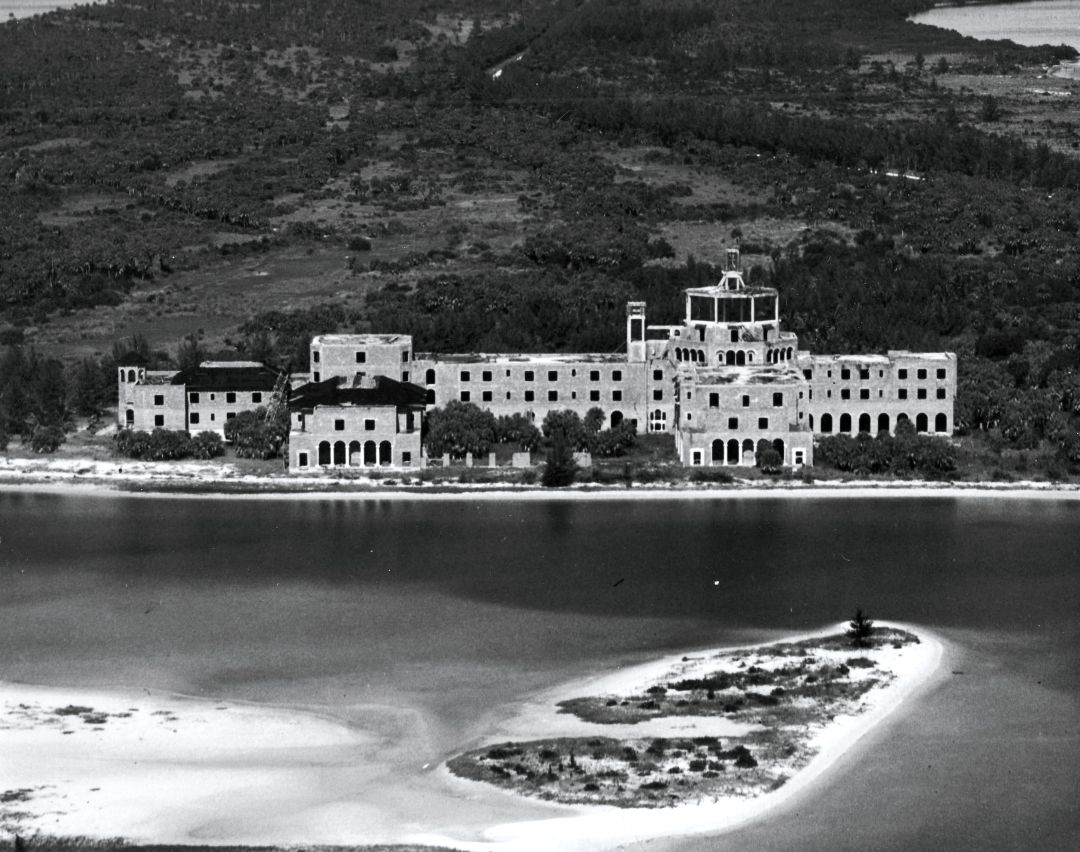
A visible reminder of the downturn was the shell of John Ringling’s unfinished Ritz-Carlton Hotel wasting away on the southern tip of Longboat Key, a certain sign that the good days were over.
Sarasota has had many ups and downs fueled by land speculation since the Roaring ’20s. But the frenzy, ambition and pace of real estate sales of that era stand apart. Dreams of easy money in those five short years created a sort of madness, attracting swindlers as well as dreamers.
But the major developers of the ’20s brought vision, not just speculation. The Ringling brothers, Owen Burns, Walter Coleman, A.B. Edwards and Andrew McAnsh were well-known in the community. Burns and the Ringlings arrived in Sarasota before the boom, lived here and invested their own money in their projects. They collaborated to establish the area as a world-class destination.
Of the real estate crash, Sarasota Mayor A.B. Edwards said, “The water had been squeezed out of the sponge."
It could be argued that their dreams have been realized. Our museums, cultural institutions, beaches, parks and schools have won state, national and international accolades over the decades. Sarasota was named to Time magazine’s “100 of the World’s Greatest Places” four years ago, and named again last year for standing out on Florida’s cultural circuit. Marie Selby Botanical Gardens was one of only eight places to visit in the U.S. on Time’s list and the only botanical garden.
Still, they probably couldn’t have imagined the growth, sprawl, traffic
congestion, downtown high-rises and unrelenting development of today’s Sarasota. It’s hard not to wonder: If the Ringlings, Burns, Edwards and other civic visionaries of 100 years ago could see Sarasota now, what would they think?