



4,000 Gallons of Rain and a Century of Stories at Asolo Rep

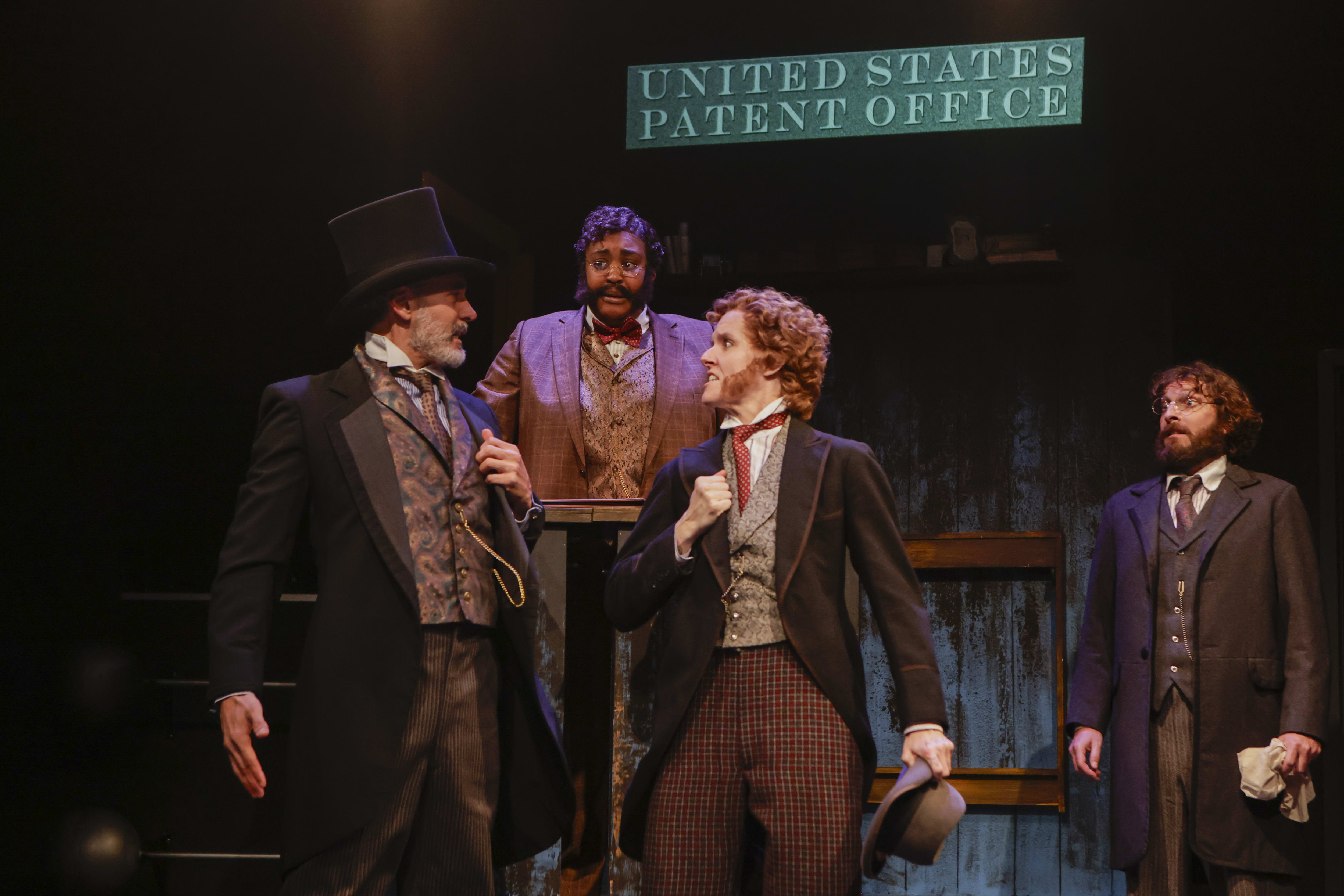
Image: Photo by Adrian Van Stee
Yes, It’s Really Raining.
In Asolo Rep’s Singin’ in the Rain, Hollywood movie magic meets the ingenuity of live theatre.
Don Lockwood steps into the rain, singing and dancing through one of Hollywood’s most recognizable musical numbers. But at Asolo Rep, the rain isn’t a movie effect. It’s happening live, just feet from the audience.
Directed and choreographed by Josh Rhodes, Asolo Repertory Theatre’s production of Singin’ in the Rain follows Hollywood’s uneasy transition from silent films to talking pictures, when actors, studios, and filmmakers had to learn an entirely new way of working.
Each rain sequence sends approximately 2,000 gallons of water onto the stage. With two sequences per performance, that’s roughly 4,000 gallons of falling rain, all of it cycling through the same system.
Getting that much water onto a stage is one challenge. Making sure it falls at the right moment, in the right places, and works seamlessly with the choreography, lighting, and scenery is another.
“We’re running three separate overhead rain systems, and there are a few surprises beyond those that audiences won’t see coming,” says Mike Rodgers, Asolo Rep’s Director of Production. “Engineering it all took months of planning and testing, and we couldn’t have done it without the insight of local partners like Cortez Irrigation, who took the lead in tracking down the products that made our vision possible.”
The water doesn’t simply disappear after each rain sequence. It drains through the stage into two 1,000-gallon tanks below, where it’s filtered, sanitized, and pumped back up for the next downpour.
The Stories Behind the Spectacle
Singin’ in the Rain takes place in 1927, a year that connects the musical to nearly every corner of Asolo Rep’s new season.
In October 1927, The Jazz Singer arrived in movie theaters, helping usher in the era of talking pictures. On Broadway, Show Boat opened on December 27, followed just one day later by George S. Kaufman and Edna Ferber’s The Royal Family. Sir Arthur Conan Doyle published his final collection of Sherlock Holmes stories that year, while Black blues musicians in Chicago were recording music for an industry largely controlled by white producers.
That same year, John Ringling moved the circus’s winter headquarters from Bridgeport, Connecticut, to Sarasota, bringing hundreds of performers, workers, and their families to the area.

Asolo Repertory Theatre has built its 2026–27 season,
The Greatest Season on Earth, around that single year.
For James Monaghan, Asolo Rep’s Director of New Works and Dramaturgy, the process began with a question:
“Would we recognize ourselves in those stories from 100 years ago?”
In Singin’ in the Rain, new technology threatens to leave silent-film stars behind. In Ma Rainey’s Black Bottom, the growing recording industry raises questions about who controls the music and who profits from it. And in The Royal Family, a theatrical dynasty faces the demands of a life spent onstage and off.

For The Day the Circus Came to Town, a World Premiere musical developed in collaboration with The Ringling and the Circus Arts Conservatory, Asolo Rep is drawing on dozens of interviews with circus artists and extensive research into their lives. The stories they share today help shape a musical about Sarasota’s circus past.