





What does it take to preserve a slice of "Old Florida"? We asked the women who are doing it
Cortez: Anchored in the Past, Devoted to the Future
In the northeast corner of Sarasota Bay sits a time capsule—Cortez Village—a community quite literally anchored to the past.
Cortez sits modestly as one of the last remaining fishing villages on Florida’s Gulf Coast. Landscape and policy shifts have continuously threatened its historic and economic health, but its strong maritime ties have proven unbreakable since the 1880s.
You may have passed the buoy-peppered borders of Cortez on your way to the beach. Or maybe you’ve noticed one of its restaurants on an “America’s Best” list. What’s less visible is the quiet resilience keeping the Village afloat. In this article, two long-time residents shared their stories and contributions with us.
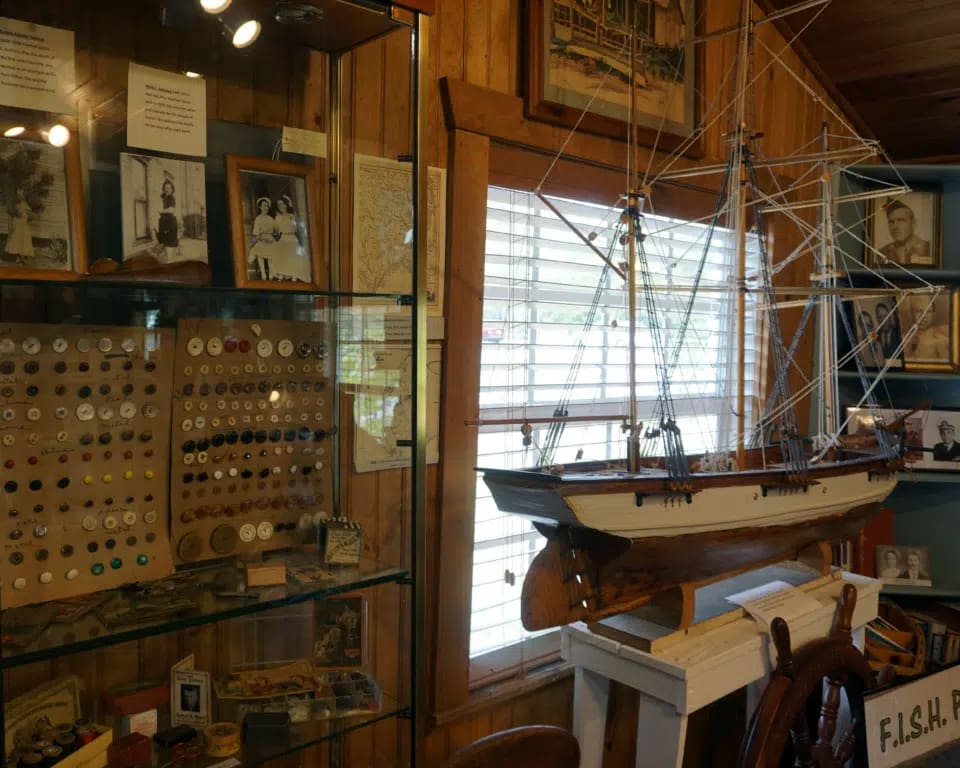
Image: Courtesy Photo
A Generational Responsibility
“My great-grandparents were among the original settlers who came in the late 1800s. My mom and my grandmother were both born in the second house Captain Billy built,” said Cynthia (Cindy) Rodgers, President of the Cortez Village Historical Society.
The Historical Society operates out of the Cortez Cultural Center, a former Army barracks on Anna Maria Island that was gifted by the Monroe family and relocated to the campus in 2010. The Cultural Center proudly showcases a collection of relics and antiques, ranging from old photographs and books to model ships and fishing gear. As President, Cindy is charged with advancing the center through volunteer engagement and furthering its mission through grant-based initiatives, including an environmental education and stewardship grant awarded by the Sarasota Bay Estuary Program last year. She also spearheaded multi-phased recovery efforts following the 2024 hurricane season.

Image: Courtesy Photo
While Cindy has deep roots in Cortez, she did not move to the area full-time until 2020. She owns a historic family home that had been run as a bed and breakfast by her mother for many years. Her childhood memories in the home remain vivid.
“I actually became president on my 70th birthday in 2022, and it has really been an honor to serve in this position. I stepped into this role feeling a sort of generational responsibility to my great-grandparents,” said Rodgers.
Just down the road from Cindy lives Jane VonHamman, a 50-year resident who has been involved in just about every aspect of preserving Cortez Village.
Jane is a native-born Floridian who fell in love with Cortez because it reminded her of Old Florida. “It was just like where I grew up. No curb and gutter, no homeowner associations, no gated community,” said VonHamman.
Jane moved to Cortez in 1975 with her husband, a Bradenton native who was raised in Cortez, to open a retail business. From 2000 to 2008, Jane served on the Manatee County Commission. Her leadership was instrumental in shielding Cortez from commercialization and development.
“The whole premise of this place, as long as I’ve been here, is to keep the culture and the lifestyle that were started here.”

Image: Courtesy Photo
Over five decades, Jane helped lead or participate in opposition to the 1990s net ban on commercial fishing, hotel and condo developments, and an Enterprise Zone designation that would have commercialized and reshaped the community. The Village is now protected as a designated Working Waterfront with a historic overlay district.
Jane now serves as Treasurer of the Florida Institute for Saltwater Heritage (FISH) board, a nonprofit whose mission is to champion and facilitate heritage-aligned protection efforts. One of the nonprofit’s most notable achievements is the purchase of an undeveloped 100-acre waterfront parcel in the Village. The site, now known as the FISH Preserve, was acquired in 2000 through a grassroots fundraising effort. The organization later paid off the $250,000 mortgage with funds raised over four commercial fishing festivals.
The Smell of Mullet Is the Smell of Money
What kind of person does it take to live in Cortez? Someone who relishes the sights, sounds, and—most importantly—the smell of a working waterfront.
“I always tell people, right now, that’s the smell of money. That’s the smell of what this working village is all about,” said VonHamman. “If you can’t put up with clutter in front yards, the smells, watching people haul boats and fix them, you really shouldn’t be here.”

Image: Courtesy Photo
The composition of the Cortez community has shifted. Both women noted that there are fewer families and more short-term rentals. Cultural ties are not as easy to pass down as property, and over time, many Cortez descendants sold the homes they inherited. This slow social erosion is counterbalanced by a continuous community spirit and sense of Cortezian pride. Rodgers’ lived experience showcases this.
“I love to go walking through the village and be able to have a conversation and say hi to people. That social connection and sense of community are really some of the things that keep me here.”
During mullet and crab season, you may find fishermen sleeping in those short-term rentals. Karen Bell of the A.P. Bell Fish Company and owner of Star Fish Company purchased several of the properties to preserve them and provide housing for fishermen when they come to Cortez to work. When Karen’s name came up, Rodgers and VonHamman were eager to highlight her importance.
“If you say commercial fishing and village, it’s her,” Rodgers said.
Karen is a descendant of some of the Village’s earliest settlers. Her dedication to keeping commercial fishing—its restaurants, fleets, and real estate—alive has reinforced the economic backbone of Cortez.

Image: Courtesy Photo
Tourism is embraced in the Village. Many come to its seafood restaurants for award-winning food and a boat-to-table atmosphere. During the height of the season, you could find yourself waiting an hour and a half for a fresh-caught grouper sandwich. The wait is well worth it, and the views might keep you preoccupied.
“People come in, and they go, ‘Oh my gosh—Old Florida.’ And I kind of forget about it living here,” said Rodgers.
Clean Water, Clear Vision
When your culture and economy rely on a healthy estuary, safeguarding it is nonnegotiable.
“Protecting the environment, protecting the estuary—because without that, there’s no fishing,” Rodgers emphasized.

Image: Courtesy Photo
This year, the Cortez Village Historical Society launched a multifaceted educational initiative designed to inform residents and visitors about bay-friendly practices. The call-to-action spectrum is broad and tailored to boaters, restaurant-goers, and homeowners.
“We’re hoping that people will come here, fall in love with it, and just do one small thing. Everybody together makes a huge difference.”
For VonHamman, the FISH Preserve promises a new generation of care and compassion for Cortez. Recently completed trails and bridges now allow visitors, including school groups, to walk or kayak through the preserve, and educational signage enlightens readers about its connection to historic Cortez.
“We need to get them early and instill a love of this place,” said VonHamman.

Image: Courtesy Photo

Image: Courtesy Photo
Partnerships with organizations like the Cortez Village Historical Society and the Florida Institute for Saltwater Heritage that educate and instill appreciation for the estuary are essential to the mission of the Sarasota Bay Estuary Program. They remind us that when we love something deeply, we are motivated to protect it for ourselves and, more importantly, for future generations.

Image: Courtesy Photo
To learn more about the Cortez Village Historical Society, visit their website at cortezvillagehistoricalsociety.org. Stay up to date with the Florida Institute for Saltwater Heritage by visiting their Facebook Page.