

Ruby Bridges Talks Desegregation, Hope and the Power of Education
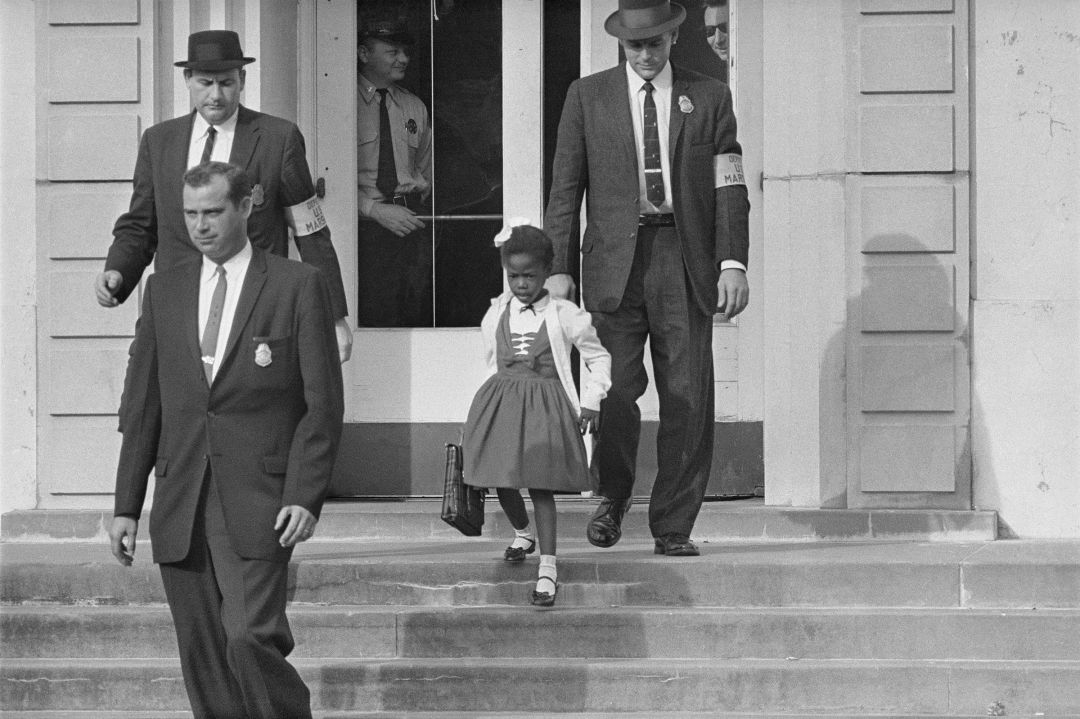
Image: Public Domain
For the last 66 years, Ruby Bridges has existed in the American imagination as she was when she was 6 years old—neat white ribbon in her hair, plaid satchel at her side, Mary Janes frozen mid-stride. It’s 1960, and she’s leaving her first day of elementary school as the first Black child to attend an all-white school in the South, flanked by U.S Marshals on all sides. Beyond them, just outside the frame of the now-iconic photograph, a mob of white protestors chants, screams slurs and hurls tomatoes, held back by wooden barricades and the police. One woman brandishes a Black baby doll in a coffin. Even if you’ve never seen the photograph itself, you’ve almost certainly encountered Norman Rockwell’s haunting rendering of the scene, The Problem We All Live With.
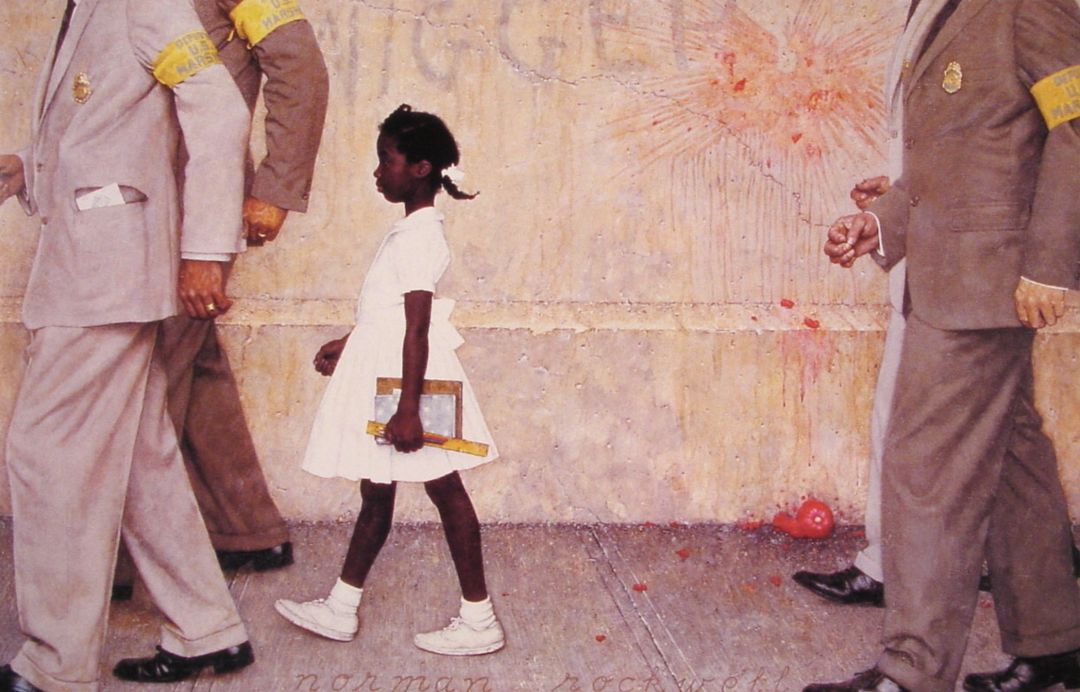
Image: Public Domain
There’s an inevitable fabulization that happens when a real person becomes an icon. Bridges became one of the defining symbols of courage in the Civil Rights movement, an image of innocence and vulnerability facing the beast of contempt and prejudice. But last week, before a sold-out crowd at Booker Visual and Performing Arts Center, she was no longer a symbol. She was simply herself—contemplative, good-humored and gracious—recounting her story in intimate, often little-known detail.
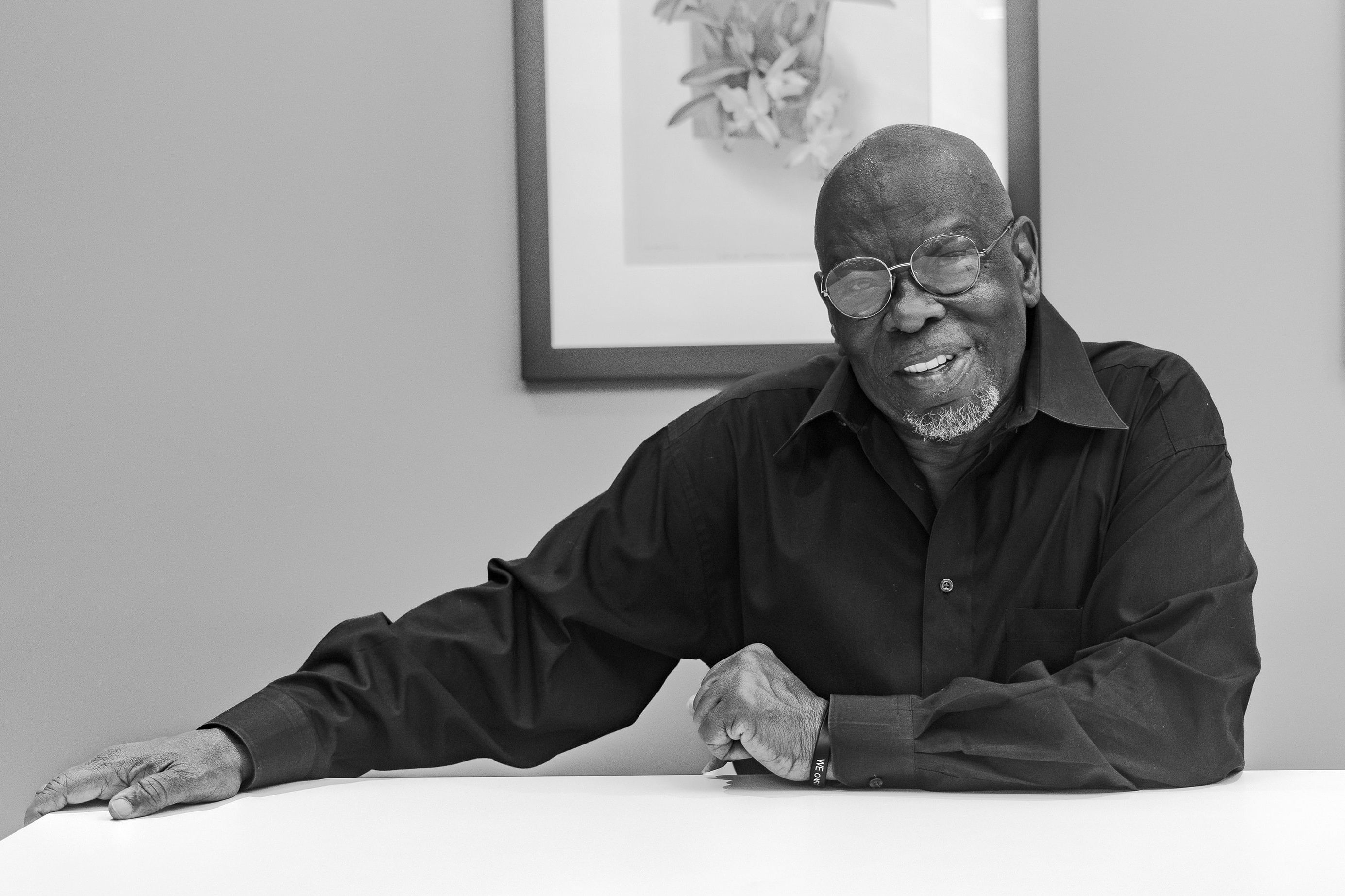
In a bit of circularity, Bridges’ journey to Sarasota began with a little girl. While studying Black history at Bay Haven School of Basics Plus, which has been observing an annual Ruby Bridges Walk to School Day for the last five years, Walter Gilbert’s great-granddaughter chose to dress up as the civil rights icon. Gilbert, a fourth-generation Sarasotan and Newtown elder, spontaneously promised the students that Bridges would visit the following year. “Where that came from, I don’t know,” Gilbert recalled with a laugh. “But you can’t tell a child something without making it happen.”
True to his word, Gilbert chaired a planning committee with Renée Gilmore and Victoria Kasdan, rallying local organizations including Embracing Our Differences and the Charles & Margery Barancik Foundation to bring Bridges to town. Standing before the audience, Gilbert declared, “That was the vision, and the vision lives!”
Among the crowd was Alexander Kupfer, an artist who had flown from his home in Germany for the occasion. In 2023, his illustration of Bridges, Colors Matter, was selected from more than 16,000 submissions for Sarasota’s Embracing Our Differences exhibition. When organizers asked if he would sign a print to present to Bridges, Kupfer initially planned to mail it. “I still think it’s a bit zany to go 8,000 miles just to present a piece of paper,” he admitted. But the image, and the history behind it, had traveled much farther than he had.
“People in Germany are not very well acquainted with the fact that there were segregational laws in the U.S., but still many of them have seen this picture," Kupfer said. In the context of protests unfolding across Europe, he saw a timely relevance in Bridges’ story. “Young people are going into the street, revolting against the conditions of life,” he said.
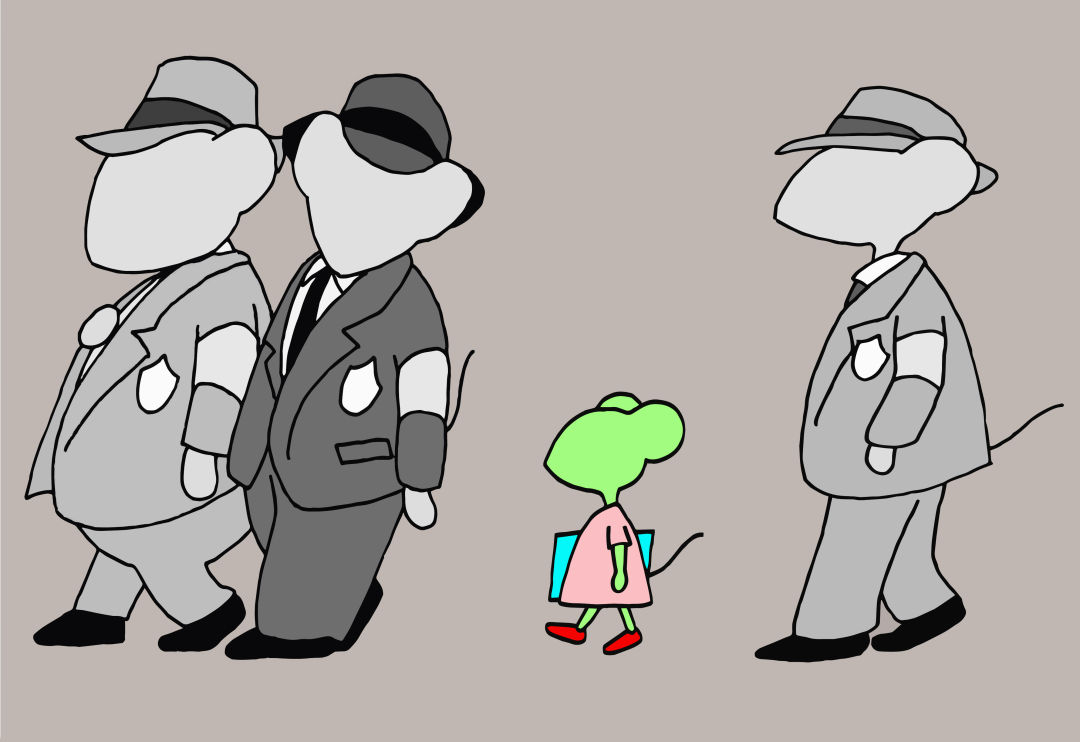
Image: Courtesy
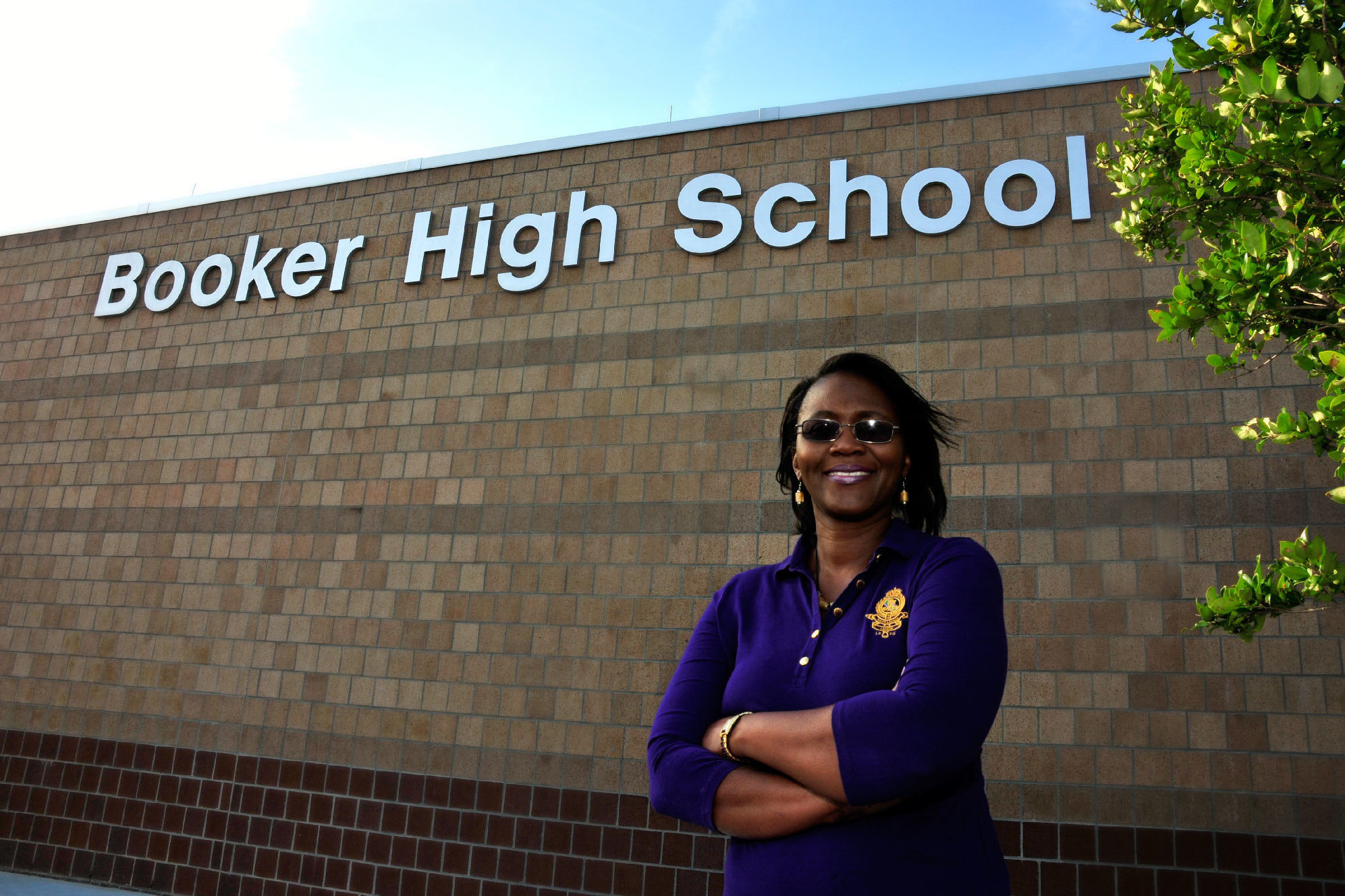
That sense of urgency was echoed by Kennedy Cole, Booker High’s student body president, who saw Bridges’ visit as an opportunity to connect the tensions of the past with those facing his generation. “When you look around the world, when you look around the United States, students are hungry for change. They’re hungry for more. And in order to fight for more, we have to take lessons from the past,” Cole said. The Civil Rights movement, he pointed out, is “recent, in the grand scheme of things. I mean, we’ve got Ruby Bridges here. This isn’t something that happened in the 1600s. This is something that happened where the people who experienced these injustices are still alive today.”
The responsibility now falls to his generation to shape a better future for those who come after them, Cole said. “I think the way to thread that needle is through conversations with people like Ruby Bridges," he added.
Many in the audience remembered a time when Sarasota was wrestling with its own battles over desegregation. For Dr. Rachel Shelley, Booker’s longtime former principal, Bridges’ visit offered an opportunity to consider not only her story, but what followed in the years after.
Two years after Bridges integrated William Frantz Elementary in New Orleans, Bay Haven became the first school in Sarasota County to integrate, following an NAACP lawsuit, when 29 Black students enrolled. Then, in 1967, rather than integrate Black and white students equitably, the Sarasota County School Board shut down Booker High School entirely, busing Black students out of Newtown to predominantly white schools across town. In a letter to the editor of the Sarasota Herald-Tribune, Rev. D.W. Judge wrote, “Again, there appears to be an effort in the wind to give the Negro children and community the short end of the stick. [The desegregation plan favored by the Board] implies that white children are still too precious to walk through a Negro neighborhood but Negros are not too good to walk through white neighborhoods.”
Black students and community members responded with a boycott, establishing grassroots Freedom Schools inside local churches with the help of New College of Florida students, who volunteered as teachers. The protests continued until the district reopened Booker as a magnet school, in part to attract white students. “It all ties [in], it’s all connected,” Shelley says. “It’s not just [American] history, it’s our local history.”
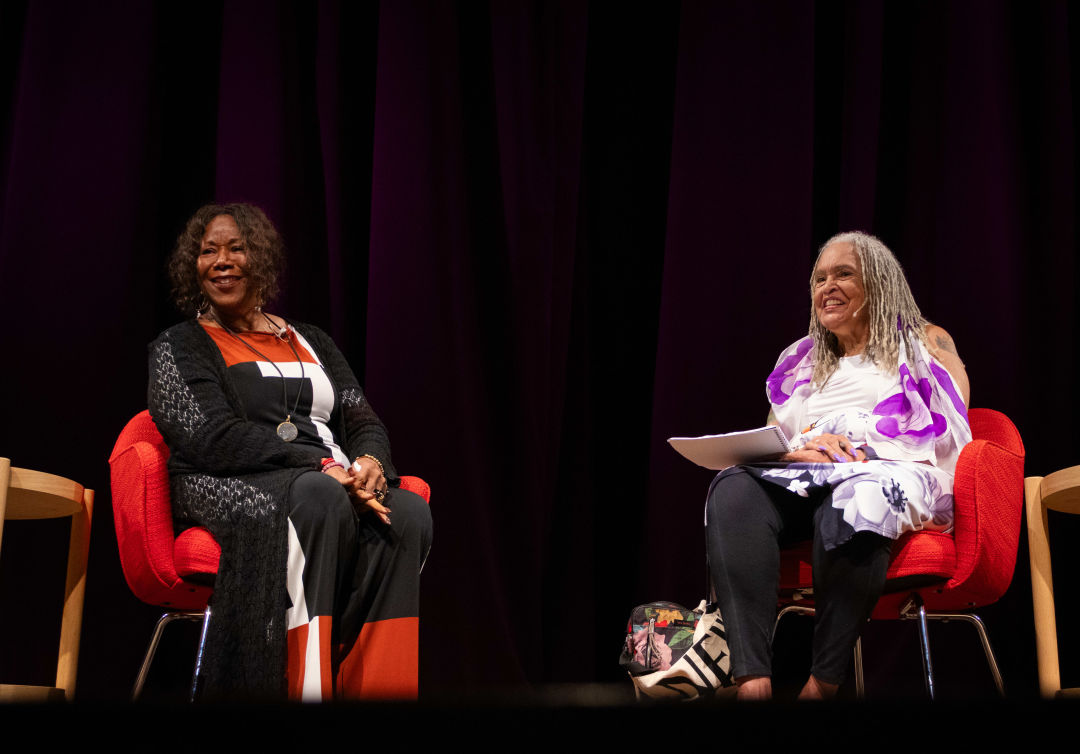
Image: Francis Garcia
Six years after Brown v. Board of Education ruled school segregation unconstitutional, Bridges’ local school board was forced to comply. In opposition, and to keep actual integration to a minimum, the board utilized a loophole in Louisiana law and required any Black first-graders seeking transfer to white schools to pass an intensive screening and entrance exam. Bridges’ parents were among 150 families who volunteered their children. Only six students—all girls—passed. When two families ultimately withdrew, Bridges was left as the sole Black child assigned to her school.
Bridges' parents had been sharecroppers in Mississippi and had middle-school educations. “[My mother] wanted for me what she had been denied,” Bridges said. Her father took more convincing. A Korean War veteran, he was disillusioned with a country where men shared foxholes across racial lines but were divided the moment they returned to the barracks. Still, after urging from their community, her parents decided to move forward and send Bridges to William Frantz Elementary, with one condition—her father wouldn't accompany her to school, afraid he might retaliate if a segregationist threatened his daughter. “They had it all wrong,” Bridges recalled amusedly. “My mother was much worse.”
No one had explained the significance of the test she'd taken or why so many adults around her seemed preoccupied with its results. When four towering white U.S. Marshals arrived at her door that morning, Bridges wondered who had told them she needed a ride to school.
As Bridges, her mother and the U.S. Marshals climbed into the car, the men offered one instruction: “Walk straight ahead, and don’t look back.” Behind them, neighbors took to the streets, following the vehicle all the way to the school in solidarity. When she finally stepped out into the noise and chaos, Bridges thought to herself, “Oh, it must be Mardi Gras.”
It was "the innocence of [being] a child,” Bridges recalled, that protected her. Her first day was spent in the principal’s office, watching furious white parents pull their children out of class. When the dismissal bell rang, she said to herself, “That was easy,” and went home to jump rope with her sister to the rhythmic cadence of the protestors’ chants: "Two, four, six, eight, we don’t want to integrate."
For months, the school’s principal kept Bridges isolated from the school's white students, forcing her to eat lunch alone in her classroom. Her teacher, Barbara Henry, meanwhile, advocated tirelessly to ensure the school complied with federal integration law. Outside, the few white parents who chose to keep their children enrolled faced death threats, had eggs thrown at them as they crossed the picket line and, in some cases, lost their jobs. It wasn’t until she was finally allowed on the playground, Bridges said, that she started to realize the truth of what was happening around her. There, a little white boy approached her and explained matter-of-factly, “My mom won’t let me play with you because you’re a n—r.”
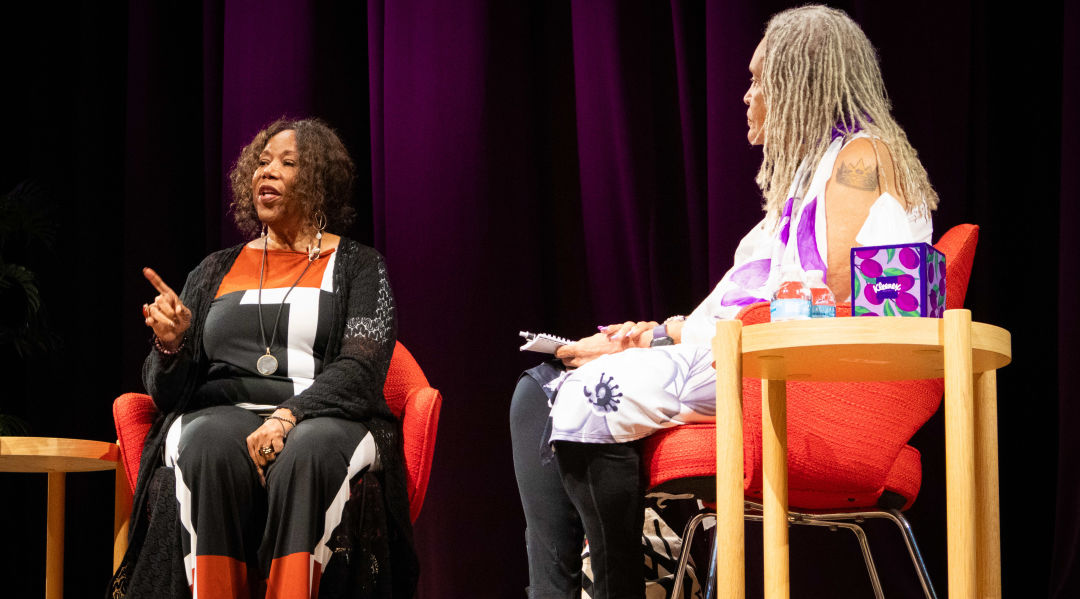
Image: Francis Garcia
Looking back, Bridges said she didn’t believe the boy harbored real animosity towards her. “I didn’t believe then, and I don’t believe now, that he meant it,” she said. Children, Bridges said, are born with the gift of a “pure heart.” This idea, that, in Bridges' words, "racism is passed on," was a central theme during the town hall.
Near the close of the conversation, Bridges was asked how she hoped to be remembered. She paused for a long moment before responding. "The fight we’re in has absolutely nothing to do with the color of our skin," she said. "It’s much, much deeper than what we look like. It’s about good and evil. And evil comes in all shades and colors."
Bridges spoke not as an activist or symbol, but as a grieving mother. In 2005, just two months before Hurricane Katrina decimated New Orleans, one of her four sons was murdered. The tragedy compounded a string of gun violence that had already struck her family. Shortly before his death, another son and her grandchild survived a drive-by shooting, and years earlier, her brother was also a victim of gun violence.
Since then, Bridges has emerged from a quiet life outside of the public eye to visit schools, connect with students and share a message that confronts not only racial bigotry, but violence of all kinds. Addressing the audience at Booker, filled with dozens of educators and students, she emphasized the vital role educators play in reaching young people.
“My story has been promoted by teachers across the country. They see what I see. They understand the relationship I built with my teacher,” she said. “Despite all the hatred outside, that classroom was a very loving environment. [Barbara Henry] showed me her heart. And once you show a child your heart, they see straight through it.”
As she left the stage and the audience moseyed out of the auditorium, two women walked side by side, softly singing the lyrics to Harold Melvin & the Blue Notes’ “Wake Up Everybody,” which had played as the crowd first arrived: “When you teach the children / Teach ’em the very best you can / The world won’t get no better / If we just let it be / The world won’t get no better / We gotta change it, yeah / Just you and me.”