




Sarasota Rejects $8 Million Parking Deal for Rosemary District Development

Image: Courtesy photo
After years of complaints about parking shortages in Sarasota's rapidly growing Rosemary District, a proposed solution finally came before city commissioners Monday. But the $8 million price tag and questions about what the city would actually get for its money, proved too much for a majority of the board.
The Sarasota City Commission voted 3–2 on Nov. 16 to reject an agreement with the Sarasota Housing Authority that would have secured 160 public parking spaces in a proposed garage at the 3 McCown Tower redevelopment, near Boulevard of the Arts and North Cocoanut Avenue.

Mayor Kathy Kelley Ohlrich, Vice Mayor Jen Ahearn-Koch and Commissioner Flo Entler voted to reject the agreement. Commissioners Kyle Battie and Liz Alpert opposed the rejection, arguing that the city was passing up an opportunity to address a longstanding parking shortage in a neighborhood where residential and commercial development has for years outpaced public parking infrastructure.
The garage was planned as part of a larger mixed-use redevelopment that would bring 96 affordable apartments for older adults, retail space and a 343-space parking structure to the existing McCown Towers property. Of those spaces, 160 would have been available to the public, with the remainder reserved for residents, commercial tenants and others associated with the development.

Image: Google Maps
The housing project itself is expected to proceed. City Manager Karie Friling told commissioners that the Housing Authority had indicated it would redesign the garage and move forward without the city's financial participation.
"The question before you is not whether the housing development should move forward," Friling said. "It is whether the city should make this particular public parking investment on the terms presented to you today."
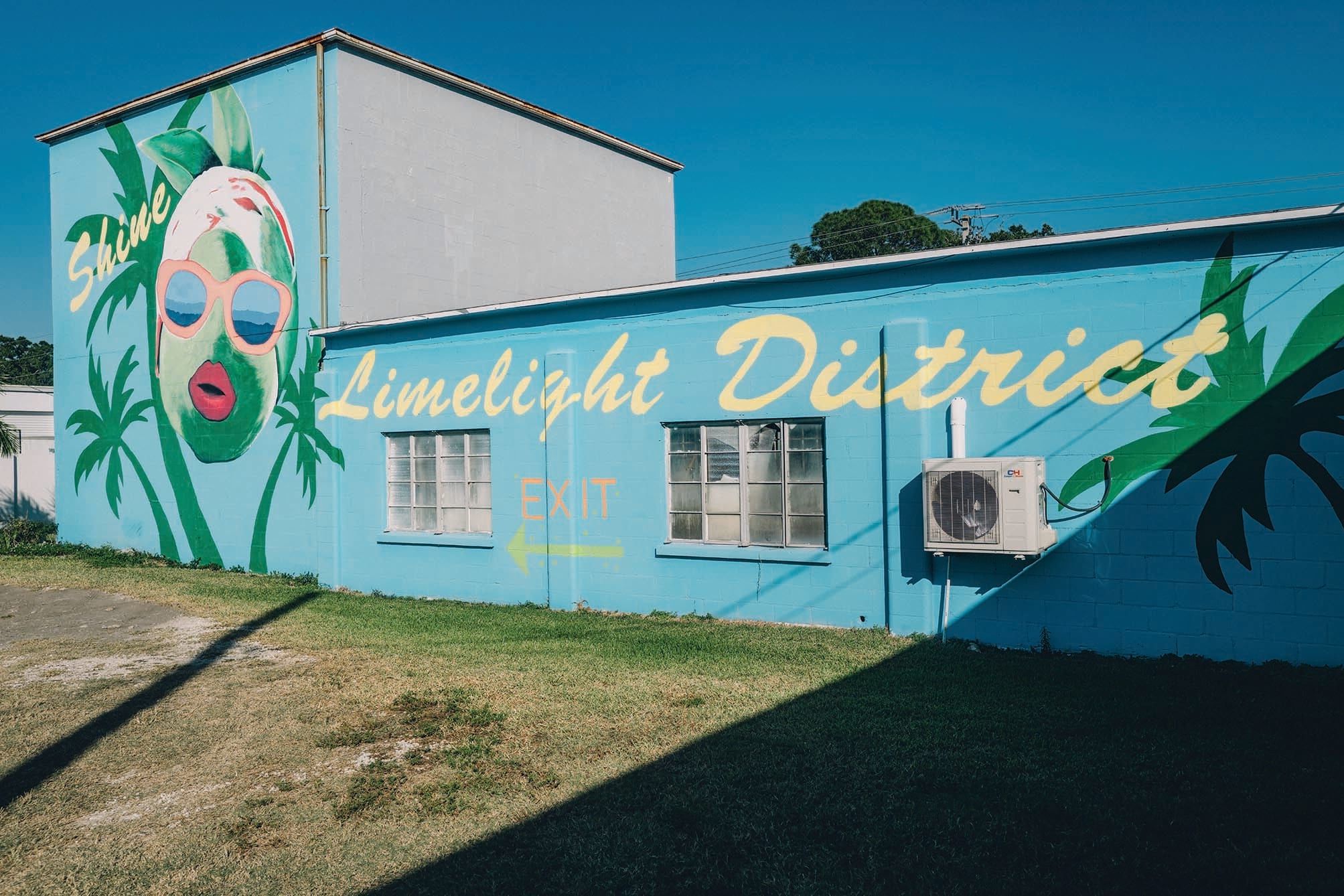
It’s a parking problem years in the making. The Rosemary District has undergone dramatic growth, with new apartments, restaurants and businesses filling a neighborhood once characterized by warehouses, modest homes and older commercial buildings.
The Rosemary Residential Overlay District encouraged denser development with reduced parking requirements, helping fuel that transformation while leaving a shortage of convenient public parking.
"We knew this was going to be a situation with the overlay when we reduced the parking requirements," Ahearn-Koch said. "It was an unfortunate consequence of incentivizing development in the area, but we could see this coming."
The proposed partnership with the Housing Authority was intended to address that shortage without requiring the city to acquire land and construct an entirely separate municipal garage.
The arrangement had been under discussion for more than a year, with neighborhood businesses and the Rosemary District Association advocating for additional public parking.
A city memorandum says businesses attending a March meeting supported paid parking in exchange for additional spaces. Residents generally supported expanding parking opportunities, though opinions on charging for those spaces were mixed.
The financial details became more complicated in the months leading up to Monday's vote. Initially, city officials anticipated owning their portion of the parking garage through a condominium-style arrangement. But in October, the Housing Authority advised the city that the U.S. Department of Housing and Urban Development would not permit that ownership structure.
Instead, Sarasota would receive a sublease granting it the right to operate the 160 spaces for between 50 and 65 years, rather than owning them permanently.
That brought financial consequences.
Because the city would lease rather than own the spaces, financial advisers anticipated that borrowing would need to be taxable rather than tax-exempt, increasing the estimated interest rate from 4.75 percent to roughly 6 percent.
Under those assumptions, total estimated repayment would increase from $12.72 million to $13.81 million, although final financing terms wouldn't be established until the city sought financing, expected in 2027.
The proposed agreement also required Sarasota to cover approximately 46.65 percent of shared garage maintenance and operating expenses, along with the costs of running its public parking program. After a specified period, the Housing Authority would also receive a share of the net parking cash flow. And paying for the garage would have required more than charging motorists who parked inside it.
A September study by Walker Consultants examined a districtwide paid parking program involving 524 existing on-street spaces, 39 public off-street spaces and the proposed garage. At $1.50 an hour for street parking and $1 an hour in the garage and existing public lot, the consultant projected approximately $1.52 million in annual revenue.
After operating expenses and debt payments, the preliminary model showed approximately $264,000 remaining annually.
But those projections depended heavily on introducing paid parking throughout the Rosemary District, and the consultant cautioned that the figures required further verification before being used to support financing commitments.
For Ahearn-Koch, the financial uncertainties were too significant, particularly with potential changes to the city's property tax revenue following voter approval of Amendment 3.
"I do think that there is a solution out there for us, and I do want to help the businesses and the residents in Rosemary, but not at any cost," she said.
Entler, participating in her first meeting as a commissioner said, "There are so many unknowns here that I just can't tie the city's hands on this." Battie, whose district includes the Rosemary District, argued that delaying the project could ultimately cost taxpayers considerably more.
"This area needs parking," he said. "That parking not only will satisfy Rosemary, but will also help with The Bay and everything that is to come."
Alpert agreed, noting that any future parking solution would involve financial uncertainty and that postponing the investment could leave the city spending millions more to address the same problem.
Mayor Ohlrich said she had initially supported the proposal but became uncomfortable with the changing terms and financial exposure. "Initially, I was all in on this project," she said. "However, to me, the relatively newly revealed uncertainty makes the city participating in this project dangerous."
The Housing Authority's redevelopment, which is being pursued with Fortis Development, remains separate from the city's parking agreement. The project is intended to expand affordable senior housing while retaining the site's role as an established residential community. The Housing Authority's plans have evolved over time, and its latest proposal includes 96 apartments and a mixed-use building.
The city rejected participation in the parking arrangement, not the development application, which remains subject to its own approval process.
Friling said city staff would continue exploring other ways to add public parking in the Rosemary District. Those possibilities include acquiring property for a city-owned garage or pursuing another partnership, although either would require additional time, funding and negotiations.
For Rosemary District businesses and residents, that leaves a familiar problem unresolved: The neighborhood keeps growing, but finding somewhere to park hasn't gotten any easier.


