




Community Leaders Experience Life After Lockup Simulation With Project 180

Image: Courtesy Photo
Last month, community leaders, landlords, lawyers and curious citizens found themselves scrambling before police officers and representatives from the Florida Department of Corrections, frantically digging through paperwork for identification, waiting in long lines to give blood, racing between churches and grocery stores and even stealing money from one another (monopoly money, that is).
The chaos intentional—and part of Project 180’s Reentry Simulation, an immersive exercise designed to compress the overwhelming first weeks after an individual’s release from prison into a single disorienting hour. Hosted by the Sarasota-based nonprofit, which focuses on helping formerly incarcerated individuals reintegrate into community life, the exercise assigned participants new identities and limited resources before sending them through a maze of responsibilities, institutions and unexpected setbacks individuals must confront immediately upon reentering society.
The simulation’s effectiveness was written across participants’ faces.
With the exception of a handful of those whose careers involved the reentry process—and two lucky volunteers guided through the experience by Project 180 staff—most participants were visibly frustrated within the first 15 minutes.
Among them was Manatee County Commissioner George Kruse. “It showed how broken the entire system is,” Kruse says. “It was physically impossible to actually complete what was necessary. You had to make tough decisions, and it almost felt like it was set up to fail."
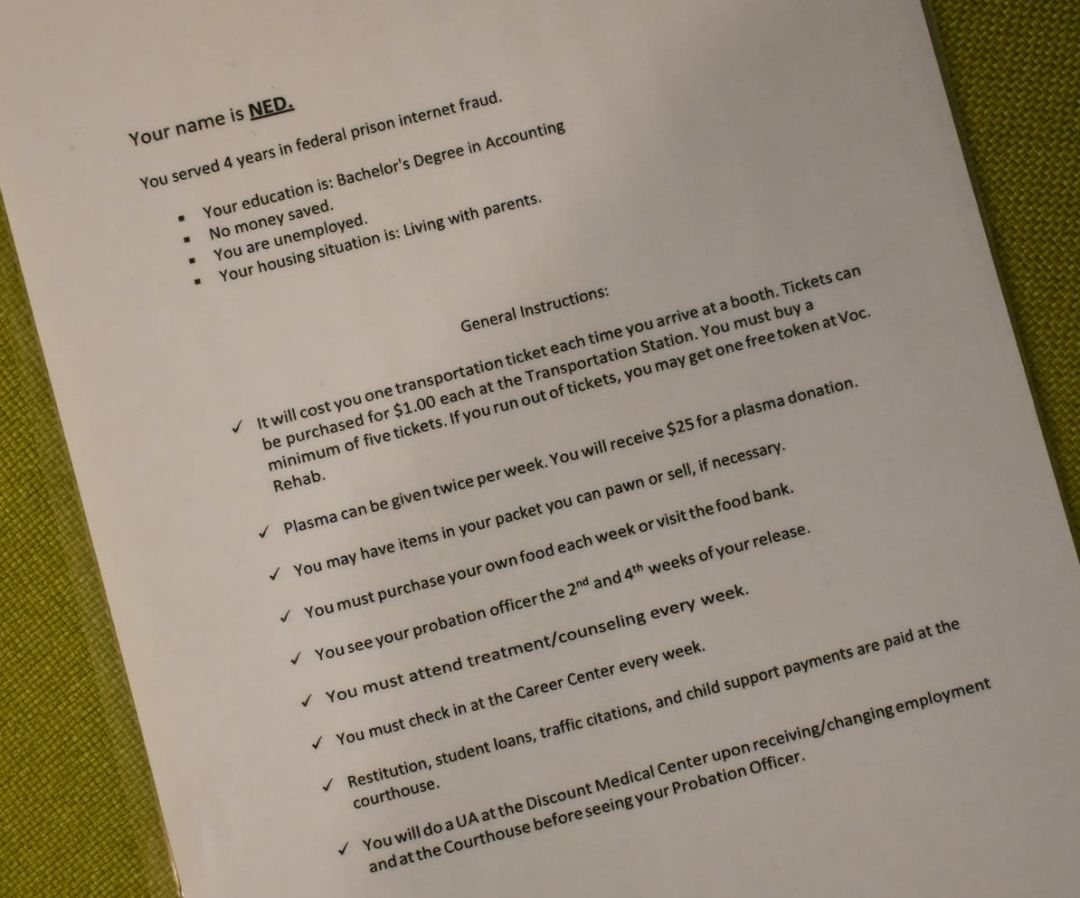
Image: Courtesy of Project 180
The simulation reflects what advocates often describe as a “stacked burden”: not one obstacle, but many, arriving all at once, with each challenge dependent on successfully navigating the last. A missed appointment with a caseworker can mean losing eligibility for food stamps and other forms of assistance. A delayed paycheck can jeopardize housing. A lack of transportation can unravel both.
Each year, more than 30,000 people are released from Florida prisons and return to communities across the state. Many hope to become productive, law-abiding citizens but face significant barriers, including limited job skills, gaps in education and discrimination in housing and employment because of their criminal records.
Without support, many become statistics—the homeless, the unemployed, the undereducated and the impoverished. More than 76 percent are rearrested within five years, perpetuating cycles of victimization and straining community resources. Reducing those barriers is central to Project 180’s mission of decreasing poverty, homelessness and unemployment among formerly incarcerated individuals while improving public safety.
For Michelle Ace, an assistant public defender who participated in the simulation, the experience underscored how easily good intentions can be derailed by systemic barriers.
“It’s really frustrating when people are trying and the world comes down on them,” she says. “It’s easy to judge or be afraid of someone if you don’t understand them, but we have to have some graciousness and sympathy.”
Ron Solorzano, an Army veteran—known as “Uncle Ron” to the Project 180 folks—was grateful for the simulation, but didn’t want to participate. He already did, in real life, when he reentered society after serving twenty years in prison.
“When I got out, I was scared. I had no money,” he says. “I had lost everything. When I got out, they gave me $50, and that was that. I was working while I was incarcerated as part of the ‘farm squad’, farming produce for prisons all over, but there was nothing to report as earnings for Social Security. I had to start all over again.”

Image: Courtesy of Project 180
Project 180’s model combines recovery support with practical assistance such as food, clothing and transportation, introductions to employers, leadership training, volunteer opportunities and a new, law-abiding social network. With that support, Ron rebuilt his life. Today, he serves as a source of wisdom, accountability and stability for younger men navigating the same transition.
And Project 180 is working to extend its model to more people. Under the leadership of new president and CEO Antonia Rolle, the nonprofit is preparing to open its first residential program for women, aiming to replicate their reentry model while addressing the unique challenges women face when returning home and rebuilding their lives.
"This is the kind of thing that needs to get out more to the general public," says Kruse, "and equally—or moreso—to the elected officials who have a say in it.”
Learn more about Project 180’s philosophy and programs by visiting project180reentry.org