



While Caring for Her Father, Writer Bryn Durgin Watches Over the Things That Grow
Florida is a place of natural disaster. A place whose ground can give out just like that, swallowing whatever’s there at the time, gulping it down. A hungry place that spits out mango and papaya, and where passion fruit bursts open under your thumb.
I live here now, though I haven’t always. I grew up in the North Country, the northernmost part of New York state. A place whose ground stiffens with cold, where winter buries itself beneath the soil, making the dead wait for spring. A patient place whose sweetness isn’t plucked from a branch but drawn through a hole in a maple tree, drop by drop.
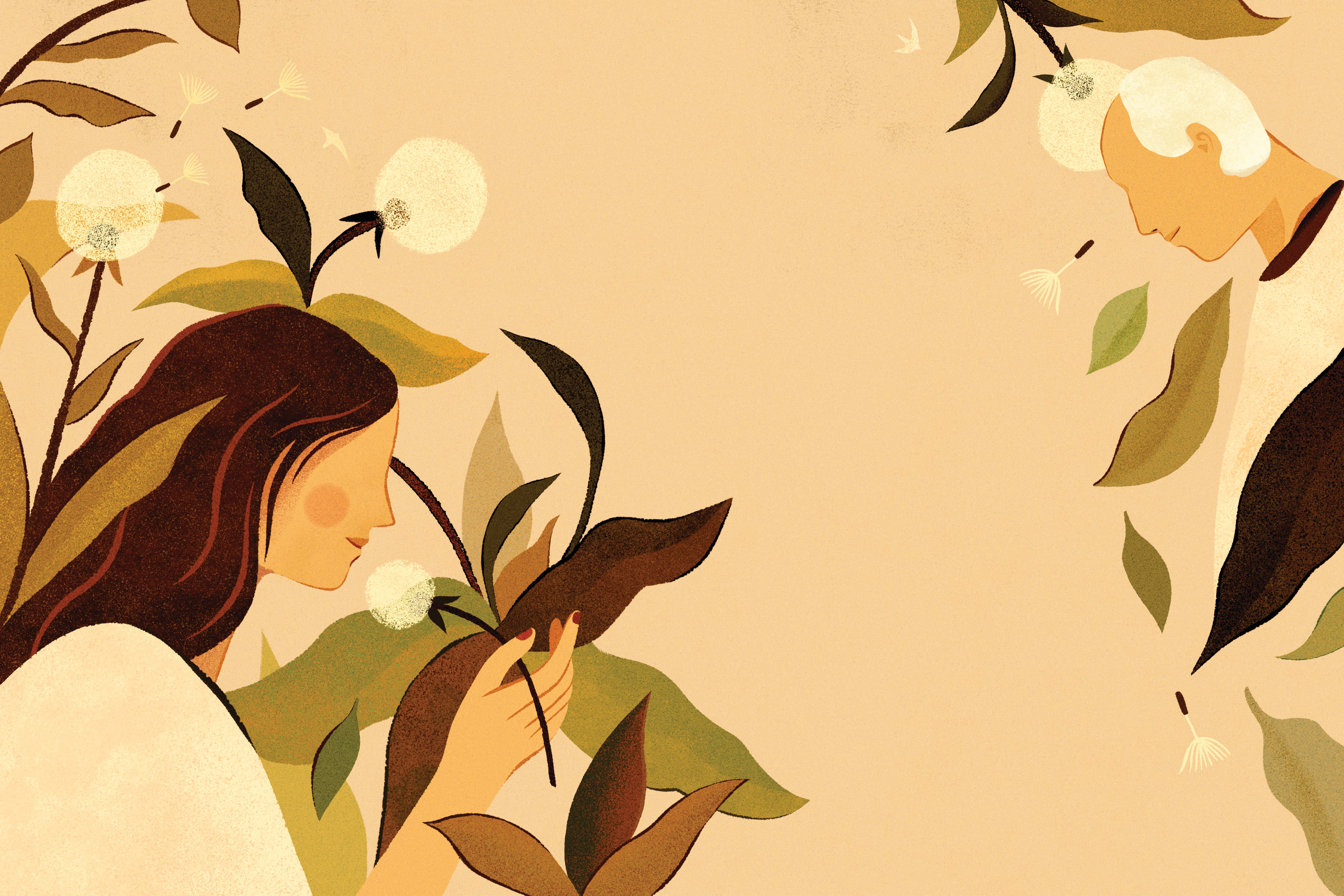
As a little girl, I remember coming home from a summer vacation to our lawn covered in dandelions. Their stems had grown long and bent under the weight of their yellow blooms. I had never seen anything like it before. It looked as if the sun had broken apart and scattered itself across my own backyard.
And I wanted it to stay just like that. I didn’t want to step on it—didn’t want anyone else to, either. I watched my mom make her way to the front door with my brothers with the anxious vigilance of a general watching her soldiers cross a minefield. There I stood in the driveway, firmly planted, until my dad carried me inside on his tiptoes, careful to step only where I pointed.
I don’t have a lawn here in Sarasota. I live downtown, in a small second-floor apartment with a balcony littered with evidence that I used to garden: a rusty trowel, a watering can filled with rain—now mostly a womb for maturing mosquitoes—and, in the corner, a tower of clay pots, each one holding another pot, like Russian nesting dolls. The plants that once filled them are long dead. Their soil had gone bone dry, closer to ash than dirt by the time I dumped it over the side of my balcony onto the slim stretch of land along Fruitville Road.
But when I first moved here, in September 2020, I lived in a little house with a yard on a street named for a tree. While the whole world was shrouded in a veil of death that first year of the pandemic, these street names felt impossibly optimistic. I started working at the bookstore down on Pineapple Avenue and took Orange Avenue to get there, making a left on Lemon Avenue. Ducking under branches heavy with avocados and sidestepping fallen mangoes fermenting on the sidewalk, I felt as though the city was welcoming me with a basket of fruit. Drunk on all that abundance, I wanted more. I wanted to grow something myself.
So I bought twine, stakes, netting, a hand trowel, a wheelbarrow, a 43-gallon dual-chamber compost bin, and rubber-palmed gloves that pulled all the way up to my elbows. Some of the plants I chose just for the name alone: snapdragon, beautyberry, moon flower, beach creeper, scorpiontail, sensitive pea, turkey-tangle frogfruit. The herbs and vegetables—butter crunch lettuce, dinosaur kale, collards, Danvers carrots, Everglades tomatoes, green beans, Datil pepper—I ordered as seeds from a catalog. Sage, lemon balm, cilantro, milk thistle and dill. Thousands of seeds, each kind with its own countdown to germination and another to harvest. I tucked them into the soil in tidy rows, evenly spaced, and could hardly wait for time to do its work.
About a decade before this, my dad was diagnosed with a fatal neurological disease. When I first saw scans of his brain, I remember telling the doctor they looked like a Rorschach test, pointing to the butterfly in black and white. Smiling, I said it looked like a swallowtail. I was only a teenager then, so when the doctor called it a black hole instead, I pictured a scene from a video of a supernova explosion shown in science class.
Immediately, I felt the gravity. Eventually, I became his caregiver until, finally, I moved him into a long-term care facility.
There was no cure for this disease—nothing to slow its progression, nothing we could have done to prevent it. It’s a disease that takes away, first, your ability to imagine a future and, eventually, your ability to remember the past, leaving you stuck in between the two, in only the present. I was watching my dad disappear in that slow, subtle way the seasons change. How the days shorten little by little, stretching the shadows until there’s barely enough light to remind you the sun is still there. Except, in this case, there was no looking forward to spring.
Planning this garden was the closest I’d come to imagining the future in a very long time. I could see myself in denim overalls and a floppy straw sunhat, gathering more from the ground and the trees than I could carry in my arms, turning it into pies and pickles and garnishes for the cocktails I’d serve at the dinner parties I’d host in the backyard I’d made beautiful. Everywhere I looked, life.
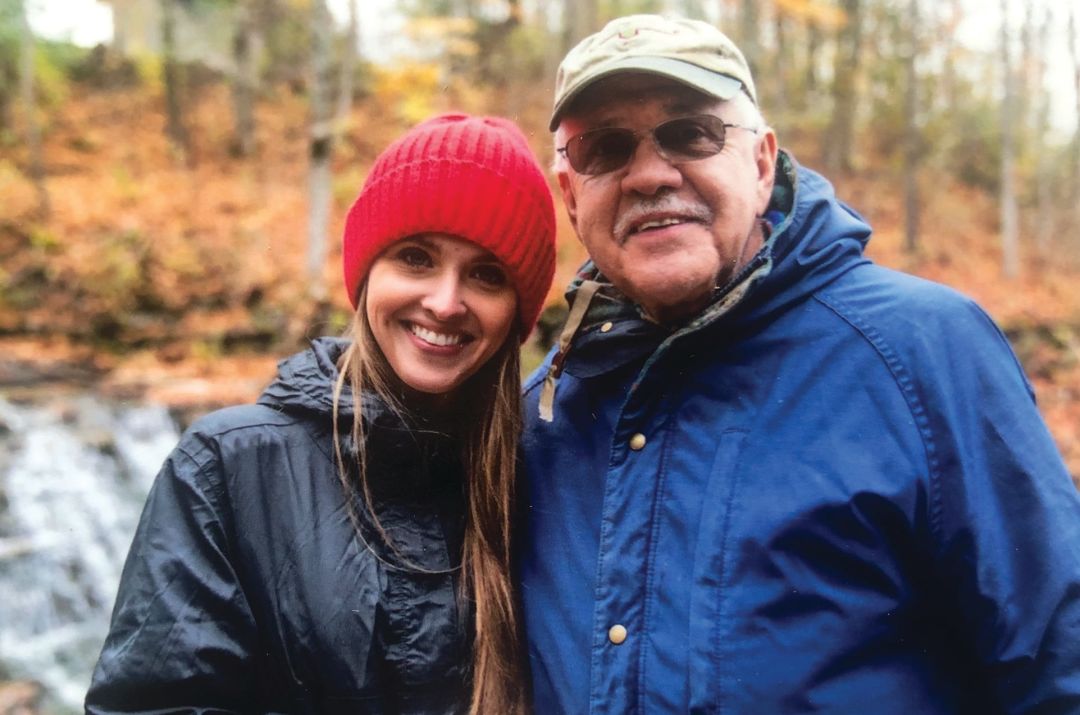
Image: Courtesy Photo
Every morning, I searched for signs that this future was arriving. One by one, green shoots broke through the soil. Then leaves. Then more leaves. Every day there was something that hadn’t been there the day before. I felt like a magician with one hand inside the hat, my fingertips grazing the rabbit.
Just when I thought I had a grip on things, it all started to slip away. I spotted some leaves pocked with holes, so I dusted them with cayenne pepper. Still, mealybugs, spider mites, whiteflies, aphids—all of them—multiplied. I picked up a bag of ladybugs from my local garden center, hoping they’d eat whatever was doing the eating, and shook the bag over the garden. I’d imagined a cloud of ladybugs taking flight. Instead, they rained down into a motionless heap. Dead.
I drove back to the garden center to report the dead ladybugs and wound up leaving with a cartful of half-dead plants from the discount rack to replace the fully dead ones in what had become the graveyard I was still calling a garden. They, too, died. And it went on like this for months: the more plants died, the more I planted. I tried my hand at cucumber, quinoa and okra—and when it became clear that I was always either overwatering or underwatering or watering at the wrong time of day, I snaked a drip hose through the rows and installed a timer on the spigot that I never managed to properly program.
Every small loss felt enormous and personal. I started hoping for a hurricane—just enough wind and rain to give me something to blame besides myself.
The only things that seemed to thrive were the weeds. I yanked them out by the fistful and threw them into the compost with the maggots and the flies. Whatever had appeared without my permission,
I pulled.
Most mornings I was on my hands and knees in the dirt, autopsying whatever had died in the night, taking inventory of what I’d failed to keep alive. Then I’d drive almost an hour to where my dad was waking up, waiting for me to feed him breakfast. I’d wheel him outside, off the grounds of the facility and to a small park with a dock and a picnic table. I’d feed him there, in the fresh air, something I’d packed. Yogurt. A banana. Something soft and sweet. Sometimes he’d close his eyes and turn his face toward the sky, like a plant stretching for the sun.
Each morning, I measured his decline by what had disappeared. I’d done this exercise for years, watching him lose his ability to match two socks from a pile of laundry; to know the rules of a sport he’d coached for decades; to count the bills in his wallet; to read a menu; to tell time; to find the right words; to drive a car or ride a bike; to run or walk or stand up; to swat a mosquito from his arm; to spell his own name; to recognize himself in the mirror.
The doctors called this litany of losses progression. I tried everything I could to stop it: I enrolled him in a clinical trial; got him into physical therapy; played catch; put him on a Mediterranean diet; changed medications; laid out his clothes; finished his sentences; learned to read his body language; replaced his shoelaces with those elastic coils that don’t need tying; bought him a cane then a walker then a wheelchair; told him I love you and I need you and you can never die.
In the garden, I was testing a theory I needed to be true: that with enough vigilance and devotion, I could keep something alive. I’d found no evidence in support of this with my dad—the plaques and tangles in his brain turning pathways into thickets—but a garden seemed like a reasonable place to expect a different result. Brains are complicated. Tomatoes? Considerably less so. The stakes were nowhere near the same, but the outcome would be.
I left that house and its garden in November. The next month, my dad died. Though he was cremated on the winter solstice—the day with the least light—we waited until summer to have his services. In the intervening months, my childhood home stood empty, shrinking in winter and swelling with spring, and by the time I pulled into the driveway, the lawn was a carpet of dandelions.
I took off my shoes and let the dandelions carry me to the door, their cool stems catching between my toes and their crushed flowers staining my soles gold. I imagined their taproots stretching underground, far into the dark, beyond my reach. What keeps them alive, hidden from me.