






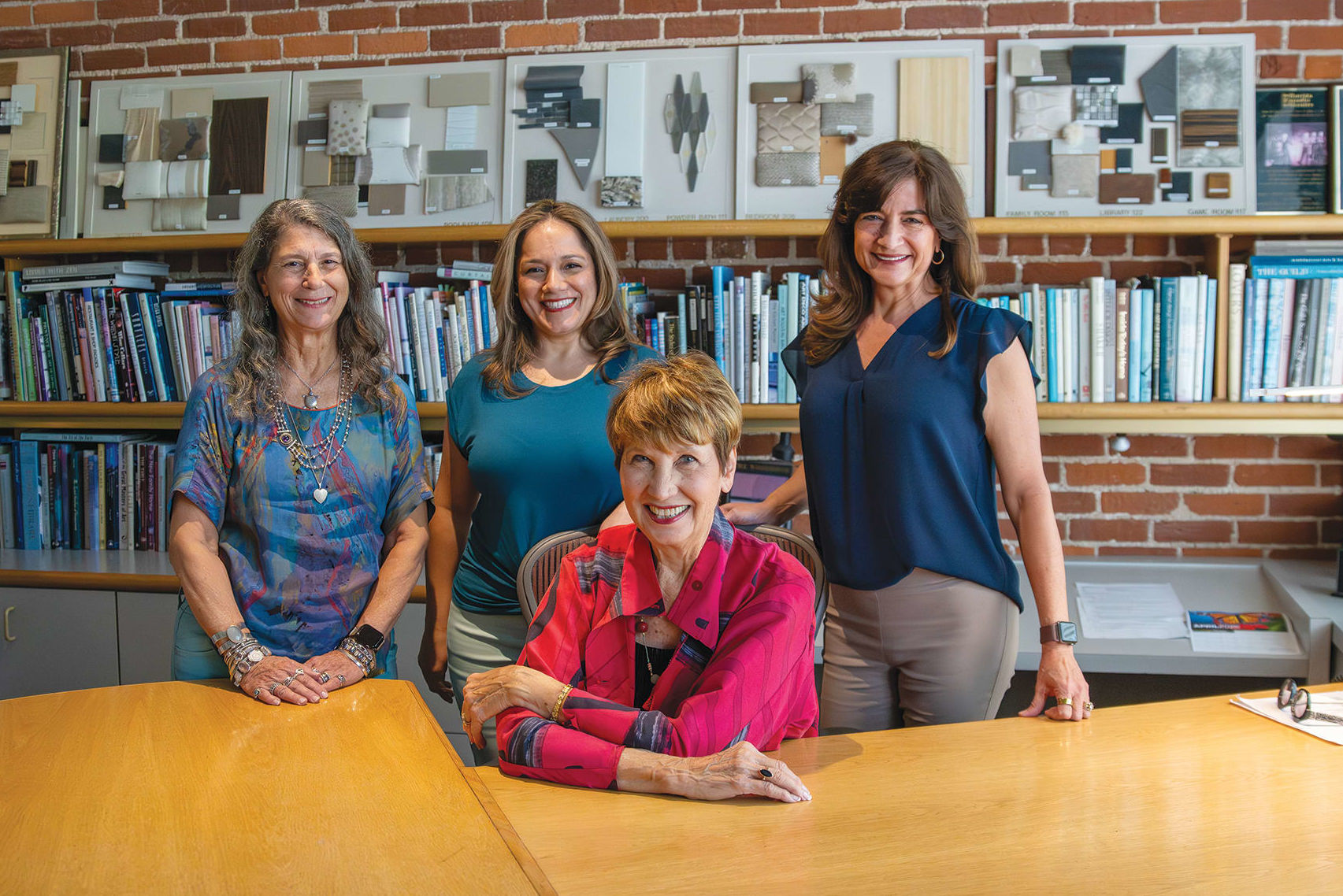
Doctors Told Anne Folsom Smith She Had Alzheimer's. Unconvinced, Her Friends Launched a Rescue Mission.
It was a summer day in 2022, and Anne Folsom Smith had lost her car keys—again. Standing in the kitchen of Ventana, the historic Sarasota bayfront farmhouse that she and her husband, architect Frank Folsom Smith, had renovated and lived in for almost three decades, she had an uncharacteristically bewildered look on her face.
Frank glanced up from the newspaper, frowning. Other people lost their keys all the time—but not Anne. His wife, who had turned 74 in December, reveled in her hard-driving, multitasking schedule. At her Anne Folsom Smith Interior Design firm, she worked with some of the region’s wealthiest—and most demanding—clients. A music lover, she had served as chairman of the board of Sarasota Orchestra since 2012, an unprecedented 10-year tenure. She was an accomplished cook who enjoyed entertaining; and she also managed their home and its extensive gardens and supervised the caretakers that Frank, who at the age of 90 struggled with mobility, needed around the clock.
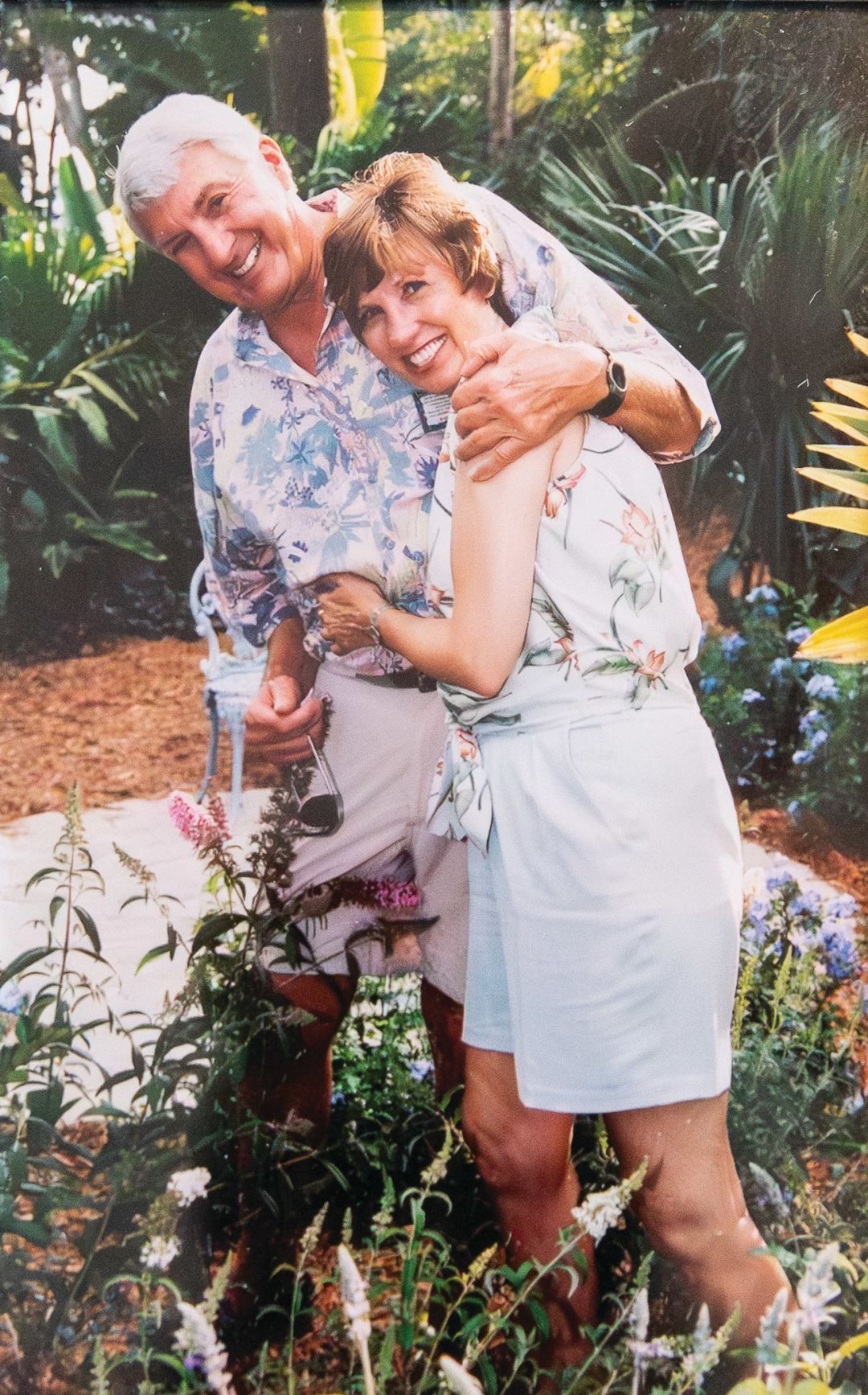
Image: Courtesy Photo
Tall, with perfect posture and a dazzling smile, Anne combined the warmth and ladylike manners of her Tennessee Southern-Baptist upbringing with fierce determination and an occasional salty epithet. Frank’s caretaker Paola Fernandez marveled at her energy.
“She was always doing something,” Fernandez says. “She came home from work and cooked dinner for her husband, then would be outside working in the garden or the pool. Everything had to be spotless.”
But something had changed. Anne was not only losing her keys; she was forgetting appointments and conversations—including important ones, as recent as the day before. She was having trouble composing the daily lists she lived by—and her handwriting was deteriorating, too. The close-knit staff at her design firm, some of whom had worked for Anne for decades and felt like part of her family, had started to talk about it.
“At first we thought, well, she’s getting to a certain age,” says Fabiola Softas, the company’s principal designer. But later that summer, when they were driving to an appointment and Anne turned left into a roundabout and collided with another car, leaving everyone shaken but unhurt, Softas confronted her.
“Something’s going on with you,” she said. “We need to see a doctor.” At first defensive, Anne finally conceded. “All right,” she said. “I’ll do it just for you.”
Smith met with a neurologist, who recommended an assessment at Sarasota Memorial Hospital’s Memory Disorder Clinic. He also ordered an MRI of her brain. The MRI revealed enlarged ventricles, which can be associated with Alzheimer’s disease, as the ventricles (fluid-filled chambers) expand to fill the space left by a shrinking brain. It also noted a noncancerous cyst on one of her ventricles, but this received little attention and was overshadowed by the final diagnosis. After a series of tests, in August 2022, the clinic concluded that Anne was suffering from “a major neurocognitive disorder/dementia, probable Alzheimer’s disease.”
Despite the diagnosis—which she scoffed at—Anne continued to go to work every day. But she had been struggling with knee pain and decided to have knee replacement surgery in October. She asked Maggie Uccello, a physical therapist who had been working with Frank, to help her rehabilitate after the surgery.
Uccello says Anne made good progress for the first few weeks. But then she developed a new problem. She began listing to one side and losing her balance when she walked.
“That’s not typical with knee issues,” says Uccello.
Anne’s orthopedic surgeon confirmed that the problem was not related to the knee. He referred her to a new neurologist, whose first opening was in February.
Over the next few months, Anne declined with frightening rapidity. Her mobility, understanding and even her hearing seemed to diminish daily. She became incontinent and needed help standing, dressing and in the bathroom. Soon she was in a wheelchair and required 24-hour caretaking. She had a dull, vacant look in her eyes—“almost like a cloud,” Softas says—and although she recognized people and could talk to them, she would forget what was said and keep repeating herself.
“It was like she was living in another world,” says Fernandez.
But unlike many Alzheimer’s patients, Anne was never anxious or agitated. “She was very happy—almost childlike,” Softas says. And also unlike Alzheimer’s patients, she had periods of lucidity, “where the old Anne would flash through,” Softas says.
Those lucid intervals haunted Softas. Her mother and grandmother had both had Alzheimer’s, and something about Smith’s condition felt different. It wasn’t just the flashes of lucidity—she was also physically declining much faster than they had. Softas couldn’t shake the feeling that the real Anne was still there, trapped inside her stricken body and brain.
Softas shared her misgivings with Jack Wolf, the Smiths’ longtime financial adviser, who was empowered to make health and other major decisions for the couple. He agreed. But if it wasn’t Alzheimer’s, what was it? Several other employees who were close to Anne, including Uccello, Fernandez and Cindi Perkins, were also involved in the discussions. With Anne unable to advocate for herself and Frank too fragile to help, they decided it was up to them to find the source of her illness and a doctor who could treat it.
Everyone hoped the appointment with the new neurologist would provide some answers—and hope. The doctor ordered several tests, which he said confirmed that Anne had Alzheimer’s. But he did notice something interesting: The MRI report indicated that Smith’s brain showed signs of hydrocephalus, a condition found in some older people, usually beginning in their 70s. The most common form is called natural pressure hydrocephalus (NPH).
NPH is the accumulation of too much fluid in the brain. Cerebrospinal fluid—as much as half a liter a day—normally circulates through the ventricles and over the surface of the brain before it is reabsorbed. But sometimes that fluid instead accumulates in the ventricles, enlarging them so much that they press upon and damage nearby brain tissue and blood vessels. The first sign of NPH in older people is usually impaired gait and balance; many patients also develop trouble thinking and reasoning and lose control of their bladders.
As people age, their brains shrink and become less able to adapt to pressure. In some people, for reasons not yet known, those age-related changes in the brain lead to NPH. A variant called obstructive hydrocephalus can occur when a cyst blocks the circulation of fluid and causes it to accumulate in the ventricles.
Like Anne’s first MRI, this one showed that she did have a cyst. The report noted that it might—or might not be—causing her hydrocephalus. But in any case, the neurologist explained, the hydrocephalus was secondary and removing the cyst was out of the question. He had consulted with a neurosurgeon who agreed that such an operation would be too delicate and dangerous to risk. Besides, the real problem was Alzheimer’s. And unfortunately, he said, Anne’s Alzheimer’s was so advanced that she would probably die within two years.
“Make plans and arrangements now,” the neurologist advised. “Put her in care that will make her remaining time comfortable.”
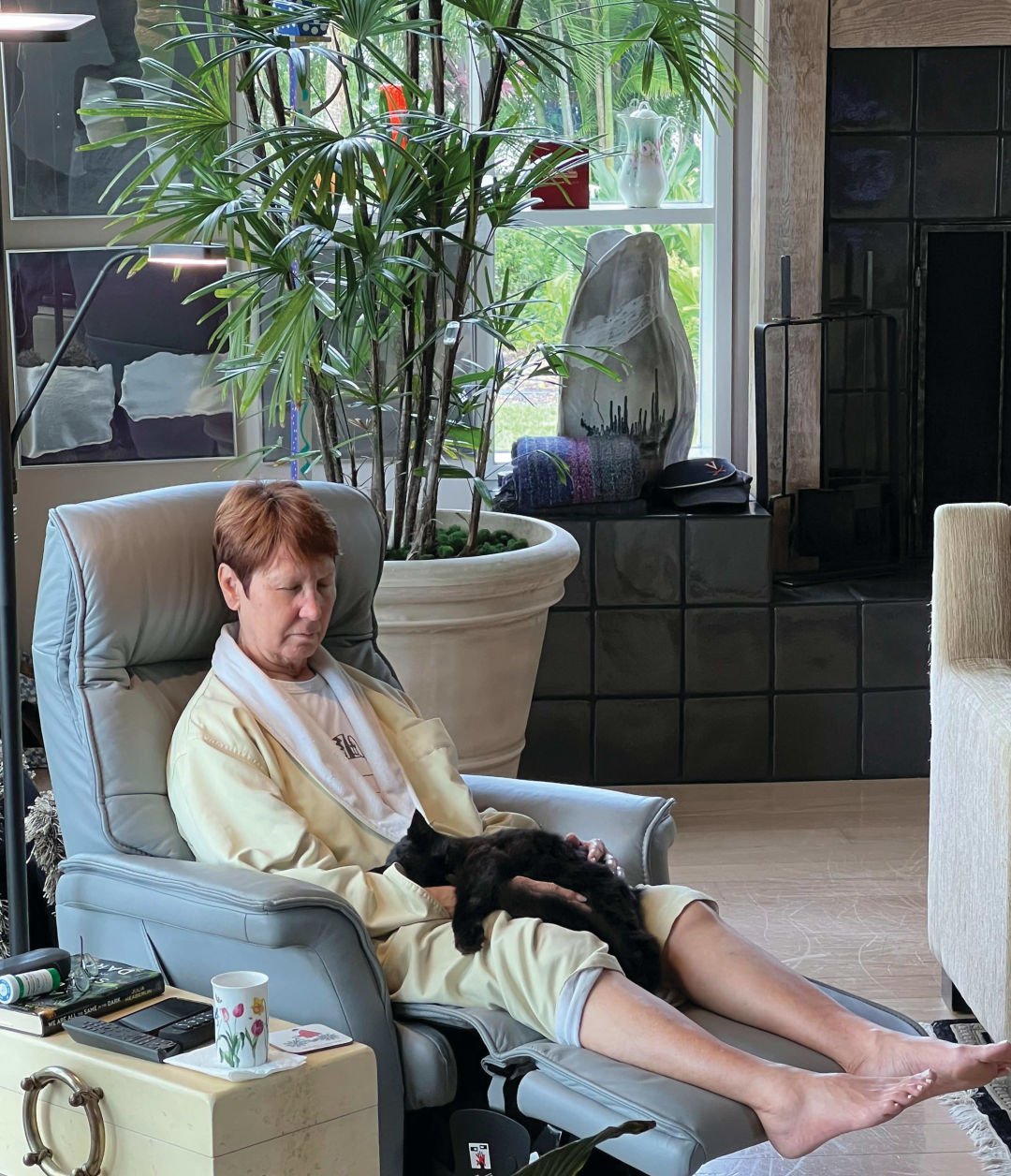
Image: Courtesy Photo
“I can’t tell you how many times I have heard this story,” says Dr. Mark Hamilton, director of the University of Calgary’s Adult Hydrocephalus Program and chair of the medical advisory board of the United States-based Hydrocephalus Association. In his own practice and his work with the association, he meets patient after patient with NPH who has been instead diagnosed with Alzheimer’s.
“There is a big problem with awareness,” he says. “A lot of people never find a place that can recognize and treat this.”
And yet NPH is anything but rare. Hamilton cites a recent study that shows that 2 percent of 70-year-olds have it. By 77, almost 3 percent do. And by 85, the percentage rises to 6 or 7 percent. In the United States alone, an estimated 1 million people have or will develop NPH.
“The overall incidence is almost the same as Alzheimer’s,” Hamilton says about NPH. “It’s more common than Parkinson’s.”
Although scientists have not yet found a cure for NPH, it can be treated, primarily by installing a shunt in the brain to drain off excess fluid. The disease has been receiving more attention and funding in recent years. Hamilton was one of the researchers conducting a study that the National Institute of Health called one of the most important neurological studies of 2025. It found that shunts significantly improved gait and balance in NPH patients; he expects further study will show shunts also improve other NPH symptoms.
Yet many NPH patients are never properly diagnosed and never receive treatment.
“And if you don’t have treatment, we’re pretty sure you will deteriorate and die,” Hamilton says.
Back in Sarasota, Anne’s advocates had never heard of NPH. But they knew they had no intention of just waiting for her to die.
“We always had faith,” says Fernandez, who had grown to love Anne, who remained sweet-natured and positive even in her daunting circumstances.
They decided to reach out to the Mayo Clinic, famous for its diagnostic skill and top-tier specialists. One of its three major campuses in the United States is in Jacksonville, and in May, they managed to get an appointment.
By the day of the appointment, Anne was barely functioning. But she revived a bit when they met with Mayo neurologist Dr. Neill Graff-Redford. Fernandez recalls Graff-Reford began by asking Anne a series of questions. She sat up straight in her wheelchair and answered each question cheerfully and confidently—but completely incorrectly. Fernandez was there, and she laughs as she recounts the interaction: “Were you able to walk into this appointment? “Yes.” “Do you still drive?” “Yes.” “How many episodes of incontinence have you had in the last month?” “None.”
“But even though everything she said was wrong, her personality was there—so full of life, so positive,” Fernandez says.
Graff-Radford ended his questions and leaned forward. “I am really touched by your case,” he said. “I want you to have a consultation with my colleague and I hope he can do something for you.”
Recalling that meeting, Graff-Redford says, “It was clear that we needed to treat her. She was in terrible shape.” And though the surgery would be challenging, he says Mayo’s neurosurgeons had expertise and experience in such procedures.
The next day, they saw neurosurgeon Sanjeet Singh Grewel. He explained that instead of living two more years, as they had been told, Anne could have a stroke or other fatal event any day. “Your case is very difficult and we will not know how to proceed until after we open your skull,” he told her. She might not survive the operation, he warned. But without it, she would surely die.
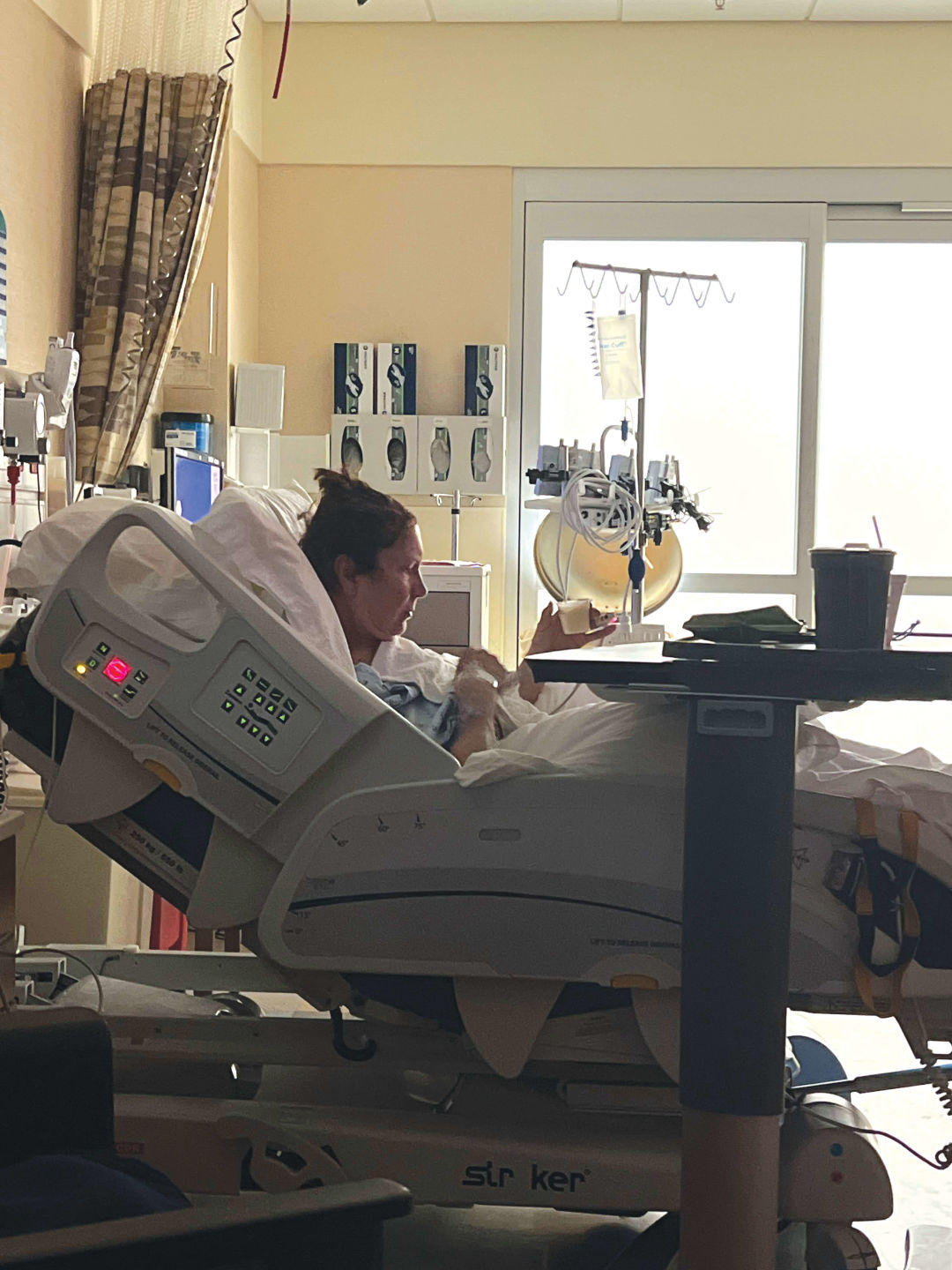
Image: Courtesy Photo
Surgery was scheduled for the morning of Sept. 4, 2023. Grewel and neurosurgeon Rabih Tawk explained they would pierce the cyst, a procedure called fenestration, and remove as much of it as possible, allowing the trapped fluid to drain and reabsorb. They expected the surgery to last five or six hours.
Wolf, Softas and Fernandez had accompanied Anne to the surgery, and they sat together in the waiting room. Even though they expected the surgery to last well into the afternoon, they were too nervous to leave for lunch.
But after only three hours, a solemn-faced nurse called them into a private room.
“Oh my God,” Fernandez thought. “Something went wrong. She is dead—God took her.”
Grewel pushed open a door and walked into the room—smiling widely. The operation, he announced, had been a success. They did not need to install a shunt, since puncturing and removing most of the cyst had restored proper flow. And because the cyst was destroyed, the condition would not recur.
A few hours later, Softas was allowed to see the patient. Anne was still groggy, but when Softas leaned down, she opened her eyes—“They were clear!” Softas says—and started talking. “It was Anne!” Softas says. “She was back.”
Within a few months, Anne, who remembers almost nothing of the time she was lost to the world, had resumed her former activities, from driving to running her business. Her family and friends consider her recovery a miracle, and even neurologist Graff-Redford calls it “amazing.” Although patients with NPH and other forms of hydrocephalus usually do improve after treatment, not all rebound as completely as Anne, says Graff-
Radford. The duration of the disease and the degree to which it damages the brain affects the outcome.
Not every part of Anne’s recovery was easy. She came back to life to find that Frank had developed lymphoma, and they had little more than a year together before he died. She also had lost her beloved home. With Frank ill and Anne not expected to live, their financial adviser had decided it made sense to sell Ventana.

Image: Courtesy Photos
But Anne, who likes to joke that God was not ready for her to redecorate heaven, is deeply grateful for her new lease on life and the friends who fought to save her. Although people tell her she has completely returned to her former self, she says the experience “absolutely” changed her.
While it’s human nature to present a mask to the world to cover up fears and feelings of inadequacy, she says, “Now I just don’t have the same fears and I don’t see the mask as a necessity.” She’s also less annoyed by mistakes at work or difficult people. “I used to count to 10,” she says. “Now I count to 100.” Most problems can be fixed, she’s realized, and if not, she says, “Why am I going to worry about such petty stuff? I am not going to waste the years I’ve been given.”
Alzheimer's or NPH?
Many NPH patients have lost their ability to research their symptoms and find proper treatment. Anne Folsom Smith was lucky to have advocates who found the right place, NPH expert Dr. Mark Hamilton says. Support from friends and family is critical.
Most people diagnosed with Alzheimer’s do not have NPH, but a small percentage—estimates vary from 1 to 10 percent—do. (Some people have both conditions.) Unlike Alzheimer’s, which is incurable, NPH can be treated. Shunts are the most common treatment, and new advances continue to improve them.
A few differences between Alzheimer’s and NPH
Changes in gait and balance are the early hallmark of NPH, often followed by bladder incontinence and cognitive decline; Alzheimer’s patients lose their balance later.
Many Alzheimer’s patients fail to recognize people; NPH patients continue to recognize people, but their overall cognitive function slows. “They look like they’re not there,” says Hamilton.
NPH affects what’s called “executive function,” like planning and decision-making; Alzheimer’s impairs memory and language.
The bottom line? “If someone says you have Alzheimer’s, in this day and age—prove it,” Hamilton advises. Blood tests can identify Alzheimer’s, and CT scans, MRIs and lumbar punctures reveal NPH.
For more information, visit the Hydrocephalus Association at hydroassoc.com.