



The Sarasota Spaces Bringing People Together Beyond Home and Work
Sarasota is full of places where nobody needs to host, reserve a table, or invent a reason to stay. A shaded bench near the bay, a Saturday market aisle, a coffee shop patio, or an art class can do something homes and offices often cannot: create room for casual contact. The best Sarasota spaces bringing people together make connection feel ordinary rather than scheduled. That matters for longtime residents, newcomers, remote workers, retirees, and anyone whose week has started to feel too private. A good community is not built only through major events. It also takes shape in smaller moments: recognizing the same dog walker, greeting a vendor, chatting after a class, or sharing a table with someone who was a stranger ten minutes earlier.
Why Do Sarasota Spaces Bringing People Together Matter?
The most useful gathering places give people a reason to return without demanding much from them. The Bay is a strong local example because the waterfront works as both a destination and an everyday public space. The Bay’s grand opening celebration showed how open lawns, trails, performances, family activities, and room simply to linger can coexist in one setting. People can come for a walk, meet friends, bring children, or spend time alone without looking out of place. That range of uses is what makes a public space feel woven into daily life rather than reserved for special occasions.
The social value of a place often comes from what it allows, not what it programs. A bench can hold a conversation or a quiet lunch. A path can become part of a morning routine. An open lawn can feel lively during an event and completely different the next day. When a space supports several kinds of use, it attracts different people at different times and creates opportunities to cross paths without arranging it first.
When Public Space Feels Easy to Enter
Low-pressure places remove the burden of having to be sociable on command. People can walk, browse, read, exercise, or drink coffee while leaving conversation optional. That flexibility can be especially useful during stressful periods, when even a small routine can make the week feel steadier. Bright Futures Treatment Center similarly emphasizes supportive relationships and consistent routines as part of maintaining mental well-being during difficult periods. In everyday life, that can begin with having somewhere familiar to go without needing an agenda.
Someone new to Sarasota does not need to “find a community” in one weekend. A more realistic starting point is to choose one or two places that fit naturally into an existing week. The same idea can help people adjusting to retirement, remote work, parenthood, or a major life change. A short walk after work, coffee in the same neighborhood, or one recurring class asks much less than building a social calendar from scratch. Over time, the city begins to feel less anonymous because daily life has a few recognizable points in it.
Where Does Sarasota Gather Without Planning?
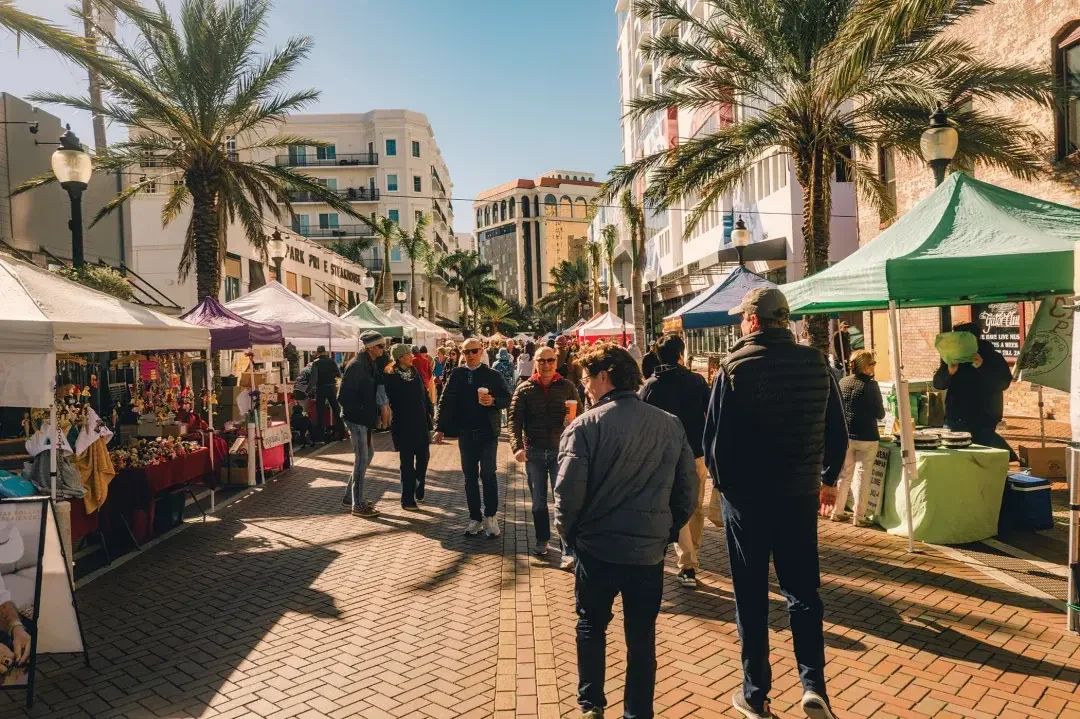
Farmers markets work because they combine an errand with the possibility of staying longer than expected. A person can arrive for tomatoes, bread, flowers, or coffee and end up talking with a maker, greeting a neighbor, or pausing to watch what is happening around them. At the Sarasota Farmers Market near Lemon Avenue and Main Street, shopping is only part of the appeal. The market gives people something to do while making conversation easy to enter and easy to leave.
Downtown streets can work the same way when they invite people to slow down. A Saturday morning might include the market, a bookstore, lunch, and an extra block walked simply because the weather is good. None of those activities is remarkable on its own. Together, they create a public rhythm in which residents see one another outside formal appointments and planned gatherings. Belonging often starts there, with a city becoming familiar at eye level rather than through a calendar of major events.
What Changes When People Make Something Together?
Creative spaces offer a different kind of social ease because the activity itself gives people a starting point. Drawing, writing, music, ceramics, and other shared pursuits reduce the pressure to invent conversation from nothing. Fogartyville’s Drink + Draw gatherings and programs at Art Center Sarasota show how a room can hold beginners, regulars, and experienced artists at once. People arrive with something to focus on, which leaves interaction free to develop around the work rather than becoming the whole purpose of the evening.
The most welcoming arts spaces do not require someone to identify as an “artist” before walking through the door. A beginner can ask a practical question, admire someone else’s work, or simply watch for a while. The value is not only what gets made. It is the shared concentration, humor, curiosity, and occasional awkwardness that give strangers something real to talk about.
Why Do Libraries and Cafés Still Matter?
Libraries and cafés remain useful third places because they make room for solitude and company at the same time. Sociologist Ray Oldenburg popularized the term third place for informal settings outside home and work where people spend time and develop social ties. Sarasota offers many versions of that idea, from Selby Public Library to independent bookstores and neighborhood coffee shops. Someone can read quietly, work for an hour, attend a program, or talk with another regular. No one has to choose between being alone and being part of public life.
The broader importance of those settings is reflected in the U.S. Surgeon General’s advisory on social connection. The advisory describes libraries, parks, green spaces, and community organizations as part of the “social infrastructure” that helps people form relationships and participate in community life. That framing is useful because it shifts the conversation away from personality. Feeling connected is not only about being outgoing. The design and availability of everyday places can make interaction easier or make isolation more convenient.
What Makes a Third Place Work in Sarasota?
A successful third place is accessible, comfortable, and easy to use without much planning. In Sarasota, shade matters. Seating matters. So do walkability, visibility, and a mix of reasons to stay for another ten minutes. A beautiful space can remain socially empty if people only pass through it. A modest café, courtyard, library corner, or neighborhood strip can become beloved when it works reliably as part of ordinary life.
The best gathering places also leave some of the experience unscripted. A bench does not tell someone how long to sit. A lawn can host a planned event one evening and an informal picnic the next afternoon. A café table can hold a laptop, a book, or a conversation. Good social spaces give people permission to linger. That extra time is often what turns a functional stop into a place with personality.
How Do You Become a Regular Without Forcing It?
The easiest way to feel more connected locally is to make one public place part of a routine. Choose somewhere close enough that visiting does not require motivation or elaborate planning. Go at roughly the same time each week. Put the phone away for part of the visit. Greet staff, vendors, or other familiar faces. Join an activity only when it genuinely interests you. The point is not to manufacture friendship. It is to spend enough time in the same places for casual interactions to have somewhere to grow.
A useful starting mix might include:
● a waterfront or neighborhood walk that fits into the week;
● a market where you buy from some of the same vendors;
● a café or library where you stay instead of rushing out;
● a class, volunteer shift, or creative event with recurring participants;
● a public event that draws people outside your usual circle.
The goal is not to turn every outing into networking. The goal is to become part of the scenery. When a place starts to feel familiar, there is less pressure on each conversation to become something important. A nod can stay a nod. A short exchange can remain short. Some acquaintances will never become friends, and that is fine. A city can still feel warmer simply because more of the people in it stop feeling entirely unknown.
Where Does Connection Begin?
Sarasota already has the raw materials of a connected city: waterfront parks, markets, libraries, arts spaces, cafés, and streets that can function as shared living rooms. The strongest Sarasota spaces bringing people together succeed because they are useful before they are social. They give people a reason to arrive, enough comfort to stay, and enough freedom to decide what happens next. Residents do not need a packed calendar to feel more rooted. Pick one place that fits your actual week, return often enough to notice its rhythm, and give familiarity time to do its work. Community usually grows quietly before it feels significant.
References
● Oldenburg, Ray. The Great Good Place. Paragon House, 1989.
● U.S. Department of Health and Human Services, Office of the Surgeon General. Our Epidemic of Loneliness and Isolation: The U.S. Surgeon General’s Advisory on the Healing Effects of Social Connection and Community. 2023.