



Best Organic Coffee Brands 2026
Many brands of coffee carry organic certification, but the best ones offer more than just a certification. Twelve ounces of certified organic coffee can cost $10 or $30, and the differences lie in the details — the origins, the farms, the quality testing, and the characteristics that make your cup of joe healthy, energizing, calming, or just delicious. That’s why this article covers 9 organic coffee brands, evaluated against the same criteria to help you choose the best option for your needs.
What Went Into This Review?
Our reviews are based on five main data points:
- Certifications: Which certifications, audited by an outside independent 3rd party, the company lives up to
- Origins: How far the paper trail on coffee beans runs — country, cooperative, or named farm.
- Screening: Whether a lab checks for mycotoxins, pesticides, and metals, with results that are easy to find.
- Formats: Light through dark, decaf coffee, whole bean, ground, pods, cold brew, or instant coffee.
- Price: Range per 12 oz, as it is the most common pack size, converted for a more convenient comparison where bags run 10, 16, or 20 oz.
What we didn’t evaluate is flavor. Two people rarely rate the same cup of coffee the same way.
Note that prices and available products may change. The information for this comparison is current as of September 2026.
1. Fabula Coffee

A USDA certification confirms that Fabula Coffee sells organic beans and grounds, but the company doesn’t stop there. The beans go to an independent laboratory, and the panel screens for more than 350 compounds: aflatoxins B1 through G2, ochratoxin, fumonisin, deoxynivalenol, herbicides, and pesticides. The test results are easy to locate. This testing proves that the products are mold-free.
Acidity is handled earlier than most drinkers assume, with no chemicals involved. Varietal, slope, microclimate, and altitude set how sharp a lot can turn; the roast finishes the job, keeping the flavor and balance of the bean intact before the cup turns bitter.
The brand sources beans from a select group of farms that are small, high altitude, and forest-shaded. Only single-origin lots go into these organic coffee beans. At Fabula, roasting happens daily, so buyers get fresh beans with every order.
- Certifications: USDA-certified organic.
- Origins: Peru (medium and dark roast), Mexico (light roast, decaf), Colombia (espresso beans), plus rotating single origins from other countries.
- Screening: 350+ compounds, with the results easy to locate.
- Formats: Several roast options, espresso, decaf, pods, cold brew, flavored coffee.
- Price: $19.99–$29.99 per 12 oz.
2. Death Wish Coffee

Death Wish is available in 25,000-plus US stores, which is unusual for a certified organic product. Mike Brown started the company in Saratoga Springs in 2012.
Caffeine, the thing the brand is known for, comes from blending Robusta with Arabica. Robusta is an inexpensive bean, it can be harsh and bitter, mostly used for instant coffee, but it does carry far more caffeine. Dark roast led the line at first; medium, light, and espresso came later.
Green coffee arrives from Peru, India, Guatemala, Ethiopia, and Sumatra. However, no contaminant panel is published.
- Certifications: USDA Organic, Fair Trade certified.
- Origins: Peru, India, Guatemala, Ethiopia, and Sumatra.
- Screening: Not disclosed.
- Formats: Four roasts, flavored bags, pods, instant, canned lattes.
- Price: $11.25–$15 per 12 oz.
3. Volcanica Coffee
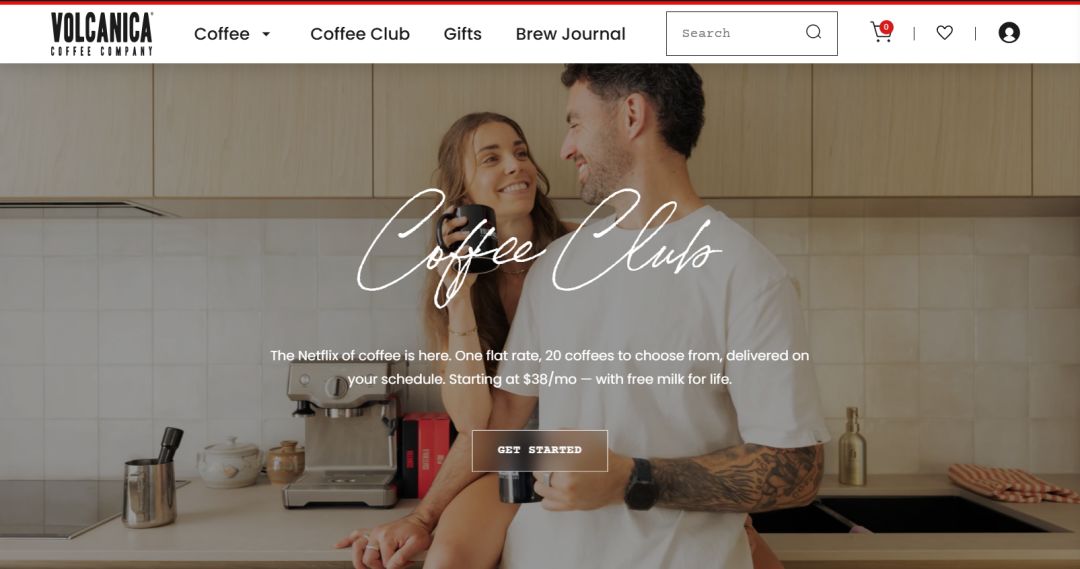
One element governs everything at Volcanica: certification applies product by product. Kosher covers the full catalog, while organic and fair trade verifications sit on individual products, so choosing certified organic coffee here means reading each page.
What that buys is choice: more than 100 coffees from volcanic soil across roughly 25 countries, including Geisha and Blue Mountain lots most coffee roasters never stock.
Maurice and Diane Contreras built the company out of a garage in 2004. Now, roasting runs weekly near Atlanta.
- Certifications: Kosher catalog-wide; organic and fair trade by product.
- Origins: 100+ single origins and estates.
- Screening: Not disclosed.
- Formats: Medium-light to dark, decaf, flavored, pods, cold brew.
- Price: $14.25–$24 per 12 oz.
4. Kicking Horse Coffee

At Kicking Horse, certified organic fair trade coffee runs across the entire range, every bag and blend.
Beans arrive from nine countries, among them Colombia, Peru, Uganda, and Indonesia, sold under blend names rather than origins — Kick Ass at the dark end, Hola at the light end. Decaffeinated coffee goes through the Swiss Water Process.
The roastery was founded in the Canadian Rockies in 1996; Lavazza took a stake in 2017, but roasting still happens in Invermere. However, no detailed contaminant results are published.
- Certifications: Organic and Fair Trade, whole range.
- Origins: Blend level, nine countries.
- Screening: Not disclosed.
- Formats: Blends, whole bean, ground coffee, decaf, pods.
- Price: About $12.80–$20.40 per 12 oz.
5. Lifeboost Coffee
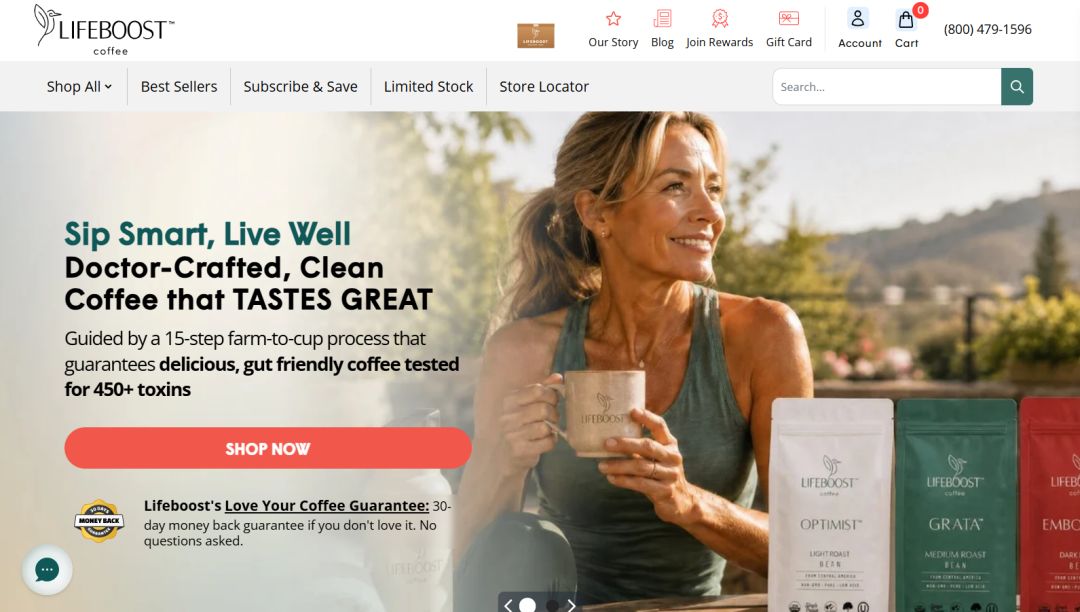
Aside from being USDA-certified organic, Lifeboost tests for 450 substances, including pesticides, mycotoxins, heavy metals, glyphosate, and acrylamide. Flavored bags run the panel twice, before and after flavoring.
Everything traces to small farms in Nicaragua's Nueva Segovia, at altitude above 5,700 feet, under forest canopy. Cherries are hand-picked, washed in spring water, sun-dried, and roasted to order.
The brand specializes in low-acid, mold-free coffee. No certification for either claim exists anywhere in the industry, which is why independent lab results are the evidence that matters.
- Certifications: USDA Organic.
- Origins: One region, Nueva Segovia.
- Screening: 450+ substances.
- Formats: Three roast levels, espresso, decaf, flavored.
- Price: $19–$29.99 per 12 oz.
6. Equal Exchange

Roughly $10 a bag makes Equal Exchange the least expensive organic coffee in this review. However, the website sells by the case, not the bag.
According to the brand, the price reflects buying straight from 40-plus democratically run small-farmer organizations in about 20 countries, on long contracts, at above-market pay, with money advanced before harvest.
The organic certification is in place, organic decaf coffee runs through the Mountain Water Process, and the Massachusetts roastery works under a 1,418-panel solar array. Worker-owners have run it since 1990.
- Certifications: Organic, Kosher, and Fair Trade by product.
- Origins: 40+ named cooperatives.
- Screening: Not disclosed.
- Formats: Blends, single origins, decaf, flavored, whole bean, drip grind.
- Price: About $9.70–$13.50 per bag, sold only in multi-packs.
7. Purity Coffee
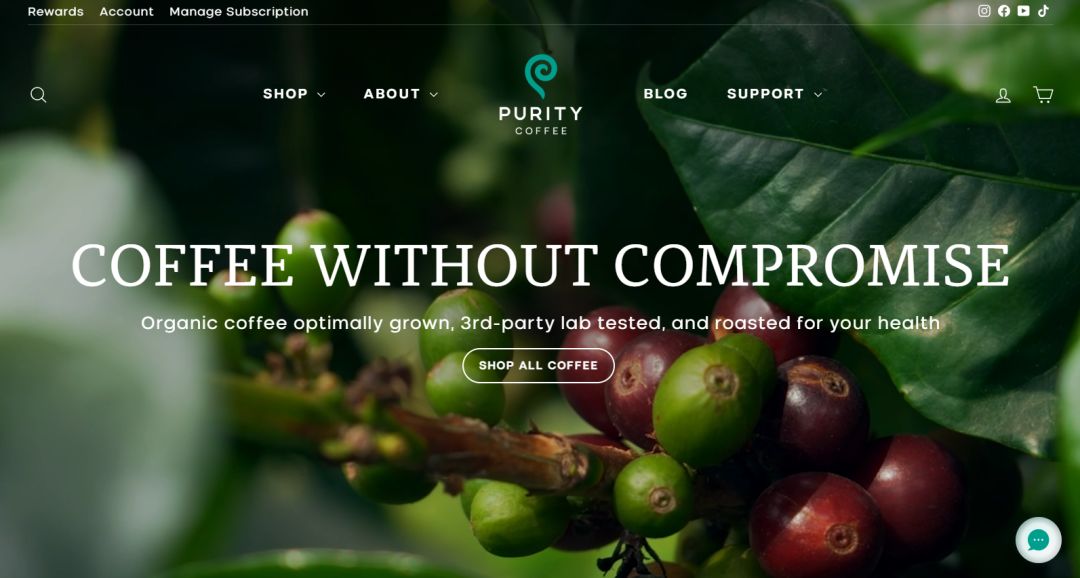
Open any product page at Purity, and the certificate of analysis is there. Named laboratories check ochratoxin A, aflatoxin, a 310-pesticide composite, and metals.
Three credentials sit behind it: organic, Smithsonian Bird Friendly, and Demeter Certified Biodynamic on select products. The beans score above 80 on the Specialty Coffee Association (SCA) scale.
Five core coffees make up the catalog, plus a few limited-release single origins, fewer than most other organic coffee brands carry. The range covers whole-bean, ground, decaf, and instant coffee, as well as formats such as pods and sachets.
- Certifications: Organic, Bird Friendly, Demeter on select products.
- Origins: Four countries, named producers.
- Screening: Published certificates, named laboratories.
- Formats: Medium and dark roasts, decaf, pods, and instant.
- Price: $16.70–$29 per 12 oz; single origins $32–$50.
8. Bulletproof Coffee
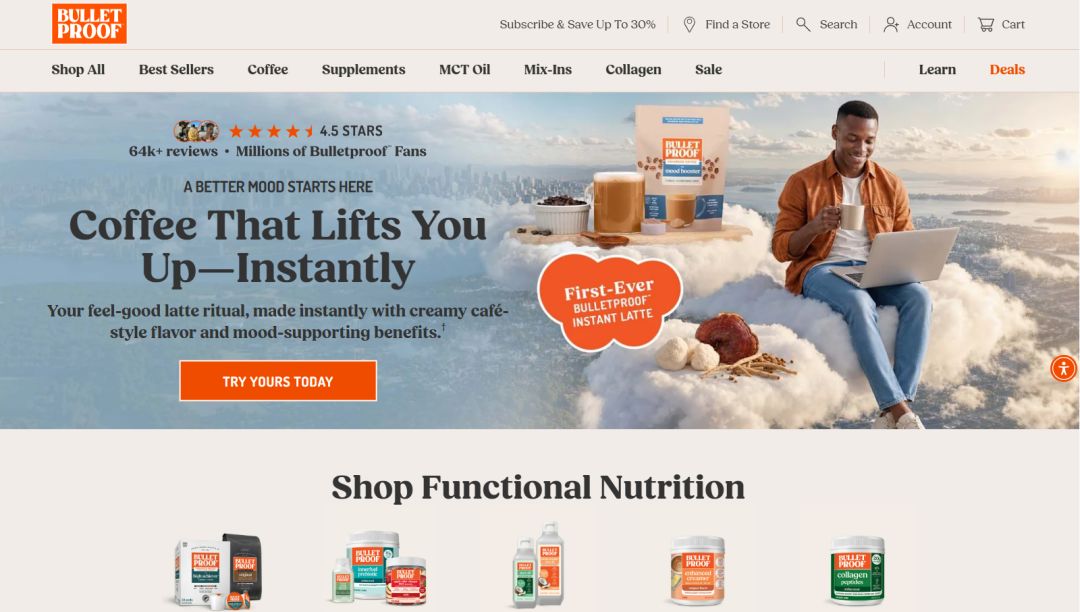
An asterisk belongs on Bulletproof here: the USDA Organic certification is not portfolio-wide, so anyone after organic beans must read the label. Sourcing runs through the Rainforest Alliance Certified farms in Central and South America.
Testing happens, and it stays private. Accredited labs run LC-MS/MS on green coffee beans for mold toxins and metals, but no certificates are released, which puts the clean coffee positioning on trust. Decaf coffee is produced with the Swiss Water Process.
Bulletproof conducts an internal quality evaluation using a standardized approach to control product quality and taste profiles. Its variety packs are helpful for those who want to try out different options.
- Certifications: Organic for some products; Rainforest Alliance sourcing.
- Origins: Central and South America.
- Screening: Third-party panels, unpublished.
- Formats: Four roasts, Swiss Water decaf, pods, instant, functional blends.
- Price: $14–$19.99 per 12 oz for The Original.
9. Holistic Roasters

Two farms supply Holistic Roasters: La Chacra D'Dago in Peru and 18 Conejo in Honduras. Traceability does not get tighter.
Each harvest passes two laboratories before release: Actlabs for a 16-compound mycotoxin panel, Eurofins for metals and microbiology. Certificates go online unedited, so you can explore the details yourself.
The biodynamic line holds two certifications at once. Gregory Kalinin and Dominique Jacques have been roasting in Montreal since 2016.
- Certifications: Demeter Biodynamic, USDA Organic.
- Origins: Peru and Honduras.
- Screening: Every harvest, two labs, certificates published.
- Formats: Rubicon light, Rise & Shine, French Roast, decaf.
- Price: About $18.10–$22.65 per 12 oz.
Certifications, Testing, and Prices Compared
Here are the top brands at a glance:
|
Brand |
Certification |
Sourcing |
Lab testing |
Price range per 12 oz |
|
Fabula Coffee |
Organic |
Peru, Mexico, Colombia, and other countries |
350+ substances |
$19.49–$29.99 |
|
Death Wish Coffee |
Organic and Fair Trade |
Peru, India, Guatemala, Ethiopia, Sumatra |
Not disclosed |
$11.25–$15 |
|
Volcanica Coffee |
Kosher; organic by product |
100+ coffees, about 25 countries |
Not disclosed |
$14.25–$24 |
|
Kicking Horse Coffee |
Organic and Fair Trade |
Blend level, 9 countries |
Not disclosed |
$12.80–$20.40 |
|
Lifeboost Coffee |
USDA Organic |
Nicaragua |
450+ toxins |
$19–$29.99 |
|
Equal Exchange |
Organic |
40+ cooperatives |
Not disclosed |
$9.30–$14.99 *only sold in bulk |
|
Purity Coffee |
Organic, Bird Friendly |
Colombia, Nicaragua, Honduras, Ethiopia |
Published certificates |
$16.70–$29 |
|
Bulletproof Coffee |
Rainforest Alliance |
Central and South America |
Panels unpublished |
$14–$19.99 |
|
Holistic Roasters |
Demeter, organic |
Peru, Honduras |
Every harvest, published |
$18.10–$22.65 |
What Does Each Certification on the Bag Guarantee?
Each certification answers one question:
- USDA Organic: Bans synthetic pesticides and fertilizers, with three clean years in the soil before a harvest qualifies.
- Fair Trade: A floor price, a community premium, and fair wages for farmers on equitable trading terms.
- Rainforest Alliance: Sustainable farming practices, worker treatment, and human rights. Not an organic certification.
- Bird Friendly: Requires that organic coffee beans be grown in the shade of a diverse forest canopy.
- Demeter Biodynamic: Whole-farm organic farming practices scored on soil fertility and closed loops.
Organic practices and sustainability are separate claims, and no certification speaks to cup quality. Look for a score above 80 on the 100-point specialty scale from the SCA.
Should You Be Worried About Mold in Coffee?
The study most coffee brands quote found mold on 91.7% of 60 green coffee bean samples. However, only a third carried ochratoxin A, most below the EU limit.
Cherries come off the tree wet and often wait in humid storage, which suits fungi. Ochratoxin A is the compound measured most often, and the International Agency for Research on Cancer lists it as possibly carcinogenic. Roasting possibly destroys 30% to 90% of what survives that far. After roasting starts the bagging, storing, and distribution, which can be lengthy, and unwanted substances can occur. No US maximum exists for mycotoxins in the final product, so checking and testing is left to roasters.
Which is why “toxin-free coffee” and “clean coffee” need elaboration and qualification. Three details make a claim checkable: the compounds, the laboratory, and the frequency. Mold-free coffee brands provide lab testing results for those who are particularly concerned about mold toxins.
Which Brand Should You Actually Buy?
The first step is to study the bag. The bag should have a one-way valve, so CO₂ can wear off, a proper closure, and no light getting in; the origin should name a country, and a lab claim needs reports. Labels that say “chemical-free” with no testing results behind them are selling adjectives — no certificate exists for those words, so results and reports are the only substantiation..
Roast level is a matter of preference, not quality in itself. Light roast keeps the bright and floral side of a bean, medium-roast coffee sits between sweetness, brightness and body, and dark-roast coffee bean character for more body and roasty profile. High-grown Arabica develops slowly, so the cup is more balanced and more characterful; Robusta is inexpensive, can be harsh and bitter, and is mostly used for instant coffee, though it does contain more caffeine.