






Best CBD Oil In Canada: Trusted Brands & Reviews [2026]

Image: Courtesy Photo
Medically Reviewed by: Jamie Warner, PharmD
Fact-Checked & Verified: January 2026
Choosing the best CBD oil in Canada isn’t as simple as it sounds.. We tested more than 40 of Canada’s most popular CBD oils over 3 weeks to confirm their potency, lab results, THC levels, and consistency. CBD in Canada is still regulated under the Cannabis Act, so quality and compliance matter more than branding. Use the table below to compare trusted Canadian CBD brands, check strengths, and buy CBD with confidence.
Quick Comparison: Best CBD Oil Brands in Canada (2026 Buyer Snapshot)
|
Brand |
Hemp Source |
CBD Type |
Extraction Method |
Potency Options |
Lab Tested |
THC Compliance |
Best For |
|
Canadian |
Full Spectrum + Isolate |
CO₂ |
500–2000mg |
Yes |
<0.3% THC |
Best Overall |
|
|
Domestic + US organic |
Full/Broad/Water-Soluble |
CO₂ |
500–4000mg |
Yes |
<0.3% THC |
Variety & Innovation |
|
|
Organic Canadian |
Full Spectrum |
CO₂ |
600–2400mg |
Yes |
<0.3% THC |
Organic Ingredients |
|
|
Resolve CBD |
Canadian |
Full Spectrum |
CO₂ |
500–2000mg |
Yes |
<0.3% THC |
Beginners & Flexible Strengths |
|
CBD2go |
Domestic |
Full Spectrum + Isolate |
CO₂ |
500–3000mg |
Yes |
<0.3% THC |
Value & Accessibility |
While these are "Consumer" picks, users seeking CBD for chronic medical conditions should still consult a healthcare practitioner via a Medical Document (ACMPR).
Key Takeaways
1. Top Rated Brands & Specializations
Our testing of over 40 oils identified five CBD oil brands that lead the Canadian market in 2026, each excelling in a specific category.
-
CBD North (Best Overall): Distinguished by its use of organic Canadian hemp and high-quality Full Spectrum blends containing secondary cannabinoids like CBG and CBDV.
-
CBDMagic (Best for Pain): Offers specialized high-potency formulations (up to 4000mg) designed specifically for joint and muscle discomfort.
-
Plant of Life (Best Organic): Focuses on "seed-to-bottle" transparency with strictly organic ingredients and natural, earthy flavor profiles.
2. Legal Compliance and Sourcing
The 2026 landscape is defined by strict adherence to the Cannabis Act, making source verification a non-negotiable step for safety.
-
Regulatory Channels: Authentic CBD must be sourced through provincial distributors or licensed medical sellers; "wellness supplement" labels in standard grocery stores are a significant red flag.
-
THC Thresholds: All reviewed brands maintain trace THC levels below 0.3% to remain compliant with federal law while providing the "entourage effect."
3. Strategic Usage and Dosing
Modern CBD users in Canada have shifted toward a more data-driven approach to consumption.
-
The "Low & Slow" Rule: Initial doses typically start at 10–15mg, with gradual increases every 3–5 days to avoid overconsumption and find the "sweet spot."
-
Format Efficiency: Sublingual oils offer faster onset times than gummies or capsules because they bypass the digestive system via the oral mucosa.
-
Routine Maintenance: Daily logs for weight, metabolism, and effects are recommended to help users adjust their milligram intake as tolerance develops.
CBD Oil Legal Status in Canada (2026 Updated)
Cannabis Act Explained Simply
CBD products in Canada are regulated under the federal Cannabis Act and the Cannabis Regulations, the same framework that governs THC‑containing cannabis. CBD for non‑medical use must be produced by licensed cannabis cultivators and processors, tested to federal standards, and sold only through provincially or territorially authorized cannabis retailers and federally licensed medical‑cannabis sellers.
CBD vs THC Under Canadian Law
CBD is non-intoxicating, but the law treats it differently from typical wellness supplements because it is derived from cannabis. Unlike the U.S., CBD cannot be sold over the counter in pharmacies without cannabis licensing, and THC levels must remain within strict compliance thresholds.
Buying CBD Online in Canada
Because CBD is legally treated as cannabis, non‑prescription CBD products cannot be sold over the counter in ordinary grocery or pharmacy aisles unless they are coming through the provincially authorized cannabis system or a licensed medical‑cannabis channel.
If CBD oil is marketed in regular supplement sections or carries an NPN despite not being distributed via these regulated cannabis channels, it is likely unlicensed, mislabelled, or part of the illicit/grey market.
Types of CBD Oils
CBD oils sold in Canada vary by cannabinoid profile and carrier formulation. The main distinction is how much of the plant’s natural compounds remain after extraction. This affects flavour, entourage effects, THC compliance, and dosing preferences.
Full Spectrum CBD Oil
Full-spectrum oils contain CBD along with minor cannabinoids (such as CBC and CBG) and trace THC within legal compliance limits. Many Canadians prefer full-spectrum options because they provide a more complete hemp profile. In our testing, full-spectrum oils also tended to show more consistent user feedback for stress and sleep support.
Broad Spectrum CBD Oil
Broad-spectrum oils retain multiple cannabinoids and terpenes but remove THC to non-detectable levels. These formulas are commonly chosen by people who want hemp compounds without any THC exposure. They also work well for individuals subject to strict workplace testing policies.
CBD Isolate Oil
CBD isolate contains only cannabidiol without other cannabinoids. Isolate oils offer the most controlled THC-free profile but lack supporting compounds found in the broader plant matrix. Some users prefer isolate for precise dosing and neutral flavour.
Carrier Oils: MCT vs Hemp Seed
Most CBD oils in Canada are blended with MCT or hemp seed oil. MCT offers faster absorption and a neutral taste, while hemp seed oil contributes omega fatty acids and a more natural hemp flavour. Both carriers performed well in lab stability tests and dosing accuracy during our review.
How We Evaluated the Best CBD Oil Canada?
To find the best CBD oil in Canada, we tested more than 40 products sold across the country. Each oil was examined for potency accuracy, cannabinoid content, formulation quality, labelling, lab testing transparency, and overall user experience.
Hemp Source Verification
We checked where the hemp was grown and how it was cultivated. Canadian-grown hemp generally showed tighter potency accuracy and fresher batch dates compared to imported hemp.
Extraction & Purity Testing
Products using CO₂ extraction scored higher for safety and cannabinoid preservation. We reviewed lab data for residual solvents, microbial contamination, heavy metals, and pesticides when available.
We penalized brands that showed residual solvents above 5000 ppm (parts per million) or any detectable levels of Mycotoxins, ensuring our top picks exceed Health Canada’s baseline safety requirements.
Cannabinoid Profile & Potency Accuracy
We compared labeled CBD amounts against third-party lab results. Oils with more than a ±10% variance were penalized. Each oil was classified as full spectrum, broad spectrum, or isolate, and THC levels were documented for compliance.
Ingredient & Formulation Review
We evaluated carrier oils (MCT vs hemp seed), flavors, and added botanicals for absorption, allergen risks, and overall stability.
THC Compliance & Regulation
Products were checked against Canadian THC compliance limits. Oils without recent batch COAs or missing compliance data were removed from top rankings.
Lab Transparency & Traceability
Brands with batch-specific COAs, testing lab details, and cannabinoid breakdowns scored higher than brands providing generic or outdated certificates.
User Experience & Feedback Signals
We also reviewed verified customer feedback, repeat ordering behavior, subscription patterns, shipping reliability, and customer support performance.
Best CBD Oil Canada — Reviewed & Ranked
1. CBDNorth — Overall Best CBD Oil in Canada
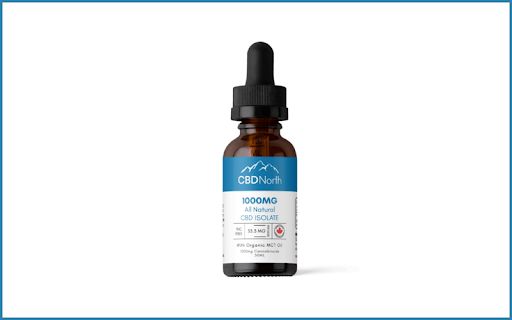
Image: Courtesy Photo
Quick Intro (Who It’s For)
CBDNorth is ideal for Canadians who want a clean and consistent CBD oil with verified potency. It works well for beginners and experienced users who value Canadian-grown hemp and clear lab reporting.
During testing, CBDNorth showed reliable dropper measurements, clean bottle presentation, and accurate fill volume. Lab traces matched the stated spectrum type, confirming full-spectrum oils contained detectable CBC and CBG with legal trace THC.
Strengths & Differentiator
The key differentiator is transparency in sourcing and manufacturing. CBDNorth uses Canadian hemp and publishes batch-specific lab reports with cannabinoid breakdowns. This level of traceability was uncommon among the 40+ products we tested.
Potency & Product Range
CBD oils are offered in 500 mg, 1000 mg, and 2000 mg bottles. The range allowed us to compare how lower and higher strengths behaved with dosing accuracy. Each sample used MCT carrier oil, which produced a mild taste and stable consistency during our review.
Lab Testing
We verified CBD content, THC compliance, and minor cannabinoid levels against CBDNorth’s posted COAs. The results showed strong alignment with the labelled amounts and no irregularities in purity or contaminant screening. The batch age was recent, which indicates steady production instead of older stock.
Best Use Cases
Best suited for daily wellness routines, stress support, improved sleep consistency, and users who want simple dosing without complex formulations.
2. CBDMagic — Best CBD Oil for Pain Relief

Image: Courtesy Photo
Quick Intro (Who It’s For)
CBDMagic is a strong fit for Canadians who primarily use CBD oil for pain relief and want stronger potencies that scale up without needing to take multiple servings.
Full-spectrum versions had a slightly stronger herbal taste, but dosing was easy thanks to clear dropper markings. Our testers used CBDMagic for routine joint and muscle relief. After a few days, they noticed some relief in their pain.
Shipping times were slower for certain provinces during our test orders (Ontario and Alberta), which may matter for repeat buyers.
Strengths & Differentiator
What separates CBDMagic from the other oils we tested is its taste, potency range, and full-spectrum profile, which made it easier for testers to build a routine for joint and muscle discomfort. Higher strengths gave users more flexibility without increasing bottle usage too quickly.
Potency & Product Range
CBDMagic’s CBD oils range from 500 mg to 4000 mg. This made it one of the highest-potency oils we tested. The stronger potencies helped reduce the total number of drops needed per serving, which our testers noted as helpful during pain-focused routines.
Lab Testing
CBDMagic publishes COAs showing CBD content, THC compliance, and cannabinoid breakdowns. The lab results we reviewed matched labeled potency within acceptable variance and showed no contaminants.
Best Use Cases
Best CBD oil for pain relief, joint stiffness, and muscle discomfort for users who prefer higher strength oils and want full-spectrum support.
3. Plant of Life — Best Organic CBD Oil Option

Image: Courtesy Photos
Quick Intro (Who It’s For)
Plant of Life is suitable for Canadians who prefer organic hemp and natural-tasting CBD oils. It works well for buyers who want simple ingredients and minimal additives.
During testing, the natural hemp taste was noticeable, especially at higher strengths. Bottle presentation was minimal, but everything was correctly labelled and easy to dose.
Stock availability was inconsistent during our testing period, and certain strengths were out of stock for weeks.
Strengths & Differentiator
The main differentiator is organic hemp sourcing and natural formulations. Plant of Life has the cleanest ingredient lists, with no artificial flavours or colourants. The oils also carried a mild, earthy profile that aligned with their organic positioning.
Potency & Product Range
Potencies range from about 600 mg to 2400 mg per bottle, covering moderate to high-strength needs. The MCT carrier oil maintained viscosity consistency, and the droppers had accurate millilitre markings.
Lab Testing + Trust Signals
Plant of Life publishes COAs that confirm cannabinoid levels and THC compliance. The COAs we reviewed showed clean contaminant panels and full cannabinoid profiles, aligning with the organic messaging.
Best Use Cases
Good for users who prioritize organic sourcing and natural flavour profiles without added sweeteners.
4. Resolve CBD — Best for Beginners & Flexible Strengths
Quick Intro (Who It’s For)
Resolve CBD is well-suited for beginners who want a mild-tasting CBD oil with multiple strength options and straightforward dosing. It also appeals to users who prefer routine delivery through subscription programs (25% off every recurring order on subscription).
Testers found the dropper markings helpful for beginners who need more controlled titration. The oil mixed cleanly and showed no sediment or clouding.
Though customer support reply times varied during testing, and email responses took longer on weekends.
Strengths & Differentiator
Resolve CBD’s main strength is accessibility. It offers several potencies across smaller and larger bottle sizes, making it easier for first-time buyers to test CBD without committing to high-strength products. Subscription pricing and loyalty discounts also helped reduce long-term costs during our evaluation.
Potency & Product Range
Potency options generally span from 500 mg to 2000 mg, giving our testers enough range to compare lighter vs. stronger usage scenarios. The flavour profile was mild, with a slight botanical note that did not overpower the carrier oil.
Lab Testing
Resolve provides COAs that verify CBD levels and THC compliance. The lab reports we reviewed were clear and matched the potency listed on the label. Bottle dating and batch tracking were present and easy to read.
Best Use Cases
Best for new CBD users, light daily wellness routines, and buyers who value flexible potency ranges with subscription options.
5. CBD2Go — Best Value & Canada-Wide Accessibility
Quick Intro (Who It’s For)
CBD2Go is a good fit for Canadians who want lower-cost CBD oils with fast shipping and 20% off on the first order. It suits buyers who prioritize accessibility over premium packaging or complex formulations.
The bottle presentation was basic but functional. Our team did not encounter any inconsistencies, leaks, or sediment during evaluation.
The main trade-off with CBD2Go is the simpler flavour and presentation. Users who prefer premium packaging or enhanced flavour profiles may not find that here.
Strengths & Differentiator
CBD2Go stands out for its pricing and availability. During testing, it was one of the most affordable options among the 40+ CBD oils we compared, and it offered consistent nationwide shipping. The catalogue also included multiple CBD types, allowing buyers to choose between full-spectrum and isolate oils.
Potency & Product Range
Potencies range from roughly 500 mg to 3000 mg per bottle. This broad range made it easier for testers to evaluate how CBD2Go scaled across different strength levels. Carrier oils were simple, and dosing was straightforward due to clear dropper markings.
Lab Testing
CBD2Go publishes COAs confirming cannabinoid profiles and THC compliance. The lab reports we reviewed aligned with labelled potency and showed no contaminants of concern.
Best Use Cases
Best for budget-conscious Canadians who want reliable CBD oil with quick fulfilment and multiple strengths.
A Guide to CBD Oil Dosage
In our testing, the most predictable results came from users who increased dosage slowly and paid attention to how their body responded over time.
First-Time Users — Low & Slow
New users generally start with low-strength oils and smaller doses. A common entry dose is around 10–15 mg of CBD once per day for the first several days. If needed, the dose can be increased in small steps (e.g., 5–10 mg at a time) until a stable daily routine is established. Taking CBD at the same time each day helped maintain consistency in our tester logs.
Everyday Wellness Dosage
For general wellness routines, testers typically settled between 20–40 mg per day, split into one or two servings. Oils made titration easier because droppers had mg-per-drop or mg-per-millilitre markings, which reduced dosing guesswork.
Higher Potency Use Cases
Some users prefer higher potencies for stronger daily routines. During testing, doses in the 40–60 mg range were more common among individuals using full-spectrum oils at 1500–2000 mg concentrations. Higher mg concentrations reduced the number of drops needed per serving, improving dropper accuracy.
Weight, Metabolism & Tolerance Guide
Body weight and metabolism can influence how much CBD is needed to reach a steady state. Heavier individuals may require more milligrams per serving than lighter individuals. Tolerance also plays a part. Users taking CBD for longer periods generally require smaller adjustments over time. Keeping a simple dose log helped testers stay consistent and avoid over-adjusting.
Why Are Canadians Turning to CBD Oil?
CBD oil has become a regular part of wellness routines for many Canadians because it is easy to dose, cost-efficient, and adaptable to different daily habits. Our testing and user logs highlighted several practical reasons behind this shift.
Stress & Day-to-Day Balance
Many testers used CBD oil to help maintain a calmer daily rhythm during work or evening downtime. Oils made it easier to adjust the amount based on how stressful the day felt, which was noted repeatedly in feedback logs.
Sleep Consistency
Evening dosing was common among testers who wanted better nighttime routines. Full-spectrum oils were frequently chosen for this purpose due to the broader cannabinoid profile.
Joint & Muscle Comfort
Users with active or physically demanding routines liked oils because dosing could be based on how they felt that day. The dropper format made it easy to make small adjustments.
Focus & Mental Clarity
Some testers preferred CBD during daytime hours to support focus during tasks that required sustained attention.
Affordability & Long-Term Use
Compared to gummies or capsules, oils provided more milligrams per dollar and offered subscription discounts from several brands we evaluated.
Precise Dosing Control
Droppers with millilitre markings or mg-per-drop guidance allowed users to titrate slowly, helping new users avoid overconsumption and build tolerance more smoothly.
Discreet & Practical Format
Oils can be stored at room temperature, don’t create odour, and require no accessories. This made them easy to integrate into both home and travel settings.
CBD Oil vs Other CBD Formats
CBD oil remains the most common format in Canada, but gummies, capsules, and topicals each serve different user preferences.
CBD Oil (Sublingual Use)
Oils are taken under the tongue and absorbed through the oral mucosa. This allows moderate bioavailability and a faster onset than swallowed formats. Testers appreciated the ability to adjust dosage drop by drop and log effects over time. Oils also offered the lowest cost per milligram across most of the brands we evaluated.
CBD Gummies (Edible Format)
CBD gummies are easy to take and taste pleasant, but they require digestion first. Onset was slower, and absorption rates varied more between individuals due to metabolism. Gummies worked better for testers who disliked the taste of hemp oil or wanted a pre-measured serving without a dropper.
CBD Capsules (Swallowable Format)
Capsules were favoured for convenience and discretion. Like gummies, they rely on digestion, producing a slower onset and reduced bioavailability compared to oils. Capsules made sense for people who want consistent, pre-measured servings without any flavour.
CBD Topicals (Skin Application)
Topicals such as balms and creams were used externally. Topicals do not deliver cannabinoids systemically, so they avoid ingestion and dosing calculations.
Summary of Differences
Sublingual administration (oil) typically offers 12%-35% bioavailability, significantly higher than the 4%-20% found in traditional edibles (gummies), making it more cost-effective for high-dose users. Topicals served localized external routines without systemic effects.
Red Flags & How to Avoid Low-Quality CBD Oils
CBD oil quality in Canada varies significantly, especially online. Many products appear legitimate at first glance but fail basic quality checks. During testing and COA verification, these were the most consistent red flags associated with unreliable products:
No Lab Reports or Outdated COAs
If a brand does not publish recent Certificates of Analysis, it becomes impossible to verify CBD content, THC levels, or contamination screening. We found several oils claiming to be “lab tested” without providing any documentation to support it.
A common grey-market tactic is a QR code on the bottle that leads to a generic homepage rather than a batch-specific lab report. If the QR code doesn't link to your specific batch number, the product is not verified.
Vague Cannabinoid Amounts
Labels listing “1000 mg hemp extract” without specifying CBD content are misleading. Hemp extract is not the same as CBD. Several products we tested contained only trace CBD despite aggressive labelling.
Suspiciously Low Pricing
Ultra-cheap oils frequently failed potency testing or lacked batch data. Low pricing is not proof of fraud, but it consistently correlated with weaker quality control during our evaluation.
Imported or Untraceable Hemp
Products using hemp from unknown or undisclosed origins showed the highest variance in potency accuracy. Traceability begins with source disclosure; without it, quality cannot be confirmed.
Flavour-Heavy Formulations With Minimal CBD
Some products used strong flavouring to mask poor formulation or extremely low CBD concentrations. These oils delivered a pleasant taste but minimal functional value.
Where to Buy CBD Oil in Canada (Online & In-Store)
Canadians can buy CBD oil through several channels, but not all operate under the same rules or quality standards. Understanding the differences helps avoid unregulated products and misleading labels.
Licensed Provincial Cannabis Distributors
Every province has its own official cannabis distributor (e.g., OCS in Ontario, BC Cannabis Store in British Columbia, NSLC in Nova Scotia). These channels source CBD oils from licensed producers operating under the Cannabis Act.
Products must pass potency and contaminant testing before release, and THC levels must remain within compliance. Selection can be limited, and pricing tends to be higher compared to other channels, but regulatory oversight is clear.
Reputable Direct-to-Consumer (D2C) Online Brands
A large share of Canadian CBD users purchase from established online brands such as CBDNorth that ship nationwide. These brands often publish batch-specific COAs and offer more potency options, better pricing, and subscription discounts. This channel performed well during our testing due to clearer lab documentation and fresher inventory.
Retail Health Stores & Grocery Chains
Despite growing consumer interest, most of these chains cannot legally stock compliant CBD oils without cannabis licensing. If CBD oil appears on shelves as a “wellness supplement” or carries Natural Product Number labelling, it is either mislabeled or unregulated.
FAQs on CBD Oil Canada
Will CBD oil show up on a drug test in Canada?
Most workplace drug tests focus on THC instead of CBD. However, full-spectrum CBD oils can contain trace THC within legal limits, which may pose a testing risk for sensitive panels. Users who must avoid THC often choose isolate or broad-spectrum oils to reduce exposure.
Are Canadian hemp-derived CBD oils better than imports?
During our testing, Canadian-sourced hemp showed greater potency consistency and fresher batch dates than imported hemp. The advantage is not guaranteed, but domestic traceability and regulatory oversight make Canadian products easier to verify.
Does CBD oil interact with medications?
CBD can affect how the body processes certain medications. Canadians with prescription drug regimens should speak with a healthcare provider before adding CBD oil to avoid unwanted interactions.
Can I travel within Canada with CBD oil?
Yes, CBD purchased legally in Canada can be carried between provinces. Air travel within Canada also allows legal cannabis products, provided they remain in carry-on or checked luggage in their original packaging.
Can seniors take CBD oil safely?
Many seniors in Canada use CBD oil as part of their daily routines for general wellness. Dosage should start low, and seniors on multiple medications should check for drug interactions through their physician or pharmacist.
Final Takeaway — Choosing the Right CBD Oil in Canada
After testing 40+ CBD oils sold in Canada, the biggest differences came from potency accuracy, lab transparency, and THC compliance. Oils supported by batch-specific COAs and recent production dates performed more consistently than products with vague labelling or incomplete lab data.
CBDNorth stood out as one of the strongest overall options due to its Canadian hemp sourcing, clean formulation, and reliable testing documentation. For Canadians comparing CBD oils in 2026, the smartest approach is to choose traceable products, start with lower daily doses, and increase gradually. Quality, not flavour or packaging, is what makes CBD oil worth buying in the long run.