





Have You Seen This Lizard?
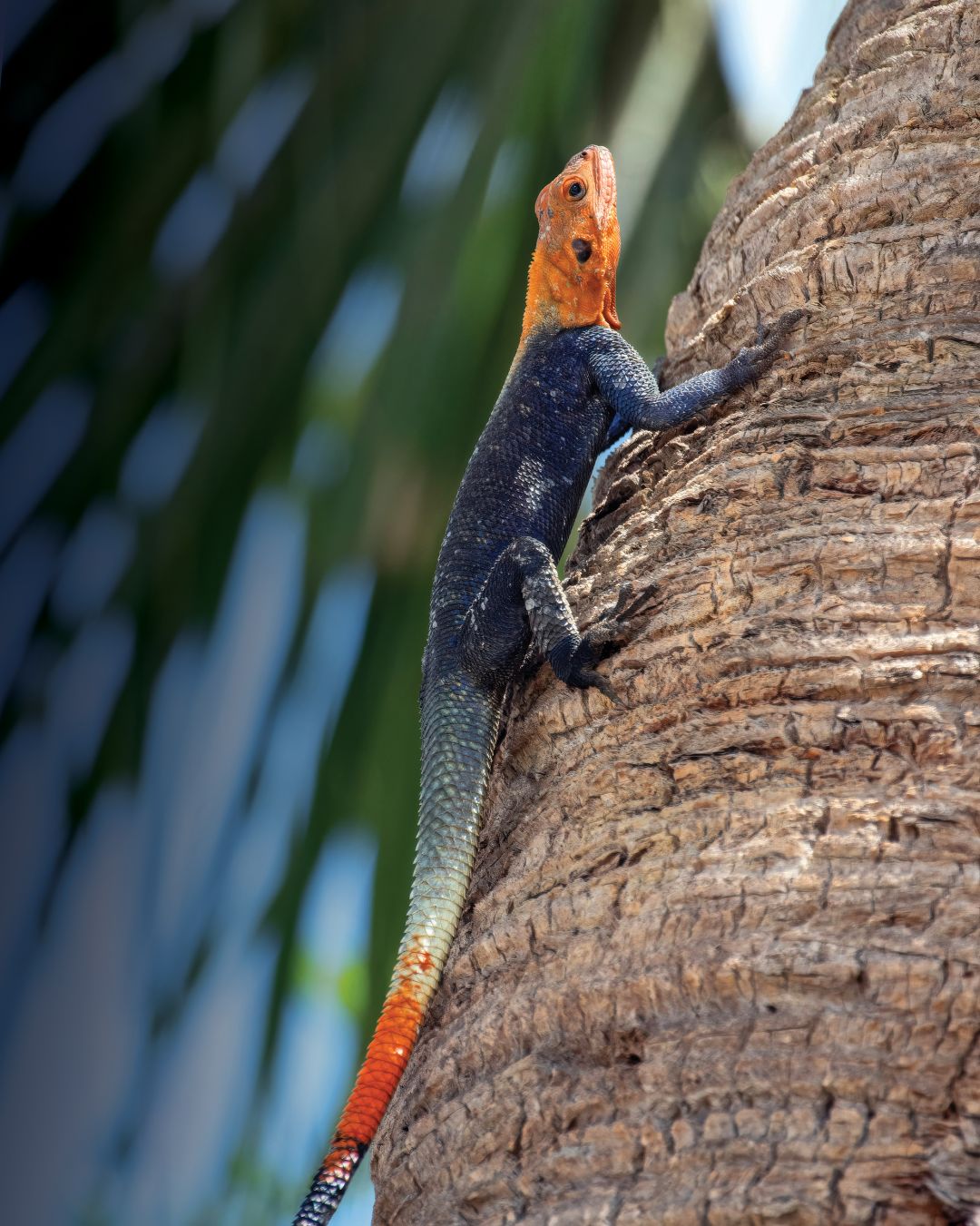
Image: James Rogers
You’ve probably seen them in parking lots, on fences or zipping around their preferred stomping grounds—boiling hot asphalt. A favorite spot is Sarasota City Hall’s parking lot on First Street, where they sun themselves on walls and scurry under cars when humans approach. These frying-pan conditions resemble the sub-Saharan African home of the Peter’s rock agama lizard.
“[They have] no predators and lots of hot rocks to sit on,” says Sean Patton, an adjunct professor of ecology at Ringling College of Art and Design. “That’s why you’re seeing them everywhere.”
First introduced in the mid-1970s through the pet trade, the agama has spread throughout coastal South and Southwest Florida. The male adult agamas sport an orange head and indigo-colored body, while juvenile female and male agamas have an unimpressive brownish color. According to the Florida Fish and Wildlife Conservation Commission, they typically consume crickets and other insects, but they’ve been known to sample other lizards, birds and even their own offspring.
Although people-averse, they prefer the suburbs and human-populated areas, which means they aren’t a huge threat to Florida’s native species. And as long as you don’t try to handle them (and good luck catching one) they’re not dangerous to people or pets, according to the University of Florida’s Institute for Food and Agricultural Sciences.


