







Mr. Gruters Goes to Washington
Joe Gruters is a nice guy.
Almost everyone will tell you so.
A political operative for nearly three decades, the 48-year-old, Sarasota-born Gruters is a fixture in Sarasota and Florida politics. He’s been a member of the Florida House of representatives, Florida state senator (a position he still holds), MAGA warrior, Sarasota’s Republican Party chair, Republican Party of Florida (RPOF) chair and Florida co-chair (alongside Susie Wiles, now White House Chief of Staff) of Donald Trump’s 2016 presidential campaign. But ask locals and state politicos, and he’s just as famous for his affable nature, avoiding name-calling and public vendettas despite being inseparable from the toxic stew of Washington.
Being a nice guy isn’t a new label. His nickname in high school was “The Chaperone.” With a moniker like that, it’s safe to assume he wasn’t cool. “They called me the chaperone because I didn’t drink, I didn’t do anything bad and I would just be there,” he says. “I was such a dork.” His friends’ parents always felt at ease when Gruters was around because they knew everyone would get home safe.
But in August 2025, Gruters assumed a much bigger title than designated driver. Joe “The Chaperone” Gruters was unanimously elected the 67th chair of the Republican National Committee, taking over from Michael Whatley, who stepped down to run for a Senate seat in North Carolina. This makes him the face of the Republican Party. It’s his job to raise the funds that will fuel his party’s campaigns and find winning candidates and strategies. It will be up to him to assure GOP victories for Trump in the upcoming midterm elections and secure the future of the modern conservative movement. He is kind of a big deal.
But how does someone with the “nice guy” handle get so far in the ugly, back-stabbing, sausage-making world of politics—especially when tied to the most polarizing and crude figure in 21st-century politics?
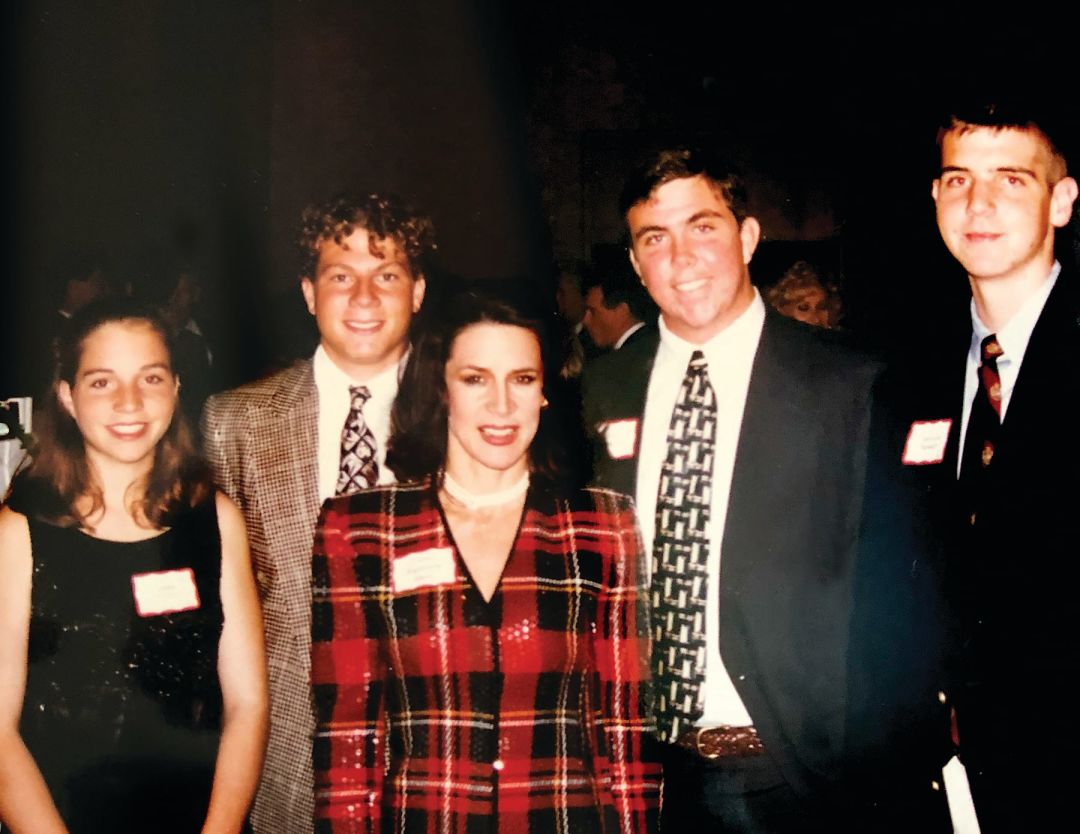
Image: Courtesy Photo
Just days after he started his job as RNC chair, I met with Gruters at a local, bustling vegan coffee shop in downtown Sarasota. He kindly offered to buy my coffee, but I told him for the sake of journalistic integrity, I would buy him one instead. He ordered a black coffee, no milk. I wondered if anyone would recognize him. Did the people sipping their matcha lattes know that one of the most powerful political figures in the nation was in their presence? No, they did not.
Interviewing politicians about their personal lives and not their policies can be tricky. They are media trained and censored by their PR people, so almost everything feels curated and overly polished. You’re lucky if you can meet with them in person. Interviews are often over the phone so that their communications person, muted on the other line, can step in in case they say anything that might be off script. But Gruters met me on his own. He even told me he might get in trouble for talking to me.
“They would not be happy that I’m even talking to you because everything is so tightly controlled,” he says. “We have a communication staff of 25, so everything is pre-prepared.”
But Gruters doesn’t need a handler. It’s clear he practices his talking points. He told me the exact same anecdotes as he did in this magazine’s previous profile from 2019, never deviating from the script or changing details. He would be a perfect witness under cross examination.
Politicians’ personal histories often lean into the apocryphal—always with humble beginnings and the odds to overcome. Gruters’ story is no different, but I have little reason to doubt him, if only because the stories are rather modest.
Gruters even looks like your prototypical nice guy. If he walked behind you down a dark alley in the wee hours of the night, the hairs on your arms would not stand up.
The day I met him, he wore a polo shirt, blue jeans and sneakers. It fits his work as a CPA at Paoli & Gruters Certified Public Accountants in Venice. For a few years now, Gruters has been sporting a salt-and-pepper beard, which grizzles his soft, baby-faced features. He is always smiling.
Small talk with Gruters was positive without being saccharine. He’s charming without coming across as slick. A fourth-generation Sarasotan, he waxed nostalgic about the Sarasota of his youth, when the traffic wasn’t terrible. But then he told me how much more he prefers the new Sarasota with its skyline of towering concrete condos. “I like the growth. In a perfect world, I’d have unlimited
density and unlimited height. I think it’d be perfect,” he says.
His great-grandfather, William Hobson, moved to Sarasota in 1922 to become the chief tent maker for Ringling Bros. and Barnum & Bailey Circus. Hobson lived at a house at the intersection of Fruitville Road and U.S. 41, where there’s now a new roundabout. Gruters’ family once owned the entire block between Central and Cocoanut avenues.
His father was a computer programmer who was shot down in Vietnam, and his mother was a homemaker and scuba instructor. They had six children. Gruters is No. 2, just beating out his twin sister. He attended Cardinal Mooney Catholic High School, where he played football and was elected class president.
Gruters’ political origin story begins in 1992, when his Old World History teacher offered students 10 bonus points to attend then-Vice President Dan Quayle’s campaign speech at City Island Park. “I show up to this thing and there’s a thousand people and everybody’s cheering,” Gruters says. “It’s like a football game. I said, ‘Wow, this is kind of exciting. I’m obviously not going to make it as a football player, baseball player, so I said, ‘I want to do politics.’”
Even before he was legal to drink, Gruters had the hubris essential for a politician. He was a 20-year-old Florida State University college student when he ran against Democrat Shirley Brown in 1997 for her seat in the Florida House of Representatives. He lost badly, ran against her again two years later, estimating he knocked on 20,000 doors, and did slightly better, but still lost. “Double loser, I always thought,” Gruters says.
He believed he could do better if there were more young Republicans in the area. “At the time, they were basically non-existent,” he says. “So I said, ‘I can do a better job. Let’s go take over the Young Republicans [chapter].’”
If anyone doubted that ambition and confidence, he put that doubt to rest. In 2012, when establishment GOP types thought of Donald Trump as a clown, Gruters invited him to speak at a Republican Party of Sarasota fund raiser at The Ritz-Carlton, Sarasota, and named him Statesman of the Year. At the time, Trump was campaigning for presidential candidate Mitt Romney and just flirting with the idea of his own run down the road. But the Sarasota award put a national spotlight on him as a winner in the political arena—not just as a self-promoting New York real estate guy and reality TV star.
Local political consultant Mac Stevenson, who’s watched Gruters’ political evolution over the years, says, “I jokingly tell people that if you see Joe walking into a racetrack, follow him and buy the same ticket.”

Gruters’ first big political win was with Vern Buchanan, and it also established his bona fides as a risk taker, gambling on unknowns and working nonstop to get out the vote. When Buchanan, a wealthy businessman who moved to Sarasota from Michigan to open car dealerships, heard about Gruters’ door-knocking operation for the House seat, he wanted Gruters on his team. “I thought to myself, anybody who’s going to knock on 60,000 doors as a 20-year-old, he’s a kid I want to hire,” says Buchanan (misremembering by 40,000, since Gruters told me he knocked on 20,000 doors).
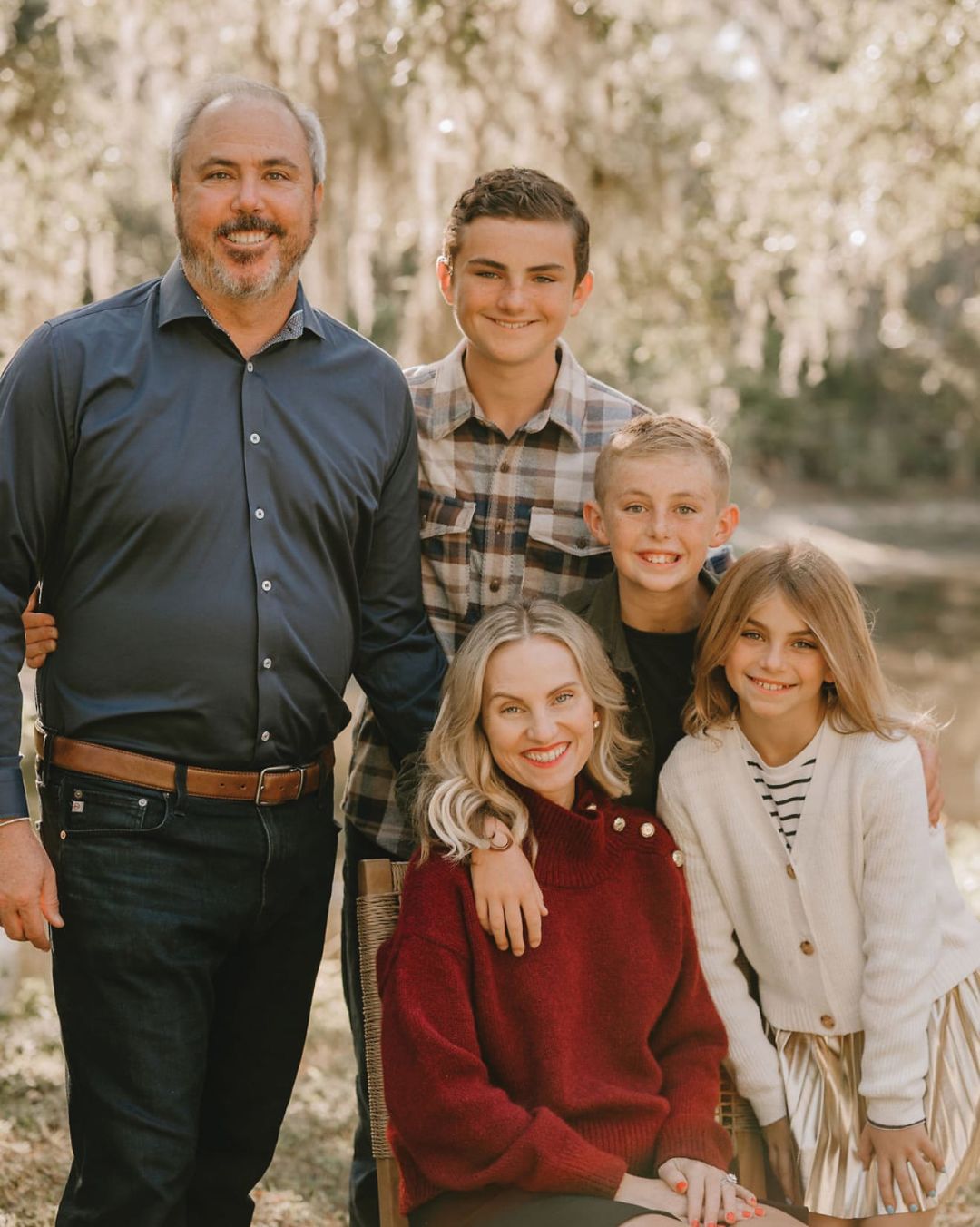
Image: Courtesy Photo
Almost everything about Gruters’ life revolves around politics, so it’s no surprise that’s how he met his wife. Gruters encountered Sydney Spence while they were both working for Buchanan. Since then, Sydney’s career has been closely linked with her husband’s power in Tallahassee and Washington. She was appointed by Trump in his first term as rural development state director for Florida and the U.S. Virgin Islands for the U.S. Department of Agriculture and later worked as a political aide to Congressman Greg Steube. Her current position is executive director of New College Foundation in Gov. Ron DeSantis’ New College of Florida takeover experiment.
Even though Buchanan was seen as a long shot outsider for Congress, Gruters saw a play. It went like this: Take a big risk on a wealthy businessman “without barnacles,” as Gruters likes to say, and then apply his analytical ground game. The establishment choice was Tramm Hudson, a well-respected Sarasota banker involved in state party politics. “Tramm was the hero of the local party,” Gruters says. Buchanan beat Hudson in the primary and then eked out a victory against Democrat Christine Jennings by 369 votes in the general election. The win on dark horse Buchanan gave Gruters immediate credibility.
“Without Joe’s ground game and leadership, Vern Buchanan most likely would have never been a member of Congress,” says Max Goodman.
Goodman, a political consultant, first met Gruters in 2005. “Joe completely revolutionized what a ground game looks like in Florida,” Goodman says. “He brought about 12 or 14 interns and developed an apparatus at the time that was sort of unheard of. We had an army; Joe was the general. And make no mistake, when you win by 369 votes, you gotta believe that actually mattered.” Buchanan has served in Congress for more than 20 consecutive years.
Gruters went on to apply his formula to billionaire Rick Scott, also seen as a long shot, in his successful 2010 bid for Florida Governor. Then came Trump’s 2016 campaign. Billionaire Trump, he says, wasn’t a lifelong politician so, as far as Gruters was concerned, he was free of barnacles. Ever the loyalist, Gruters didn’t bring up Trump’s multiple bankruptcies, lawsuits, his friendship with Jeffrey Epstein, or Trump’s mentor, criminal blackmailer Roy Cohn. Gruters also remained steadfast that Trump was still the man to lead us to a brighter future, even after what happened on Jan. 6, when droves of registered Republicans dropped out of the GOP.
“There is no rest for the weary when it comes to him,” Goodman says. “Joe is obsessed with winning. He’s obsessed with politics. He’s obsessed with the politics of winning. He loves it. He eats, breathes, sleeps it.”
Obsessions can make people ruthless, but Buchanan insists Gruters remains a good guy despite the all-or-nothing approach. “If you’re not nice, you’re probably not going to end up in politics for very long,” he says. (I couldn’t help but think of segregationist Strom Thurmond, one of the longest-serving senators in U.S. history, who stayed in office for 47 years and 159 days and staged a record filibuster against civil rights.)
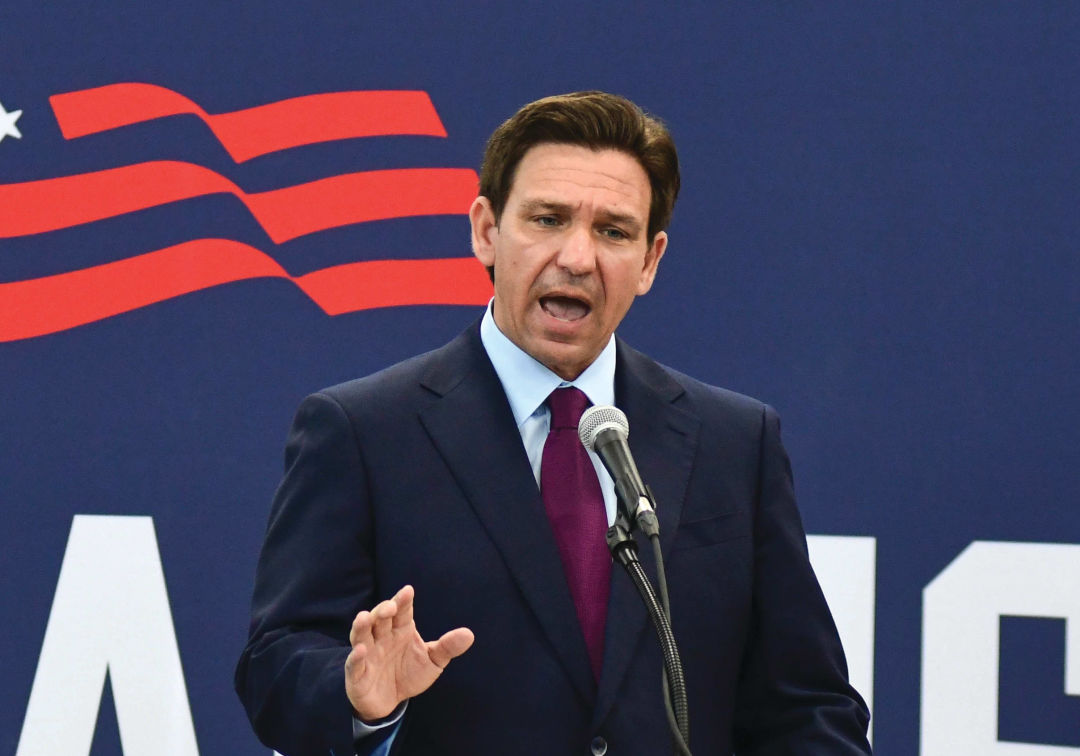
Image: SIPA USA/ALAMY
One person who has been not so nice to Gruters is DeSantis. The governor has had it out for Gruters since 2018, when Gruters endorsed then-Agricultural Commissioner Adam Putnam over DeSantis in the primary. DeSantis defeated Putnam, thanks in large part to Trump’s endorsement after DeSantis’ many cloying overtures to the president.
The governor claims Gruters has a “linguine spine” and allies himself with teachers’ unions instead of conservatives. When asked in 2025 if he would appoint Gruters to be Chief Financial Officer of Florida, DeSantis said, “If George Washington rose from the dead and came back and tapped me on the shoulder and said, ‘Will you appoint Joe Gruters CFO?,’ my response would be, ‘No, I can’t do that without betraying the voters that elected me.’”
But in spite of DeSantis’ open disdain for him, Gruters says he was always willing to break bread. “I’m more concerned with how we can have an alignment of interests and focus on a goal for the greater good,” Gruters says. “My success comes from my willingness to forgive and move on, even if people have taken shots at me.” He says every time he sees DeSantis he tries to give him a hug. “‘Come on in here,’ I always say when I see him. He won’t get near me.”
Gruters insists the reason nothing rattles him comes from his childhood. “The reason why I have such thick skin, where almost nothing bothers me, is because of that speech impediment I had for the first 20 years of my life,” he says. This is one of the origin stories Gruters likes to tell. “You know, a lot of people don’t know, and I don’t know if it’s worthwhile mentioning…I couldn’t say my own last name.” He pronounced Rs like Os, which made his name sound like the Dutch cheese gouda. “It wasn’t until I went to Florida State that I went to speech and hearing [classes]. And now I speak in front of 50,000 people.”
Gruters’ legislative accomplishments are broad. He has sponsored environmental bills, like the one that restores septic tank regulation to curb red tide blooms and banned smoking on beaches. He was a big proponent of Amendment 3, the Marijuana Legalization Initiative. He also filed SB 438, better known as the Florida Inclusive Workforce Act, which protected LGBTQ groups from workplace discrimination and led to Christian rights organizations calling for Gruters’ resignation.
But don’t kid yourself into thinking Gruters is some kind of centrist. He has supported some of the most right-wing policy that came across his desk. In 2019, he started the state Senate’s attack on abortion by banning the procedure at 20 weeks. He was the prime sponsor for the ban on “sanctuary cities”; he was one of 17 state lawmakers who voted to dispute Joe Biden’s Electoral College victory; and he introduced a bill that gave law enforcement a quarter of a billion dollars to oversee immigration and punished undocumented students by tripling their college tuition.

Image: SIPA USA/ALAMY
Gruters says that while he has a strong jaw that can take punches, he’s not good at punching. That’s why he cherishes his working friendship with U.S. Rep. Randy Fine (R-Fla.), who was his roommate in Tallahassee while they were both members of the state legislature and is often described as a combative bully. Fine has become Gruters’ pit bull.
“Randy has the strongest right hook in the business, and he will beat the tar out of people,” Gruters says. “I could just sit there and take beatings, but when I needed someone to attack, I would just give him a little elbow, and he’d go up to the mic and just completely just crush it. Doesn’t matter what the subject is. He could have zero knowledge but still deliver winning line after winning line.”
In 21st-century politics, winning often means just offending your opponent—“owning the libs,” in conservative parlance. Fine is known for his shocking comments. For example, Fine received a flood of criticism for his tweet on X this July when he said the people of Gaza could “starve away” in response to an ABC news article reporting that 15 people had died from malnutrition. Even the American Jewish Committee, an Israel advocacy group, said he had gone too far. Fine didn’t back down. In October he said that since there are no living Jewish hostages left in Gaza, Israel should “glass” them, slang for destroying something with a powerful weapon like a nuke.)
When asked if these comments make him cringe, Gruters goes into PR mode, saying, “I’m thankful we have people like Randy Fine who will be aggressive when an aggressive response is necessary.” When pushed a little further to disavow nuking Gazans, Gruters hesitates and says, “It’s not my style, but it’s who he is.”
I asked Fine if he could tell me anything about Joe that didn’t have to do with politics. “I mean, we didn’t have ragers in our apartment,” Fine says. “He’d come home and call his [three] kids, talk to his wife and then watch horror movies. I’d go to bed. I don’t like horror.”
Fine says he and Gruters managed to carve out some fun. “Once all of our boys came and paged,” he says. “Our apartment turned into boy heaven. It was boyapalooza. We literally ate [Raising] Cane’s chicken fingers for four nights straight. I think we’ll be in trouble with their mothers if they read this in your story.”
The only other non-political insight Fine could offer was that Gruters liked to dip his chicken fingers in ranch dressing. (He didn’t approve.)
But other than Gruters’ taste in condiments, Fine has nothing but praise for his friend. “I would say Joe is the nicest, most loyal guy in the business,” he says. “Joe is a guy who loves everybody, even those who sometimes don’t treat him the way he deserves. I’m much different. If someone comes at me, they get a fist in their face. We’re great friends. I’m so excited. I don’t know if he told you, we’re roommates again. This time in Washington.”

Image: Courtesy Photo
Goodman has a response to everyone calling Gruters “nice.”
“You know, it’s like that football player who is the nicest guy off the field,” Goodman says. “But when he’s on the field, he’s a killer. Joe is a political killer. Joe is the ultimate risk taker.”
I tried getting in touch with Evan Power, chair of the RPOF; Sen. Scott; Florida Attorney General James Uthmeier; White House Chief of Staff Wiles; and DeSantis to find out why Gruters is so effective. No one called back except DeSantis press secretary, Molly Best, who said, “We are unable to accommodate your request at this time.” I also tried to get Democrats Nikki Fried, chair of the Florida Democratic Party, and Florida Rep. Anna Eskamani to comment, with no luck. Whitney Murray Brown, press secretary of the Florida Democratic Party, said, “We will not be participating on this story.”
On the Florida Democratic Party website, Fried called on Gruters to disavow the “I love Hitler rants” (as well as jokes about rape and slavery) that were posted on a Young Republican leaders’ Telegram chat last year. “There is no excuse for this kind of vile, antisemitic, racist, misogynistic hate,” she wrote. “The Republican National Committee must immediately condemn these comments and take action. Joe Gruters and Evan Power need to denounce this behavior publicly and make
clear that racism and antisemitism have no place in their party.”
Gruters says he never saw this post. “Those guys should have been removed or have resigned and are gone. I would have—" He pauses. "No excuses."

Image: Courtesy Photo
Ryan Ray, chair of the Leon County Democrats, who spent the past decade in the swampy halls of Tallahassee alongside Gruters, was willing to talk. He says Gruters’ “nice guy persona is effective.”
“In many ways, when I lived in Sarasota nearly 20 years ago, Gruters was ahead of his time. He was a pioneer in Trump-style bare knuckle politics,” Ray says. “Gruters took us from the chamber of commerce-style ‘traditional’ conservative politics that Sarasota was once particularly known for—socially tolerant, but economically conservative—to the top-down authoritarianism that we have today.”
Even though Ray says Gruters is a founding member of the MAGA-dominated Florida Republican politics that we see today, he is known in Tallahassee for being “smiley” and appearing more like “an accountant type, more professional compared to most of these Neanderthals.”

Image: Barbara Banks
Now, Gruters faces his toughest battle yet: leading the Republican Party during a midterm with a mercurial and increasingly unpopular—at least as this is being written—Republican president. Gruters knows the odds: “The party that holds the White House has won the midterms three times in the last 100 years and four times in the last 150 years,” he says.
Many sources I reached out to interview for this story would all say the same thing: “Why would anyone want to be the chairman?” Even Gruters acknowledges its loathsomeness. “Everybody hates the chairman,” he says. “Everybody hates any chairman at any level because you get the blame, right? And if you’re the captain of the ship and you get throttled, it’s on you.”
And it’s especially risky under Trump. RNC chairs haven’t always lasted. For example, Trump pushed out long-running RNC chief and prolific fund raiser Ronna McDaniel in 2024, making sure Whatley, who endorsed the claims of election fraud, succeeded her.

Image: Access/ALAMY
Michael Steele, former RNC chair from 2009 to 2011 and a current host and political commentator on MS NOW, says people in this position often wonder what possessed them to run.
“Well, you often ask yourself that a few hours after you get it,” Steele says. “Why anybody would want this job is because you’ve done the work, and you appreciate the opportunity to advance that work on a national scale as national chairman. That’s what it sounds like on paper. The reality, of course, is very different and, at times, challenging and difficult.”
While Steele doesn’t know Gruters personally, he says that Gruters must have played the game well enough to not offend Donald Trump. “That means he’s a good ingratiator,” and has managed to stay “out of the crosshairs of the Mad King,” Steele says.
Besides the regular tasks of raising money, selecting candidates, winning elections and picking the location for the Republican National Convention, Steele says RNC chairs need to have certain qualities to be successful.
“The first skill that you need to have out of the gate is patience, because you’re going to run into a whole lot of people who are full of crap. So you’ve got to wade through a lot of that in order to get something accomplished,” he says.
The second most important early requirement is having relationships. “This gets you back to patience. Those relationships will try your patience,” Steele says. “The people you think are on your side are not on your side, because everybody has an agenda. If you want a friend, get a dog.”
I asked him if Gruters’ nice guy reputation would hurt him in D.C.
“There are some really nice people in this game,” Steele says, adding that Gruters doesn’t have to be nice to everybody.
“Joe Gruters only has to worry about being nice to 168 people [that make up the Republican National Committee—three representatives from each state and territory] and Trump,” he says. “That’s his universe. He’s not a front-facing figure in the Republican Party, so being nice actually works to his benefit because he’s behind the scenes. It’s not the base he has to worry about, because the base didn’t hire him.”
Steele says Gruters’ fierce fealty to Trump will work out in his favor. “The president calls the shots,” he says. “He’s the titular head of the party. So, if you are someone who has an aggressive vision that you want to execute on, but you’ve got to sit and get orders from the man in the White House, you ain’t doing too much. We know at this point that Donald Trump has infused his organization into the party. Look, anyone in that job with this president is going to be meek and passive. You have no choice if you want the job. I’m not trying to undercut this chairman. I want him to be successful. I’d like him to be a little bit more independent of Trump and recognize that the entire country is not red.”
Gruters understands the odds and the job, but he couldn’t turn down the opportunity when Trump asked him to be chairman. “I’ve been waiting for this my whole life,” he says. “I’ve spent 22 years in the minor leagues of the party system, four years as the Young Republicans of Sarasota chairman, 14 years as the chairman of the Republican Party of Sarasota and four years as the Republican Party of Florida chairman. You learn how to fight in the trenches and win knife fights and at the same time how to bring people together and get them to focus on the common goal of winning. Because at the end of the day, what matters as a party leader is wins and losses.”

Image: Courtesy Photo
Two months after I first interviewed Gruters, we met at the coffee shop again. When I first talked to him, the Republican party seemed destined to run the country for the foreseeable future. But Trump’s approval ratings dropped to 36 percent in November, according to a Gallup Poll, and the Republican Party was gobsmacked by the special elections this fall. The economy, foreign policy and that pesky Epstein problem that just won’t go away are dogging Trump and creating factions in the party. Even former Trump sycophants like Congresswoman Marjorie Taylor Greene and far-right commentator Nick Fuentes are breaking with the president and splitting the party.
If Gruters was tired, he didn’t show it—still smiling despite the deluge of bad news and exhaustion. “The nonstop travel is crazy,” Gruters says. “And my diet has been terrible.” Gruters sometimes flies twice in a day. He’s still a Florida state Senator and has to go back to Tallahassee frequently. I asked him why he didn’t resign his position.
“If I show up for 25 more days, I could deliver $100 million to my community,” Gruters explains.
He’s had to adjust to his new job, which means altering his famous nice guy persona. “In this world of being party chairman, I’m a stone cold killer,” he says. “From the standpoint of winning these midterms and helping the president be successful, that’s my role and that’s what I’m going to do.”
He says it’s easier to not be nice when you don’t know the people you are “crushing.” He described D.C. as a constant knife fight where nobody is close to one another, unlike local politics, where he has friendships with the opposition.
“I’d have a hard time backstabbing [Democratic Florida Sen.] Shev Jones or any of my Democrat colleagues in the state Senate,” Gruters says. “But in D.C., it’s different. Because you have no relationships. Nobody has any relationships with anybody. At the end of the day, it’s about control.”
Then he promises he won’t completely change.
“I will always be nice and treat people with respect and try to do what I can to help them,” he says. But from the standpoint of making sure that we maintain the majorities, I’m willing to do whatever it’s going to take to make sure we’re successful, even if that means plowing people over.”
I asked if this was the most stress he’s ever experienced in his life.
“Yeah,” he says. “There’s a lot of pressure. We’ve got to win.” He compared being chair of the RNC to being on Trump’s show, “The Apprentice.” “If we lose the midterms, there’s the chance I get asked to leave. I’m coming right back to Sarasota, which would be fine. But I know we’re not going to. I’m not supposed to set expectations too high, but I just know we are going to win.”
He already knows who to blame if something goes wrong. “What we know will happen is these third-party groups and billionaire leftists that hate the president will come out and spend, they’ll beat us in fundraising,” he says. (The RNC has so far outraised the DNC $156 million to $133 million.)
The good news for Gruters is that he is up against the Democratic Party, which is as unpopular as the president. I asked him if he wishes he had a more formidable opponent, because watching the Democratic Party go up against Republicans is like watching the Washington Generals lose to the Harlem Globetrotters.
He said no.
I wanted to know what he thought he might be doing if he didn’t succeed as RNC chair or in another elected office. He said he would probably just keep at his CPA firm and get more involved with the local chamber of commerce. He repeatedly told me that if he had guessed wrong on his big political moves—Buchanan, Scott and Trump—he’d have been tossed to the side.
Still, I wanted to know: How does a nice guy, who prides himself on taking the high road and preaching unity, attach himself to someone known for his combative divisiveness? It’s a hard circle to square.
Gruters says he sees a side of Trump that others don’t. “This is what people don’t see,” he says. “Trump has a genuine interest in the general wellbeing of others. People don’t believe it, but he does.”
I told him that it can be very hard to believe.
“But that’s why people are so loyal to him!” he says. “Trump doesn’t care about being liked. All he cares about, deep down, is saving America. And I think he’s doing it with his Big Beautiful Bill and everything else. I think he’s committed, and that’s where I fit in. I’m committed to him and pushing his vision.”
I know it’s folly to try to parse any contradictions in this view. This is what it means to be a true believer. To have faith is to be able to hold two conflicting ideas simultaneously. Gruters believes that Trump is chosen.
“I really do believe that Trump is saving the world,” he says. “I think when he dodged that bullet in Butler, Pennsylvania, that was a hand of God that saved him. I think He saved him to save us. Which is crazy to think about, but I think he was given a second chance to come back and set the alignment right with not only our country, but the entire world.”
I thanked Joe for his time, which he doesn’t have a lot of. He offered to buy me a coffee next time I’m off the clock. I walked him towards his custom Army green Tesla Cybertruck. I told him he could buy me a beer instead. I wondered to myself if I could ask him to be my designated driver.