




A Sarasota Couple Built One of the Top-Rated Sustainable Homes in the Nation
For years, Lisa Barzel could mark the end of the workday by a familiar ritual: the soft thud of her husband Dan’s briefcase on the counter, followed by the metallic clatter of aluminum and glass spilling onto the surface. Inside were Dan’s finds—discarded bottles, stray cans, the occasional crumpled cardboard sleeve—that he’d pick up off sidewalks, in parking lots and in any public space he was passing through. “Sometimes it was pretty gross,” Lisa says, laughing. “He’s just rabid about the environment.”
For Dan, that small daily act was about shaping a future he can live with, one choice at a time. On a grander scale, his passion for the environment is reflected in the Element House, the couple's spacious residence in Oyster Bay Landings, which is one of the highest-rated sustainable homes in the United States.
The home doesn’t announce itself with spectacle. Unlike more spaceship-like modern houses—alabaster monoliths with Star Wars-esque facades—that have popped up around Sarasota, Element House feels less like a crash landing and more like a natural extension of its surroundings, settling into its waterfront site with a studied restraint.
“It’s about creating spaces that preserve resources while inspiring love and respect for the environment,” says Jonathan Parks, founder of Solstice Planning and Architecture, the firm behind the project. For Parks and his team, sustainability isn’t simply about reducing environmental impact. It’s a conservation-first philosophy that treats buildings as participants in their ecosystems, not interruptions of them.
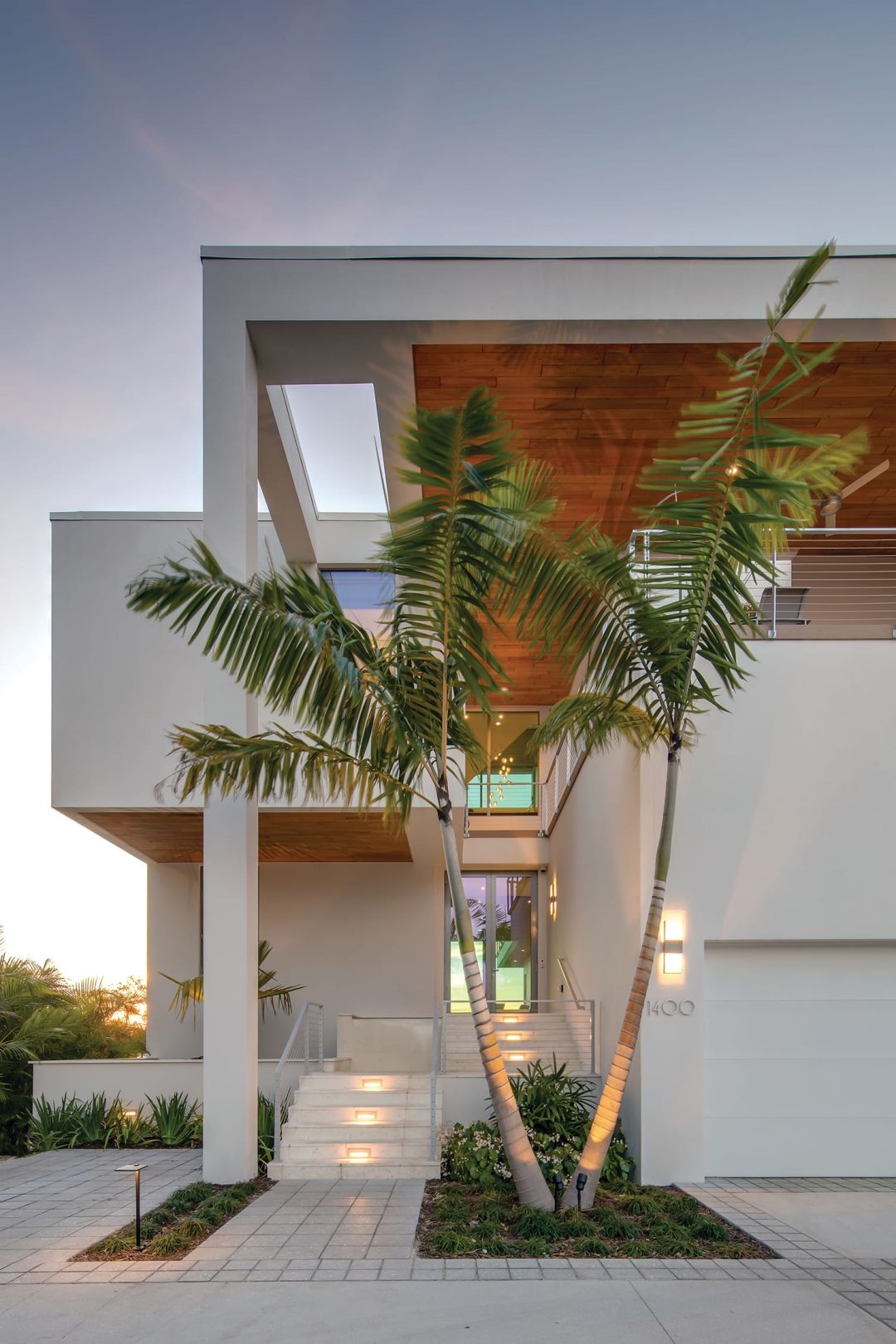
Image: Ryan Gamma
The truth of that philosophy and the aptness of the home’s name are apparent before crossing the threshold. Native palms unfurl overhead, their fronds suspended like a firework paused mid-burst. A mere 200 yards from the house lies a trio of rookery islands. “We get roseate spoonbills, herons, white pelicans that come once a year,” Dan says. “It’s always different, always alive. It’s something to appreciate.” Between the briny seagrapes and the only sound in the air being the murmur of the Roberts Bay breeze, it’s hard to believe you’re less than a half mile from the churn of Tamiami Trail.
For the Barzels, Element House is the culmination of a process grounded in curiosity, care and a lifelong fascination with science and design. Dan’s father was an architect, and Dan also holds a diploma in architecture, as well as a degree in building construction and a master’s in business administration from the University of Florida.
Out of college, he was involved in the building business but made a pivot to merchandising, eventually becoming the vice president of merchandising at AutoZone, an international retailer and distributor of auto parts. But his eye for design never faded, and he advised on significant projects, among them a Black theater in Memphis, Tenn., and rebuilding a synagogue after arson in Richmond, Va.
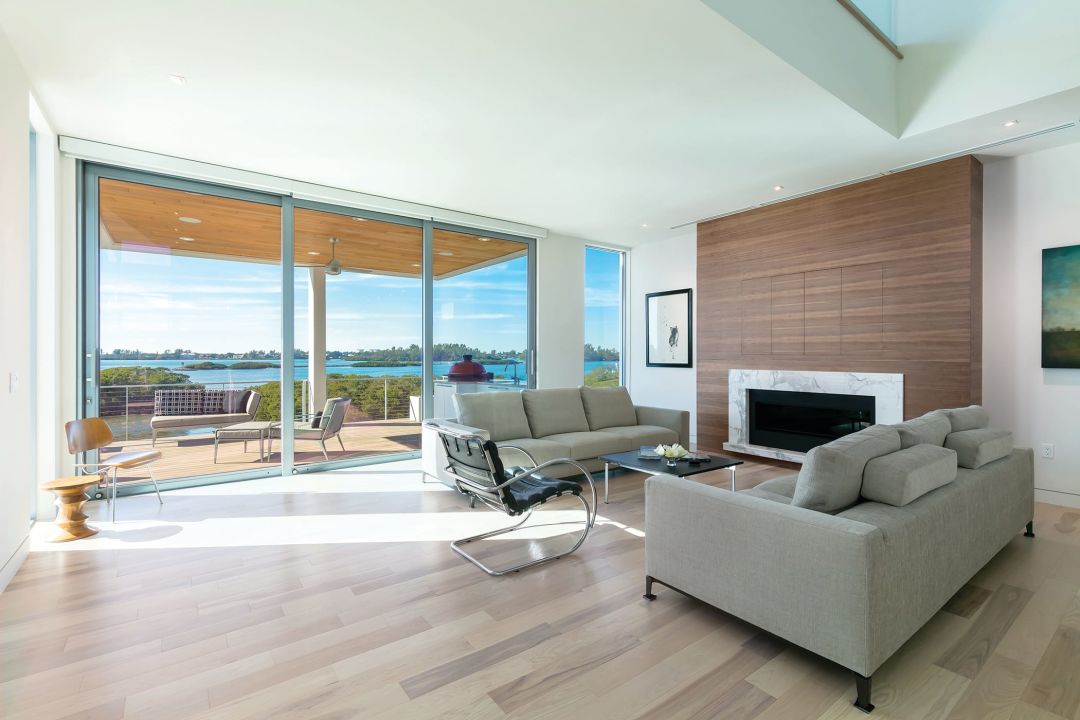
Image: Ryan Gamma
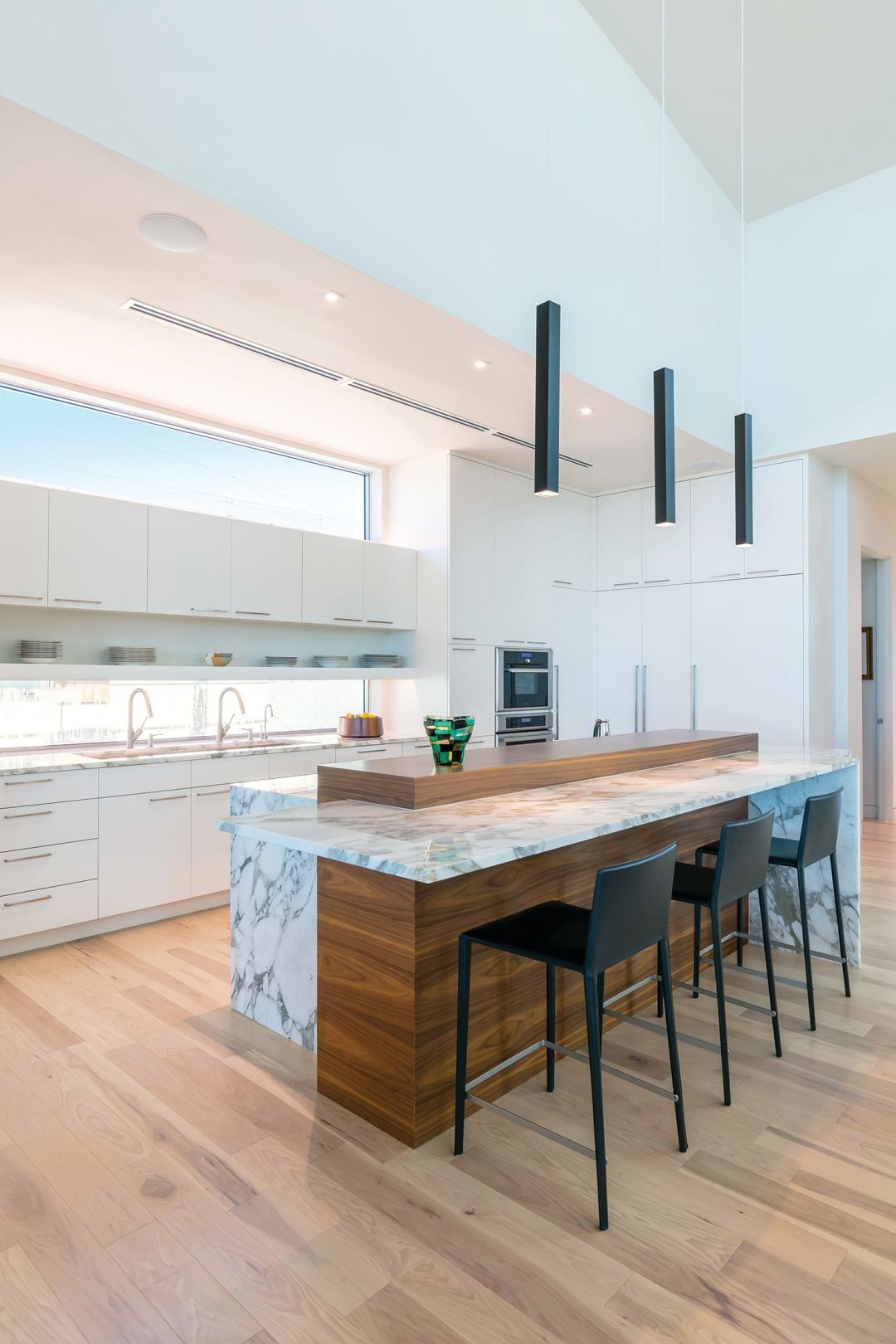
Image: Ryan Gamma
When it came time to design their own home, the approach that the Barzels and their architectural team took in creating Element House is less reinvention than return. Before air conditioning reshaped American life, homes were designed to work with the environment rather than against it. The Barzels looked to the Sarasota School of Architecture, a design movement of the 1940s through 1960s, that was all about creating homes for the realities of Southwest Florida’s coastal climate and geography. The Sarasota School used roof overhangs, cross ventilation, shade trees, abundant windows and natural materials. Element House revives and refines those principles, updating them with modern materials and engineering to meet contemporary expectations for resilience and comfort—right in Lido Shores, the neighborhood where many of the original Sarasota School homes still stand.
Element House incorporates massive, sculptural roof overhangs that define the home’s bold silhouette and act as sunshields, diffusing brutal heat before it ever reaches the glass. Energy-efficient U-factor windows, which insulate the home from the sun, provide a second line of defense, all while maintaining visual connection to the surrounding landscape.
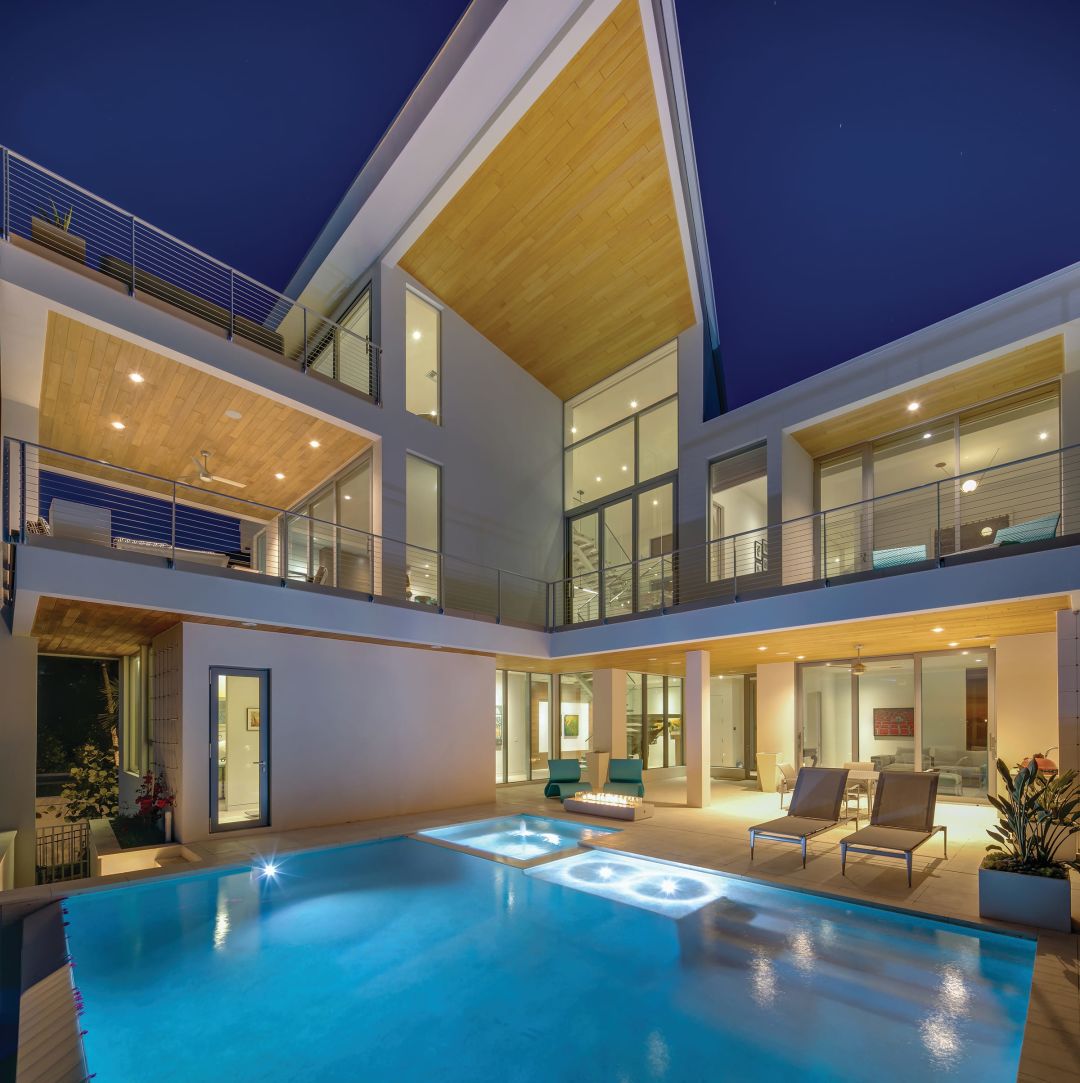
Image: Ryan Gamma
And despite the need to shield the home from the sun, the couple also wanted a light-filled house. High clerestory windows draw daylight deep into the interior, flooding living spaces with a warm, natural glow that often makes artificial lighting unnecessary. As Parks says, “The most energy-efficient lightbulb is the one you never have to turn on.”
“I wanted you to feel like you’re outside, inside,” Lisa says, gesturing toward the bay. “We love Florida—being here under the blue skies—and the beauty of it all.”
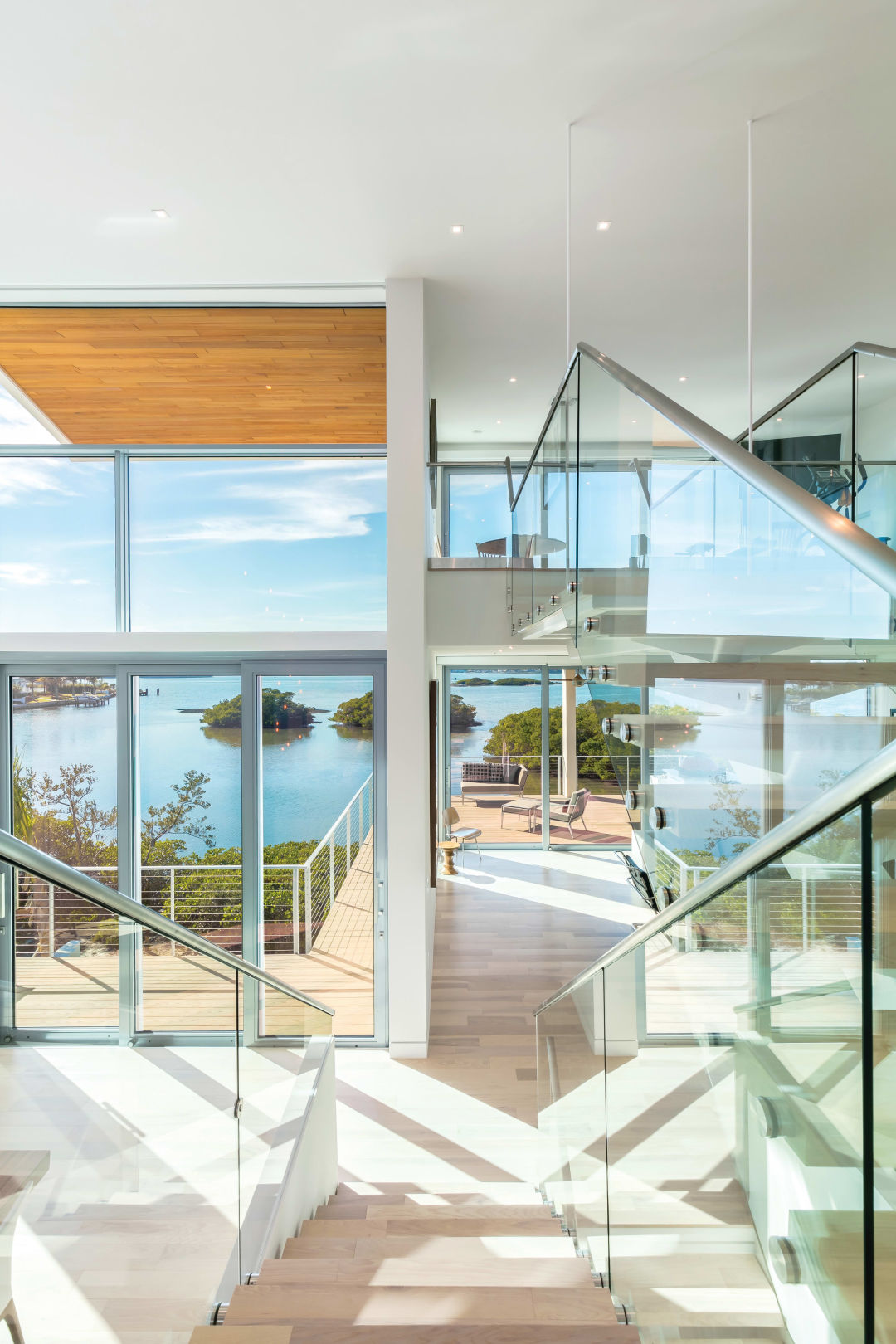
Image: Ryan Gamma
The home’s passive strategies—those that rely on orientation, shading and airflow—are also married to active systems powered by technology. Working closely with Solstice and Two Trails, a local consultancy specializing in high-performing LEED projects, Barzel immersed himself in the home’s mechanical details. The result is a highly efficient HVAC system—two variable-speed units serving six distinct zones, allowing rooms to operate independently of each other.
At night, with the exception of the primary suite, the house lies dormant. During the day, automated shades rise and fall in sync with the sun.
Water usage is treated with the same level of thought. A natural-gas-powered circulating system delivers hot water to taps in seconds. Rainwater from the roof feeds a series of cisterns that hold 1,600 gallons, irrigating the landscape. Barzel even modified the system to manage overflow and maximize capture. Over the course of a year, he tracked the savings: roughly 25,000 gallons—about 800 showers, 125 hot tubs or several months of water use for an average American household.
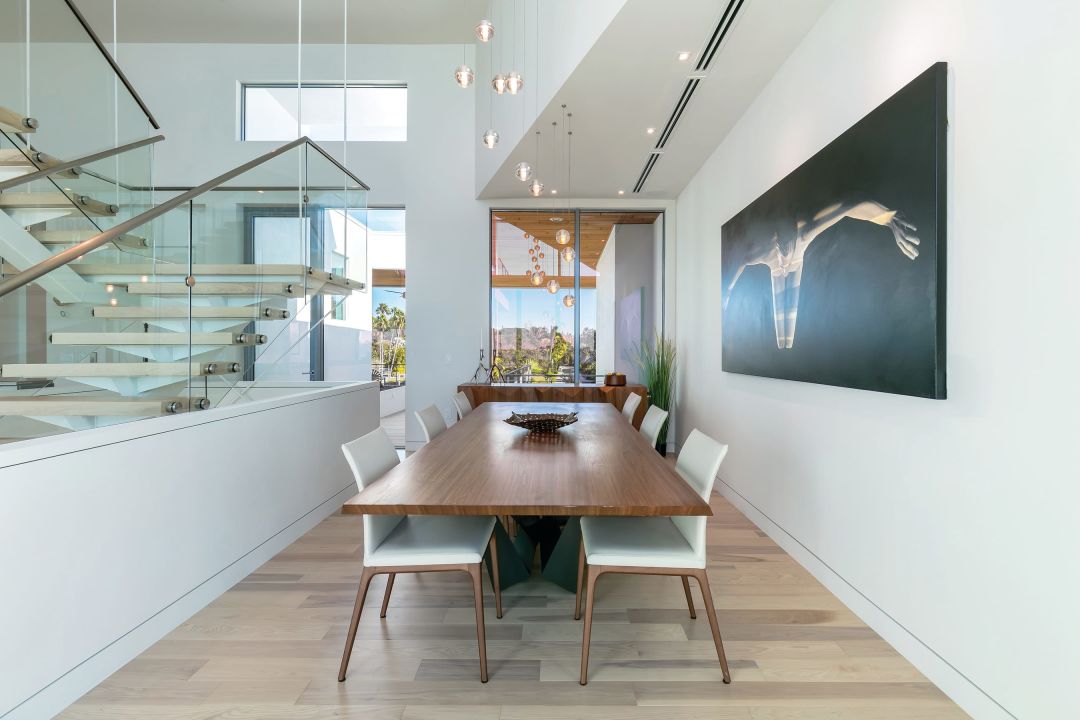
Image: Ryan Gamma
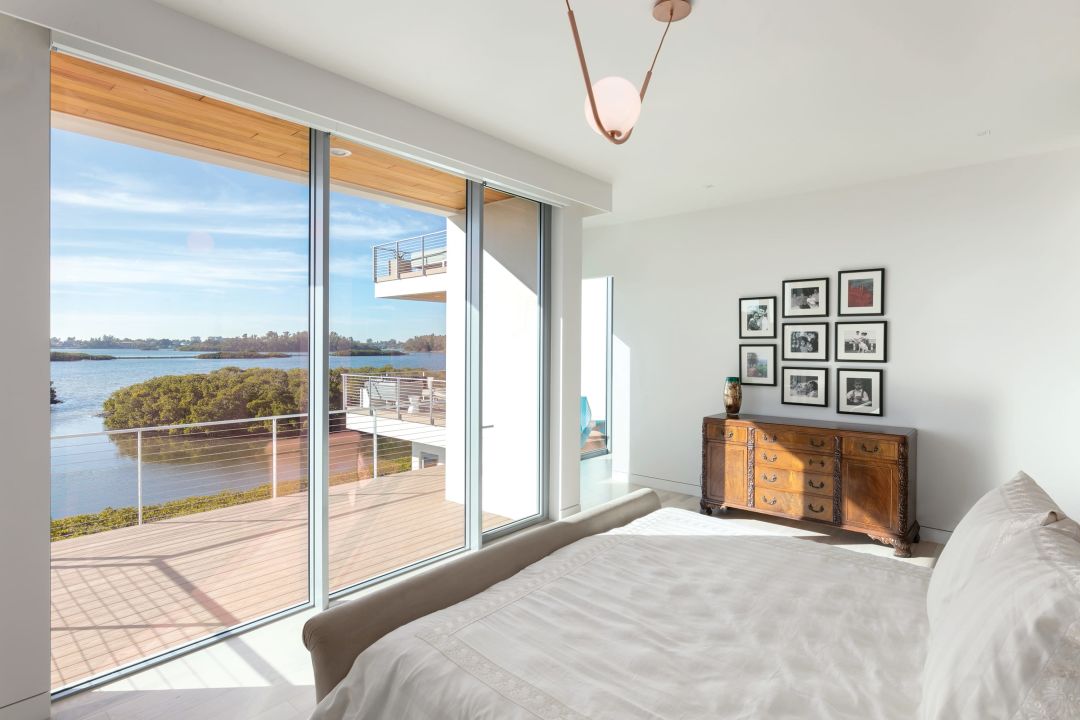
Image: Ryan Gamma
The planning that went into the home was tested in 2024, when historic storms tore across the Suncoast. “No one was prepared for the power of the water,” Dan says. Element House’s architecture is a direct response to its bayside setting, employing a “vertical lifestyle” that elevates primary living spaces to the second floor. While a boat, dock and some ground-level electrical equipment were lost, the living areas were untouched. “The house wasn’t hurt,” Dan says. “It was everything below the living level.” While neighbors sorted through ruined keepsakes and family photographs, the Barzels’ home was largely protected.
Despite its sophistication, Element House never feels hyper-futuristic—even with an optimized photovoltaic solar system tucked neatly on the roof. Its innovations are intentionally discreet. Natural materials—Jerusalem tile, hickory-engineered hardwood that absorbs rather than emits toxic gases, and stone—blur boundaries between inside and out.
Its accolades are formidable: Its Home Energy Rating System (HERS) rating—a nationally recognized measure of a home’s energy efficiency—achieved a -26 (pre-existing homes score around 130), among the lowest ever recorded in Florida. The home also received LEED Platinum certification, Florida Green Building Coalition Platinum status, and EPA Energy Star Highest Standards, Indoor airPLUS and DOE Zero Energy Ready Home certifications. When the American Institute of Architects Tampa Bay honored the project with its Sustainability Award in 2020, one juror observed, “Pretty isn’t good enough anymore. Element House sets the tone for its peers to raise the bar.”
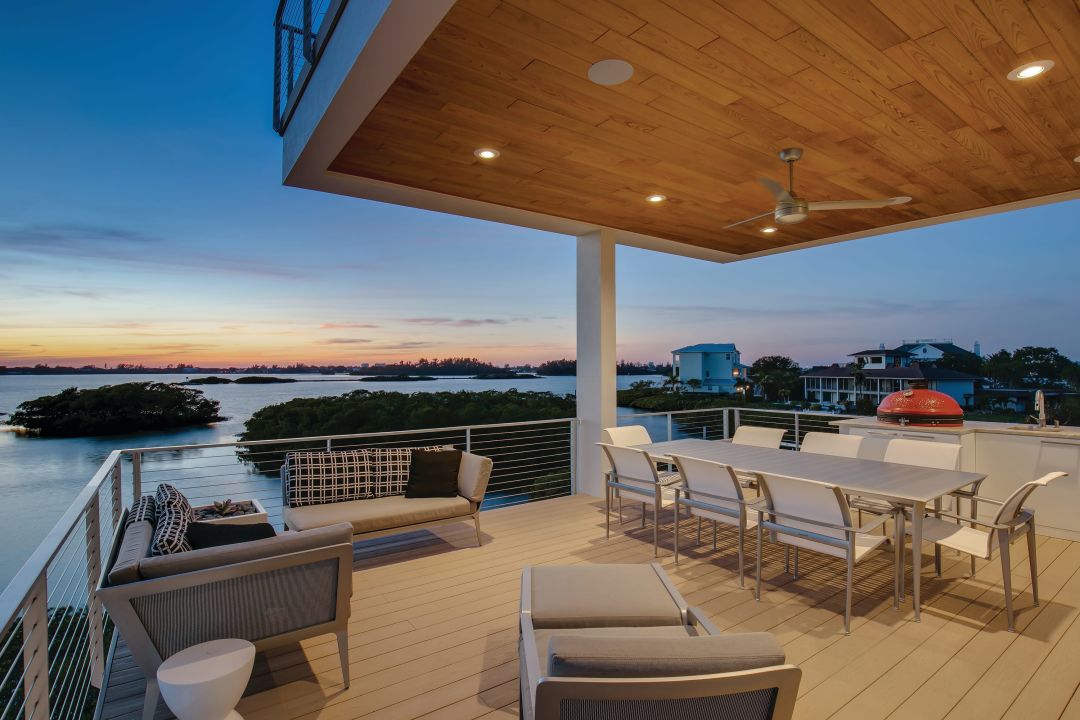
Image: Ryan Gamma
For the Barzels, though, success is measured more simply. “I live in this house as I’d live in any home,” Lisa says. That means tending the rosemary and tomatoes spilling out from the garden just steps from the kitchen, hosting holiday gatherings with children and grandchildren in matching pajamas, and moving through the day without thinking much about what the house is quietly accomplishing.
That effortlessness, Lisa says, is the point.
Dan may no longer carry that briefcase packed full of recyclables, but the impulse that drove those small, daily acts lives on at Element House, proving that living well and living responsibly don’t have to be at odds.
“There are people out there to help you with this,” Lisa says. “You don’t have to have the knowledge that Dan has. You have your goal, and you can hire the people who have that wisdom. They’re there to keep the goal in focus.”

Image: Ryan Gamma
Element House Team
Architect
Solstice Planning and Architecture, Jonathan Parks, FAIA
Builder
NWC Construction
Interior Design
David K. Lowe Interior Design
Landscape
Michael A. Gilkey, Inc.
Structural
McCall & Young Engineering, LLC
LEED Certification
Two Trails, Inc.