





The Untold Stories of Sarasota's Women Artists
Several years ago, I wrote a piece for this magazine about the artists who made Sarasota famous—a look at more than a dozen of the best-known visual artists, members of what has long been known as the artists’ and writers’ colony here, dating from the 1930s on.
Many of the names included were quite well-known beyond Sarasota: creatives such as Conrad Marca-Relli, Philip Guston, Jimmy Ernst, John Chamberlain, Syd Solomon, Ben Stahl and more. What I didn’t really think much about at the time I wrote the piece was that only two women artists were even mentioned—Helen Sawyer and Dorothy Leech—and that was, at least in part, because of their long personal and professional partnerships with their husbands, Jerry Farnsworth and Hilton Leech, both of whom were among the earliest teachers and practitioners on the visual art scene here.
Then, in February, something happened that kicked me into wanting to focus on the women artists of the Sarasota colony. An exhibit at the Field Club presenting a retrospective of the work of Beth Arthur was the catalyst. Arthur, who will turn 100 this December, displayed 30 of her artworks from over six decades before a Who’s Who of the Sarasota art world in a show that looked as stunning as those you might see from some of the more familiar artists mentioned above. Then the all-female Petticoat Painters (more on them in a minute) marked more than 70 years of featuring their work here, with an exhibition showing off current members’ work closing last spring at City Hall. And a recent exhibit at the Ringling College’s Stulberg Gallery presented quite a few artworks and biographies of women working in the years 1945 to 1965 to viewers, many of whom might have long thought that there were no women (other than supportive wives) in the artists’ colony.
Au contraire. From the earliest days of Sarasota’s vaunted arts history, women were painting, drawing, sculpting and otherwise creating—talented, professional women artists. If few of them gained quite the national or international recognition as some of the men, that is surely at least in part because most of them were wives and mothers trying to achieve that eternal—and often impossible—work/family balance.
After all, it’s always been more challenging for women to succeed in their careers due to lack of equal educational and employment opportunities. That the women profiled in this story continued to work, show and sell for decades and were often selected for prestigious collections and museum exhibits, both in and far beyond Sarasota, is surely something to celebrate. So, here’s a look at a few of those women, who bring to my mind that oft-quoted line about actress-singer-dancer Ginger Rogers, of whom it was said that she did everything her frequent partner Fred Astaire did, just “backwards and in heels.”
Beth Arthur

Image: Joseph Janney Steinmetz
Beth Arthur arrived in Sarasota from her native Pittsburgh in 1953, slinging her Martin guitar, a handful of paintbrushes and a degree in fine arts, to study with noted teacher-painter Hilton Leech. In an article decades ago in this magazine, she explained that she couldn’t afford to pay Leech for lessons, and he couldn’t give her full free tuition, so she worked cleaning the studio, babysitting and anything else to further her painting ambitions. Leech may have been the most influential of her teachers, but along the way she also studied with and became friends with such artists as Syd Solomon, James Brooks, Larry Rivers and more. Also playing a key role in her artistic development: serving as a staff artist at the Ringling Bros. and Barnum & Bailey Circus, where she created props and displays.

Image: Courtesy Robin Draper
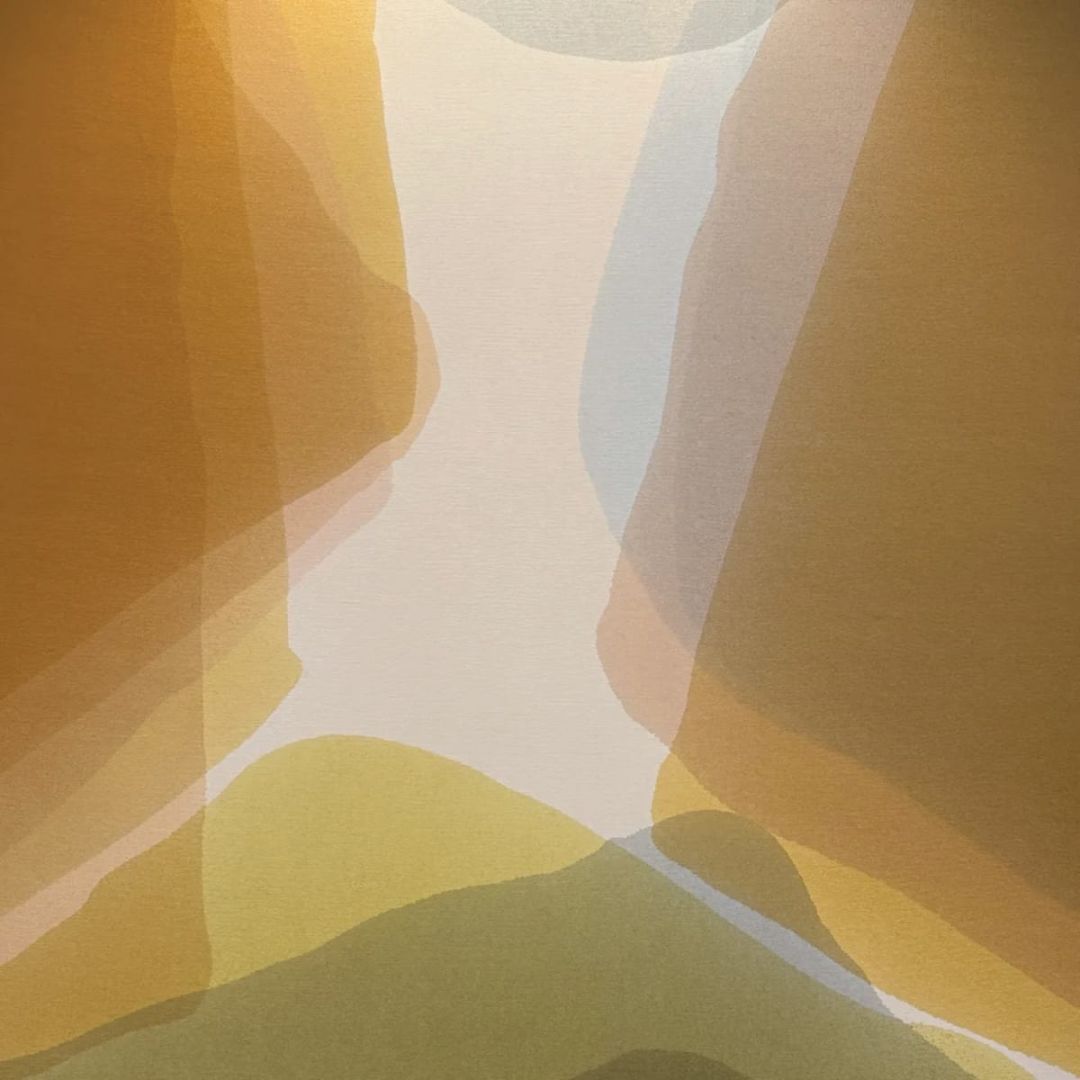
Image: Courtesy Arts Advocates

A wife and mother to two, Arthur always considered herself an artist first, says her daughter, Robin Draper. “And she hustled,” Draper recalls. “If she wasn’t painting, she was teaching and hosting workshops.” Her use of materials changed over her career, moving from mixed media and collage to oil flows, glowing with luminous, vibrant colors, to acrylics and watercolors. She drew inspiration for her 30-plus one-woman shows from her travels to places like the Southwest and Haiti, and her work is in a number of private and public collections—including, possibly soon, the Ringling Museum’s.
Dorothy Sherman Leech

Dorothy Leech’s arts career may be a little overlooked in favor of her husband, Hilton Leech’s, but she had an extensive list of exhibits and awards. The pair met when Dorothy was studying at Ringling School of Art (now Ringling College of Art and Design); Hilton was one of the first instructors there and himself a fine watercolorist who exhibited at the Metropolitan Museum of Art, the Whitney and the National Gallery of Art. They married in 1937 and together taught aspiring artists at the Amagansett School of Art on Hillview Street. (Some longtime Sarasotans will remember the property that housed the school, converted from former military barracks, until 1960. It later became a pottery school under owner-artist Frank Colson). The couple’s later studio/gallery space in the iconic Sarasota Round House on Riverwood Avenue still stands today, with some modifications.
And Dorothy Leech did indeed enjoy an extended painting career. Exhibiting in 16 one-woman shows and included in a 1955 Ringling Museum exhibit, Fifty Florida Painters, she began her training at the Carnegie Institute in Pittsburgh, where she was born in 1913. Over the years, she had pieces exhibited at the Albright-Knox in Buffalo, New York, the Clearwater Museum of Art, and here at the Sarasota Art Association. She and her husband painted backdrops for Ringling Circus acts, as well. And she and a longtime friend, Marjorie Reynolds Sprague, painted Florida jungle-motif murals in 1940 for the late, lamented Lido Beach Casino ballroom; anyone who saw those would surely have remembered them ever after. Dorothy Leech died in 2001 at the age of 87.
Emily Willingham Holmes

Image: Courtesy Arts Advocates
Born in Chattanooga, Tennessee, in 1928, Emily Willingham Holmes came to Sarasota in 1960 after receiving her degree in art from Western Reserve University (now Case Western Reserve University) and the Cleveland Institute of Art. A watercolorist and an active member of such organizations as the Florida Artists Group and the Petticoat Painters, she, with four women friends, was a founding member of the Fine Arts Society of Sarasota (now known as Arts Advocates) in 1969, which from the beginning intended to assemble a permanent collection, one still being added to today. She painted both landscapes and abstracts, while raising twin sons and teaching for years at the Hilton Leech Art School and the Longboat Key Art Center, winning many awards along the way.
But her longest lasting legacy may be the book she worked on with her mentor, Leech, and completed after his death: The Joys of Watercolor. Published in 1973, the book became a helpful guide for both beginners and more experienced hands in the field of watercolor. It can be found on used book websites and in art libraries today, stretching its influence across generations of hopeful watercolorists. Holmes died in 2008 at the age of 80.
Helen Sawyer

Image: Courtesy Tim Jaeger
You could say Sawyer, the daughter of noted watercolor painter Wells Sawyer, was among the very first of these women to make her mark here. She was born in 1898, and her doting father encouraged her artistic ambitions from the start, even taking her to Europe to visit museums when she was just 11. At the tender age of 16, Sawyer had one of her landscape paintings accepted in a juried show at the National Academy of Design in New York City. She then went on to study at art school in Provincetown, Massachusetts, meeting the man who became her husband, fellow artist Jerry Farnsworth. The couple eventually found their way to Sarasota, establishing an art school here in 1941.
A lifelong lover of nature, Sawyer often worked outdoors, picking wildflowers or paddling her kayak through canals; the resulting paintings established a strong mood, whether peaceful and serene or wilder, storm-driven scenes. She also, like many other artists here, sketched Ringling Bros. and Barnum & Bailey performers and animals. Longtime Sarasota arts writer Marcia Corbino described her as “a free spirit” who “loved to entertain at parties with impromptu Spanish dances and clicking castanets.” A president of the Florida Artists Group, Sawyer had her work in the collections of the Carnegie Institute and the IBM Corporation gallery, and exhibited at the Metropolitan Museum of Art, the Art Institute of Chicago, and the Corcoran Gallery of Art, among other prominent galleries. She painted and exhibited well into her 90s and died in 1999 at the age of 101.
Martha “Marty” Hartman

Image: Courtesy William Hartman
Unlike Helen Sawyer, Hartman had a father who wasn’t too keen on her career as an artist, suggesting instead that she go to secretarial school so she’d be sure of a job. Hartman, who grew up in Florida, did indeed find a good job posting when World War II broke out, working for the Army Air Corps at a base in Orlando, but she saved the money she earned for an arts education.

Image: Courtesy William Hartman

Image: Courtesy William Hartman
When the war ended, she came to Sarasota’s Ringling School of Art, enrolling for the fall session in 1945. As her son Bill Hartman, who owned the William Hartman Gallery on Palm Avenue for more than 40 years, explains, “She had secretarial skills, and the school didn’t have a secretary, so the president made a deal that if she worked in the front office, the school would cover her tuition.” That worked out well personally as well as professionally, since it was at her desk there that she met husband-to-be William Hartman, also an artist and one of many attending college on the G.I. Bill.

Image: Courtesy William Hartman
The two opened a gallery with a school/studio component in 1952, in the historic Sarasota Times Building on First Street where Sage Restaurant is now located. That was also the year Marty, a collagist who admired the works of Marc Chagall, won first prize in a show at what was then called the Sarasota Art Association (today it’s Art Center Sarasota). But…surprise! Unlike male winners, who had always received a cash prize, Marty received only a certificate. “Quick to see an injustice,” as Bill Hartman says, Marty and some of her fellow women artists banded together to create the Petticoat Painters, to which only a select number of female artists could belong. She continued to create, exhibit and support fellow artists for decades, passing away in 2017 at the age of 94.
Judy Shepard Axe

Image: Courtesy Photo
Hartman and her lifelong friend, Judy Axe, met while rooming across the hall from each other at the Ringling School, and Axe was a founding member of the Petticoat Painters as well. Raised in the Asheville, North Carolina, area, Axe also arrived in Sarasota in 1945; her husband William “Bill” Axe had trained here during World War II and liked the area enough to return after the war. Together, the couple ran for nearly 40 years The Interior Shop on Palm Avenue, serving and advising generations of homebuyers. Judy worked in painting and mosaics, and her work appeared in national juried exhibitions; she also had solo shows at the Asheville Art Museum, the Longboat Key Art Center, the Sarasota Art Association and more.

Image: Courtesy Photo
In addition to her painting and design career, Axe and her husband stood out every year at the popular Beaux Arts Ball, consistently winning prizes for their over-the-top costumes, labored on for months. Among their creative concoctions, the duo came dressed up as sea amoebas, dominoes, Chinese wind chimes, Shakespeare’s Ariel and Prospero, and, one memorable year, as peacocks. (She had to enter the Municipal Auditorium venue on her hands and knees for that one.) She died in 2013 at the age of 91, and her ashes are at rest with her husband’s at Sarasota National Cemetery.
Shirley Clement

Clement, born in 1922, was an early member and participant in the Sarasota art scene, often exhibiting in juried shows here, including the very first one to take place at the Sarasota Art Association’s “new” (and still-current) home along North Tamiami Trail in 1949. Clement was also a Petticoat Painter, one of the first women accepted into the American Watercolor Society in 1953, and a prolific artist who worked in oil and watercolor, featuring subjects varying from figures to portraits to landscapes. (You can find a number of her works for auction online.) She also showed in the early 1950s in the 84th Annual Watercolor Society Exhibition in New York City with fellow Sarasotans Hilton Leech and Syd Solomon, and in the High Museum’s Fifth Southern Annual in Atlanta, again with Solomon and Leech, around that same time.

Image: Courtesy Arts Advocates
Clement and her husband, Howard Uhr, were also the commissioners and owners of an historic Sarasota School of Architecture home (unfortunately now demolished) on Red Rock Lane, where Clement had her studio. Fun fact: Although we’d need a genealogist’s help to trace the exact family tree, Clement was the great-niece of modern art master Henri Matisse, apparently on her maternal line. She died in 2002 at the age of 80.
Lois Bartlett Tracy

Image: Courtesy Arts Advocates
Tracy may be better remembered in Englewood than in Sarasota proper, as she began painting there in the 1930s and eventually established an artists’ colony of her own, Artist Acres, consisting of her home/studio/gallery and nine cottages for visiting artists in the 1960s. But her career began decades before the birth of that colony, in 1939, garnering her a gold medal at the New York World’s Fair for a series of landscape paintings on view in the fair’s Florida Pavilion. Born in Michigan, she spent summers in New Hampshire, and here became one of the first members of the Sarasota Art Association, well-known for her Old Florida landscapes and especially her “jungle” paintings, lush with native flora and fauna.
After her New Hampshire studio and the paintings there were destroyed by fire, Tracy made a leap into more abstract work. Expanding upon an interest in physics, she began to break up basic forms on canvas in a series titled Energy in Space, and the Air and Space Museum of the Smithsonian Institution eventually acquired paintings from that series. (Her work has also been seen at the Guggenheim, the Met and MOMA in New York.) Tracy painted for more than 70 years, taught at many schools and wrote two books on art before facing an ongoing struggle with macular degeneration; she died at the age of 106 in 2008.
Still Painting...

Image: Courtesy Photo
Founded in 1953 in Sarasota, Petticoat Painters is one of the longest continually exhibiting women’s art groups in the United States. The group started with Martha Hartman (profiled on opposite page), who won top prize at a Sarasota exhibition and discovered she wouldn’t get the prize money male winners were receiving. She invited a select group of accomplished women artists—who also struggled to show their work—and they’ve been holding exhibitions ever since. The latest show, a year-long effort, with works from 24 female artists, was the Now You See Us Cultural Heritage exhibit at Sarasota City Hall through March of this year. For more information, go to petticoatpainters.com.
...and Still Learning
There were many other women artists working here over the years, of course—Mary Sarg Murphy, Nike Parton, Flo Singer, Lynn Davison, Jeanne Norman Chase, Glenna Finch and Sophie Johnstone are among those springing to mind, especially because pieces created by virtually all of them, as well as the artists above, are part of the Arts Advocates collection. (Arts Advocates also presents talks, exhibits and other programming in addition to providing scholarships for students in the arts.) You can view some of those works at the Van Wezel Performing Arts Hall and also at the Arts Advocates Gallery, at The Crossings at Siesta Key Mall; docent tours are available at both venues.
Once you start discovering the role women artists played here in the 20th century, you may find that the story keeps expanding. We’re still learning about them, and learning to appreciate what they accomplished.