






How Parents Can Help Babies Become Comfortable in the Water
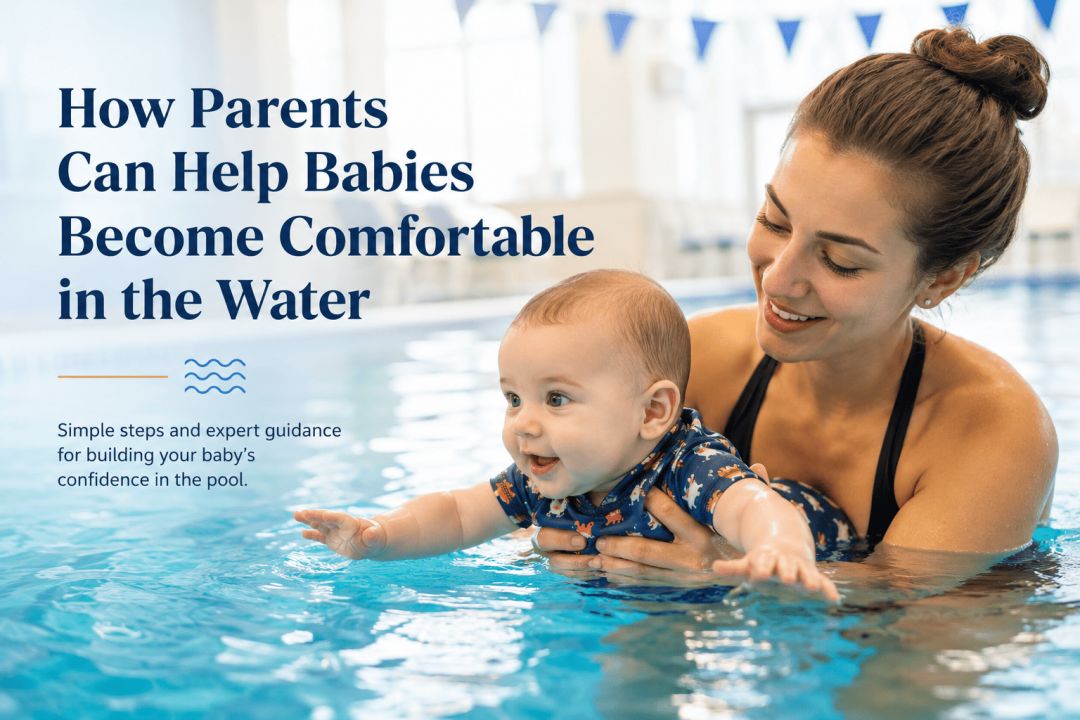
For many parents, a baby's first experience in a pool can bring mixed emotions. Some babies seem naturally relaxed around water, while others become tense, cling tightly to a parent, or cry when their feet leave the floor.
That reaction is normal. Water is a new environment, and babies need time to become familiar with how it feels, sounds and moves around them.
The goal of early water experiences does not have to be teaching a baby to swim independently. A more appropriate starting point is helping a child develop comfort, trust and positive associations with being in the water while a parent or caregiver remains close.
Start Slowly and Follow Your Baby's Cues
A calm introduction can make a significant difference.
Instead of immediately putting a baby into deeper water, parents can begin by holding the child securely and allowing them to experience the sensation of water gradually. A few minutes of relaxed play may be more productive than a long session that leaves the child tired or upset.
Watch your baby's reactions. Relaxed body movements, eye contact and curiosity can indicate that the experience is going well. Crying, stiffening, turning away or repeatedly trying to cling to the parent may mean that it is time to pause.
There is no benefit in forcing a child to continue when they are overwhelmed.
Over time, repeated positive experiences can help the water become a familiar environment rather than something unfamiliar or frightening.
Let Your Baby Stay Close to You
Parents are an important source of security during early water experiences.
Holding a baby close, speaking calmly and maintaining eye contact can help the child feel supported. Parents can gently move through the water while keeping a secure hold and allowing the baby to experience different positions.
This is also why parent-and-baby swim programs can be useful for families who want more structure. Instead of asking parents to figure out every technique on their own, an instructor can demonstrate appropriate ways to support a child and explain why particular activities are used.
The parent remains an active part of the experience rather than simply watching from the side of the pool.
Make Water Time Predictable
Babies often respond well to familiar routines.
Parents can use the same simple sequence each time they enter the pool. For example, they might begin with holding the baby close, move into gentle water play, practice a few simple movements and finish with a calm activity.
Songs and repeated phrases can also give a baby recognizable cues. When the same activity happens in a similar way from one session to another, the child has an opportunity to become familiar with what comes next.
The routine does not need to be complicated. Consistency matters more than the number of activities.
Introduce New Skills One Step at a Time
Early swimming experiences can include simple skills that prepare children for later swimming instruction.
A parent may practice supporting the baby's body in different positions, allowing the child to become familiar with having water around the face, or introducing a supported back-float position when the child is ready.
Each skill should be introduced gradually and with appropriate adult support.
Parents should never assume that because a baby tolerated an activity once, the child is ready to repeat it without assistance. Babies develop at different rates, and their reactions can change from one session to the next.
Consider Structured Infant Swim Lessons
For parents who want professional guidance, infant swim classes at SwimRight Academy’s Miami location can provide a structured setting for building early water comfort.
A good program should involve more than simply putting babies in a pool. Parents should understand how to hold their child safely, how to support different body positions and how to respond when a child becomes uncomfortable.
At SwimRight Academy, the Parent-Tot approach is designed for children under 2 and keeps the parent in the water with the child. Instructors guide parents through activities that include proper holding, supported underwater experiences and back-float work, while songs and games are used to introduce early skills.
For families in the Miami area, this type of program can provide a more structured alternative to occasional recreational pool visits. The Miami location offers Parent-Tot classes, including beginner and advanced levels, with sessions lasting about 30 minutes.
Parents interested in this type of approach can read more about infant and toddler swim lessons and see whether the program is appropriate for their child.
Don't Rush Underwater Experiences
One of the areas that can make parents particularly nervous is putting a baby's face underwater.
There is no reason to turn this into a test of how much a child can tolerate. Any underwater activity should be introduced appropriately, with qualified instruction and careful attention to the child's response.
Parents should also avoid trying techniques they have seen online without knowing whether they are appropriate for their baby's age or development.
A qualified instructor can demonstrate how an activity should be introduced and help parents recognize when their child is ready to progress.
Use Back-Floating as a Supported Skill
A supported back float can be another useful part of early water instruction.
For a baby, floating on the back can feel very different from being held upright. The position can be introduced gradually while the parent provides physical support and reassurance.
The purpose is not to expect a baby to float independently. Instead, the child becomes familiar with a body position that can later become part of broader swimming and water-safety skills.
This is one reason professional instruction can be helpful: parents can receive direct guidance rather than guessing about positioning or timing.
Keep Sessions Short
Babies have limited attention spans, and water can be physically demanding.
A short, focused session can be more productive than trying to keep a baby in the pool for an extended period. Signs of fatigue or overstimulation may include fussiness, reduced attention, shivering or a sudden change in mood.
Ending the session while the experience is still positive can help reinforce the idea that time in the water is enjoyable.
Structured infant classes commonly keep sessions relatively short. For example, Parent-Tot sessions at SwimRight Academy are approximately 30 minutes.
Remember That Comfort Is Not the Same as Water Safety
A baby who enjoys being in the pool is not automatically capable of protecting themselves around water.
This distinction is important for every parent.
Water confidence is one part of early aquatic development. It does not replace close, active adult supervision. Babies and young children should remain within immediate reach of a responsible adult whenever they are in or near water.
The same rule applies around backyard pools, public pools, lakes and the ocean.
Parents should also use appropriate barriers and safety practices around home pools and avoid relying on flotation devices as a substitute for supervision.
Build Positive Experiences Over Time
Helping a baby become comfortable in the water is usually a gradual process rather than a single milestone.
Some children may become relaxed after only a few visits. Others may need considerably more time. What matters is giving them supportive experiences without turning each session into a test.
Parents can provide reassurance, maintain predictable routines, introduce new skills gradually and seek qualified instruction when they want additional guidance.
With patience and consistent practice, early water experiences can become a positive part of family life while laying the groundwork for future swimming instruction.
Most importantly, parents do not need to rush. A baby's first goal in the water can simply be to feel secure, supported and comfortable.