






How Often Should You Replace Your Mattress — Really?
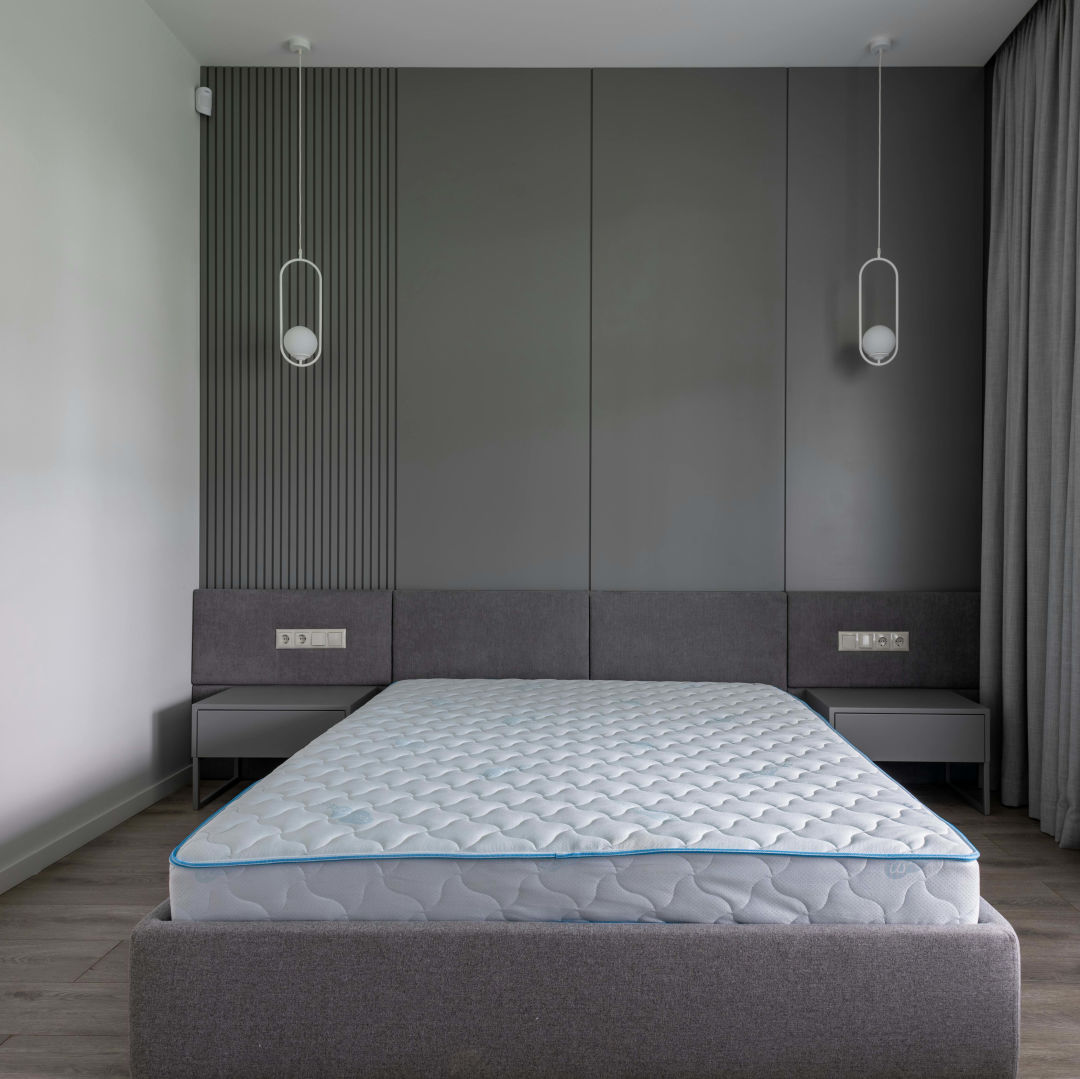
Eight years. That's the figure you'll see quoted everywhere, and it's almost certainly wrong for your mattress specifically.
The seven-to-ten-year range is a crude average taken across wildly different product categories. A cheap spring mattress might be past its useful life in four years. A high-end latex one could be structurally sound at fifteen. Treating all mattresses as if they age at the same rate is like saying all cars need replacing at 100,000 miles. Technically a number, practically useless.
What actually degrades inside a mattress
Three things wear out at different rates: the comfort layer, the support core, and the cover. Comfort layers, which are usually foam or fibre, lose resilience fastest. Memory foam softens permanently under repeated compression, a phenomenon called hysteresis. Polyfoam does the same thing, often faster. Pocket springs in a well-built core can last well beyond a decade, but the foam encasing them around the edges often fails long before the springs do.
The cover matters more than people realise. Once it stops recovering its shape, body impressions become permanent, and the comfort layers below can no longer distribute pressure evenly. You'll feel this as a "valley" where you usually sleep, even if the mattress is technically still supportive in the middle.
What are the signs your mattress needs replacing?
Visible sagging of more than 2–3 cm in a sleeping area is a reasonably firm indicator. Persistent morning back pain that eases quickly after you get up is another. Waking more often during the night, particularly from pressure-related shifts rather than noise or temperature, suggests the surface has lost its ability to distribute your weight.
More subtle signs: you can feel the springs or the edges of structural components through the comfort layers. The mattress feels noticeably different on each side, which means wear is asymmetric. You sleep better on a hotel mattress or a spare bed, not because it's inherently better, but because the baseline you've adapted to at home has quietly deteriorated.
One signal that gets missed: allergy flare-ups. Older mattresses accumulate dust mite populations, skin cells, and moisture. If you've been waking up congested or itchy and the rest of your bedroom hasn't changed, the mattress is a plausible suspect.
Why eight years isn't a universal answer
The eight-year figure traces back partly to the Better Sleep Council, a US-based trade body. It became shorthand even though the underlying reality varies dramatically by construction. A well-built hybrid with high-density foam comfort layers and individually pocketed springs tends to outlast a cheap all-foam mattress by several years if it's rotated regularly and used with a proper bed base. A cheap all-foam mattress bought during a sale might be losing structural integrity by year four.
Usage matters too. A guest bedroom mattress slept on twenty nights a year will outlast a primary mattress by a factor of several. Heavier users accelerate wear on comfort layers. Children's mattresses, despite lighter loads, often fail faster because of jumping, spills, and uneven use.
How long should a good mattress actually last?
A realistic span, if you've bought well, looked after it, and used it on an appropriate base:
Basic polyfoam mattress: 4–6 years. Innerspring with minimal comfort layers: 5–7 years. Mid-range memory foam: 7–9 years. Hybrid with pocket springs and quality foams: 8–12 years. Latex, either natural or blended: 10–15 years, sometimes longer.
These are ceilings rather than guarantees. A mattress used without a proper bed base, left in a damp room, or slept on by one person in exactly the same spot every night will age faster regardless of its construction.
The care that meaningfully extends life
Rotating the mattress 180 degrees every two or three months does more than people expect. It redistributes wear across the comfort layers and delays the formation of body impressions. Flipping, if the mattress is designed to be flipped, does the same thing more aggressively; most modern mattresses are one-sided, so check before you try.
A supportive bed base matters more than the industry lets on. Slats spaced more than 7 cm apart will cause foam mattresses to sag between them over time. Old divan bases that have themselves compressed will transfer that unevenness upward. Many mattresses fail warranty inspections because of base-related wear, not because the mattress itself was faulty. Investing in durable bed bases for everyday comfort is one of the simplest ways to extend the life of any mattress sitting on top of them.
Keeping the mattress clean, using a washable protector, and airing it periodically all contribute. None of this is glamorous advice. It's just genuinely effective.
When replacement isn't about age at all
Sometimes a mattress doesn't need replacing because it's worn out. It needs replacing because your body has changed. Pregnancy, significant weight change, a new injury, or a new sleeping partner can all make a previously comfortable mattress suddenly wrong. The bed didn't fail; the fit did.
People tend to resist this diagnosis because the mattress is still visibly fine. But comfort and support are relational properties. They depend on who's lying on them. A mattress that was perfect for you at 70 kilos may genuinely not work at 85.
Is it worth repairing a mattress instead of replacing it?
Almost never, honestly. Toppers can mask surface discomfort for a while, but they can't restore a failing support core. If the springs have lost tension or the base foam has compressed, nothing added on top will fix the underlying problem, because the issue is that your weight is no longer being held at the right height. You'll feel the fix for a few weeks, then the same discomfort will creep back from below.
The useful frame is this: a mattress is a consumable. It wears out, sometimes slowly and sometimes fast, and pretending otherwise costs you sleep quality for years before you finally act on it. The best time to think about replacement is the moment you notice you've stopped sleeping as well as you used to, not the moment the sagging becomes visible from across the room.