






How Interior Visual Planning Improves Renovation Decisions
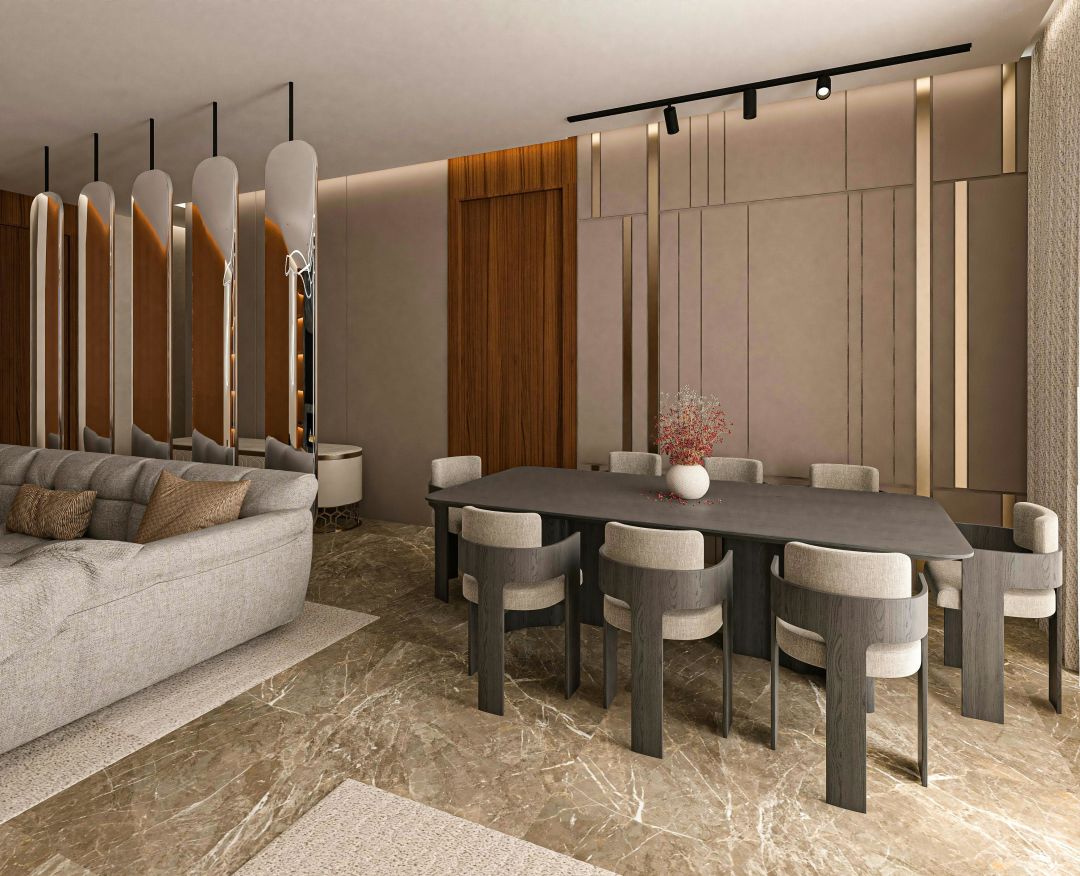
Image: Achraf Borkadi via Pexels
There's a particular kind of confidence that the best-renovated homes seem to have — a quality where nothing feels forced or corrected after the fact, where the millwork sits in exactly the right proportion to the room and the stone on the kitchen counters reads honestly against the cabinetry rather than fighting it. This is not an accident of taste. It's almost always the result of a planning process rigorous enough to catch problems before any tile was ordered or any wall came down.
Most renovation regrets trace back to the same place. Not bad contractors, not budget overruns, not the wrong furniture. They trace back to decisions made without a clear enough picture of the finished result — a material selected from a sample that looked different at scale, a layout approved on a floor plan that didn't quite convey how the room would actually live.
The gap between knowing what you want and seeing how it will actually work is where renovation mistakes are born. Closing it, before construction begins, is both possible and worth the effort.
What Mood Boards Miss
A mood board does one thing beautifully: it establishes direction. A collection of images that captures the feeling you're after — the warmth of bleached oak floors beside a plastered wall, the way a particular shade of sage reads in the light of a well-photographed Florida morning room — can be profoundly useful for aligning a homeowner and their designer around shared goals.
What a mood board cannot do is show you your room. It shows you someone else's. The sage that reads so well in the photograph was in a room with 11-foot ceilings, north-facing windows, and pale terrazzo underfoot. Put it in a 9-foot-ceiling room with wood floors and west-facing glass and you're working with an entirely different problem. The material might still work, or it might not. The mood board offers no reliable way to know.
Floor plans have their own limitations. They tell you where the walls are, where the openings fall, the proportional relationships between spaces — all of it essential, none of it sufficient for understanding how the room will feel at eye level with actual furniture in it. A kitchen island that looks generously scaled on a drawing can create an awkward bottleneck once you account for appliance clearances and the natural movement patterns of a family cooking dinner together.
For homeowners trying to understand how a concept may actually feel in real life, 3D render interior design can bridge the gap between inspiration and a believable room — translating materials, proportions, and light conditions into something that can actually be evaluated before any commitments are made.
What Light Actually Does to Materials
The relationship between light and material is among the most consequential and least predictable forces in interior design. Clients understand this intellectually and consistently underestimate it in practice.
A honed limestone that looks soft and creamy on a showroom sample will behave differently on a kitchen floor that receives direct western sun in the late afternoon — the same surface that was matte and quiet becomes almost luminous, reads warmer, asks different things of the walls around it. A white that holds beautifully in a showroom under diffuse lighting can turn slightly cool and blue in a room that doesn't get morning sun. These are not failures of the materials. They are failures of context.
Seeing a proposed material palette rendered in the actual room — with the room's real window positions, its ceiling height, its proportions — gives homeowners a fundamentally more honest read than any sample board can provide. The raked afternoon light that will pour through the south-facing window in a primary suite will hit the proposed marble backsplash in a specific way. Knowing that before the marble is fabricated changes decisions.
This extends to furniture. A sectional sofa selected from a product image shot in a studio will perform differently in a room where it shares space with a floating credenza, a large-format rug, and built-ins along one wall. Scale relationships become legible when everything is shown together. Separately, each piece can be beautiful. Together, they can crowd each other in ways that only become apparent when you can finally see the room complete.
When a renovation involves multiple material, furnishing, and layout decisions, 3D interior rendering services can help make the design direction clearer before work begins — allowing homeowners and designers to review, refine, and resolve the visual logic of a space while changes are still simple rather than expensive.
Where the Investment in Planning Pays Off Most
Some renovations forgive imprecision. A coat of paint in a guest room. New hardware on existing cabinetry. These are low-stakes, reversible. The commitment level is modest.
A kitchen renovation is not that. Neither is a primary suite with custom millwork, integrated lighting, and a stone-clad bathroom that required weeks of fabrication. These are the projects where a poorly understood design direction costs real money to correct — and where the early investment in seeing the finished room clearly, before work begins, pays returns many times over.
Open-plan living areas present their own particular challenge. The appeal of removing a wall, of connecting a kitchen to a great room that was previously separate, lies almost entirely in the spatial experience that results — the borrowed light, the improved social flow, the sense of the house breathing differently. Whether the resulting space achieves those qualities or merely trades one set of limitations for another depends enormously on how the new configuration is handled. Furniture placement, ceiling treatment, the visual relationship between the kitchen zone and the living zone — these decisions either resolve the newly open space or they leave it feeling undefined. Seeing the resolution before committing to it is the only way to know if you've got it right.
Primary suites reward careful planning in a different way. These are the rooms that ask the most of a renovation budget and the rooms that homeowners will use every single day. Getting the proportion of the built-ins right relative to the ceiling height, understanding how the layered lighting scheme will actually read at different times of day, knowing whether the bathroom threshold feels like an arrival or just a door — this level of spatial clarity shapes whether a primary suite feels like a sanctuary or a nice hotel room that happens to be your bedroom.
The Confidence That Clarity Provides
There is something in the renovation process that conspires against clear thinking. Decisions accumulate quickly, each one contingent on others, and the cognitive load of holding the whole project in mind while responding to samples and drawings and proposals can be genuinely overwhelming. Homeowners often default, under this pressure, to choices they're fairly sure of rather than choices they're confident in — safe decisions rather than right ones.
Seeing the room clearly changes the nature of that conversation. It transforms a series of abstract decisions into something more like editing — you can see what's working, what needs adjustment, what should be reconsidered before the contractor arrives. The dialogue between homeowner and designer becomes more specific and more productive because there is an actual image to react to rather than a collection of separate elements that each participant is visualizing independently.
The homes that feel genuinely resolved — where everything seems to have found its right place — were rarely improvised. They were planned with enough rigor to make good decisions early, when decisions were still easy to make.