






EcoFlow vs Anker SOLIX — Which Portable Power Station Handles Power Outages Better
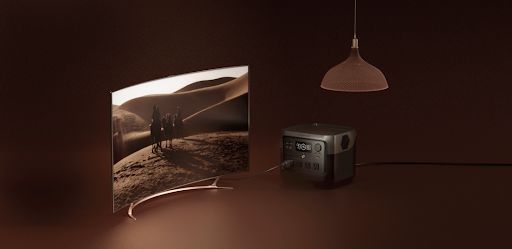
Image: Courtesy Photo
When the grid goes down for more than a few hours, a portable power station stops being a convenience item and becomes a genuine household necessity. Keeping a refrigerator cold, running medical equipment, and maintaining home security systems are all real demands that a capable unit has to meet without flinching.
EcoFlow and Anker SOLIX are the brands that most buyers end up comparing in the high-capacity home backup segment. Both operate in the same price range, target the same use cases, and have built credible reputations — which makes choosing between them genuinely difficult without a direct, side-by-side look.
Why Extended Outages Expose Every Weakness in Your Backup Plan
A one-hour power interruption is manageable for most households. A 24-hour blackout during a heat wave or winter storm is a fundamentally different situation. At that point, refrigerators, HVAC systems, and home medical devices become the critical loads — and running all of them simultaneously places demands that expose real gaps between units.
Understanding what your home actually draws is the right starting point before choosing a portable power station. The most common household loads people plan around include:
-
Refrigerator: approximately 100–400W continuous, depending on model and age
-
CPAP or other home medical devices: roughly 30–60W during normal operation
-
Router, basic lighting, and phone charging: typically 50–150W combined
Core Specs at a Glance
Before looking at real-world behavior, a direct numbers comparison helps frame where each unit is strong and where it gives ground. The two flagship home-backup portable power stations from each brand — the EcoFlow DELTA Pro 3 and the Anker SOLIX F3800 — sit close to each other in several categories but diverge sharply in others.
|
Feature |
EcoFlow DELTA Pro 3 |
Anker SOLIX F3800 |
|---|---|---|
|
Battery Capacity |
4,096Wh |
3,840Wh |
|
Continuous AC Output |
4,000W |
6,000W |
|
Surge Rating |
Higher than rated continuous |
9,000W |
|
Max Expandability |
Up to 48kWh |
Up to 26.9kWh |
|
Weight |
~103 lbs |
~132 lbs |
|
UPS Switchover |
~10ms (per independent testing) |
Not clearly published |
|
AC Charge Rate |
3,600W at 240V |
~3,200W |
|
Starting Price |
~$2,699 |
Varies; often $2,599–$2,999 |
How These Two Units Actually Differ
Most buyers comparing portable power stations focus on battery size and inverter wattage. Both numbers matter, but three technical areas tend to reveal the most meaningful differences between the DELTA Pro 3 and the F3800 during a real outage scenario. Each one affects a specific part of the experience:
-
Battery capacity — how far you get before needing a recharge
-
Inverter output — how many appliances you can run at the same time
-
Charging speed — how quickly you can recover during brief windows of grid restoration
Battery Capacity
The DELTA Pro 3 holds 4,096Wh against the F3800's 3,840Wh. The 256Wh gap won't feel dramatic during a single day of use, but it gives EcoFlow a marginal edge in sustained runtime. Both units use LFP chemistry, which handles deep discharge cycles more durably than older lithium-ion designs and contributes meaningfully to long-term battery health.
Inverter Output
This is where Anker pulls ahead clearly. The F3800's 6,000W continuous inverter — paired with a 9,000W surge rating — can handle heavier simultaneous loads, including large air conditioners, well pumps, and power tools under full demand. The DELTA Pro 3's 4,000W inverter covers the majority of residential appliances comfortably but will reach its ceiling faster if multiple high-draw devices are running at the same time.
Charging Speed
EcoFlow has the advantage here. The DELTA Pro 3 supports up to 3,600W of AC charging at 240V and accepts up to 2,600W of solar input — both higher than what the F3800 supports, based on available independent comparisons. In a multi-day outage where grid power briefly returns, recovering battery capacity quickly has real operational value that doesn't always show up clearly in spec sheets.
Design and Daily Usability
Neither unit is something you move casually around the house — both are large, heavy power stations designed primarily for stationary placement. But the physical design choices each company made affect how practical these portable power stations are to live with on a week-to-week basis, and how much control you have when things go wrong.
Physical Build and Portability
The DELTA Pro 3 uses a suitcase-style chassis with an integrated telescoping handle and large rear wheels, making repositioning considerably more manageable. At roughly 103 lbs, it's still heavy but well-balanced for its size. The F3800's tower-style design weighs around 132 lbs and can be less stable on uneven surfaces — a practical consideration if the unit will need to move outdoors at any point during an emergency.
App and Remote Monitoring
EcoFlow's smartphone app is consistently rated in independent reviews as one of the most capable in this category. It provides real-time power flow visualization, remote monitoring over Wi-Fi, and over-the-air firmware updates. Anker's app handles the basics well, but multiple 2025 comparisons note it currently trails EcoFlow in analytics depth, integration range, and overall feature sophistication.
Three Outage-Specific Factors That Separate These Units
Choosing the right portable power station for emergency home backup means looking past headline specs. Three less-discussed factors tend to determine how well a unit actually performs once your household is fully depending on it for an extended period.
UPS Switchover Speed
When grid power cuts out, there's a window between the outage moment and the point your backup unit takes over. That gap matters for electronics that don't tolerate a hard restart — routers, NAS drives, and CPAP machines especially. Per independent testing, the DELTA Pro 3 switches over in approximately 10ms, which is fast enough to keep most sensitive electronics running without interruption. The F3800's equivalent spec is not clearly stated in available published materials.
Home Panel Integration
EcoFlow's Smart Home Panel 2 allows the DELTA Pro 3 to connect directly to a home's electrical panel, enabling circuit-selective backup without a full rewire. This turns the unit into a more complete whole-home solution. Anker offers accessories for similar setups, but the EcoFlow ecosystem around panel integration is more developed and has been more extensively reviewed and tested in real residential configurations.
Expandability for Multi-Day Events
For households preparing for outages that stretch beyond a single day, total expandable capacity matters more than the base battery alone. The DELTA Pro 3 scales to 48kWh with compatible add-on batteries — nearly double the F3800's 26.9kWh maximum. For anyone building a serious portable power station setup intended to support multi-day independence, that ceiling difference represents a meaningful long-term advantage.
Price and Long-Term Value
Both units sit in the premium home-backup tier, and neither automatically wins on cost alone at any given moment. Promotional pricing, bundles, and seasonal sales shift the effective price frequently for both brands, which means the real comparison on value comes down to what you're getting alongside the purchase price.
Upfront Cost
The DELTA Pro 3 has a retail price of approximately $2,699. The F3800 fluctuates more and is frequently available in the $2,599–$2,999 range with discounts. Both brands run promotions regularly, and paying close to full retail for either unit is generally avoidable with patience. Solar panel bundles and extra battery packages can also shift the effective cost per unit of storage considerably.
Battery Lifespan
Both units use LFP chemistry, which is rated for thousands of charge cycles before degrading to 80% capacity. Independent comparisons suggest the DELTA Pro 3 offers a longer rated lifespan at that 80% threshold than the F3800. Over years of regular use as a primary home backup portable power station, that difference may translate into a lower total cost of ownership, even if the upfront prices land close together.
Which One Fits Your Situation
The Anker SOLIX F3800 makes sense if raw inverter output is your top priority — running large air conditioners, well pumps, or several high-draw appliances at the same time is where its 6,000W continuous output earns its place. For most households, however, the EcoFlow DELTA Pro 3 covers more ground: greater expandability, faster charging from both AC and solar sources, a more capable app, proven home panel integration, and a longer-rated battery lifespan all point in the same direction.