





What Does It Take to Protect Sarasota School of Architecture Homes from Climate Change?
The water didn’t come the way anyone expected.
It didn’t arrive from the sky, or a cinematic surge cresting over seawalls and docks. It crept—first through yards, then pools, then streets—until it found its way into houses that had been designed, more than half a century earlier, to rest level on Florida’s flat terrain. Terrazzo floors disappeared under brown water. Built-in cabinets swelled. The waterline climbed the walls and stopped, leaving a mark that would become a reference point for every decision that followed.
At 1224 Port Lane on Siesta Key, Theodore Scott was not there when the flood happened. He was half a world away, in Tibet, watching from a camera feed until the power cut out. He saw the water rise from the canal, swallow the yard, reach the pool, then creep toward the house. Then the feed went dead.
The house—a 1960 design by Ralph Twitchell, considered the father of the Sarasota School of Architecture movement—was empty. Scott and his wife, Jennifer Rauhofer, had bought it only weeks earlier, closing in August 2024, just in time for an unprecedented hurricane season. They’d moved a little furniture in. Most of the home was still bare. In a way, that helped. The architecture itself—the shell, the materials, the bones—took the hit first.
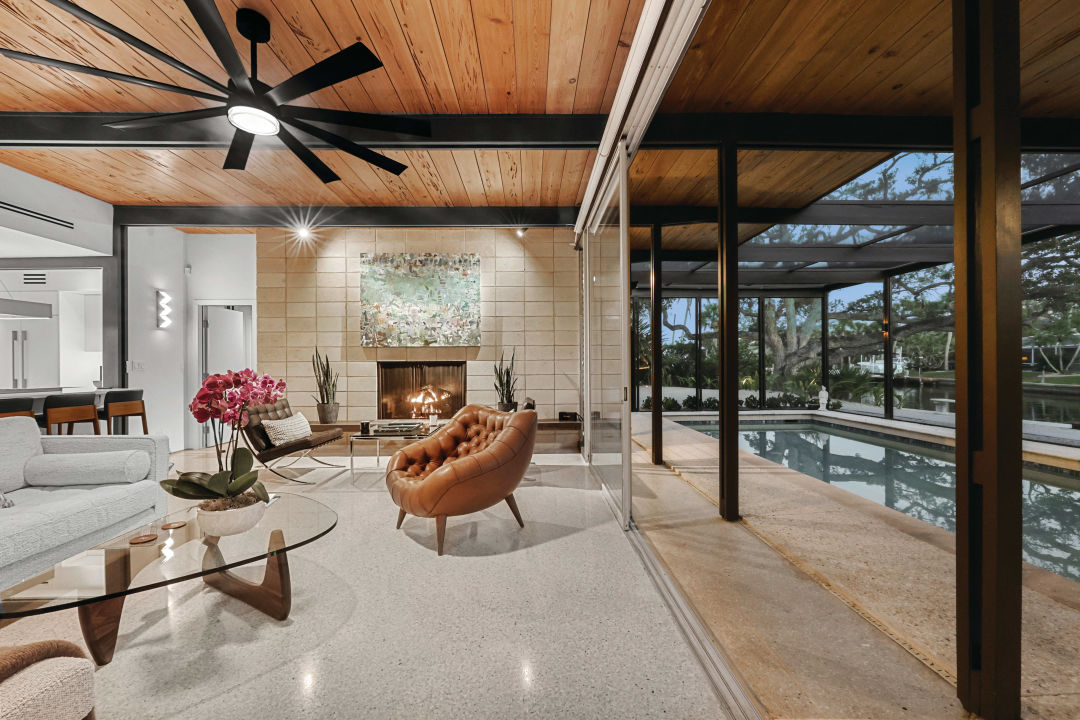
Image: Chad Spencer
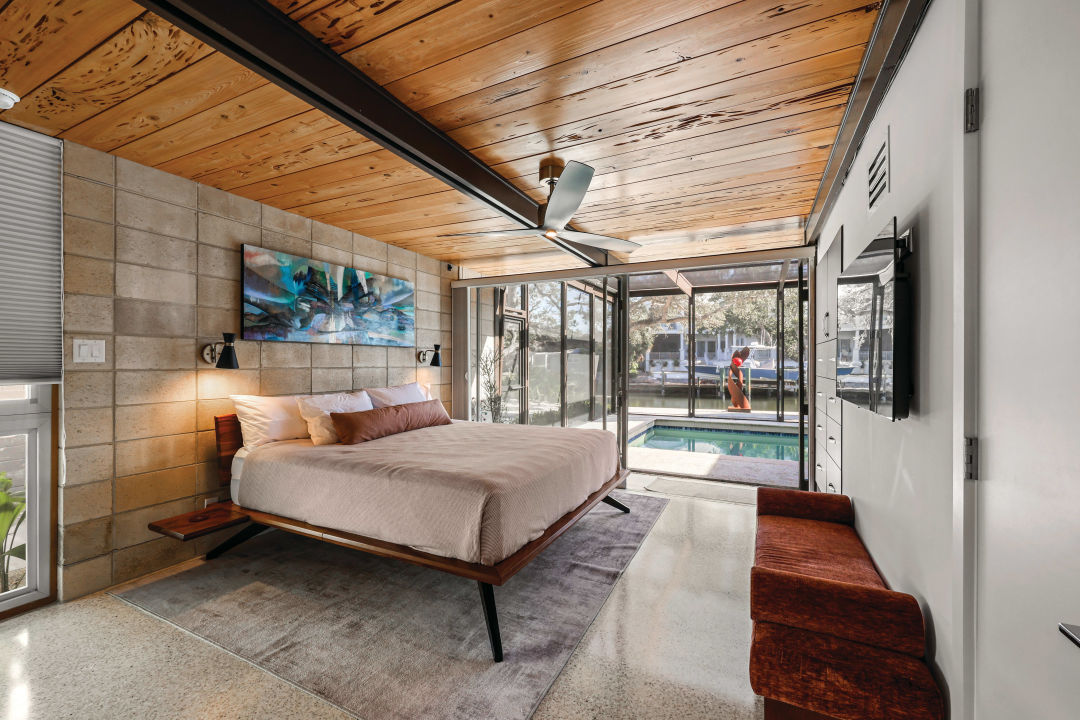
Image: Chad Spencer
“We got about 30 inches of water,” Scott says. “It wasn’t the bay. It was surge from the ocean. It came down the street, and it came in from both sides.”
What surprised him wasn’t the damage. It was what survived.
The Ocala block walls held. The terrazzo floors were fine. The original floor-to-ceiling sliders, designed decades before hurricane glass was a marketing term, remained intact. “You’ve got to give a nod to Twitchell,” Scott says. “He was evolving toward materials that are about as hurricane-friendly as you can get.”
Scott and Rauhofer are not accidental modernists. Their primary home, in Maryland, is architecturally significant as well—wall-to-wall glass, built into a wooded hillside and carefully maintained at considerable cost. “At all of our architectural homes, we see ourselves as stewards,” Scott says. “They’re not ours. We’re taking care of them. They’ll live on and be passed to others.”
On Siesta Key, that philosophy was tested almost immediately.
After the storm, Scott flew back to Florida. A neighbor had a camera feed showing water ripping down Port Lane, entering houses from unexpected angles. The restoration contractor arrived quickly, squeegeeing mud, opening walls. What had been a long-term plan—upgrading old cloth wiring, reworking mechanical systems—became an emergency.
“My wife and I are water resource engineers,” Scott says. “After the hurricane, we realized this was an opportunity to do what we had already been planning. But we weren’t just repairing—we were going beyond repairs.”
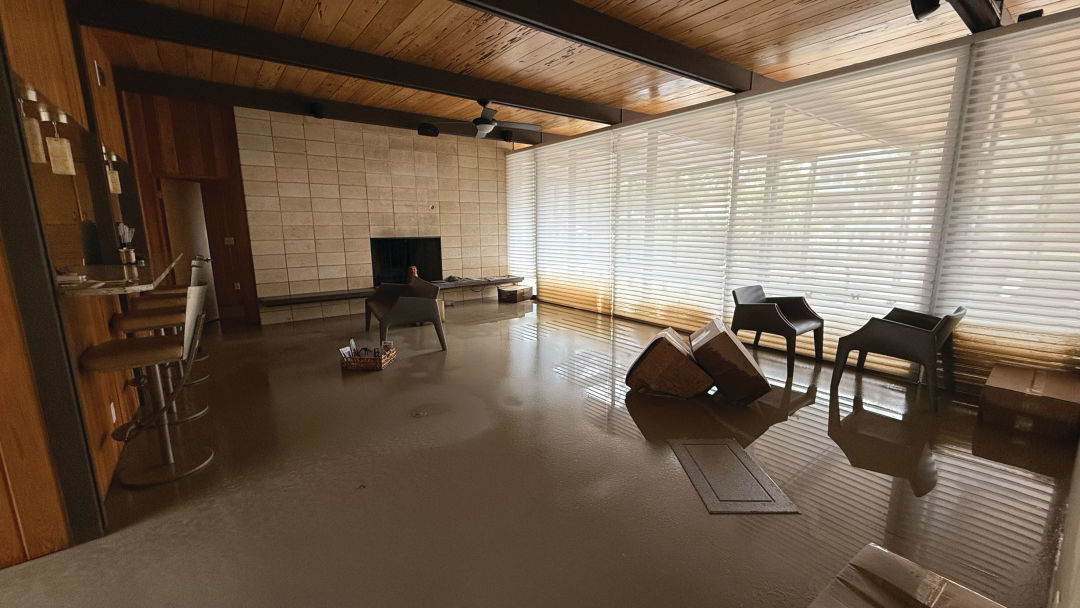
Image: Courtesy Photo
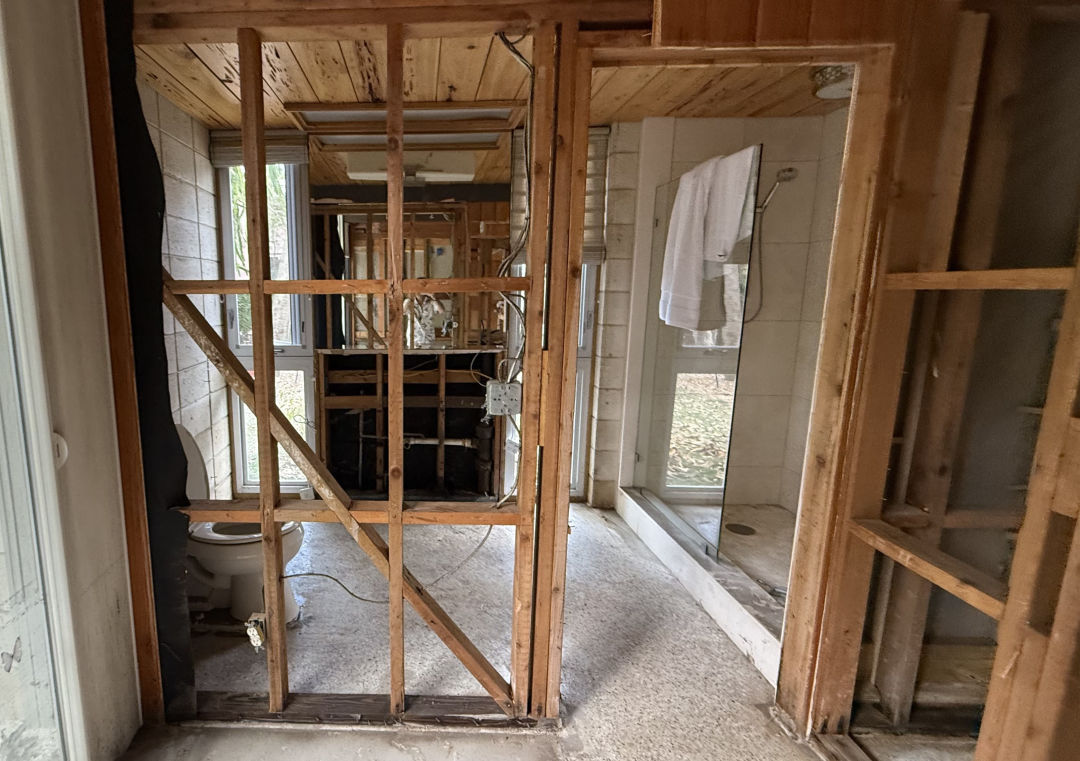
Image: Courtesy Photo
They hired DSDG Architects, who were experienced with historic structures, and WG Homes, who had just finished restoring another Sarasota School house designed by Twitchell. They relocated mechanical systems in the ceilings, replaced wiring with flood-resistant cable below four feet and ripped out plumbing vulnerable to saltwater. They also installed propane tanks, a generator and an elevated on-demand water heater. Inside the walls, they sprayed fungicide, installed closed-cell foam insulation and replaced drywall with fiber cement panels that could survive another flood. Baseboards were eliminated entirely. Cabinetry was floated above the floor.
“If it floods again,” Scott says, “it can drain.”
The work, which is ongoing, will cost between $400,000 and $500,000. Insurance covered only part of it. Federal flood insurance capped out at $250,000. Scott doesn’t frame the rest as a loss. “We see it as an investment,” he says. “The house is flood-proofed now. And when we sell one day—which won’t be soon—we can ask a premium. But that’s not why we did it.”
What mattered more was the decision not to leave.
“We never questioned selling,” he says. “We could have sold for lot value. The house across from us sold for lot value. But it’s not about the dollar. We felt a responsibility. [Previous homeowner] Lisa Russo’s passion for the house carried forward. We didn’t want to screw that up.”
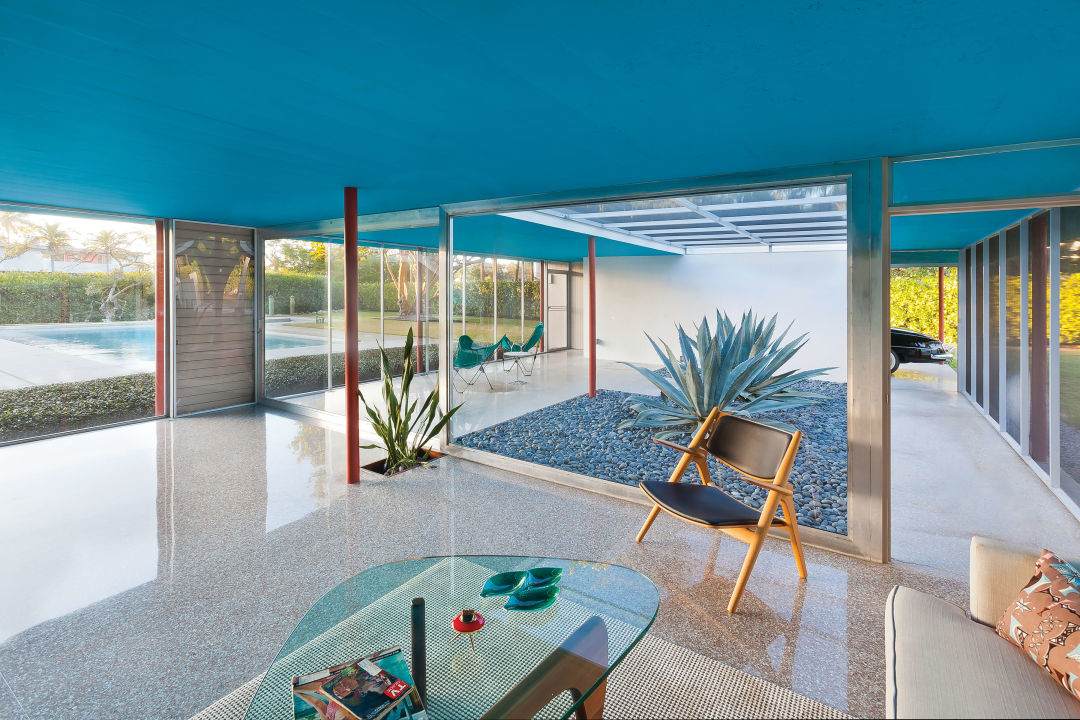
Image: Gene Pollux
Across town, at 100 Ogden Street, Loren and Brian Donovan were standing inside a very different kind of wreck.
Their guest house—the original home on the property, known as the Revere Quality House, designed in 1948 by Paul Rudolph and Ralph Twitchell—had taken on water, too. Not as much as some, but enough. Built-ins were damaged. Furniture soaked. Mechanical systems ruined. Outside, a jet ski sat tangled in the mangroves for weeks.
“[Our] large companion house was a fortress,” Loren says. “Very little damage. But the Revere house flooded a couple of feet. You had to be thoughtful about restoration.”
The Donovans came to Sarasota almost by accident. Brian had spent decades in commercial development and technology; Loren in media and sponsorship. They bought a condo on Golden Gate Point first, then a Guy Peterson house. They loved architecture, but initially didn’t know Sarasota had its own modernist lineage. “We were attracted without knowing,” Loren says. “You could feel a sense of community from the architecture.”
The Revere Quality property came to them off-market. The previous owner, David Zaccardelli, wanted it to go to someone who would care. “They were interviewing us,” Brian says. “They wouldn’t even give us a price for a month and a half.”
The Donovans bought the house as-is, post-hurricanes, before fully understanding the extent of the damage. “We didn’t care,” Loren says. “We wanted to take it on.”
What followed was not a renovation so much as an archaeological exercise.

Image: Gene Pollux
The glass, steel and concrete held. The vulnerable parts—the wood—failed. But even there, the Donovans saw intention. “Those elements were meant to be sacrificial,” Loren says. “You can take all the wood out, and the house would still stand.”
Finding the right people to restore it proved difficult. Contractors wanted to modernize. To simplify. To replace historic materials with contemporary equivalents. The Donovans resisted. “We wanted it done traditionally,” Brian says. “We didn’t want a modern version of what was there.”
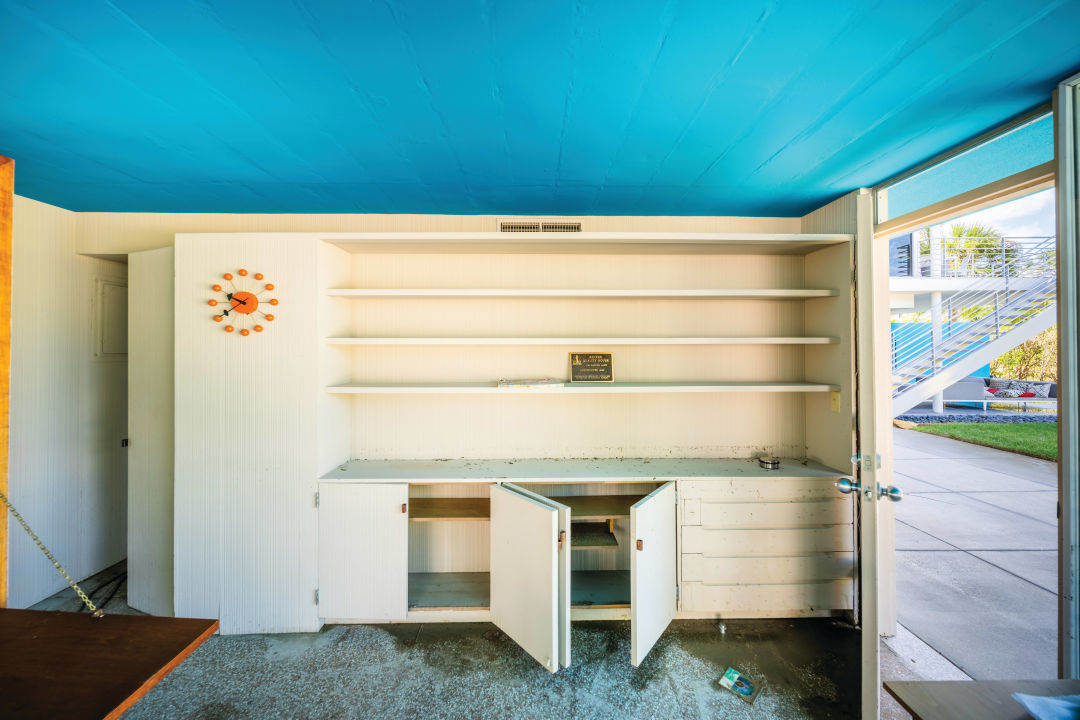
Image: Courtesy Photo
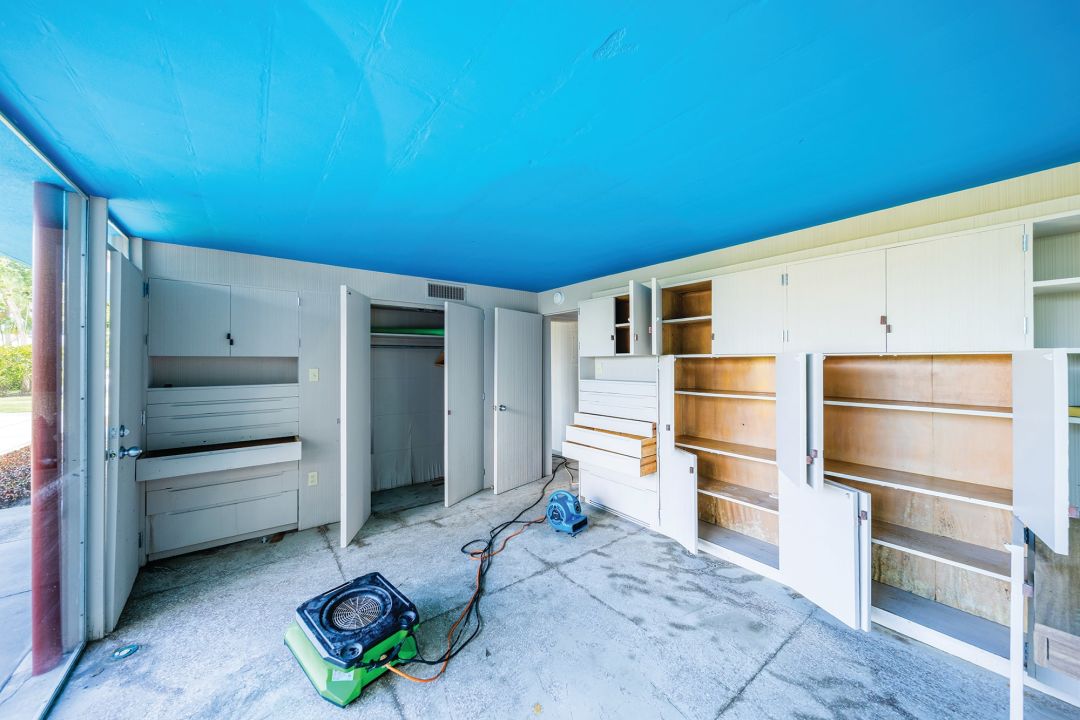
Image: Courtesy Photo
Eventually, the couple found a carpenter, Glenn Krone of Krone’s Kreations. He smelled the old wood and fell quiet. He recognized the stamp on the striated plywood and knew where to source the banded, linear-grained panels used through-out the original built-ins, a period-specific finish that’s become hard to replace and is now made by only one company in California. He tracked down old-growth cypress. He called the Paul Rudolph Institute for Modern Architecture in New York City. He researched riveted metal drawers and took pieces off-site to rebuild them exactly as they were.
“It took months to find Krone,” Brian says. “But good things are worth waiting for.”
The Donovans talk about stewardship the way Scott does. “We don’t see ourselves as owners,” he says. “It belongs to everyone. We’re just playing our part.”
For a movement so widely admired today, the Sarasota School of Architecture was never conceived as a “school” at all. It was not a manifesto, a doctrine or a campus. It was a loose, often argumentative, constellation of architects working in post-war Florida who shared a problem more than a philosophy: how to build intelligently, honestly and affordably in a hot, flat, hurricane-prone landscape at the edge of the Gulf of Mexico.
For Damien Blumetti, a Sarasota-based architect who trained under second-generation Sarasota School architect Guy Peterson, Sarasota School architecture is less a style than a method—an insistence that a building should behave intelligently in Florida.
“Guy used to say, ‘I wasn’t part of the school, but it’s part of me,’” Blumetti says. “And I feel the same way. I grew up here, and now I’m carrying that torch. It’s so important to my body of work.
“When buildings had to perform before computer models were available, [architects] were true engineers or scientists, because they had to understand climate—and the microclimate here especially,” he says.
Beginning in the late 1940s and extending through the 1970s, architects, including Ralph Twitchell, Paul Rudolph, Victor Lundy, Jack West, Ralph Zimmerman, Gene Leedy, Tim Seibert, Mary Hook and Carl Abbott, rejected the ornamental revival styles that had dominated Florida construction. Instead of Mediterranean fantasy, they pursued clarity. Instead of air-conditioning as a crutch, which wasn't universal back then, they treated climate as a design partner. Their buildings relied on cross-ventilation, deep overhangs, operable walls, shaded courtyards, raised volumes and materials suited to heat, humidity and salt air—Ocala block, terrazzo, steel, concrete, jalousie windows and cypress.
Many of the houses were modest by today’s standards, often less than 2,000 square feet. They were designed to dissolve the boundary between indoors and outdoors, to sit lightly on the land rather than dominate it, and to encourage a way of living that was informal, communal and distinctly Floridian. These were not showpieces meant to impress from the street. They were experiential buildings, meant to be inhabited slowly, with doors open and furniture pushed aside, daily life spilling into breezeways, lanais and gardens.
What distinguished the Sarasota School from other strands of midcentury modernism was its regional specificity. While modernism elsewhere often aimed for a look that could fit in anywhere, Sarasota’s architects embraced constraint. Hurricanes were not abstractions; they were facts of life. Flooding, sun angles, prevailing winds and shallow water tables shaped decisions long before building codes required them to. The result was a body of work that looked experimental but behaved pragmatically—structures that, as the 2024 hurricanes dramatically illustrated, have in many cases outperformed newer construction when subjected to wind and water.
For decades, these houses existed in a kind of architectural middle ground: too new to be considered historic, too unconventional to be widely appreciated, and too small to satisfy shifting real estate economics. Many were demolished quietly, remodeled beyond recognition, or absorbed into larger developments. Others survived because owners recognized something rare in them—an intelligence of design that felt increasingly absent from contemporary construction.
Only in recent years has the Sarasota School been widely acknowledged as one of the most important regional modernist movements in the United States, comparable in influence—if not in fame—to the better-known modernist experiments of Southern California or the Midwest. Its significance lies not just in its aesthetic legacy, but in its prescience. Long before “resilience” became a planning buzzword, these architects were grappling with how buildings could endure in a volatile coastal environment without severing their relationship to place.
That question—how to preserve architecture that was never meant to be static, monumental or sealed off from nature—now sits at the center of Sarasota’s preservation dilemma. The very qualities that made these houses radical in their time—their openness, their proximity to the ground, their refusal to retreat from the landscape—are what make them vulnerable today. And yet, for many owners and preservationists, altering those qualities risks erasing the very logic that makes the Sarasota School worth saving at all.
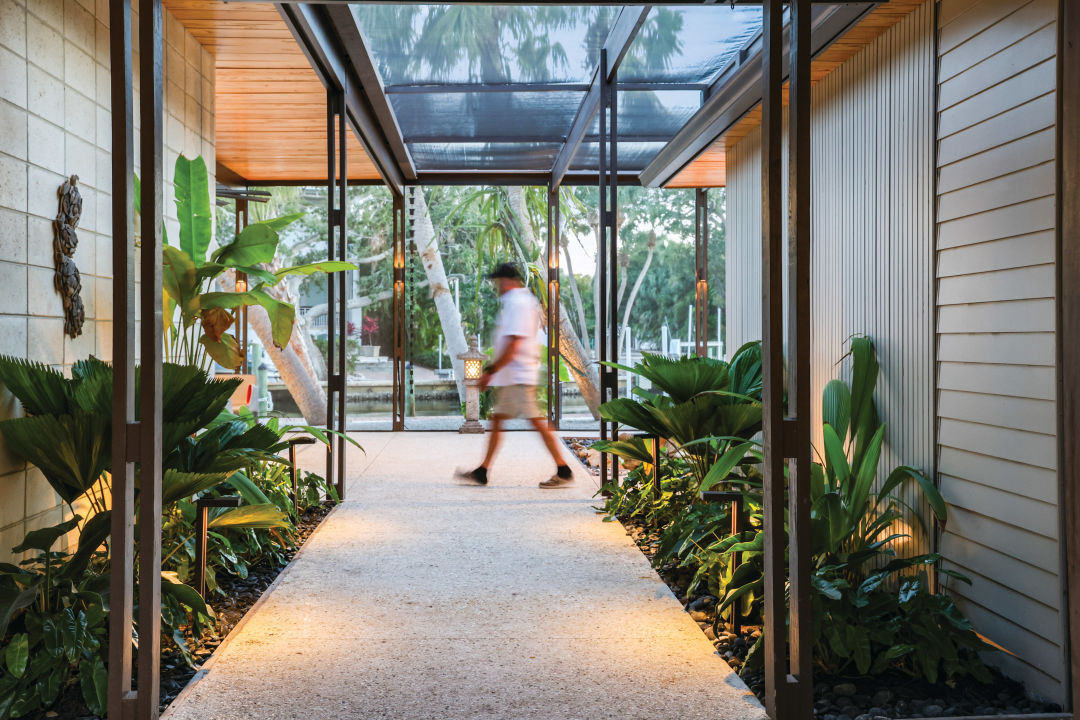
Image: Chad Spencer
Viewing themselves as stewards rather than owners is a recurring theme among people living in Sarasota School houses. It’s a language Marty Hylton hears constantly.
Hylton, the president of Architecture Sarasota, has spent his career at the intersection of preservation and disaster recovery. Earlier in his career, he worked on recovery efforts in New Orleans after Hurricane Katrina. “This is my background. It’s why I’m here,” he says.
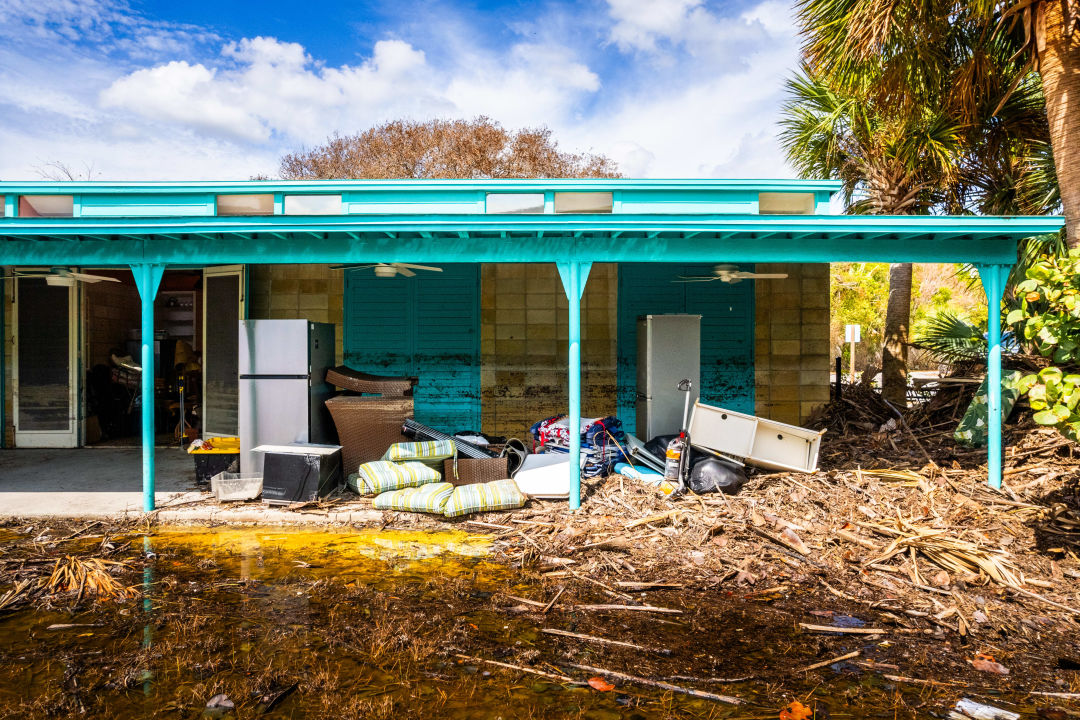
After the 2024 hurricane season, Hylton began fielding calls from homeowners across Sarasota's barrier islands. “Of the some 300 properties associated with the Sarasota School of Architecture, our estimate is that 100 to 150 were impacted by the storms with flooding and/or wind damage,” he says.
Some iconic houses took water: the Cocoon House, the Revere Quality House, homes in Sandy Hook and Sanderling. Lesser- known homes—Zimmerman designs, Lundy houses—were damaged or destroyed. “Some are just going to come down,” Hylton says. “When that happens, documentation may be all that’s left.”
After the storms, Architecture Sarasota stepped into a role it had been quietly preparing for. Years earlier, the organization had begun building a database of Sarasota School properties as part of its Moderns That Matter program. Cultural resource surveys mapped buildings constructed before 1980, the threshold for historic evaluation. When the 2024 storms hit, that data became triage.
“After [Hurricane] Helene, especially on Siesta Key, we could analyze what was impacted,” Hylton says.
Roughly a third to nearly half of the known Sarasota School properties were affected.
What followed was not just a construction problem, but a bureaucratic one.
Under FEMA rules, if the cost of repairs exceeds 50 percent of a structure’s value—excluding land value—the building must be brought up to current code. For many Sarasota School homes, that would mean elevation. Lifting a flat-roofed, ground-hugging modernist house onto stilts would fundamentally alter its design, context and meaning. In some cases, it would destroy it.
“This is the cliff,” Hylton says. “Twitchell houses would be demolished. It’s very challenging to elevate those homes.”
There is an exemption, but it requires paperwork that few homeowners know exists. Architecture Sarasota began helping owners prepare emergency determinations of eligibility for listing on the National Register of Historic Places. The response letters from the National Register didn't formally approve the structures under review, but they require local governments to treat them as if they were listed, exempting them from the 50-percent rule.
“On average, it would take three to six months,” Hylton says. “We moved as fast as we could.”
Architecture Sarasota helped homeowners complete preliminary site information questionnaires and became a point of contact for the state of Florida when county preservation staff positions sat vacant. Hylton and his team sat in living rooms where furniture was destroyed and people were deciding whether to stay or go.
“It’s heart-wrenching,” Hylton says. “You’re standing in someone’s home, and they’re asking, ‘Should I invest in this again? Should I stay here?’”
The emotional arc, he says, mirrors grief. “Denial. Anger. It takes a while. We don’t talk enough about collective loss,” he says. “Cultural heritage is about shared memory. Losing these places affects more than just the owner.”
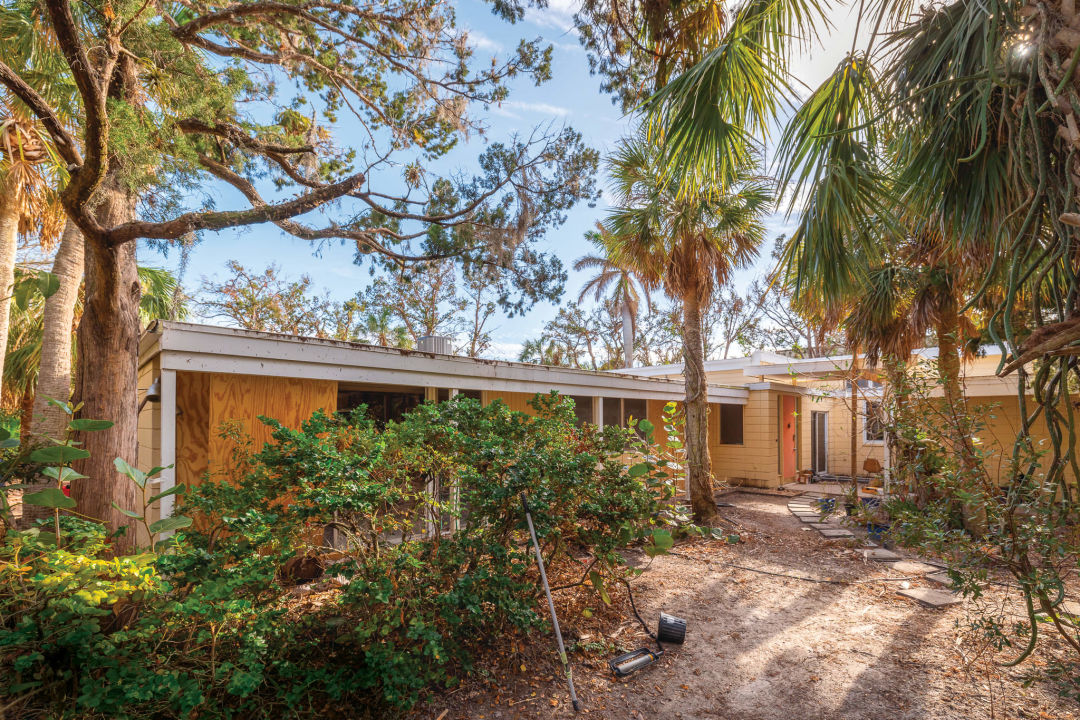
Image: Alive Coverage
In Siesta Key’s Sandy Hook neighborhood, the loss felt communal.
Sandy Hook is one of the region’s most concentrated collections of midcentury modern architecture. Designed in the 1950s, it drew architects, artists and experimental thinkers. Its guiding force was Mary Hook, the pioneering architect who shaped the neighborhood into a modernist enclave and hired Paul Rudolph to design a guest house there. Twitchell, Jack West, Ralph Zimmerman, Victor Lundy and nearly every major Sarasota School figure left a mark.
And during the 2024 storms, every house in Sandy Hook flooded.
Rather than pursue individual exemptions for each property, Architecture Sarasota is now working toward a district-level designation. The logic is pragmatic: If another storm hits, homeowners wouldn’t have to scramble to avoid the FEMA rule. The district could be treated as a historic area.
“If another storm were to do damage,” Hylton says, “those property owners could duck the 50 percent rule. Otherwise, you’re talking about hundreds of thousands of dollars to elevate, and you lose the [design’s] context.”
The work is slow. Funding for the research and documentation is being cobbled together; homeowners are exhausted. But the stakes are clear. Without documentation, without surveys, “it’s as if the property doesn’t exist,” Hylton says.
Architecture Sarasota recently received a $35,000 grant from the Florida Division of Historical Resources to update the last comprehensive Sarasota School survey, completed in 1997. It isn’t a massive pot of money, but it is the kind that matters: the funding that turns a fragile, half-known inventory into something official, searchable and usable. The new effort will catalog Sarasota School–associated properties built through 2000, while gathering vulnerability data—foundation types, flooding history, materials—details that could shape not just local preservation decisions, but how coastal modernism is documented and adapted across Florida.
“We know storms are inevitable,” Hylton says. “They will happen again. The question is whether we help people make informed decisions.”
In Blumetti’s view, the Sarasota School was never just an aesthetic. It was a set of decisions—about shade, wind, orientation—meant to make a building behave well in Florida.
“If you have zero overhang and it’s facing south or west—and it’s all glass—it probably doesn't take on the principles of Sarasota School architecture,” Blumetti says.
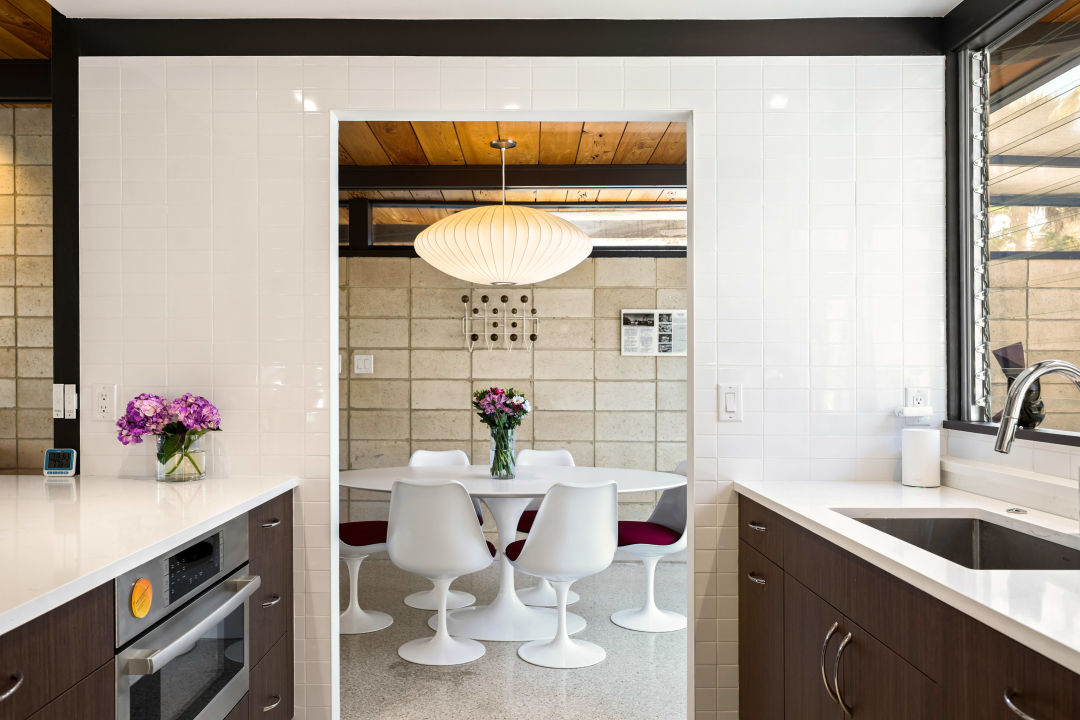
Image: Chad Spencer
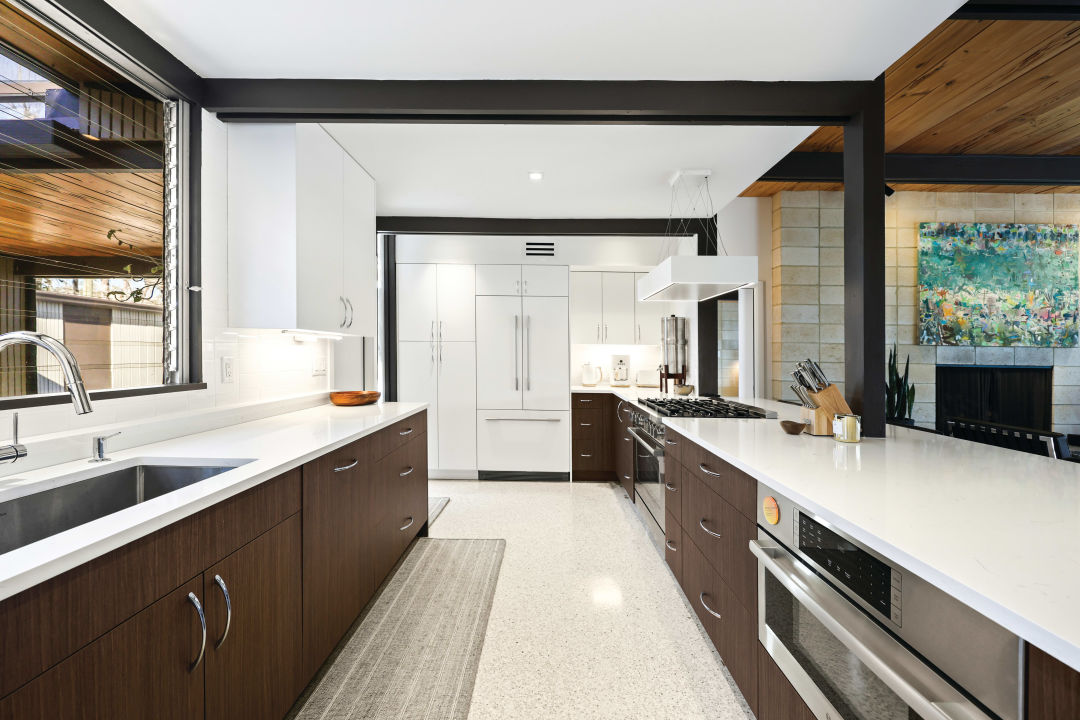
Image: Chad Spencer
Back on Port Lane, Scott is still waiting for the work to end so he can finally do the simplest thing a house is for: live in it.
On Ogden Street, the Donovans repaint the walls of the Revere Quality House using carefully studied historic palettes. They polish the original terrazzo, material they were told can’t easily be replaced because the original quarry is closed. Strangers peer through the gate. Architecture students take photos.
“Our first peepers,” Loren says. “We get excited.”
That excitement, the recognition that these houses still draw people in, may be the Sarasota School’s most durable feature of all.
“Letting people experience it beyond a photo has a profound impact on the architecture community,” Blumetti says. “It’s worldwide. Sarasota is well known for this body of work. Those buildings were an incredible inspiration to a lot of people, and by taking care of them, you don’t know who you’re affecting in the future—architects, students and the next generations.”
At top, visualizing the threat: An altered photo of what the landmark, midcentury modern Revere Quality House on Siesta Key might have looked like as the water crept toward the home during the storms of 2024.